Bulk Dog Rope Toys: Specs Before the Carton Count

Bulk dog rope toys look interchangeable until the first carton arrives. A buyer asks for "rope, 120 pieces, mixed colors" and the factory has to guess whether that means a nylon stick, a hard chew with a rope handle, or a small cotton knot meant for a puppy. Those three constructions do not share a braid, a gram weight, or a failure mode. Treating them as one SKU is how dye lots, carton marks, and hangtag copy drift on reorder.
This is a Classic Chew note for importers, pet-shop buyers, and private-label brands placing a trial with a Chinese factory. The sizes, materials, weights, and MOQ figures below come from active catalog rows. Nothing here is a lab chew score, a Shore hardness, or a certificate. If a field is missing on the spec, confirm it on the quote.
The hero on a mixed rope line is Nylon Rope Stick for everyday chew and tug. Catalog row MN-1205: PA and nylon, blue, about 17×4.5 cm, 200 g, dogs, MOQ 120. It sits in the Classic Chew collection next to lighter cotton hybrids and heavier bone shapes. Browse the wider mix in the products catalog before you freeze a colorway. A custom label, not a new braid, usually starts on private label.
Three constructions that should not share one PO line
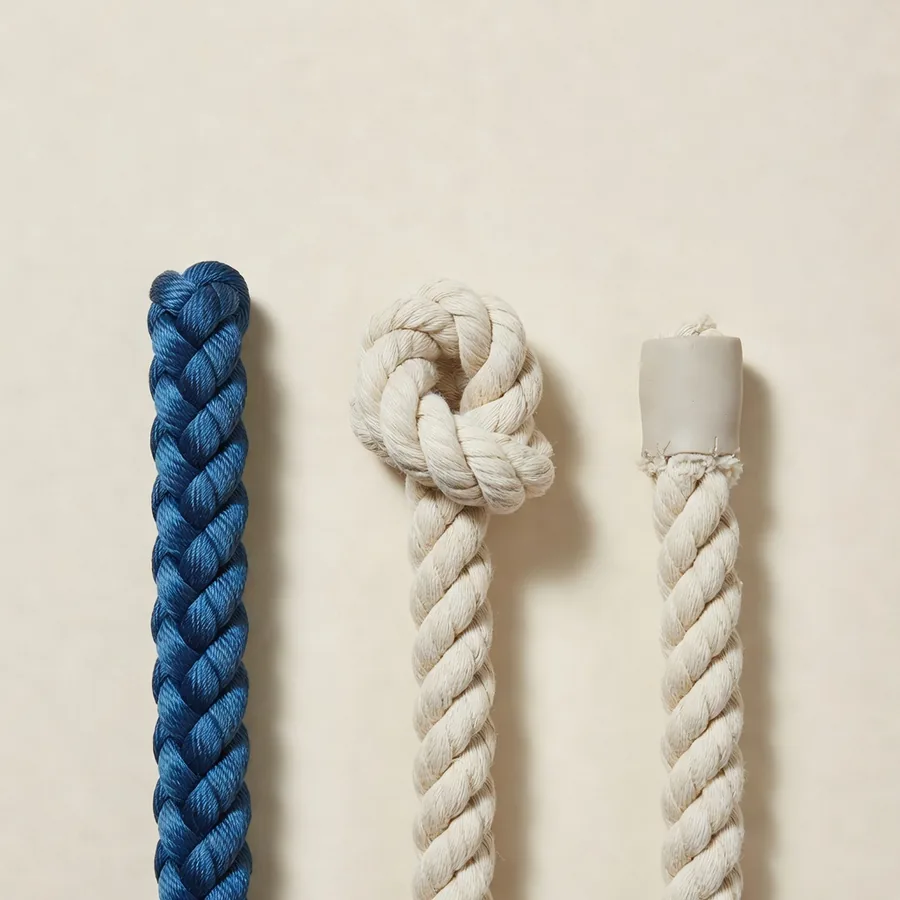
"Rope" on a line sheet is a family name, not a construction. On this catalog the family breaks into three programs that a production manager can quote without inventing the product.
Nylon stick, no cotton. Nylon Rope Stick is PA and nylon, 17×4.5 cm, 200 g, blue, MOQ 120. The rope is the body. There is no plush head and no TPR cap. A chemical screen on this SKU does not answer a dye question on a cotton knot you add later. Hard chew plus a rope handle. Rope Stick Chew for handle-rope tug programs is PA and nylon, about 15×4 cm with a handle rope listed at 36 cm, 145 g, gray and pink, dogs, MOQ 120. The molded body and the handle are different parts. A pull check has to hit the joint as well as the braid. Cotton plus TPR, puppy scale. Puppy Rope Knot for small-dog cotton chew programs is TPR and cotton, 9.8×7.8×4.3 cm, about 29 g, mix colors, dogs, MOQ 120. Same catalog MOQ as the 200 g stick. Not the same carton, and not the same dog on the hangtag.A fourth neighbor is easy to confuse with the knot: Puppy Rope Ring is also TPR and cotton, 16.5×7.8×4.3 cm, about 67 g, MOQ 120. Twenty-nine grams versus sixty-seven grams changes how many pieces fit a master carton and which size band you should imply on the card.
If the brief says "bulk dog rope toys, one SKU, assorted," split it before the quote. One line per construction. Color is a second line, not a substitute for material.
Who the nylon stick is for, and who it is not
The 200 g stick is a durable-aisle item for dogs, not a gift plush and not a teething ring. Buyers who do well with it usually sell pet shops, regional distributors, or a marketplace listing where the photo has to match a heavy nylon braid, not a soft cotton bone.
It is a poor first SKU if the channel is puppy boutiques or a subscription box that wants a light chew under 40 g. Puppy Rope Knot at 29 g, or Puppy Rope Bar (TPR and cotton, 21×2.5×2.5 cm, about 33 g, MOQ 120), sits closer to that shelf. Key Chew Long is TPR only, 21×2.5×2.5 cm, about 33 g, MOQ 120, and has no rope at all. Do not file it under rope because it shares a length with the bar.
The catalog does not publish a bite-force number, and this note will not invent one. Write the hangtag from the material line (PA and nylon, or TPR and cotton) and from a supervised-play warning. If a retailer asks for "indestructible," send them back to the spec instead of upgrading the adjective.
Color is narrower than buyers expect. Nylon Rope Stick is listed in blue. Rope Stick Chew is gray and pink. Puppy Rope Stick, a different row, is TPR and cotton, 22×4.1×4.1 cm, about 62 g, pink and yellow, MOQ 120. A Pantone from a plush line does not transfer. A second nylon color is a dye question for the quote, not a checkbox on the first PO.
Specs to lock before you copy the MOQ
Catalog MOQ on these rows is 120 pieces. That number is a starting band for a near-stock body, not a promise that a new dye, a new knot count, or a custom woven label lands at the same piece count. Confirm pack count and any color minimum on the quote.
Write the spec in millimeters and grams, copied from the row, not from "medium dog."
| SKU | What it is | Size | Weight | Materials | MOQ |
|---|---|---|---|---|---|
| Nylon Rope Stick (MN-1205) | Nylon body | 17×4.5 cm | 200 g | PA, nylon | 120 |
| Rope Stick Chew (MN-1204) | Body plus handle | 15×4 cm, handle rope 36 cm | 145 g | PA, nylon | 120 |
| Puppy Rope Knot (MN-1248) | Cotton knot, TPR ends | 9.8×7.8×4.3 cm | 29 g | TPR, cotton | 120 |
A few fields are not in the database, so they belong on the RFQ anyway. Knot count: a loose knot looks larger in a photo and opens earlier in play. Cotton end finish: raw cut, bound, or covered by the TPR cap. The nylon stick has no cotton end. Handle length on Rope Stick Chew stays 36 cm; do not shorten it in the listing photo and reorder the catalog length. Species on the card is dogs. Do not add cats because a plush line in the same factory allows both. Inner pack and master carton: a 200 g stick and a 29 g knot should not share a carton mark even when the PO number is the same.
Certifications are not printed on these product rows. Do not paste CPSIA, EN71, or REACH onto the line until a current test report for that construction is in the file. A US buyer and an EU buyer should not reuse each other's suffix paperwork. Put material, what the item is, and species on the invoice, and let the broker classify it. This page does not state an HS code or a duty rate.
How a rope trio sits in Classic Chew
Classic Chew is the durable line: TPR chews, rope hybrids, and bone shapes. A rope-only assortment is a thin shelf. The useful first box is one heavy nylon, one handle-rope chew, and one puppy cotton knot, each at the 120-piece catalog band, then a non-rope neighbor so the buyer can see the boundary.
Coated Bone Chew for nylon-and-coating programs is the featured bone next door: PA and PU, green, sizes S 13.3×4.6×2.8 cm (65 g), M 16.5×5.6×3.7 cm (145 g), L 19.5×6.6×4 cm (200 g), dogs, MOQ 120. The large bone matches the stick on weight and not on construction. A buyer who says "200 g chew, either is fine" will get two different returns stories.Woven Foam Ball (TPR and foam, about 7–7.5 cm, roughly 102–119 g, blue, MOQ 120) is a fetch shape, not a rope. Keep it off the rope PO. Tripod Chew Toy is PA, 15×15×7 cm, about 295 g, red, MOQ 120, and has no cord. It is the heavy end of the same collection, useful when a shop asks for a nylon chew that is not a stick.
Studio Warmth plush, including food shapes and character rope-plus-plush, is a different wall. Those SKUs sew a head onto cord. Do not price them off a nylon-stick quote, and do not reuse their hangtag copy on Puppy Rope Knot. If the program needs a new animal head, that is an ODM conversation, not a color change on MN-1205.
A reorder should name the SKU, not the keyword. "Same as last time, the rope one" fails when the account already bought the stick, the handle chew, and the knot.
Sampling, knot QC, and what the carton should say

Ask for one sample per construction before the 120-piece run, not one "rope sample" that stands in for all three. On the nylon stick, check length, diameter, color against the blue listing, and whether the braid matches the photo you will use on the product page. On Rope Stick Chew, check the handle length against 36 cm and tug the joint by hand. On Puppy Rope Knot, check that the TPR ends still cover the cotton and that the knot has not been left loose to hit a gram target.
Compare the sample to the signed spec. Weigh a few pieces. Measure the stated dimensions. Look at the knot and the handle joint. If the cotton still smells like a dye bath after it has aired, hold the lot. Do not invent a chemical limit in the PO to cover that. If you need a written AQL, agree the number on that order. A plush-program AQL does not automatically apply to rope.
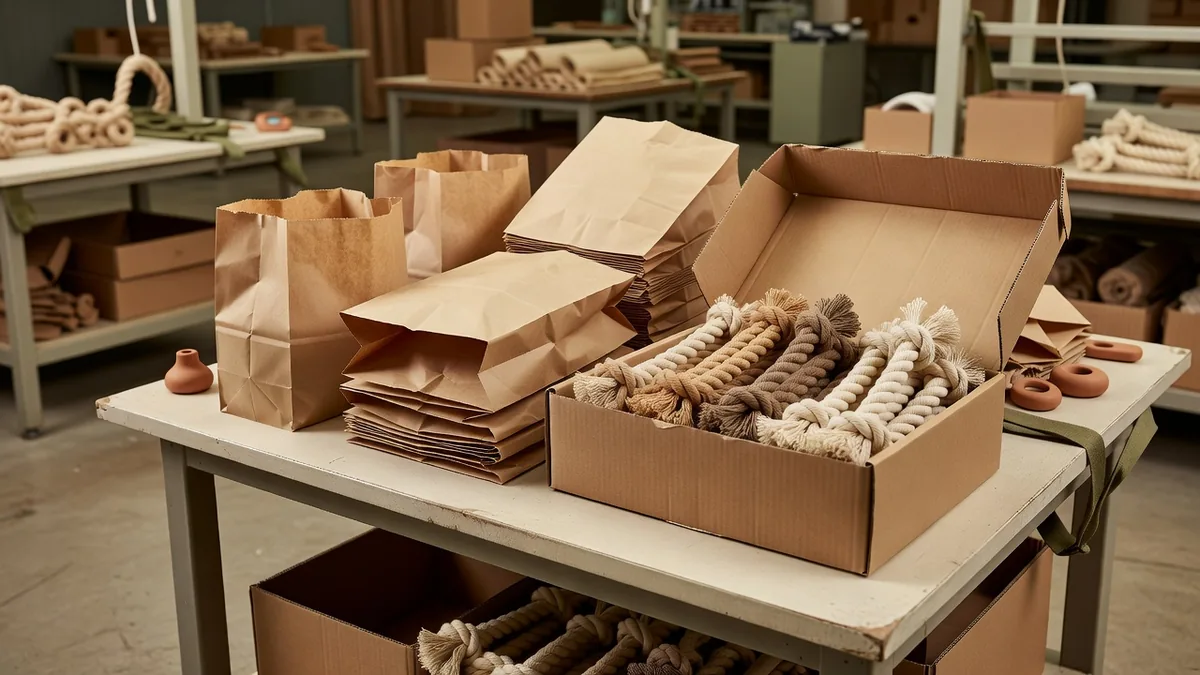
Pack-out is where mixed rope orders go wrong. Mark cartons with SKU, size, color, and piece count. Do not print "rope assorted" on the master if the inner bags are three constructions. 200 g sticks and 29 g knots have different case weights, and a warehouse that counts cartons instead of pieces will mis-receive the puppy line.
A woven label, hangtag, or barcode adds a packing step. It does not change the nylon or the cotton. Put the label art on the sample so the tag does not cover the knot or claim a material the row does not list. If the tag needs a size band, use the measured centimeters. "Medium" is not on the spec.
Seasonal colors and character prints belong on a different quote. The near-stock colors above are the ones you can photograph without a new dye lot. A second color on the nylon stick exists only if the factory confirms it. The word bulk does not imply it.
What to send when you ask for a quote
Send the SKU name, the size and weight you are copying, the material pair, the color name, and the piece count. Say whether you want the catalog body as-is or a private-label pack. Say the destination country so packing marks and paperwork can be scoped, without asking the sewing line to pick a tariff code.
Skip adjectives that the spec cannot support: indestructible, vet approved, eco, unless you already hold the document for that lot. Skip a single mixed-color MOQ that hides three constructions inside one price.
If you want the nylon stick, the handle chew, and the puppy knot quoted as a trio, say so as three lines at 120 pieces each, then ask what a mixed carton would do to the pack. That is a better first email than "bulk dog rope toys, best price."
For a quote on these Classic Chew rows, or a private-label pack on the nylon stick, use contact and name the SKU.
Ready to Build Your Next Collection?
From material selection to final delivery, we help brands bring pet toys to market.