Bulk Squeaky Toys: Specs, Squeaker QC, MOQ & Sampling

If you are buying bulk squeaky toys, you are not just ordering a soft shape with a noise maker inside. You need a program that holds squeak volume after carton crush, keeps the insert from migrating out of a torn seam, and still meets chemical and small-parts expectations for the markets you ship into.
This guide is for brand owners, Amazon and marketplace sellers, distributors, and retail buyers who need squeaker-led assortments at volume. It covers what “bulk squeaky” actually means in export factories, how to write a brief a plant can quote, realistic MOQ thinking, QC that catches silent and leaky units, and when open-stock bodies beat full custom patterns.
Browse current soft-toy and interactive direction on the products catalog before you freeze a silhouette. Catalog-adjacent bodies often start with lower MOQ and no pattern-development fee.
What bulk squeaky toys mean in export programs
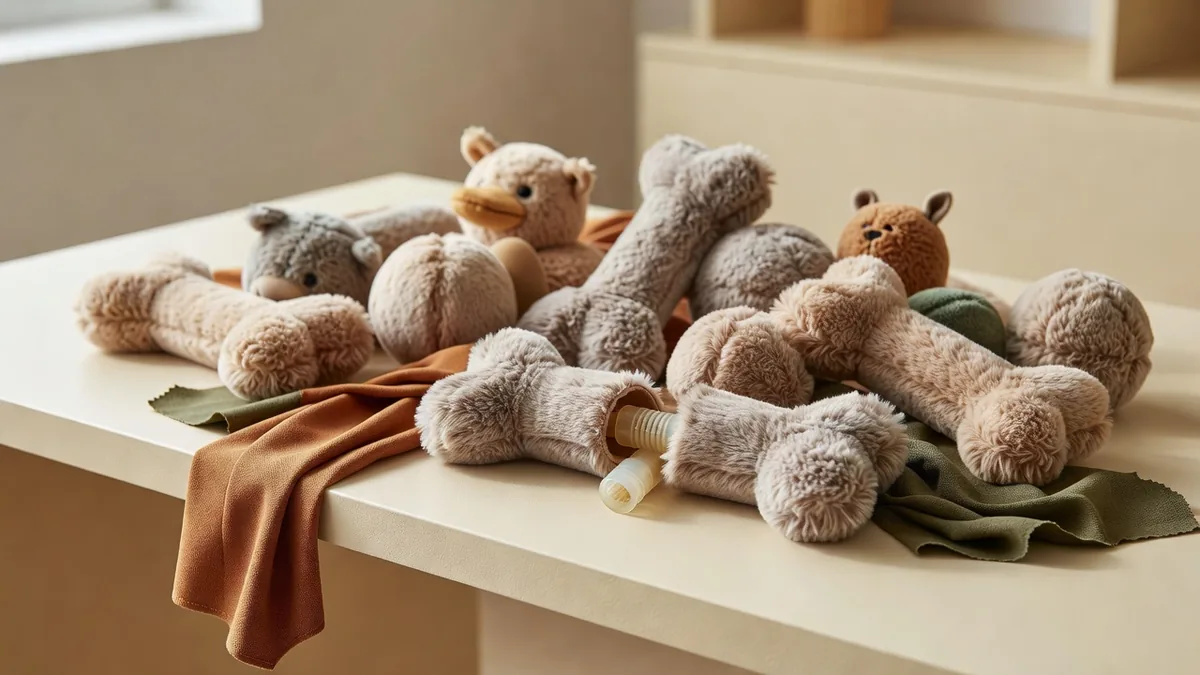
In factory English, “squeaky toy” usually means a soft or semi-soft body plus one or more plastic reed squeakers (or a molded rubber squeaker body) that makes sound under compression. The commercial product is three systems stacked: outer shell, fill or structure, and the acoustic insert with its pocket or cavity.
Common export constructions:
- Plush shell + fiberfill + sewn squeaker pocket. Most “cute animal” and food-shape SKUs. Failure modes: pocket open seam, insert rattle out, fill clumping after wash claims.
- Latex or rubber hollow squeaker. Classic ball and bone shapes. Failure modes: thin wall tear, odor, color bleed, inconsistent squeak after aging.
- TPR / TPE molded body with integral or press-in squeaker. More chew durable than light plush. Failure modes: flash at openings, hard edges, insert push-out under bite.
- Multi-squeaker or dual-tone designs. Two reeds or two pockets for retail novelty. Higher scrap if either pocket fails AQL.
On platforms you will meet three seller types under the same keyword:
Trading desks with a soft-toy partner. Fast English, mixed factories. Acceptable for open stock if you own inspection. Plush or rubber plants that already run squeaker lines. Real capacity. Pocket sewing and reed supplier control vary. Ask who supplies the squeaker and whether you can lock the model number. Pet lines that ship squeaky assortments every month. Narrower catalog, more honest about silent-unit rates and carton crush. Most mid-size brands land here after one return spike on “cute but quiet” cartons.Ask what share of monthly output is squeaker product vs silent plush. If the answer is vague, assume your order is the training run for pocket QC.
Who buys bulk squeaky programs
Serious traffic on this keyword usually falls into a few buckets:
- DTC brands refreshing a core “squeak and fetch” range for dogs under 25 kg
- Marketplace sellers building private-label multi-packs (3–6 units) without two factories
- Retail buyers filling value aisles and seasonal gift sets
- Distributors stocking independent pet shops with mid-price interactive soft toys
If your only product is heavy power-chew rubber with no acoustic insert, you may not need this category. Squeakers add pocket labor, reed supply risk, and returns when units go silent. Treat bulk squeaky toys as a dual-process program (shell + acoustic insert), not as “plush plus free noise.”
Wholesale buyers care about mixed-SKU packing and carton efficiency more than brand buyers do. Say that up front. A plant that only ships mono-SKU masters will frustrate assortment programs with six shapes and three colorways.
Spec checklist before you send an RFQ
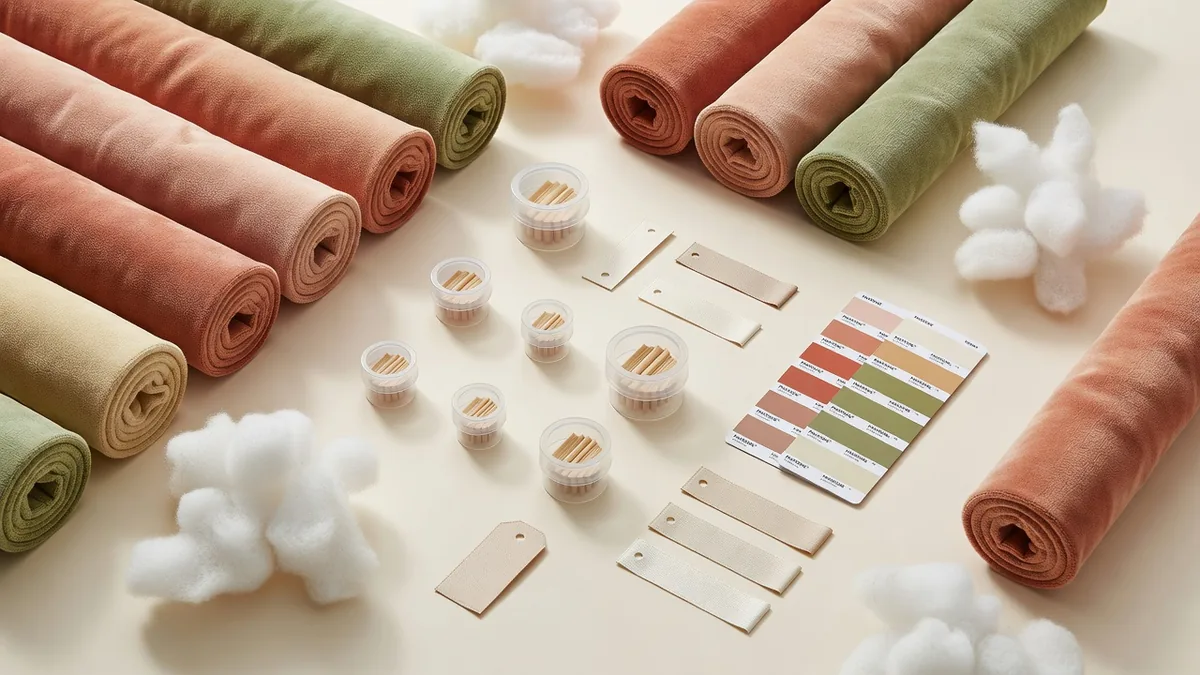
Vague briefs create samples that squeak on the desk and die after three compressions in a polybag. Send something a production manager can price without inventing your product.
Play and size- Dog size band (toy / small / medium / large) and play style: gentle cuddle, moderate fetch, light tug, or “will be destroyed eventually”
- Finished dimensions in mm; call out ears, limbs, and thin necks
- Target weight range; light units feel cheap and bruise easier in master cartons
- Fabric: short plush, crystal or crushed velvet, cotton blend, or approved alternate with GSM notes
- Fill type and weight band per size; recycled fill only with documents if you will market it
- Seam density and bar-tacks at stress points
- Eyes/nose: embroidered only vs plastic hardware (plastic = stricter small-parts thinking)
- Count per unit (1 / 2 / multi)
- Reed model preference or diameter class; single-tone vs dual-tone
- Pocket fully enclosed vs partially open; stitch type and SPI around the pocket
- Whether the insert is sewn into a fabric pouch before body close (preferred for most soft goods)
- Acceptable silent rate at AQL (define it; do not leave “most should squeak”)
- Logo: embroidery, woven label, heat transfer, hangtag only
- Polybag thickness and print; header card if retail hanging
- Master carton size, units per carton, barcode, multi-language warnings for US/EU
- Destination markets and test expectations (CPSIA-oriented chemical thinking for the US; REACH / EN71-related screens when EU retail treats the item like a toy)
A clean brief shortens sample rounds. Factories quote faster when they are not guessing reed size and pocket construction on the same line.
MOQ, tooling, and cost reality
Buyers who search bulk squeaky toys often hope for fashion-level MOQs. Squeaker programs carry floors on fabric dye lots, fill, reed purchase minimums, and packaging. Packaging MOQ can exceed toy MOQ if you need custom polybags and hangtags.
Order-of-magnitude bands you will hear (not a quote):
- Open stock / catalog squeaky body: lower MOQ per SKU if the plant already runs the shape and pocket method; color changes still cost
- Custom color on existing body: dye-lot minimums often drive the real floor more than unit count
- New pattern or multi-squeaker layout: higher first-run MOQ, sample fees, and longer lead time; lock the pre-production sample hard
- Full private label with custom pack: packaging MOQ (polybags, hangtags, cartons) can exceed the toy MOQ
If you need a lower entry for a test SKU, ask for stock squeaky bodies with your hangtag and a single custom colorway rather than a full sculpt. Private label programs often start that way, then move to exclusive silhouettes after sell-through is real. Full custom development paths are better scoped under ODM services once you know which pocket method survives your market’s dogs.
Do not treat a “300 pcs” email as a program if the fabric dye lot is 1,000 m you cannot use. Ask which constraint actually sets the floor: sewing line, dye house, or squeaker MOQ.
Sampling path that protects the bulk run
Treat sampling as product development, not a free gift box.
1. Material and reed board. Fabric swatches, fill sample, and the actual squeaker model you will lock—not a “similar” reed from the showroom drawer.
2. Soft sample. Hand-sewn or pilot-line unit for shape, color, and sound. Crush the unit 50+ times. Drop it. Stuff it in a polybag overnight and retest.
3. Pre-production sample (PPS). From bulk-intended materials, pocket method, and pack-out. This is the standard bulk must match.
4. Bulk PPS or golden sample. Seal one approved unit. Ship one with the QC file to your 3PL or warehouse team so returns can be judged against the same object.
Refuse “close enough” on pocket stitch length or reed brand swaps after PPS. Silent cartons are almost always a late substitute or a rushed close that skipped pocket bar-tacks.
Lead time varies by plant load and whether fabric is dyed to order. Build buffer for reed supply if you demand a non-stock dual-tone model. Rush fees do not fix a missing insert SKU.
QC that actually catches squeaker failures
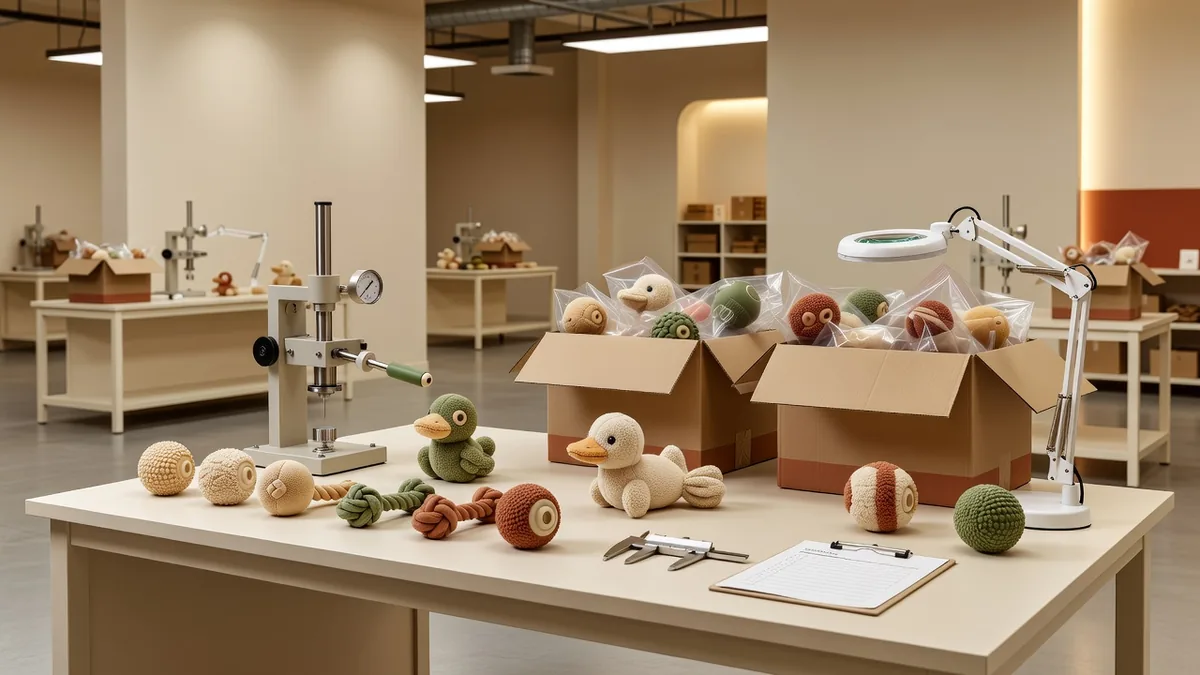
Desktop photos miss the failures that create marketplace returns. Write checks into the PO and the inspection checklist.
Incoming- Reed diameter and model match PPS
- Fabric lot vs approved swatch under consistent light
- Fill odor and clump after a short humidity hold if you claim washability
- Pocket closed before final turn-and-stuff (or equivalent for your construction)
- Bar-tack or double stitch at pocket ends
- No needle-left-in or metal detection process if your retailer requires it
- 100% or high-sample sound check: firm compression until squeak; record silent units
- Seam pull at ears, limbs, and pocket area
- Eye/nose security if hardware is used
- Dimension and weight band vs PPS
- Carton drop or compression proxy so reeds do not crush flat in the master
- Polybag seal and hangtag orientation for retail-ready units
- Carton marking, barcode scan, mixed-SKU count if assortment packing
For first bulk runs, ask for photo or short video of the sound-check station and carton packing. Keep a shared defect log so the same silent-pocket failure does not reappear on reorder.
Align lab timing with production so certificates are ready before cargo booking, not after the container is sealed. Do not invent cert names on hangtags; only print claims you can document.
Common mistakes brand buyers make
- Choosing on unit price without freight, testing, packaging, and expected silent returns
- Approving a desk sample with a different reed than bulk will use
- Skipping compression and polybag retest before PPS sign-off
- Vague artwork files that delay embroidery or hangtag print
- Ignoring packaging compliance (barcodes, warning labels, language for US/EU)
- Ordering six new shapes in one PO before any single body has sell-through data
- Accepting “factory standard AQL” without defining sound-check rules
Price shopping without a locked squeaker model is how you get three different tones across three cartons and a support inbox full of “toy doesn’t squeak” tickets.
How to shortlist a factory for bulk squeaky toys
Use the RFQ response itself as a filter.
- Do they name the squeaker supplier or only say “standard plastic squeaker”?
- Can they show a recent shipment of multi-squeaker or dual-tone product, not only silent plush?
- Will they accept your PPS as the only bulk reference and document material substitutions in writing?
- Can they pack mixed SKUs for wholesale without guessing carton counts?
- Is English project management available for sampling notes, or only order confirmation?
Visit or video-tour the pocket sewing and sound-check area if the PO is large. Soft-toy showrooms look the same; process control does not.
When you are ready to move from open stock to branded assortments, map packaging and logo scope under private label, and use ODM services if you need factory-led silhouette options instead of your own pattern library. Keep the commercial path honest so MOQ and timeline match the work.
For catalog-adjacent acoustic soft goods, compare a Latex Squeak Toy against plush-and-reed bodies such as the Dice Plush before you freeze pocket and reed specs.
Next step
If you have a target shape, size band, squeaker count, and first-order quantity, send a brief rather than a mood board alone. Include market (US/EU/other), preferred materials, and whether you need hangtag-ready retail pack or bulk polybag for repack.
Start from the products catalog for catalog-adjacent bodies, or outline a custom path through ODM and private label. For sampling timelines, carton marks, and a written quote, contact the WagNab team with your RFQ checklist above.
Bulk squeaky toys reward buyers who treat the reed and the pocket as product, not as an afterthought stuffed into a cute shell. Lock the insert, define silent-rate rules, and make bulk match the PPS—then the category becomes a reliable core SKU instead of a returns problem.
Ready to Build Your Next Collection?
From material selection to final delivery, we help brands bring pet toys to market.