China Pet Factory Small Business Friendly: MOQ, Sampling & QC That Fit First Orders

If you type China pet factory small business friendly into a search bar, you are usually not looking for a 40-foot container of identical SKUs. You want a plant that will answer email, quote a first carton you can actually fund, and still run QC that keeps returns from eating your margin.
This guide is for brand starters, Amazon and marketplace sellers, indie retail buyers, and distributors who are past Alibaba screenshots but not yet running six-figure annual POs. It covers what “small business friendly” means in factory English, how MOQ really works on pet toys, sampling that does not burn cash, QC you can run without a full compliance department, and when open stock beats a full private-label build.
Browse live assortment direction on the products catalog before you freeze a silhouette. Catalog-adjacent bodies often clear a lower first MOQ than a brand-new mold, which is where most small-order programs start.
What “small business friendly” means on a China pet factory floor
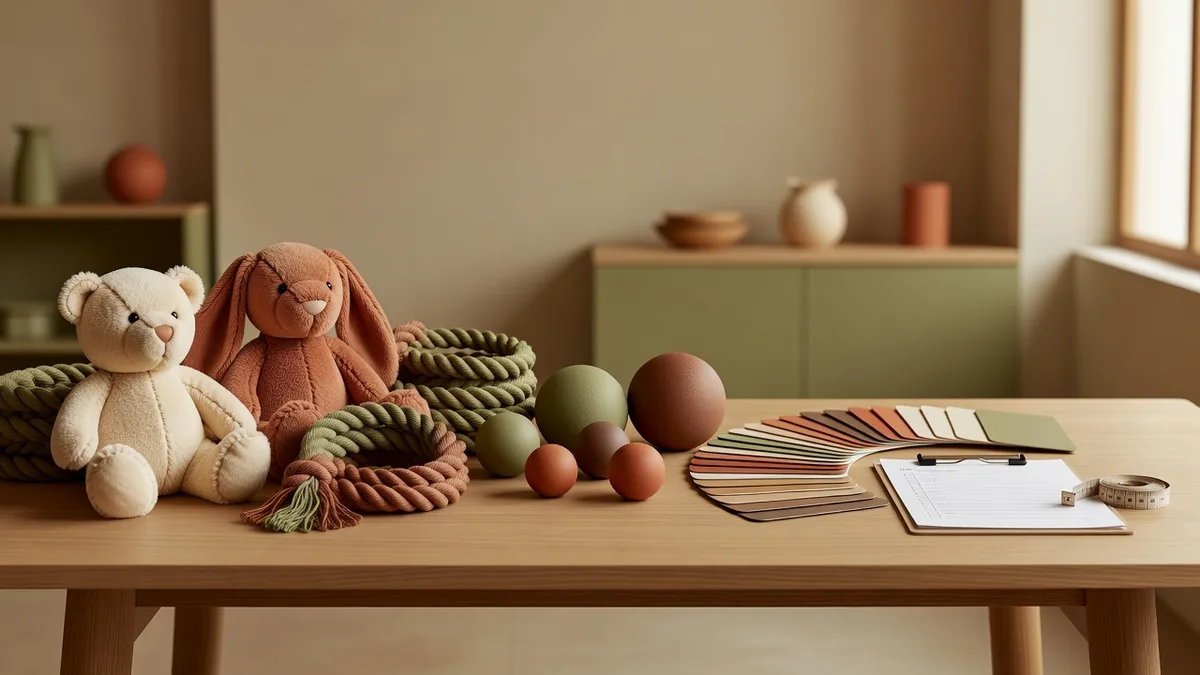
In export English, “small business friendly” is a commercial posture, not a certificate. It usually means the plant will:
- Quote mixed-SKU or color-split cartons instead of forcing 3,000 units of one Pantone
- Run a paid sample and a small trial PO without treating you like a tourist
- Name a real English-speaking contact who owns your file, not a rotating inbox
- Put construction (fabric GSM, fill weight, rope diameter, resin grade) in writing before deposit
It does not mean free samples forever, zero deposit, or “any MOQ you want.” Plants still have dye-lot minimums, sewing-line changeover costs, and packing labor. Friendly means they will explain those floors instead of ghosting you after the quote.
Three seller types still show up under the same keyword:
Export plants with a wholesale / light private-label line. Real sewing or molding capacity. They already ship open stock and logo-on-catalog work for overseas buyers. Ask what share of monthly output is your construction family. If you are 2% of the floor, you need written QC and a locked golden sample more than you need a discount speech. Factory-owned trading desks. Same ownership group as a plant, English-facing. Fine if the factory name appears on the invoice and you can visit or video-audit. Risk rises when the “factory” changes every PO. Pure trading companies. Fast photos, soft MOQ talk, weak control over the line. Useful for first samples if you own third-party inspection and never ship bulk from an unnamed plant.Ask early: who is on the commercial invoice? Who owns the pattern or mold? Who pays for rework if AQL fails? Vague answers usually mean the “friendly” price will move once packaging and QC show up.
Who this keyword is really for
Traffic on China pet factory small business friendly tends to fall into a few buckets:
- Marketplace sellers testing three to five shapes before ads spend scales
- New brands that need a “good” tier under a future premium private-label ladder
- Boutique retailers filling a small pet aisle without importer-scale cartons
- Distributors refreshing rope, squeaker, or plush basics with color splits instead of mono-SKU masters
If your only product is heavy embroidery, exclusive character IP, and medical-grade claims, this keyword is the wrong lane. Small-order economics live on shared tooling, simpler construction, and carton density. Treat them as a cash-flow and risk problem, not as “same premium SKU, tiny MOQ.”
Wholesale-minded buyers care about mixed packing and master-carton marks. Say that up front. A plant that only ships mono-SKU masters will frustrate an eight-shape assortment with two price points.
Spec checklist before you RFQ (so the quote is real)
Vague briefs create samples that look fine on a desk and fail after three weeks on a hook. Send something a production manager can price without inventing your product.
Play and size- Target pet (dog / cat), size band, play style (gentle tug, light chew, fetch, soft solo play)
- Supervised-play expectation and small-parts risk for the markets you sell into
- Body type: plush, rope, TPR/rubber, hybrid
- Fabric or compound grade (not only “soft plush”); fill type and target weight band if plush
- Squeaker model if used; pocket sewing rules
- Color count: mono vs multi; Pantone or physical swatch preferred over “as photo”
- Hangtag, woven label, printed polybag, UPC/EAN placement
- Inner pack count, master carton dimensions, mixed-SKU rules
- Warning copy for destination language (US and EU retail habits differ)
- Destination markets and which chemical screens you expect (CPSIA-oriented thinking for US; REACH / toy-adjacent screens when retail treats the SKU as a toy)
- No fabricated lab certificates — ask what tests the plant already runs on similar export lots and plan lab timing with production
A clean brief shortens sample rounds. Factories quote faster when they are not guessing fill weight and seam allowance.
MOQ reality for small first orders
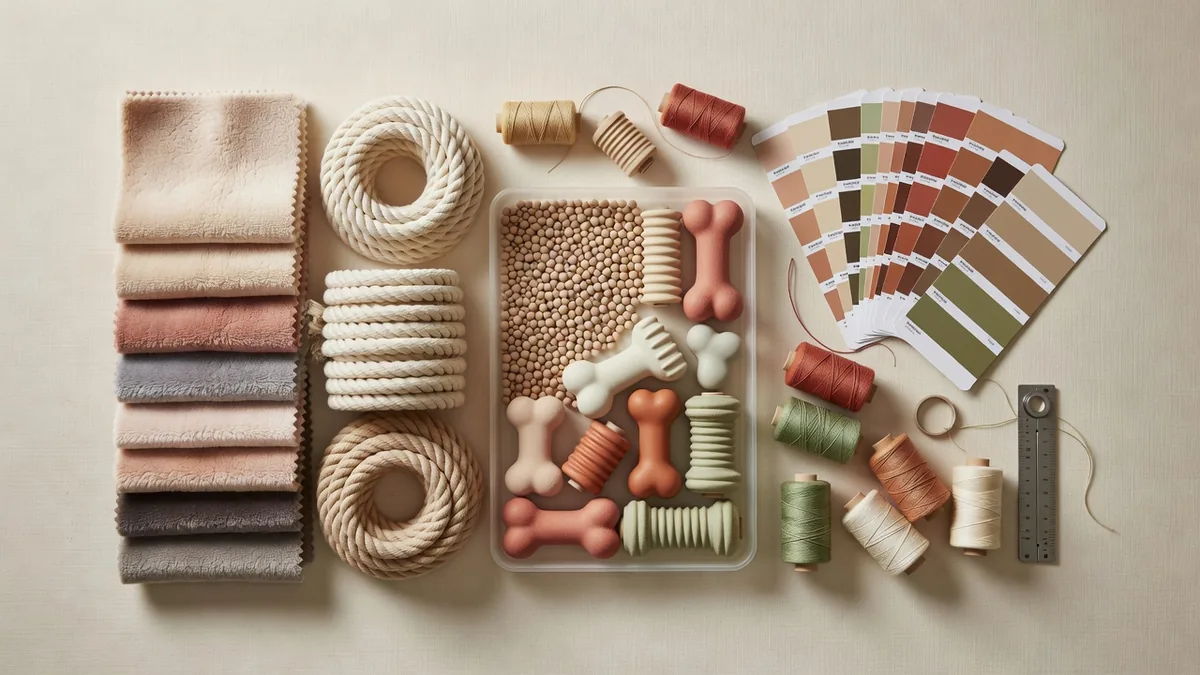
MOQ is not one number. It is a stack of floors: material purchase, colorway setup, sewing changeover, and carton efficiency. Patterns many small buyers see on current export quotes (directional, not a price list):
- Open-stock plush or rope: first MOQ often in the low hundreds per SKU or mixed color, depending on plant and season
- Custom color or logo on an open-stock body: MOQ steps up with print or embroidery setup
- Full new pattern + custom pack: not a “small business discount” program; price like development
If a quote is far below other plants for the same construction, ask which of fill weight, fabric GSM, squeaker grade, or QC hours was cut. The answer is usually one of those four.
Freight, duties, testing, and packaging can erase a “winning” FOB. Run a simple landed-cost sheet before you celebrate unit price. A slightly higher FOB with denser cartons and fewer returns often wins the year for a small brand.
When cash is tight, prefer fewer SKUs with clean construction over eight half-finished colorways. Reorders teach the plant your defect language; one locked winner beats a scattered first PO.
Sampling and trial POs that protect cash
Do not treat the first sample as a photo prop. Treat it as a production proxy.
1. Confirm construction matches the quote. Weigh plush samples. Measure rope diameter and knot count. Check TPR hardness and edge finish.
2. Run a simple abuse test. Compress squeakers 50–100 times. Tug seams. Check color rub with a damp cloth if you sell wet-play claims (only claim what you test).
3. Approve packaging with the product. Hangtag alignment, barcode scan, polybag thickness, and master-carton marks fail as often as the toy itself on bulk lines.
4. Lock a golden sample. Photograph and label it. Reorders should match that unit, not the last chat screenshot.
Trial orders on a China pet factory small business friendly program should still carry a written AQL mindset, even if the carton count is small. Plants learn which defects you will reject. Silent squeakers, underfilled plush, and frayed rope ends are the usual early failures.
Budget for sample freight both ways plus lab tests if your market needs them. Cheap samples that skip compliance often become expensive chargebacks later.
QC without a big-brand audit team
You do not need a 40-page vendor manual on day one. You do need gates the factory can photograph and you can reject against.
Incoming materials. Color, odor, fabric weight or resin lot notes against the approved sample. In-line checks. Seam strength, squeaker pocket integrity, rope join security, eye/nose attachment where used. Pre-shipment. Random pull against your AQL; pack-out photos of polybags, hangtags, and carton marks; barcode scan on a few units.Ask for photo or short video evidence at each gate on the first production run. Keep a shared issue log so the same defect does not reappear on reorder. For US or EU retail destinations, align lab test timing with production so certificates are ready before cargo booking, not after the container is sealed.
Third-party inspection (QIMA, SGS, and peers) is still worth it when the PO is large relative to your cash, or when the factory is new to you. Small-business friendly plants usually cooperate; plants that refuse any third-party check are telling you something.
Open stock vs private label vs full ODM for small budgets
Not every first order needs full private label from day one.
Open stock / near-stock. Fastest path to a usable unit cost. You pick existing shapes, pick colors, add hangtag or polybag branding if the plant allows. Good for testing price points before you invest in exclusive tooling. Private label on shared bodies. Your logo, colors, and packaging on catalog-adjacent construction. Still workable at small MOQ if you avoid heavy embroidery and custom molds. Common for Amazon multi-packs and regional brands. Full ODM / new pattern. Makes sense when you need exclusive IP. It is rarely the cheapest first carton. If that is your path, read how ODM development sequences sampling and tooling so you do not pay development prices and still expect promo-bin economics.Many programs start open stock, lock the winners, then migrate packaging and color control under a private-label brief. That ladder keeps cash free while you learn real demand.
Communication cadence that protects launch dates
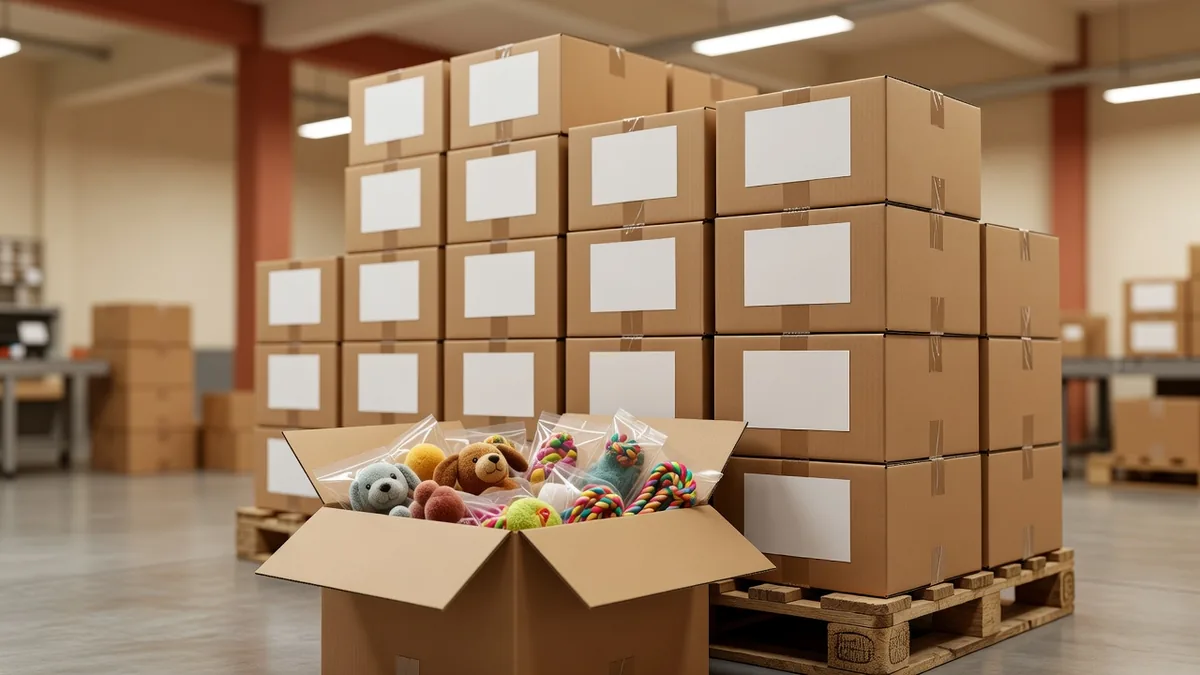
Factory silence is a risk signal. Agree on a weekly production update once the PO is live: materials in, sewing or molding progress, QC photos, and ship window. For seasonal peaks (Q4 gifting, spring outdoor play), lock capacity earlier than you think you need — pet retail calendars compress factory bandwidth.
Share one decision owner on the buyer side. Multiple conflicting revision requests from different stakeholders are the fastest way to miss a ship date on a small PO that the plant can deprioritize without drama.
Payment terms for first-time small orders are often 30% deposit / 70% before shipment (or against shipping docs). Letters of credit are uncommon at trial size. Put Incoterms, lead time, and revision rules in the PO — verbal “we’ll work it out” is how disputes start.
Common mistakes small buyers make
- Choosing on unit price without freight, testing, and packaging
- Skipping sample durability tests with real pets or simple lab proxies
- Vague artwork files that delay logo application
- Ignoring packaging compliance (barcodes, warning labels, language)
- Changing materials mid-sample without updating the cost sheet
- Assuming the factory will “just know” your market’s labeling rules
- Ordering bulk before the pre-production sample is signed off
- Spreading a tiny budget across too many SKUs instead of locking two winners
Most post-shipment fights on pet toys come from unwritten assumptions, not from bad intent. Write the assumptions down.
How WagNab works with small-order programs
WagNab manufactures pet toys for brand and wholesale partners — from material selection through sampling and bulk. Review live options on our products catalog, OEM/ODM process on ODM services, and brand-building path via private label.
Teams evaluating a China pet factory small business friendly partner usually start with a short brief: target pet, material preference, logo method, first-order quantity, and destination market. From there we map a realistic sample plan and flag compliance needs before tooling money is spent.
Decision checklist before you place the PO
Use this before you wire a deposit:
- Spec sheet signed and versioned
- Sample approved in writing (photos + physical if needed)
- QC plan and AQL agreed, even on a trial carton
- Packaging dieline approved
- Incoterms, payment terms, and lead time written into the PO
- Contingency for one revision cycle without killing the launch window
If any item is still verbal-only, pause. Small first orders fail most often on communication and pack-out, not on “China manufacturing” as a category.
When you are ready to talk MOQ and sampling timelines, contact WagNab with your brief and target markets. Share the target SKU construction and we will respond with sampling options and a realistic first-order window.
Ready to Build Your Next Collection?
From material selection to final delivery, we help brands bring pet toys to market.