Classic Chew Durable Dog Toys Buyer Guide: Assortment, MOQ, Materials

If you are building a durable aisle—or a private-label chew program that has to survive aggressive mouths—this classic chew durable dog toys buyer guide is the practical map. Classic Chew is WagNab’s hard-goods series: TPR molded shapes, PA/fiber bones, cotton and nylon rope, and a few water-soak SKUs for warm-weather resets. It sits next to Studio Warmth (plush/gift) and Smart Play (enrichment) on the products catalog, but the buying logic is different. Soft toys sell on character and feel. Chew toys sell on material honesty, size ladders, and how cleanly you can explain returns to a retailer.
Start with a real hero SKU, not a mood board. The Coated Bone Chew (PA + PU coating, S/M/L, MOQ 120) is a featured bone that buyers use as a “firm chew” anchor. Pair it early with something fetch-friendly like the Woven Foam Ball so the first carton already covers chew and short active play. That is how this line earns shelf space: one series, several mouth behaviors.
Who this series is for (and who should skip it)
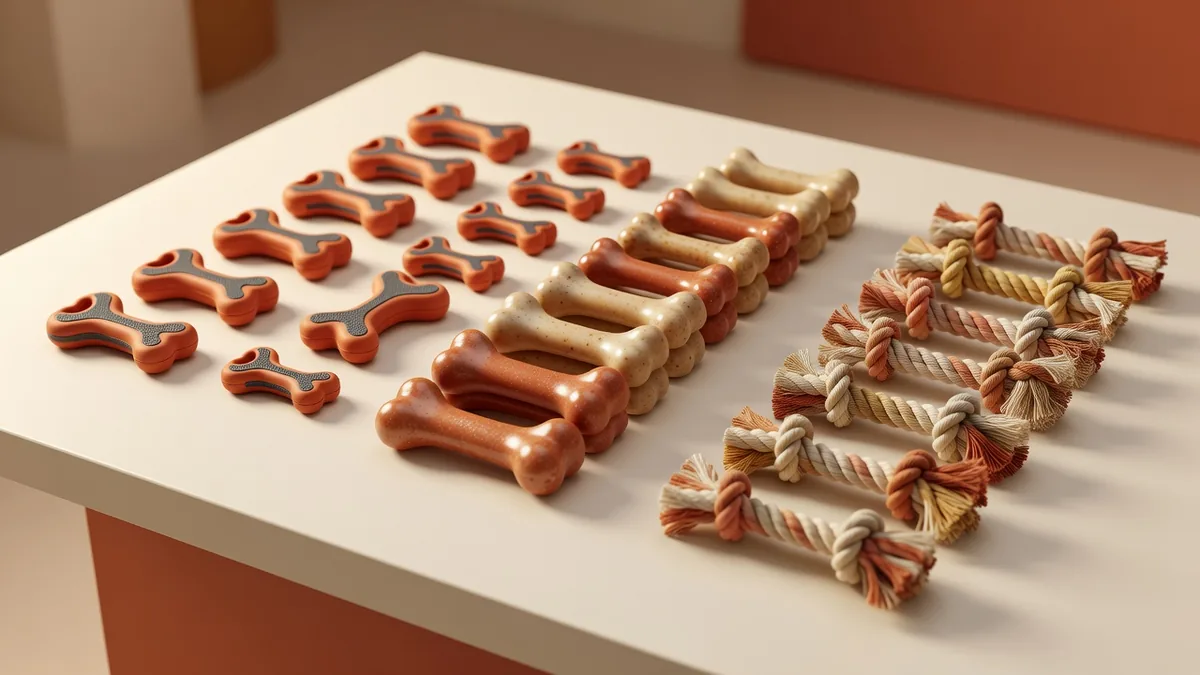
Classic Chew fits buyers who already know their channel’s chew complaints. Typical fits:
- Pet specialty and farm/feed stores that need a durable bay that does not look like a random Alibaba dump
- Amazon / marketplace brands that want open-stock shapes with clear size photos and stable reorder SKUs
- Private-label programs that need colorways and hangtags without reinventing every mold
- Distributors building mixed cartons for mid-size dogs where plush alone returns too often
Skip (or mix lightly) if your brand story is 100% lifestyle gift and soft décor. Aggressive chewers will destroy a crystal plush faster than you can restock. In that case, keep Studio Warmth for the gift wall and put Classic Chew on the “working toys” bay—or bundle a rope/TPR add-on in the same PO so the assortment tells the truth.
Puppy-first channels should lead with softer rope and mini TPR (for example Puppy Rope Knot and Key Chew Mini), then graduate size and hardness as the dog grows. Do not put a large PA bone in a “gentle puppy” kit just because it photographs well.
How to shelf TPR, bone, and rope without confusing buyers
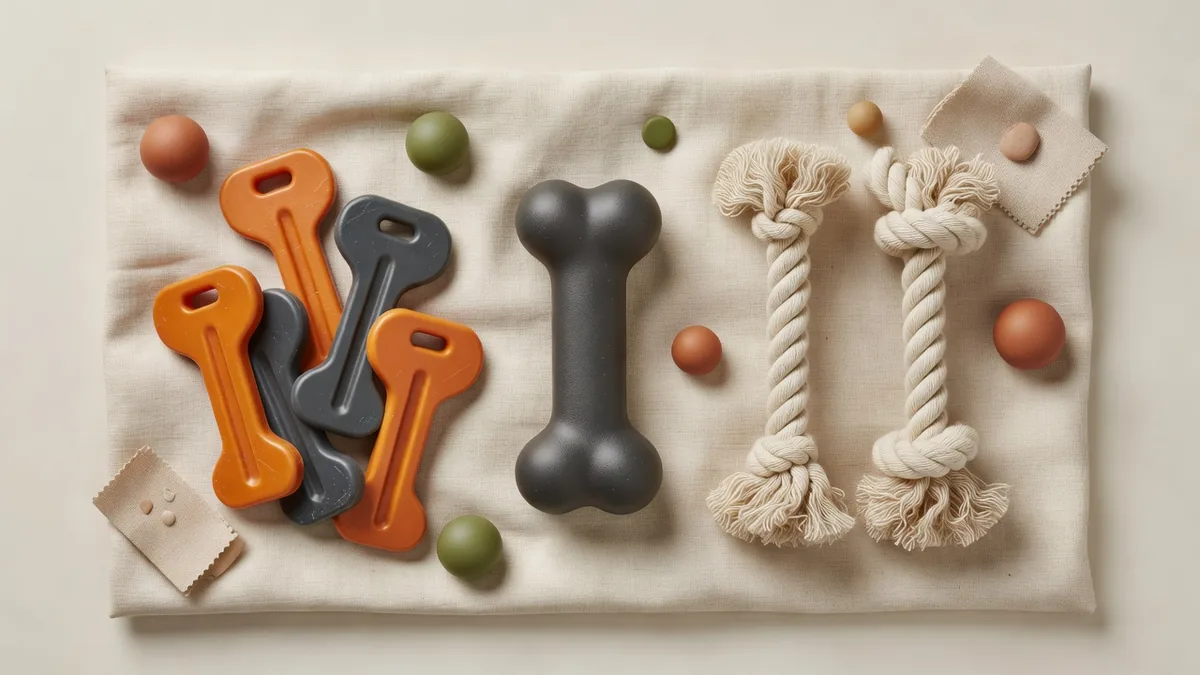
Retail and wholesale buyers get returns when three material families sit on one peg with no story. Use a simple three-lane layout inside Classic Chew:
Lane 1 — Molded TPR. Springy, wipe-friendly, good for key/bone/ball silhouettes. The Key Chew family (Key Chew Long, Flat, Mini, Slim, Wide) shares a visual language so you can sell a size ladder without five unrelated shapes. Woven Foam Ball adds a foam core for grab-and-carry play. Talk Shore and wall thickness on the RFQ; do not invent lab numbers in marketing copy—confirm hardness windows on quote. Lane 2 — Bone / PA·fiber. Firmer mouth feel, clearer “durable bone” merchandising. Coated Bone Chew (featured) and neighbors like Fiber Bone Chew or Real Bone Chew give you coated, fiber, and PA+TPR variants. Lock sizes (S/M/L where listed) before you print packaging. Size mismatch is a top customer-service ticket on bones. Lane 3 — Rope / nylon. Grip, tug, dental texture story. Nylon Rope Stick and puppy rope SKUs fill the textile bay. Rope lint and end-lock QC matter more than pretty dye lots—write pull and fray checks into the tech pack if you sell into return-sensitive channels.Optional fourth pocket for summer: soak / water-fill shapes (Soak Water Bone and siblings). Treat them as seasonal depth, not the spine of the series.
Link the series page when you brief buyers: /collections/classic-chew. Collection pages set assortment context; PDP pages carry the specs you quote against.
Specs and MOQ buyers should lock before the first carton
Every Classic Chew SKU in the live catalog uses MOQ 120 as the default trial band. That is a workable first carton for specialty and mid-size marketplace sellers; confirm color splits and mixed-SKU rules on the quote—do not assume 120 means twelve colors of twelve units without asking.
What to put in the brief:
- Pet size band and chew style (gentle mouthing vs unsupervised crate chew)
- Material family (TPR / PA bone / rope / soak) and preferred hardness feel in plain language
- Size SKUs from the PDP (e.g. Coated Bone S 13.3×4.6×2.8 cm through L 19.5×6.6×4 cm)—copy from the product page, do not freehand
- Color lock method (Pantone, physical swatch, or masterbatch code)
- Brand path: open stock vs private label hangtags and cartons vs full ODM silhouette changes
- Destination market and compliance intent (US children’s-product path vs pet-only claim—state which you want planned)
Price bands on the site are directional; FOB, testing, and packaging change the landed number. Ask for a quote rather than treating a catalog range as a PO line.
Sampling and QC that match durable toys
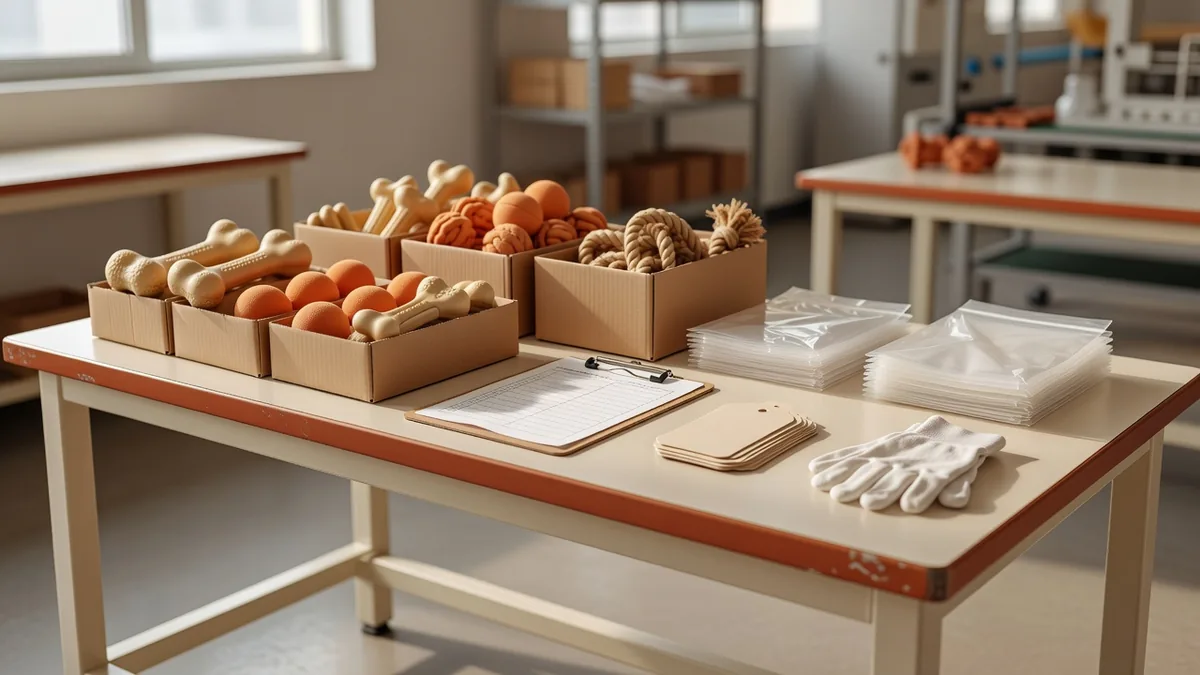
Durable toys fail in predictable ways: flash that cuts gums, rope ends that unravel, coatings that peel, foam cores that separate, size labels that do not match the carton. A usable sample path looks like this:
1. Brief + material recommendation (a few business days)
2. First sample for play feel and silhouette
3. Revision sample if hardness, size, or color moves
4. Pre-production (golden) sample locked to the PO
5. Bulk with in-line and final inspection photos
For TPR, check flash, knit lines, and Shore consistency across cavities. For coated bones, check coating adhesion and size sorting. For rope, check end locks and dye bleed. Keep an issue log so reorder does not reintroduce the same defect.
Do not invent tensile or lab pass rates in the RFQ. Ask for methods, sample photos, and—when your market requires it—which third-party labs the plant already uses on similar lots. Compliance detail for US/EU paths lives in our standards and certification guides; this series article stays on assortment and buy decisions.
Private label and ODM boundaries on Classic Chew
Most first programs stay on open-stock molds with custom color, woven label, hangtag, and master carton. That keeps tooling cost down and MOQ honest. Move to ODM when you need a new silhouette, dual-hardness cavities, or a branded join (for example a unique rope-to-TPR lock). Use private label when the same PO must carry retail packaging, barcodes, and multi-language warnings—not only bare FOB toys.
Colorway families work well on Key Chew and bone ladders: share one mold family, split Pantones, keep one tech pack version. Changing resin mid-run without updating the golden sample is how you get “same SKU, different mouth feel” returns.
Packing, returns language, and retail readiness
Chew aisles generate more “this broke in a week” tickets than plush gift walls. Write the honest use case on the hangtag: supervised play, size match to dog weight band, replace when cracked or frayed. Marketplace listing photos should match the shipped unit’s size and color—pack-out mismatch drives chargebacks.
Master cartons: confirm cube, mixed-size rules, and whether you want size-sorted inners. For FBA or distributor programs, photo the packed carton once and keep that image as the golden pack-out reference.
When you are ready to price a trial carton, browse the live Classic Chew PDPs, then contact WagNab with pet size band, preferred material lane, first-order quantity, and destination market. A short brief beats a vague “send me durable toys” email every time.
FAQ for Classic Chew buyers
Is Classic Chew only for aggressive chewers?No. The series covers puppy rope and mini TPR as well as firmer bones. Match lane and size to the dog; do not sell one hardness to every mouth.
Can I mix Classic Chew with Studio Warmth in one PO?Yes, and many specialty buyers do—gift wall plus durable bay. Keep the merchandising story separate so customers know which toys are soft décor and which are working chews.
What is a realistic first order?Catalog MOQ on these SKUs is 120 units per item by default. Confirm color splits and whether mixed SKUs share a carton. Ask on quote; do not invent a lower MOQ in your own pitch deck.
Do you publish Shore hardness or lab certificates on the blog?No. Hardness windows and certificates are confirmed against the PO and lab path for your market. Blog copy stays free of fabricated pass numbers.
Next step
Use this classic chew durable dog toys buyer guide as the assortment checklist: pick a material lane, lock a size ladder, start with MOQ-honest open stock, then decide whether private label packaging or ODM tooling is worth the next PO. Explore the Classic Chew collection, compare Coated Bone Chew, Woven Foam Ball, and Key Chew Long, and send your brief via contact when you want sampling dates and a written quote.
Ready to Build Your Next Collection?
From material selection to final delivery, we help brands bring pet toys to market.