Cotton Rope Animal Dog Toys OEM China: Specs, MOQ, QC Guide

If you are shopping cotton rope animal dog toys OEM China, you are usually not hunting a plain knotted rope. You want animal shapes — bears, foxes, elephants, or hybrid rope-plus-plush “friends” — that look good in a listing, chew without shredding into loose fibers in week one, and still feel soft enough for comfort play.
This guide is for brand buyers, Amazon and marketplace sellers, and wholesale distributors who need rope animal programs that match sample photos, survive moderate tug, and ship on a calendar you can plan around. It covers what the category really is, which specs to put in an RFQ, MOQ bands, QC that catches rope failures early, and when stock bodies beat full custom tooling.
What cotton rope animal toys actually are in export programs
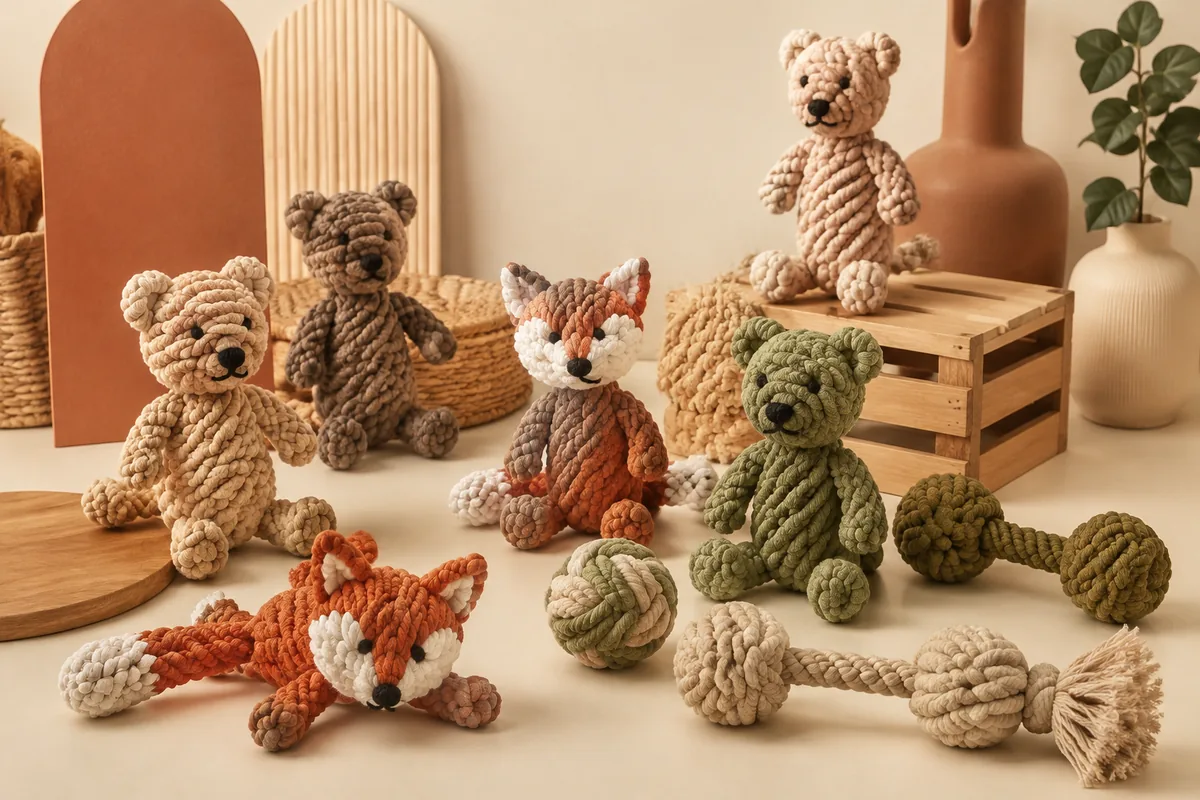
Rope animal toys sit between pure rope chews and soft companion plush. The silhouette sells the click: a bear head on a twisted body, a fox with rope limbs, or a full-body animal built from colored cotton rope. Construction mixes twisted or braided cotton rope, optional plush or felt accents, embroidery, and finishing knots. It is not molded rubber and it is not pure short-pile plush.
On export platforms you will see three seller types under the same keyword:
Trading desks with a rope workshop partner. Fast English and broad catalogs. Weak control once the PO leaves the showroom. Fine for simple open stock if you inspect hard. General textile or kids-toy plants that also braid rope animals. Capacity is real. Pet stress points (ears, limbs, neck joins, knot cores) get nursery-toy stitch density unless you write load zones into the tech pack. Pet soft-goods lines that already run rope animals and rope-plus-plush hybrids. Narrower range, more honest about color MOQ, better at locking knot ends and reinforcing limb joins. Most mid-size brands land here after one return spike on a cute sample that frayed in transit photos.Ask what share of output is pet rope vs human craft or kids macrame. If the answer is vague, assume you are the training run.
For SKU direction before you lock a body, browse the products catalog. Rope animal velocity often shows up next to classic rope bones and knotted rings; treat those as reference construction methods, not a promise that every plant can match twist density or dye lot.
Who buys rope animal OEM (and what each needs)
Serious traffic on this keyword usually falls into a few buckets:
- DTC brands that want a soft chew-and-comfort SKU next to hard TPR
- Marketplace sellers refreshing private-label animal characters without rubber tooling
- Retail buyers building gift sets or “friends” multi-packs
- Distributors filling independent pet-shop assortments with mixed animal silhouettes
If your main product is solid TPR for power chewers, you are not in a cotton rope factory decision. Rope animals are soft goods plus toy-safety thinking. Treat them that way in the RFQ.
Wholesale buyers also care about carton efficiency and mixed-SKU packing more than brand buyers do. Say that up front. A plant that only thinks in monochrome 1,000-piece cartons will frustrate assortment programs.
Spec checklist before you send an RFQ
Vague briefs create samples you cannot sell. Send something a production manager can quote without inventing your product.
Play and size- Dog size band (toy / small / medium) and play style: gentle comfort, moderate tug, or “photo prop until destroyed”
- Finished length and weight in cm / g (rope animals look large on camera and shrink in the hand if under-twisted)
- Shape family: bear, fox, elephant, rabbit, dinosaur, hybrid rope body with plush head (confirm any IP is cleared)
- Rope fiber: 100% cotton, cotton blend, or recycled-content claims with documents
- Rope construction: 3-strand twist vs multi-braid; strand count and diameter
- Accent materials: short plush ears, felt eyes, embroidered faces only vs plastic parts
- Dye: reactive or pigment; colorfastness expectations after light wash or saliva exposure
- Knot type and how ends are locked (glue, sew-through, heat seal — each has failure modes)
- Seam or join density at head-to-body, limbs, and tail
- Eyes and nose: embroidery preferred for small-parts risk; plastic needs locking washers and stricter drop tests
- Lint and loose fiber limits after a defined rub or tug protocol
- Woven label, printed hangtag, hang-loop color
- Polybag print, carton marks, barcode, multi-language warnings for US / EU
- Destination markets and test expectations (commonly CPSIA-oriented chemical thinking for the US; REACH / EN71-related screens when EU retail treats the item like a toy)
A clean brief shortens sample rounds. Factories quote faster when they are not guessing rope diameter or embroidery stitch count.
MOQ reality for cotton rope animal dog toys OEM China
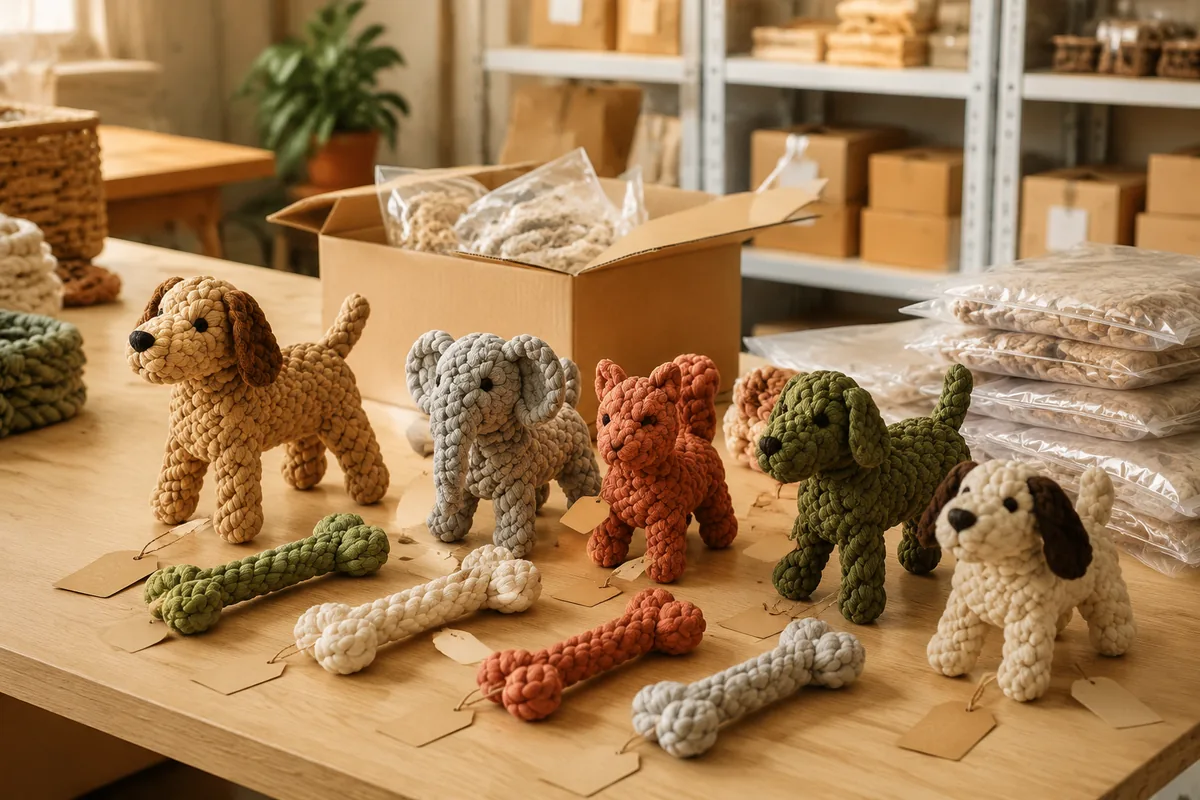
Buyers who search cotton rope animal dog toys OEM China often hope for fashion-level MOQs. Rope has its own cost structure: braid capacity, dye lots, and hand-finishing time.
Typical bands you will hear (order of magnitude, not a quote):
- Open stock / catalog animal: lower MOQ per SKU if the plant already runs the body; color changes still cost
- Custom color on existing body: dye-lot minimums often drive the real floor more than unit count
- New silhouette or hybrid plush-rope: higher first-run MOQ and sample fees; lock the pre-production sample hard
- Full private label with custom pack: packaging MOQ (polybags, hangtags, cartons) can exceed toy MOQ
If you need a lower entry for a test SKU, ask for stock bodies with your hangtag and a single custom colorway rather than a full sculpt. For brand-building paths, private label programs often start that way, then move to exclusive silhouettes after sell-through data is real.
Mixed cartons help assortment brands. Confirm whether the factory charges for mixed packing or only ships mono-SKU masters. That single line item decides whether a gift multi-pack is viable.
QC that catches rope failures early
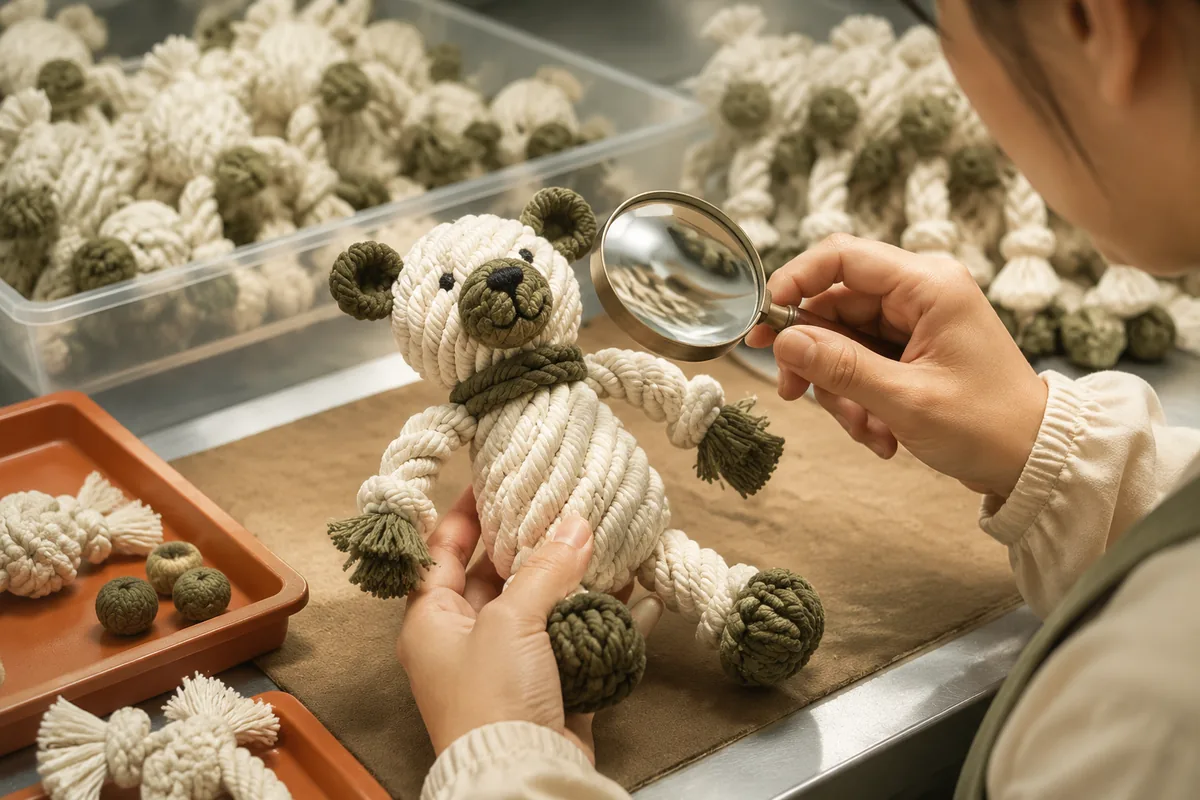
Soft rope fails differently from rubber. Your inspection sheet should not be a rubber checklist with the logo swapped.
Focus on:
- Loose strand ends at knots and limb tips after a fixed number of moderate tugs
- Head and limb join strength under axial pull
- Color transfer to a damp white cloth after a short wet rub
- Embroidery security so facial features do not peel or leave sharp thread ends
- Fill migration if the design includes a plush head or belly
- Odor and residue from dye or sizing chemicals after airing
On first production runs, ask for photo or video evidence of each QC gate before goods leave the plant. Keep a shared issue log so the same fray pattern does not reappear on reorder. Document a simple AQL plan even on small trial orders — it trains the line early.
For programs destined for US or EU retail, align lab test timing with production so certificates are ready before cargo booking, not after the container is sealed. Do not invent cert numbers in marketing copy; only claim what the lab report covers.
Sampling timeline and cost reality
A typical first engagement looks like this:
1. Brief review and material recommendation (2–5 business days)
2. Prototype or first sample (7–18 days depending on braid queue and embroidery)
3. Buyer feedback and revision sample (optional second round)
4. Pre-production sample locked against the PO
5. Bulk production with in-line and final inspection
Budget for freight both ways on samples, plus lab tests if your market requires them. Cheap samples that skip dye-lot confirmation often become expensive shade mismatches later.
If you are comparing OEM vs ODM paths, read how WagNab structures development on ODM services. ODM with an existing animal body is usually faster than pure OEM from a sketch when your launch window is tight.
Packaging, labeling, and retail readiness
Wholesale and brand buyers lose margin when packaging is an afterthought. Align early on:
- Inner polybag thickness and print (rope sheds fiber; bag quality matters)
- Hangtags, care labels, barcode placement
- Master carton dimensions and drop-test expectations
- Multi-language warning copy for target markets
If you sell on marketplaces, confirm that pack-out photos match the shipped unit. Inconsistent packaging is a top reason for customer returns on pet toys. Rope animals also photograph as larger than they pack; set listing dimensions from the sealed unit, not from a fluffed sample photo.
Common mistakes brand buyers make
- Choosing on unit price without freight, testing, and packaging
- Skipping sample durability tests (real dogs or a fixed tug protocol)
- Vague artwork files that delay embroidery placement
- Ignoring packaging compliance (barcodes, warning labels, language)
- Changing rope diameter mid-sample without updating the cost sheet
- Assuming the factory will “just know” your market’s labeling rules
- Ordering bulk before the pre-production sample is signed off
- Treating rope animals like pure plush and missing knot-end failure modes
How WagNab supports rope animal and hybrid programs
WagNab works with brand and wholesale partners on pet soft goods — material selection, sampling, and bulk. Review live options on the products catalog, process detail on ODM services, and brand packaging paths via private label.
Teams evaluating cotton rope animal dog toys OEM China usually start with a short brief: target dog size, animal silhouette, rope vs hybrid preference, logo method, first-order quantity, and destination market. From there we map a realistic sample plan and flag compliance needs before money is spent on exclusive bodies.
Decision framework before you place the PO
Use this checklist before committing:
- Signed pre-production sample with rope diameter, dye lot, and embroidery map frozen
- Written AQL and defect photos for fray, join failure, and color bleed
- Packaging and labeling mock approved for the destination market
- Lab plan timed so reports land before booking
- Reorder lead time and dye-lot policy in writing
- One decision owner on the buyer side for revisions
Reference rope constructions already on the floor—Cotton Rope animal forms and the Jungle Rope Set—so diameter, join, and dye-lot notes match something a line can actually run.
When those pieces are locked, send the brief and ask for a production calendar with material-in and ship-window dates. Ready to talk MOQ and sampling? Contact WagNab with your target silhouette, size band, and first-order quantity.
Cotton rope animal programs reward clear specs more than they reward bargain hunting. Factories that already braid pet rope will tell you early when a limb join will not survive moderate tug. Listen to that, fix the tech pack, and only then scale the PO.
Ready to Build Your Next Collection?
From material selection to final delivery, we help brands bring pet toys to market.