Custom Logo Dog Toys Low MOQ: How to Brand a First Run

Custom logo dog toys low MOQ is what buyers type when they want a name on the toy and a first carton that will not sit for a year. The phrase gets quoted as if it were one number. A logo on a stock TPR chew and a logo stitched into a new plush are different jobs, with different setup costs.
This note is for brand owners, marketplace sellers, and small distributors placing a first branded dog-toy order. Figures below come from live catalog records: MOQ, size, material, weight. If a field is not on the record, treat it as confirm-on-quote. Nothing here is a lab certificate or a retail price.
Pick a body that already runs, then decide how the mark goes on. The products catalog is the shortlist. New geometry belongs on an ODM path. Hangtags, cartons, and retail copy belong with private label, so the pack is not invented the week the goods ship.
Two open-stock pieces show the floor most first logo programs actually hit. Key Chew Long for everyday TPR chew is recorded at MOQ 120, TPR, 21×2.5×2.5 cm, about 33 g, mix colorway on file, Classic Chew. Nylon Rope Stick for braided chew and tug is also MOQ 120, PA and nylon, 17×4.5 cm, about 200 g, blue on file. Same order floor. Very different place to put a logo.
What custom logo dog toys low MOQ actually covers
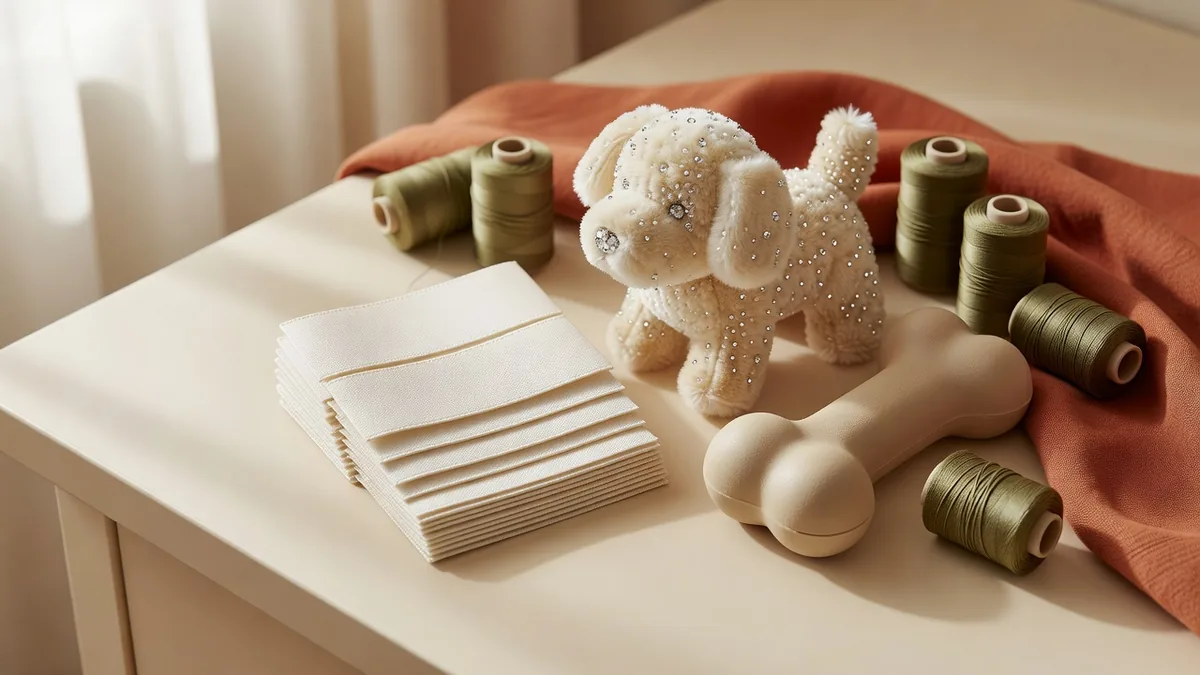
Buyers hear "custom logo" and picture the name molded into the toy. Factories hear a decoration method, a minimum for that method, and whether the body already exists.
On this catalog, active SKUs cluster by recorded MOQ:
| Recorded MOQ | Active SKUs | What a first logo order usually is |
|---|---|---|
| 120 | 136 | Stock chew, rope, fleece, and many TPR bodies in colors already on file |
| 240 | 17 | Tighter color or construction lots |
| 360 | 13 | Heavier plush and crystal-plush bodies |
| 480 | 6 | Selected linen, corn-texture, and crystal-plush shapes |
| 60 / 144 / 300 | 1 each | Outliers, not a plan |
120 is the floor on most trial SKUs, including the two above. It is a production floor for an existing body. It is not a promise that a new mold, a new dye lot, or a four-color embroidered face opens at 120.
The method moves the floor more than the slogan on the tag.
- Hangtag, woven neck label, or printed polybag on a stock body. This is the usual low-MOQ logo job. The toy stays as catalogued. Art sits on the tag or bag. Key Chew Long fits: one size, light unit weight, mix color already recorded, so you are not opening a new compound color just to put a name on a tag.
- Heat transfer on a flat TPR face. Sometimes possible. Placement, ink, and chew wear are confirm-on-quote. A transfer that looks fine on a sample bag may not survive a power chewer. Say that in the listing if you go this way.
- Embroidery on plush. Real, and slower. Digitizing, thread color, and stitch density each have minimums. A crystal-plush body can sit at a 120-piece sewing floor and still miss your date if the embroidery shop wants more.
- Deboss, or a mold with your mark in the tool. Not a low-MOQ program. Tooling and a color minimum sit on top of the toy quantity. If you need the logo in the rubber, say so in the first email so nobody quotes you a hangtag price.
If the quote only says "logo included," send it back. You need the method, the placement, and whether 120 counts the toy, the tag, or both.
Which bodies take a logo without a new tool
Nylon Rope Stick will not take a molded logo. The practical marks are a wrap label, a hangtag through the braid, or a printed band. Blue is the color on file. A second braid color is a new lot, and it can erase the "low" in low MOQ even when the toy count stays at 120. Woven Foam Ball for fetch and chew assortment is also MOQ 120, TPR and foam, S 7 cm and L 7.5 cm, about 102 g and 119 g, blue on file, featured in Classic Chew. Two sizes means two lines unless the factory confirms a mixed-size carton. A logo on the ball itself is unlikely to be clean. A header card or polybag is the honest first branding. It is a reasonable test body, and a bad body for a "logo in the rubber" story.Plush is where people overbuy. Monster Series for crystal-plush play is recorded at MOQ 120 too: crystal plush, 25×15×7, about 120 g, colors on file green, pink, blue, and yellow, dogs and cats. That 120 is the sewing floor on a body that already exists. It is not 120 of a fully embroidered custom character. If you want a wordmark stitched on the belly, ask whether the stitch minimum matches 120 or jumps. Also confirm whether 120 is per color or per style before you promise a four-color set.
Use chew and rope when you need a name in market this quarter. Use plush when the logo is the product story and you can wait on a strike-off. One chew plus one rope in the same first PO is normal. A new embroidered plush in that same PO usually is not, because the date then depends on the stitch file, not the toy.
How to brief the logo so bulk matches the sample
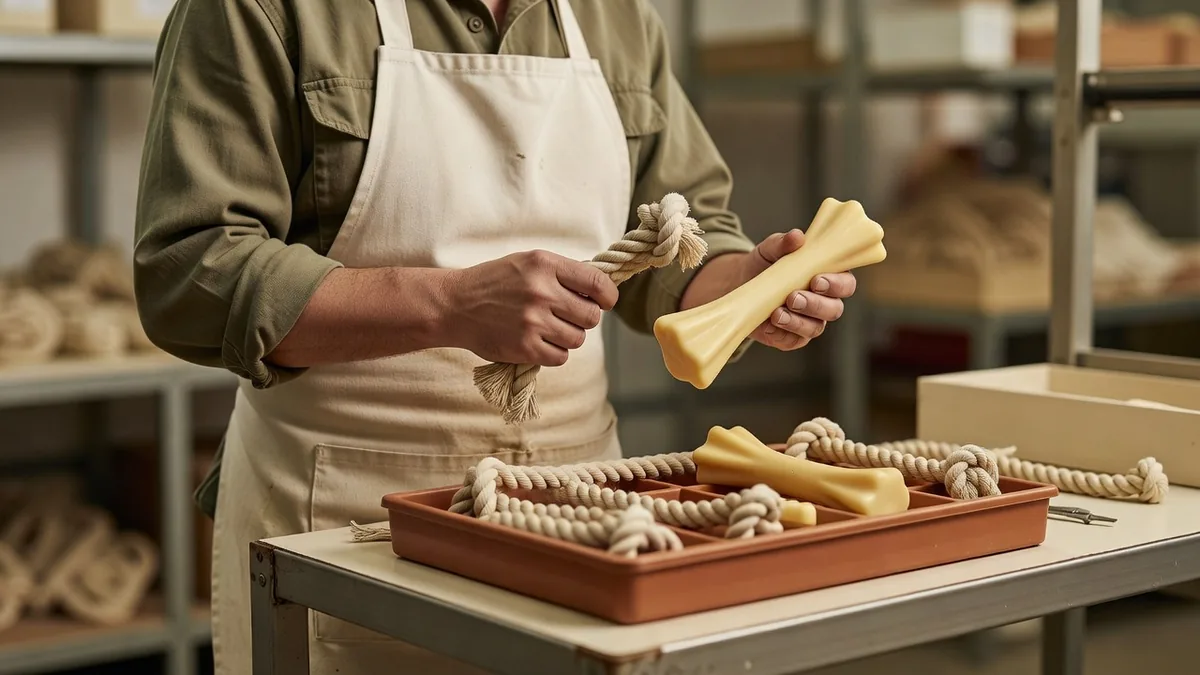
Most logo disputes are file disputes. The factory applied what you sent. You remembered a different version.
Send this with the RFQ, not after the sample ships:
- Vector art (AI, EPS, or SVG) plus a PNG for placement. Outline the fonts. Name the Pantone or thread color, or accept the closest stock thread in writing.
- Tag size, print area, and which face. For a woven label, give the width and whether it is sewn into a seam or looped. "On the hangtag" is not a placement.
- One method on the first order: hangtag, woven label, heat transfer, bag print, or embroidery. A second method is a second setup.
- SKU, size, and color on file. Key Chew Long is the 21×2.5×2.5 cm mix TPR piece. Nylon Rope Stick is the 17×4.5 cm blue braid. "Similar to" will not match the photo.
- Quantity per SKU and per color. 120 of one color is a different PO from 120 split four ways.
- What "approved" means: the pre-production unit with your logo. Bulk should match that unit, not the first rough prototype.
Keep the approved piece. If you change the logo after it, you are opening a new setup, and the ship date should move on purpose. Mix on Key Chew Long means the recorded colorway is already a mix. It does not mean three new TPR colors fit inside the same 120.
The catalog number is the toy. A logo sample is a paid unit used to check placement and whether the tag survives a tug. It counts toward 120 only if the quote says so. A custom printed carton or full-color header card can also have a plate minimum above 120. If the toy is 120 and the printed bag is 500, you do not have a 120-piece program unless you accept a plain bag and a hangtag. Put that plain-bag option in the RFQ.
Key Chew Long at about 33 g packs nothing like Nylon Rope Stick at about 200 g. Ask for pieces per inner pack and per master carton. A short run that fills half a carton gets padded, or it ships with wasted cube. Either way the landed cost moves.
Write the reorder into the first PO: who owns the artwork, whether the plate or digitizing fee is once or every order, and whether a reorder inside a stated window keeps the same floor. If every order is a new setup, 120 stops being low the second time.
A brand mark is not a compliance mark. These product records do not list certifications. Do not print "certified" because someone called the material common. If the channel needs a test, name it and budget lab pieces from the same lot. Those pieces are often extra, not inside the 120.
What to check before the carton leaves
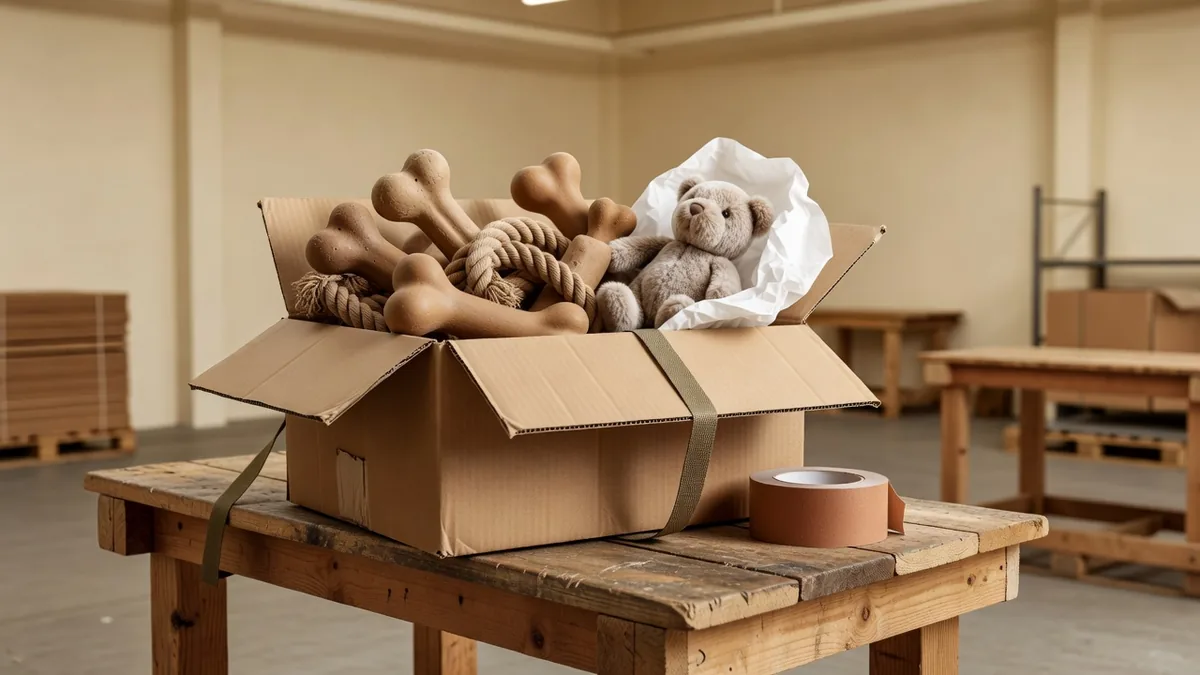
Small orders get sloppy logos more often than sloppy toys. The line has run the body before. The tag is new.
On the pre-production piece, and again on a small pull from bulk, look at placement against the approved sample, thread or ink against the swatch you signed, and whether the tag string, seam label, or transfer actually holds when pulled. Size and weight still count. A pretty tag on a Key Chew Long that is no longer 21×2.5×2.5 cm is a spec miss. If you ordered one color, the carton should not arrive as a surprise mix.
Photo the approved unit on a plain background with a ruler and send that photo with the PO. Agree what a logo fail means: rework the tag, or reject the toy. Retagging is often cheaper than remolding. Restitching a bad embroidery usually is not.
Stay on stock bodies and hangtags while you are testing a name or a channel. Leave that path when the mark has to be in the material, when a full-color box with legal text sets its own quantity, or when you already know the SKU sells and a season buy is cheaper than three setups at 120. Monster Series can carry a woven label at the recorded floor. It can also tempt you into a custom face that no longer matches that floor.
A one-page RFQ is enough: SKU, size, material, color on file, logo method, vector, quantity per color, plain bag or printed pack, and the sample date versus the bulk date. Leave a gap between those dates. If the reply has no method, ask again. If the quantity jumps far above the catalog floor, the usual reasons are a new color, a printed carton, embroidery, or a shape that is not the SKU you named. Those reasons are fair. They should be written down, not folded into one unit price.
If you have the SKU, the logo file, and a quantity per color, contact Wagnab. We will answer against the body you named, including when the logo method pushes the order above the catalog floor.
Ready to Build Your Next Collection?
From material selection to final delivery, we help brands bring pet toys to market.