Custom Plush Pet Toys OEM Manufacturer China | Specs & MOQ

Most people who type custom plush pet toys OEM manufacturer China into Google already have a product idea. What they lack is a manufacturing path that does not fall apart between the pretty sample and the second reorder.
This piece is for brand owners, Amazon sellers, and wholesale buyers who want OEM plush—characters, animal sets, cat-and-dog soft lines—made in China with specs you can reorder against. Not a catalog thumbnail hunt. Not a race to the lowest unit price.
If you are still choosing between plush, silicone, and rope for the first drop, scan the live range on our products catalog first, then come back to the OEM checklist below.
What OEM really means for plush pet toys
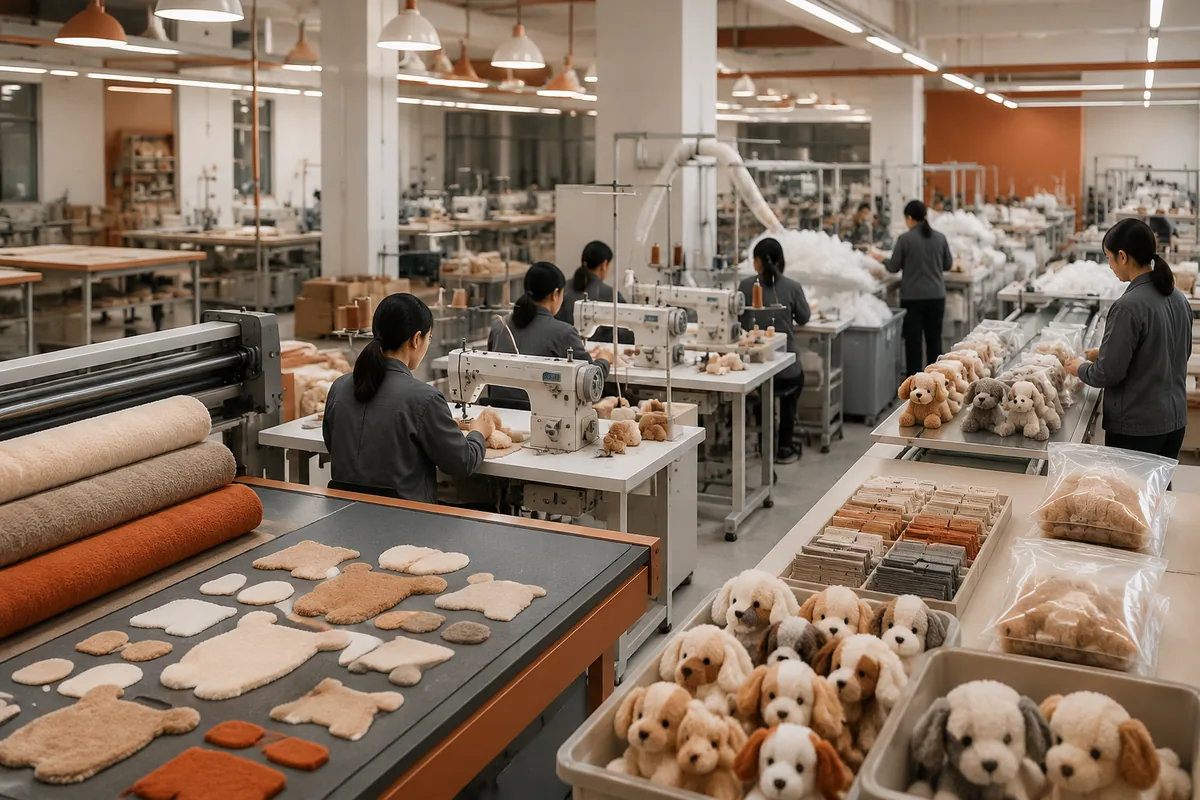
OEM here means you own (or control) the design brief: shape, fabric, fill, logo method, packaging. The factory builds to your drawing and bill of materials. That is different from grabbing a ready body and only swapping a hangtag.
A few practical distinctions buyers mix up:
- OEM: your construction (or a co-developed one locked under your brand). Factory runs your BOM and workmanship standard.
- ODM: factory or partner proposes designs from their development library; you brand and tweak. Faster when you do not need a unique silhouette. See how that path works on ODM services.
- Private label on existing tools: colorway, embroidery, label, pack-out on a proven body. Lower risk for a first season. Details under private label.
- Wholesale catalog: you buy what already exists, often multi-brand, with limited exclusivity.
For plush, “OEM” is also a sewing and textile problem, not a rubber molding problem. Fabric lots, embroidery digitizing, fill weight, and seam density drive both cost and failure modes. A factory that is excellent at TPR squeakers may still be weak at long-pile face embroidery.
Ask early what share of their output is pet plush versus kids fashion plush. Pet toys take more abuse. Kids-fashion sewing habits do not automatically survive a medium dog.
Who this keyword is really for
Buyers who land on this search usually fall into a few buckets:
- DTC brands launching a mascot or breed series (dog, cat, or both)
- Marketplace sellers refreshing a soft-toy set without inventing every body from zero
- Retailers who need seasonal animal packs (holiday, back-to-school, gift sets)
- Brands that already sell hard chew SKUs and need a softer companion line
Cat plush is not “dog plush but smaller.” Cat buyers care about size for batting, sometimes catnip inserts, lighter fill, and faces that photograph well on Instagram. Dog buyers care more about seam reinforcement and whether plastic eyes are even allowed for the chew claim you put on the listing. Write the brief for the actual pet, not for a generic “plush toy.”
Spec brief that factories can quote without guessing
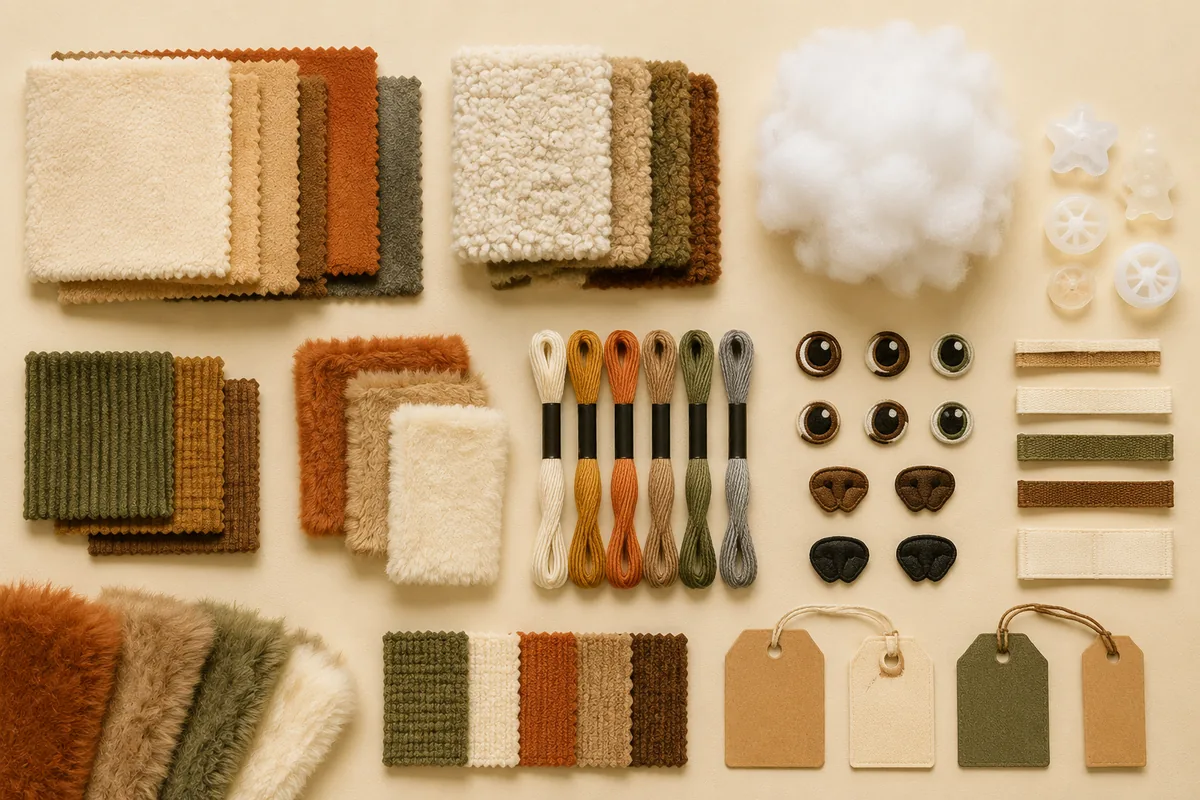
Vague RFQs create expensive samples. Send something a production manager can price.
Product and use- Pet type (dog, cat, both) and size band
- Play intensity: gentle / moderate / “will be destroyed eventually”
- Finished dimensions (body length, with limbs if relevant)
- Character type: animal, food shape, geometric, licensed-look only if IP is cleared
- Outer: short plush, long pile, sherpa, corduroy, canvas panels on high-wear zones
- GSM or pile height if reorders must match hand-feel
- Fill density range; recycled fill only if you can document the claim
- Inserts: squeaker count/type, crinkle, catnip pouch, rope limbs
- Seam type and stitch density at ears, legs, and neck
- Eyes/nose: embroidered only vs plastic with locking washers (plastic = stricter small-parts discipline)
- Wash path if you claim machine-washable
- Woven label, hangtag, heat-transfer or embroidery logo placement
- Polybag print, carton marks, barcode, multi-language warnings for US/EU
- Destination markets and test targets (US buyers often think in CPSIA / lead & phthalates terms; EU programs often need REACH and toy-adjacent mechanical/chemical screens when retail treats the item like a toy)
A complete brief shortens sample rounds. Factories quote faster when they are not inventing your product for you.
MOQ patterns for multi-SKU OEM plush
MOQ is usually driven by fabric dyeing, embroidery digitizing, and line changeover—not by how polished the sales deck looks.
What brand buyers often see:
- Private label on an existing body: a few hundred units per SKU can work if the factory already runs that body
- Fully custom shape + new fabric color: mid-hundreds to low thousands, complexity-dependent
- Animal set (3–6 characters, shared fabric family): negotiate shared dye lots and shared fill so per-SKU volume stays workable
- Cat + dog mixed cartons: agree pack ratio in the PO, not in a late WeChat message
Ask for MOQ per colorway, not only per style. “500 pcs” that secretly means 500 per color is a different P&L.
If your first season needs unique shapes, map development on ODM or private label before you lock a number that only works in a spreadsheet.
Sampling timeline and what you should pay for
A workable OEM sequence:
1. Brief + feasibility (2–5 business days): fabric suggestions, construction risks (e.g. long pile + dark dye + white embroidery)
2. Proto / first sample (often 10–20 days without heavy new tooling)
3. Revision sample: size, face embroidery, limb proportions, squeaker or catnip placement
4. Pre-production sample (PPS): golden unit locked to the PO
5. Bulk with in-line checks and final inspection
Budget sample freight both ways and at least one paid revision. Free samples that skip your real fabric and embroidery are not free—they push cost into a bad bulk run.
Photo samples help for early silhouette talk. Do not approve bulk on photos alone. Color, pile direction, and stitch quality need a physical unit under daylight, not only under factory ring lights.
QC that matters once dogs and cats are involved
Multi-stage QC is not optional if your brand name is on the label.
Incoming- Fabric shade-lot consistency
- Fill odor and clump checks
- Trims and labels correct before sewing
- Pattern accuracy
- Seam allowance consistency
- Embroidery registration (eyes not crooked, logos not tilted)
- Stuffing weight within tolerance so shelf units feel the same
- AQL visual for stains, loose threads, uneven fill
- Pull tests on sewn-on parts
- Squeaker function sample rate
- Spot wash test if you claim machine-washable
For first production, ask for photos or short video at cutting, mid-line, and packing. Keep a shared defect log. Reorders improve when the factory sees the same issue written down twice.
If US/EU retail is the goal, schedule lab tests so certificates exist before cargo booking. Testing after the container is sealed is how launches slip a month.
Branding, packaging, and multi-market labels
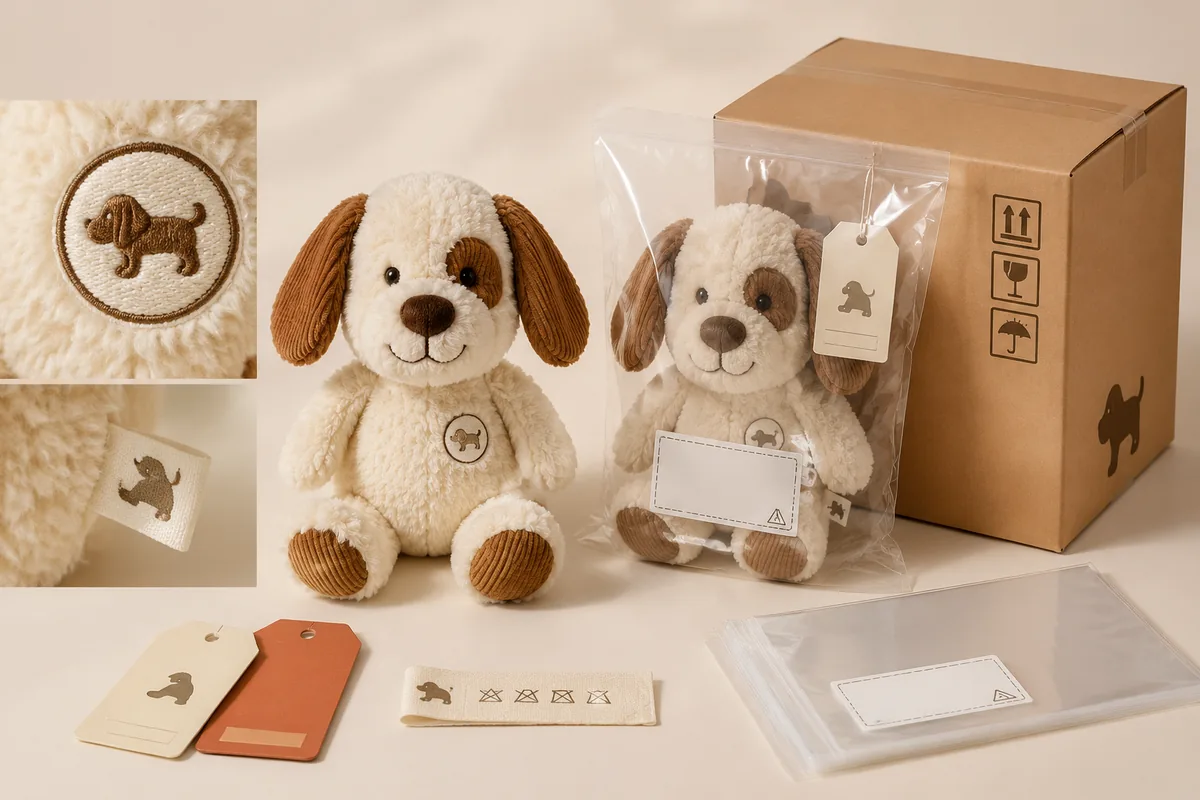
Plush branding is not one technique:
- Embroidery: durable, premium, higher setup for complex faces
- Heat transfer / screen: better for gradients; watch crack on flex points
- Woven labels: care + brand; place where pets cannot easily rip them into a choke risk
- Hangtags: retail story, not durability
Soft toys compress. That is good for freight and bad for first impression if you ship a vacuum brick that never recovers. Align on polybag thickness, whether units ship retail-ready, master carton size (dimensional weight), and how the unit should look 48 hours out of the bag.
Marketplace sellers: pack-out photos must match the unit the customer opens. Packaging mismatch kills reviews even when the plush is fine.
Communication and launch calendars
Once the PO is live, weekly updates should cover fabric in-house status, cutting/sewing progress, QC photos, and ship window. Silence is a risk signal.
Pet retail peaks (Q4 gifting, Valentine, seasonal gift sets) compress factory capacity. Embroidery digitizing and fabric dyeing do not care that your ad campaign is already live. Start sampling earlier than the hard-toy calendar in your head.
One decision owner on the buyer side saves more schedule than any production miracle. Conflicting notes from marketing, founder, and agency in the same week will miss the boat.
Mistakes that show up after the container leaves
- Choosing on unit price without freight, testing, packaging, and expected return rate
- Approving a soft, pretty sample never stress-tested at seams
- Putting plastic eyes on a product aimed at heavy chewers without a clear construction plan and listing language
- Changing fabric mid-sample without re-quoting
- Assuming the factory knows your market’s warning language and barcode rules
- Ordering bulk before PPS sign-off in writing
- Treating plush MOQ like rubber MOQ
- Writing one brief for “pet” when cat and dog failure modes differ
How WagNab works with OEM plush programs
WagNab works with brand and wholesale partners on pet toys from material selection through sampling and bulk. Compare soft lines against other constructions on products. For unique shapes and development, use ODM. For logo-led builds on proven constructions, use private label.
Teams searching for a custom plush pet toys OEM manufacturer China partner get better outcomes with a short, boring brief: pet type, play intensity, fabric hand-feel, logo method, first-order quantity, and destination market. From there you can map a sample plan and flag compliance work before anyone spends on bulk fabric.
When you are ready to talk MOQ, sampling windows, and multi-SKU animal sets, contact WagNab with that brief. We will respond with realistic lead times—not a one-size quote that ignores your market.
Decision checklist before you place the PO
- Spec sheet signed and versioned
- Sample approved in writing (photos + physical when possible)
- QC plan and AQL agreed
- Packaging dieline approved
- Incoterms, payment terms, and lead time written into the PO
- One revision cycle budgeted without killing the launch window
If any of those is still verbal-only, pause. Most post-shipment disputes on plush pet toys come from unwritten assumptions, not from bad intent.
Define the OEM brief, test the sample, lock QC, then scale. That order beats a cheaper unit that returns in six weeks.
OEM briefs convert faster with two live references: Elephant Plush for multi-animal sets and Dice Plush for hybrid soft-rope feel.
Related reading
Brand buyers comparing pure custom vs OEM should also read custom plush dog toys manufacturer China and the ODM checklist choosing an ODM partner.
Ready to Build Your Next Collection?
From material selection to final delivery, we help brands bring pet toys to market.