Dog Toy Testing: What Buyers Should Verify Before Bulk

This guide is written for people who source plush, rope, TPR, or hybrid dog toys from export factories. It covers in-house abuse tests you can run on samples, what to demand from the plant, packaging and labeling traps, and how to keep the golden sample honest through reorder. Browse construction families on the products catalog before you freeze a silhouette; catalog-adjacent bodies often clear testing faster than a brand-new mold.
What dog toy testing actually covers
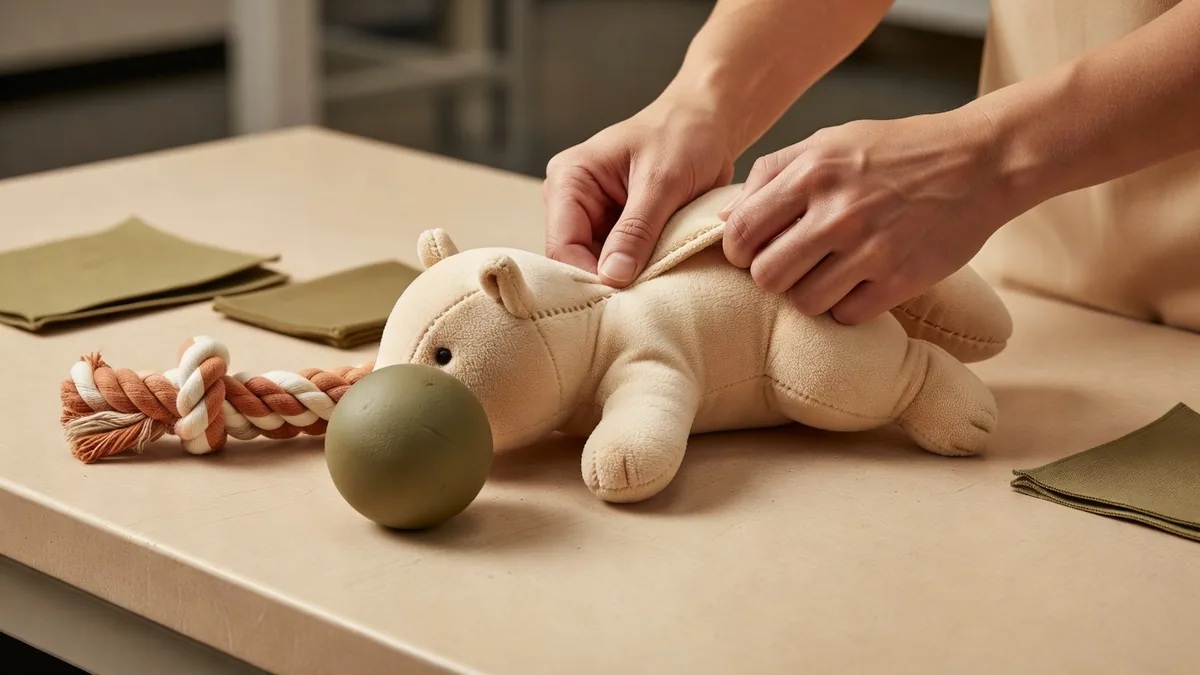
Buyers mix three different activities under one keyword:
1. Sample abuse tests you or a third party run before you approve a PPS
2. Factory QC gates (incoming materials, in-line checks, pre-shipment inspection)
3. Lab / regulatory screens for destination markets (chemical and physical screens when retail treats the SKU as a toy)
Mixing them up creates false confidence. A cute photo of a dog chewing a sample is not a pull-test protocol. A plant that says “we test everything” without a written method is quoting vibes, not process.
For chew-forward SKUs, tensile and tear behavior matter more than soft feel. For plush, seam strength, stuffing weight band, and eye/nose attachment dominate return reasons. For rope, join security and fiber shed drive complaints. Hybrid silicone + rope toys need joint pull checks that neither material alone would fail.
If you are still deciding construction, walk open-stock and light OEM options through ODM services and private label so the testing plan matches how custom the build really is.
Spec checklist before you ask for samples
Vague briefs create samples that pass a desk review and fail after three weeks on a hook. Send something a production manager can price and test against without inventing your product.
Play and risk- Target dog size band and play style (gentle tug, light chew, fetch, soft solo play)
- Supervised-play expectation and small-parts risk for the markets you sell into
- Whether the SKU will face unsupervised crate time (that changes chew expectations)
- Body type: plush, rope, TPR/rubber, hybrid
- Fabric or compound grade (not only “soft”); fill type and target weight band if plush
- Squeaker model if used; pocket sewing rules
- Color count and how color will be locked (Pantone, physical swatch, or dye lot note)
- Hangtag, woven label, printed polybag, UPC/EAN placement
- Inner pack count, master carton marks, mixed-SKU rules
- Warning copy language for destination markets
- Destination markets and which chemical screens you expect (CPSIA-oriented thinking for US; REACH / EN71-related screens when EU retail treats the item as a toy)
- Preferred lab if you already have one; otherwise ask what the plant already runs on similar export lots
Do not invent certificates in the brief. Ask what tests already exist on comparable constructions, then plan lab timing with production so paperwork is ready before cargo booking.
In-house sample tests that catch most early failures
You do not need a full lab for the first filter. You do need a repeatable method and a camera.
Plush- Weigh the sample against the quoted fill band
- Pull seams at stress points (limb joints, ear roots, squeaker pocket edges) with steady force; note where stitching opens
- Compress squeakers 50–100 times; silent or intermittent squeakers are a top Amazon complaint
- Check eye/nose attachment with a firm pull if used; loose hardware is a small-parts risk
- Measure diameter and knot count against the quote
- Tug joins hard; frayed ends and weak knots show up fast in returns
- Rub color with a damp cloth if you sell wet-play or outdoor use claims (only claim what you test)
- Check edge flash and odor against the approved sample
- Squeeze and bend for soft spots or thin walls
- Spot-check hardness feel vs the sales sample; lot drift is common when resin grade is not locked
- Pull the joint where soft and hard materials meet
- Confirm bonding method in writing (stitch, overmold, adhesive) so reorders match
Photograph failures. Send the plant a short defect language list: “silent squeaker,” “underfilled plush ±X g,” “seam open at ear root,” “rope join slip.” Plants learn faster from photos than from “quality should be better.”
Factory QC gates worth putting in the PO
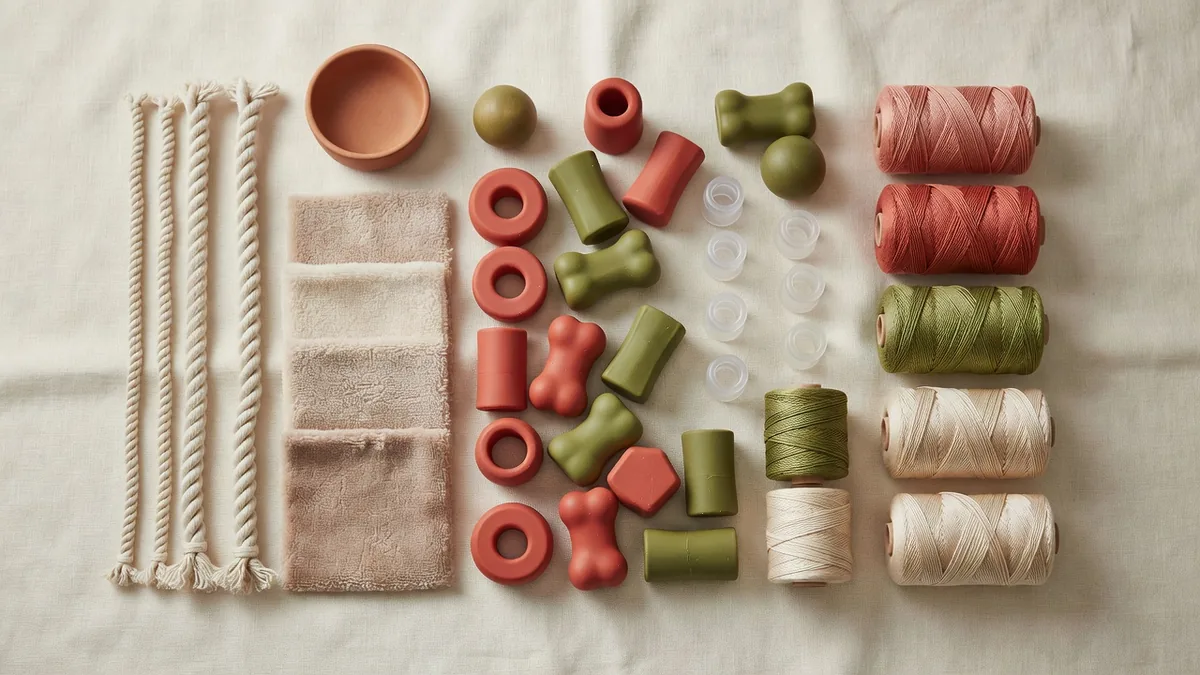
Insist on multi-stage QC even on a trial carton count. The habit trains the line before volume grows.
Incoming materials. Color, odor, fabric GSM or resin lot notes against the approved sample. Reject dye lots that do not match the golden sample before sewing starts. In-line checks. Seam strength, squeaker pocket integrity, rope join security, eye/nose attachment, flash trim on molded parts. Ask for a simple frequency (for example, first piece + hourly spot check on a sewing cell). Pre-shipment. Random pull against a written AQL; pack-out photos of polybags, hangtags, and carton marks; barcode scan on a few units. On first production runs, ask for photo or short video evidence of each gate before goods leave the plant.Document a shared issue log so the same defect does not reappear on reorder. Third-party inspection (QIMA, SGS, and peers) is still worth it when the PO is large relative to your cash, or when the factory is new to you. Plants that refuse any third-party check are telling you something about process control.
For dog toy testing programs destined for US or EU retail, align lab timing with production. Certificates after the container is sealed help nobody.
Lab timing, claims, and what not to fabricate
Regulatory screens are market- and claim-dependent. A soft plush sold as a supervised pet toy is not automatically a children's toy, but many retailers still ask for chemical screens and physical safety habits that look toy-adjacent.
Practical rules buyers use:
- Lock construction before you spend on full lab suites; a mid-sample material change can void the report
- Run chemical screens on materials that will touch mouths when chew claims are strong
- Keep claims honest: if you did not test unsupervised heavy chewers, do not write packaging copy that implies indestructible
- Never invent MOQ numbers, lab results, or certificate names in marketing copy or RFQs
If a supplier emails a certificate that does not match the construction, lot, or lab letterhead, treat it as a red flag and retest. WagNab's approach on OEM and private-label work is to flag compliance needs early in the brief, not after tooling money is spent — see ODM and private label for how development usually sequences.
Packaging and pack-out: the other half of “testing”
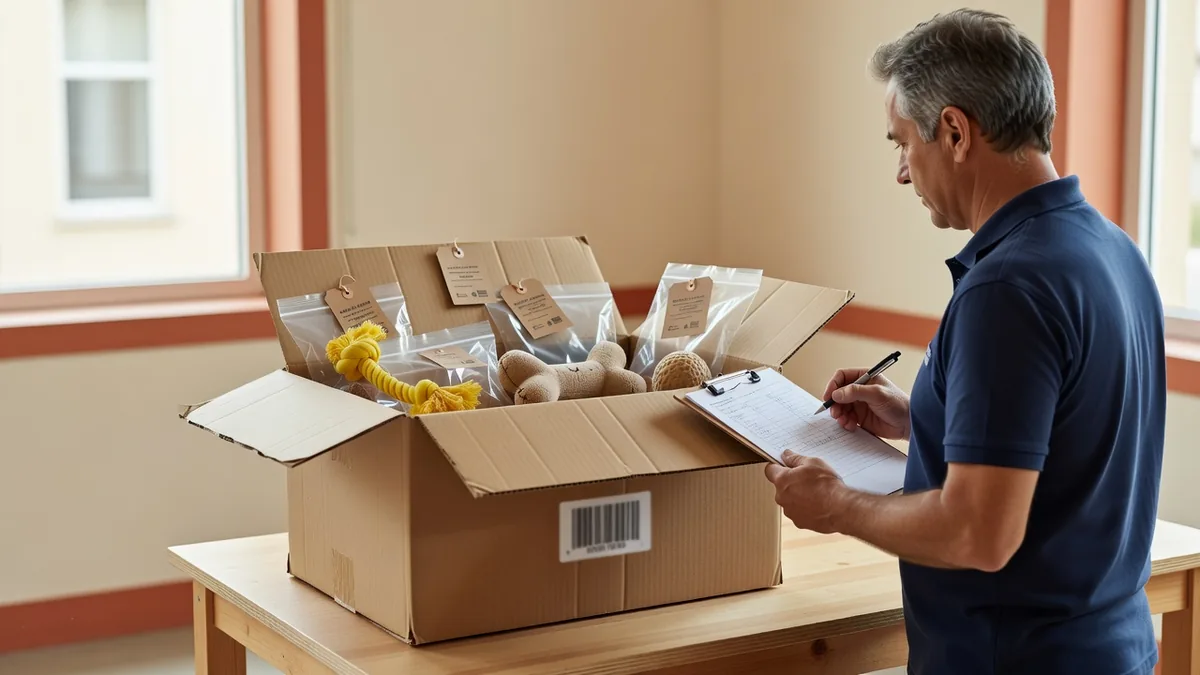
Many “failed” dog toy testing programs are packaging failures wearing a product costume. Hangtag alignment, barcode scan rates, polybag thickness, and master-carton drop marks fail as often as the toy itself on bulk lines.
Align early on:
- Inner polybag thickness and print
- Hangtags, care labels, barcode placement
- Master carton dimensions and drop-test expectations
- Multi-language warning copy for target markets
If you sell on marketplaces, confirm that pack-out photos match the shipped unit. Inconsistent packaging is a top reason for customer returns on pet toys. Approve packaging with the product, not as a separate afterthought PDF.
Common mistakes brand buyers make
- Choosing on unit price without freight, testing, and packaging in the landed-cost sheet
- Skipping sample durability tests and relying on a single desk photo
- Vague artwork files that delay logo application and push lab timing
- Changing materials mid-sample without updating the cost sheet and the test plan
- Assuming the factory will “just know” your market's labeling rules
- Ordering bulk before the pre-production sample is signed off in writing
- Treating AQL as optional on small trial orders (plants learn your defect language early or never)
Sampling timeline that keeps testing honest
A typical first engagement looks like this:
1. Brief review and material recommendation (a few business days)
2. Prototype or first sample (often 1–3 weeks depending on tooling)
3. Buyer abuse tests + feedback; optional revision sample
4. Pre-production sample locked against the PO (golden sample photographed and labeled)
5. Bulk with in-line and final inspection; lab work timed so certificates clear before booking
Budget for sample freight both ways plus lab fees when your market needs them. Cheap samples that skip compliance often become expensive chargebacks later.
Share one decision owner on the buyer side. Multiple conflicting revision requests from different stakeholders are the fastest way to miss a ship date and invalidate a half-finished test plan.
How WagNab fits dog toy testing into OEM and wholesale
WagNab manufactures pet toys for brand and wholesale partners — from material selection through sampling and bulk. Review live options on the products catalog, development flow on ODM services, and brand builds via private label.
Teams evaluating dog toy testing usually start with a short brief: target dog size, material preference, logo method, first-order quantity, and destination market. From there we map a realistic sample plan, write down the abuse checks that matter for that construction, and flag compliance needs before tooling money is spent.
Ready to talk sampling and QC on a specific SKU? Contact WagNab with your brief and target markets.
Decision checklist before you place the PO
Use this before you commit deposit:
- Spec sheet signed and versioned
- Sample abuse tests completed and photographed
- Golden / PPS approved in writing
- QC plan and AQL agreed (including silent-squeaker or joint-pull rules if relevant)
- Packaging dieline approved with the product
- Lab timing planned against production (when required)
- Incoterms, payment terms, and lead time written into the PO
- Contingency for one revision cycle without killing the launch window
If any item is still verbal-only, pause. Most post-shipment disputes on pet toys come from unwritten assumptions, not from bad intent.
When the checklist is locked, contact WagNab with the brief and we will respond with sampling options and a QC plan that matches the construction — not a generic “high quality” promise.
Ready to Build Your Next Collection?
From material selection to final delivery, we help brands bring pet toys to market.