Eco Corn Fiber Plush Dog Toys Manufacturer: Buyer Spec Guide

If you are searching for an eco corn fiber plush dog toys manufacturer, you are probably not shopping a generic plush catalog. You want a plant that can explain what “corn fiber” actually means on a hangtag, sew a character that survives real dog play, and document claims so a retailer or marketplace does not send your carton back for greenwashing.
This guide is for brand buyers, private-label teams, and wholesale distributors who source soft goods from China. It covers material definitions buyers should insist on, how factories build corn-texture plush, sampling and MOQ reality, QC that matters for stuffed toys, and how to write an RFQ that gets a usable quote instead of a marketing paragraph.
What “corn fiber” means on a factory floor
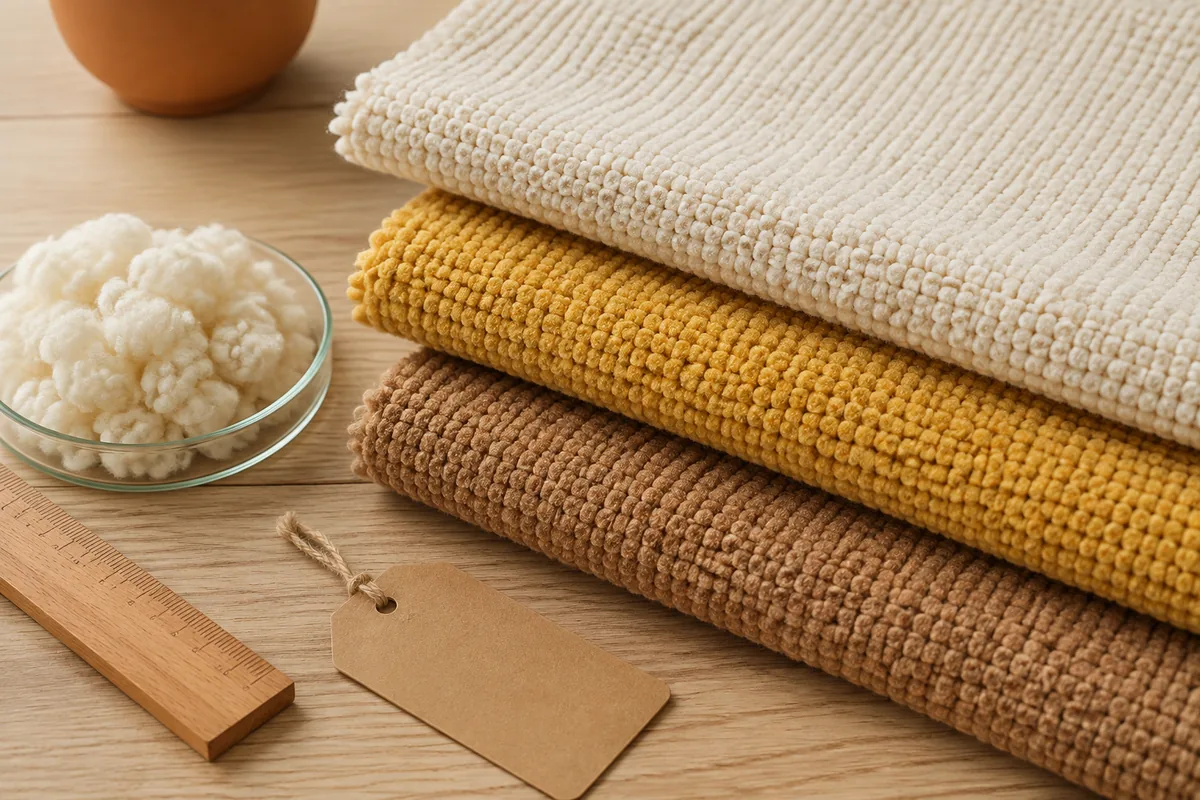
In pet soft goods, “corn fiber” is almost never 100% PLA yarn spun from cornstarch and nothing else. What most export factories deliver falls into a few buckets:
- PLA / corn-derived polyester-like fiber used in outer fabric or filling, sometimes blended with conventional polyester for hand feel and cost
- Corn-texture fabric — a surface finish and knit that reads as kernel or grain texture (common on character SKUs such as corn-themed fawn silhouettes), while the base fiber may still be polyester or a corn-fiber blend
- Marketing-only “eco” labels with no mill certificate and no percentage disclosed
Ask for composition by weight, not a leaf icon. A clean line item looks like: outer fabric X% PLA / corn-derived fiber + Y% polyester; filling Z% recycled poly or virgin poly; squeaker type and housing. If the factory only says “eco corn fiber plush,” you do not have a purchasable material yet.
For brand storytelling, texture and provenance are different claims. Texture is a design choice. Provenance needs mill paperwork. Mix them carefully on packaging, or legal teams at big-box retailers will force a reprint.
Browse reference silhouettes in our products catalog before you lock a corn-themed character that only exists as a rough sketch. Pattern and fabric consumption change unit cost more than most buyers expect.
Who buys corn fiber plush (and what each program needs)
Demand on this keyword usually splits into clear jobs:
- DTC and boutique brands that need a soft, photo-friendly character with a sustainability sentence that will not collapse under a retailer questionnaire
- Marketplace sellers who want a differentiated plush shape (food/nature themes still convert) plus hangtags and barcodes that match the listing
- Private-label distributors who care more about mixed cartons, consistent dye lots, and reorder color matching than about a single hero photo
- Retail gift programs that pair plush with seasonal packaging and multi-language warnings
If your only brief is “make something green and cute,” factories will quote the cheapest polyester plush with a new hangtag. Write the real job: target dog size, chew intensity (supervised plush vs power chewer — corn fiber plush is almost always supervised soft play), logo method, first-order quantity, and destination market.
For programs that need full design-to-production rather than label-on-stock, map the longer path on our ODM services page before you promise a launch date to retail.
Spec checklist before you RFQ a corn fiber plush line
Factories quote fast when the brief is boring and complete. Send:
Product- Target pet size and play mode (fetch, cuddle, squeak, interactive)
- Finished dimensions and weight band (e.g. ~9 × 7 in, ~70 g for a small character)
- Softness target (photo reference or competitor SKU, not “as soft as possible”)
- Squeaker yes/no; multi-squeaker; rattle; crinkle panel
- Eye/nose method: embroidered only vs plastic parts (plastic parts change small-part risk and market rules)
- Outer fabric composition with percentages
- Filling type and density
- Dye process and color standards (Pantone or physical swatch)
- Any recycled or bio-based claims you intend to print — and who supplies certificates
- Logo: woven label, heat transfer, embroidery, hangtag only
- Primary pack: polybag, kraft, header card
- Barcodes and warning languages for US / EU / other
- Destination markets and test plan expectations (CPSIA-oriented chemical thinking for the US; EN71 / REACH screens when EU retail treats the item like a toy)
- Do not invent lab results; schedule tests after the pre-production sample is locked
A brief that lists “materials: eco” will bounce between sales and production until someone invents numbers. Put numbers yourself.
How manufacturing actually runs for corn-texture plush
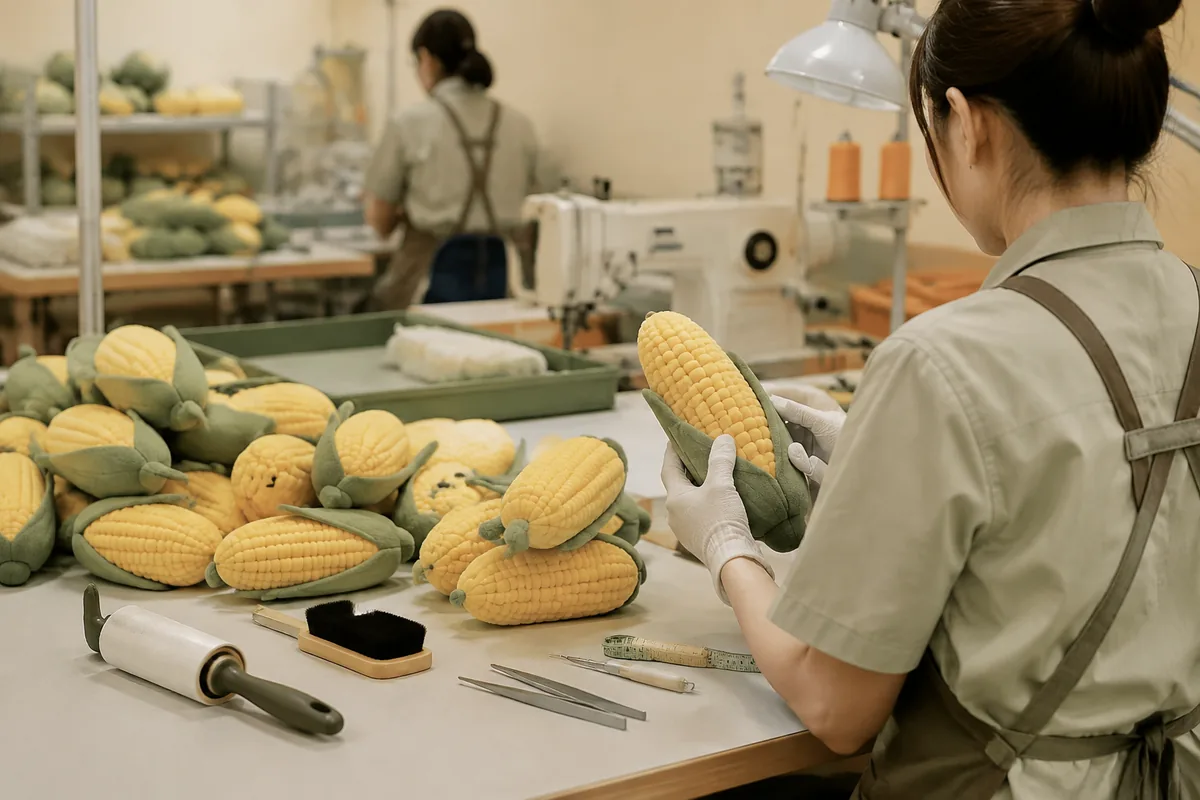
A typical soft-goods line for this category looks like:
1. Fabric and filling inbound — mill lot check, color confirm, moisture and odor screen for poly filling
2. Pattern and cutting — nested markers for ears, limbs, and textured panels so waste stays predictable
3. Sewing and turning — seam allowance and stitch density control; weak ear and limb joints are the return drivers
4. Stuffing and squeaker placement — density maps so the body does not go lumpy after shipping compression
5. Closing, labeling, hangtag — brand elements last so rejected units do not waste logos
6. Needle detection / metal detection where the plant runs that process for export soft goods
7. Pack and master carton — count, SKU mark, destination marks
Corn-texture knits can snag differently from flat plush. Ask the plant if they have run textured face fabric on dog toys before, not only apparel. Needle choice and feed dog settings change seam quality. A crew that only sews smooth minky will produce puckering on the first corn-kernel panel run.
Sampling for a new character often takes 10–20 business days for a first sew sample if the plant already has the fabric family. New mill development (true PLA yarn with certificate chain) can add weeks and MOQ at the mill, not just at the toy factory.
MOQ, cost drivers, and when “eco” actually moves the price
Unit cost on corn fiber plush moves on a few levers buyers sometimes ignore:
- Fabric premium — bio-based or specialty texture face goods vs commodity poly plush
- Colorways — each dye lot and each Pantone on a small run costs more than black/gray stock
- Embroidery and multi-panel characters — more seams, more QC time
- Packaging print — hangtag and carton MOQ often sit beside product MOQ
- Testing — lab fees amortized over trial volume hurt more than over a full container
Typical trial bands for export plush soft goods (order of magnitude, not a quote) sit in the hundreds to low thousands per SKU depending on complexity. Private-label hangtag-on-near-stock is cheaper and faster than a full ODM character with custom fabric. If you need brand packaging from day one, say so; packaging MOQ can exceed product MOQ on tiny trials.
For hangtag-and-label programs with your brand story, see private label. For full custom development, stay on the ODM path and budget time for pattern freeze.
Do not invent MOQ promises in marketing copy. Get a written quote against a frozen spec.
Quality control that protects soft plush programs
Plush returns cluster around a short list of failures. Build QC around them:
- Seam strength at ears, limbs, and belly close
- Stuffing density and empty corners
- Squeaker security (housing not free-floating where it can migrate to a weak seam)
- Eye/nose attachment if any hard parts exist
- Color consistency across a PO and against the approved sample
- Odor from dye or filling after carton storage
- Needle / metal detection results where applicable
- Label and barcode accuracy against the pack-out sheet
A simple AQL plan on first production trains the line. Photo or video evidence of each gate before cargo booking is normal for brand buyers who cannot fly in. Keep a shared defect log so reorder does not repeat the same ear tear.
Safety standards still apply to “eco” toys. Soft goods destined for the US or EU need chemical and mechanical thinking appropriate to the market. A corn fiber story does not replace phthalate or heavy-metal screens when your retailer demands them.
Packaging and claims that survive a retailer audit
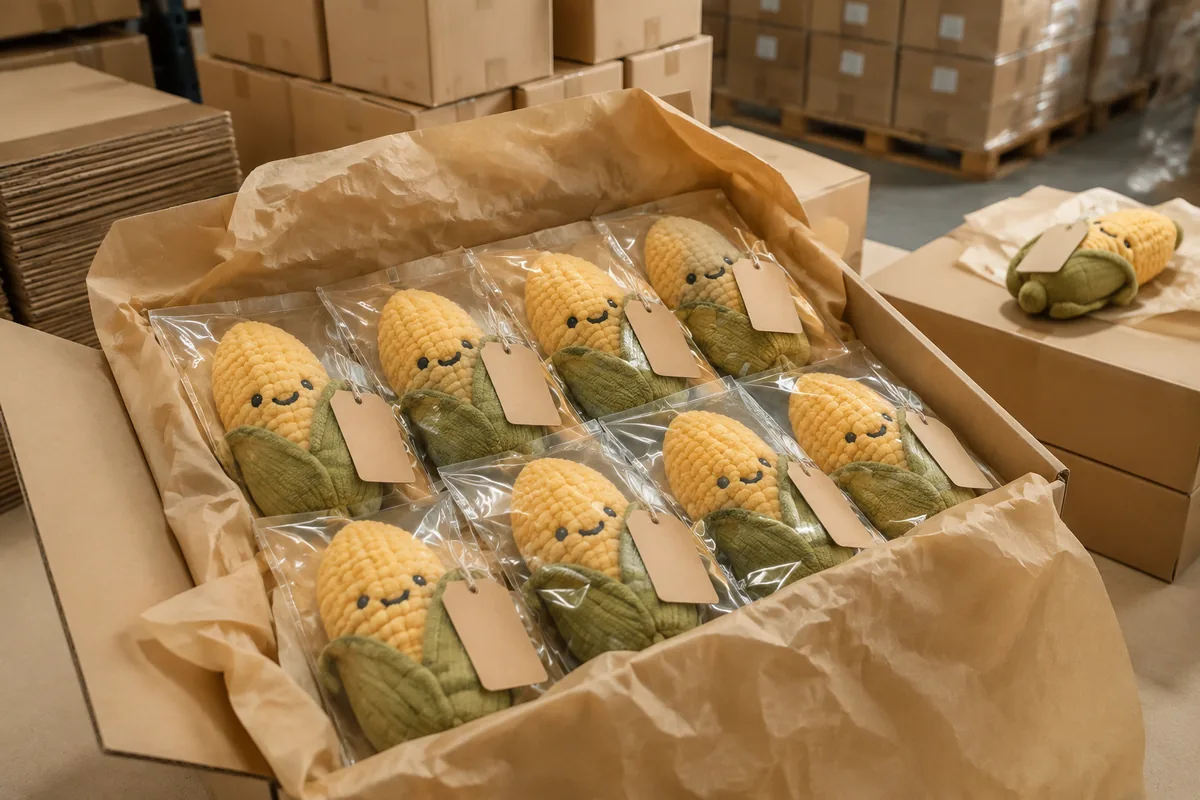
Green claims fail more often than seams. Rules of thumb:
- Print only percentages and fiber names you can back with mill documents
- Separate “corn-texture design” from “corn-derived fiber content”
- Avoid absolute words like “fully biodegradable” unless a lab protocol and product construction support it (most multi-material plush with squeakers do not)
- Match warning languages and font sizes to the destination
- Align pack photos with the shipped unit for marketplace listings
Master cartons need SKU, quantity, weights, and country of origin marks that warehouse teams can read. Gift multi-packs need a packing map so assorted corn characters do not arrive mismatched to the PO.
Common mistakes brand buyers make on this category
- Approving a polyester sample, then demanding PLA production without a new cost sheet
- Writing “eco corn fiber” on packaging with no composition table
- Treating plush as a power-chewer SKU and fighting returns that were predictable
- Changing character proportions after embroidery digitizing is paid
- Ignoring packaging MOQ until the product is already sewn
- Skipping a pre-production sample and comparing bulk only to a photo
- Letting three stakeholders send conflicting revision notes in the same week
Most of these cost calendar time, not just money. Pet retail windows (gifting peaks especially) do not wait for a third fabric swap.
RFQ template and decision checklist
Send one owner, one versioned brief, and one deadline for questions:
1. Market, channel, and first-order quantity
2. Spec: size, weight, materials with %, squeaker, logo method
3. Artwork: logo files, hangtag copy, warning languages
4. Claims: exact sustainability sentence you want approved
5. Tests required before ship
6. Incoterms and target ship window
Before you place the PO:
- Spec signed and versioned
- Physical or detailed photo sample approved in writing
- Fabric composition confirmed against mill docs if claims go on pack
- QC / AQL plan agreed
- Packaging dieline and barcode ownership clear
- Payment terms and lead time written into the PO
If any of that is still “we’ll figure it out on WeChat,” pause. Soft-goods disputes after shipment almost always start as unwritten assumptions.
Texture-led soft references that already ship—Corn Kernel Fawn and Corn Stick Toy—are useful when you need a mill conversation about hand-feel claims without starting from a blank tech pack.
How WagNab works with eco and texture-led plush programs
WagNab manufactures pet toys for brand and wholesale partners, including soft goods with corn-texture and specialty fabric stories. Start from live reference SKUs on the products page, map custom work through ODM, or build hangtag-and-pack identity under private label.
Teams evaluating an eco corn fiber plush dog toys manufacturer usually send a short brief: target pet size, fabric claim goals, logo method, first quantity, and destination market. From there we return a realistic sample plan and flag where certificates, mill MOQ, or test timing will move the calendar.
When you are ready to talk sampling and lead times, contact WagNab with that brief. We respond with options against a frozen spec — not a leaf icon and a hope.
Ready to Build Your Next Collection?
From material selection to final delivery, we help brands bring pet toys to market.