Eco Friendly Dog Toys Wholesale: Specs, MOQ & Claims Buyers Can Audit

If you are searching for eco friendly dog toys wholesale, you are usually not shopping a green leaf on a hangtag. You need cartons that land on time, constructions that survive reorders, and sustainability claims that hold up when a retailer or marketplace asks for documents.
This guide is for brand owners, Amazon and marketplace sellers, regional wholesalers, and retail buyers who buy dog toys in volume. It covers what “eco” can honestly mean in export programs, how to brief a factory without inventing certs, realistic MOQ thinking, QC that stops silent squeakers and weak seams, and when open stock beats a full private-label build.
Browse live soft-toy and chew direction on the products catalog before you freeze a silhouette. Catalog-adjacent bodies often start with lower MOQ and no pattern fee, which is how many first eco wholesale programs stay solvent.
What eco friendly dog toys wholesale actually means
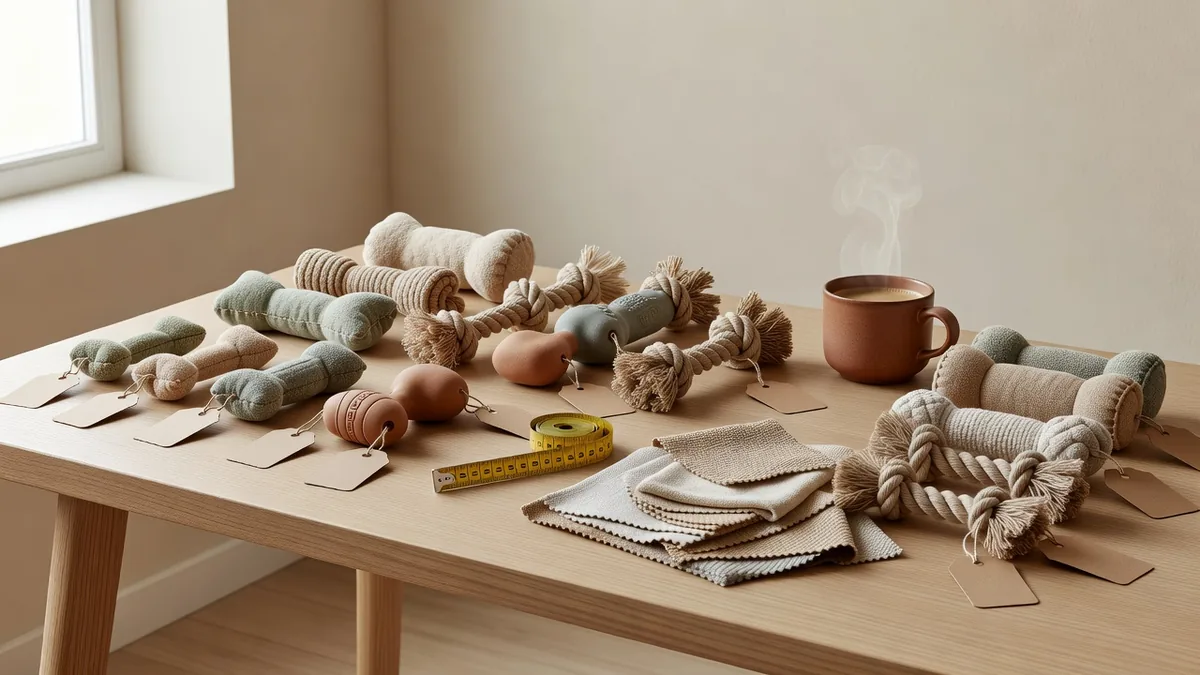
In B2B English, “eco friendly dog toys wholesale” mixes three ideas that buyers often blur:
- Material story — recycled polyester (rPET), organic or GOTS cotton rope, natural rubber, hemp blends, or other renewable inputs with a paper trail
- Process story — dye chemistry, water use, scrap recovery, or packaging reduction that a plant can prove with records
- Claim story — what you are allowed to print on the hangtag and product page without getting rejected at audit
“Eco” is not a regulated toy standard by itself. CPSIA, EN71, and REACH still sit underneath most US and EU programs. A recycled plush that fails a small-parts or phthalate screen is still a failed shipment. Treat sustainability as a second filter on top of safety and durability, not a substitute.
Ask early: which claim will appear on the retail package? Who holds the certificate (mill, compounder, or factory)? Will the claim travel with the exact lot you are buying, or only with a sample run? Vague answers usually mean the green language is marketing copy, not a production control.
Who buys eco wholesale programs
Serious traffic on this keyword tends to fall into a few buckets:
- Independent and regional pet retailers who want a “better materials” aisle without importing themselves
- Marketplace sellers building multi-packs where ads and FBA fees leave little room for full OEM tooling, but still need a credible eco line
- Mid-size brands that need a documented “good” tier under a premium private-label ladder
- Distributors refreshing rope, squeaker, and rubber basics before peak seasons with retailer sustainability questionnaires
If your only product is a heavy character plush with custom embroidery, six-language packaging, and a novel recycled claim that needs new mill qualification, you may need an OEM/ODM path more than a classic open-stock wholesale catalog. Open-stock eco lines live on shared tooling, fewer colorways, and carton efficiency.
Wholesale buyers care about mixed-SKU masters, barcode placement, and case counts. Brand buyers care about logo method and color lock. Say which you are in the first email.
Spec checklist before you send an RFQ
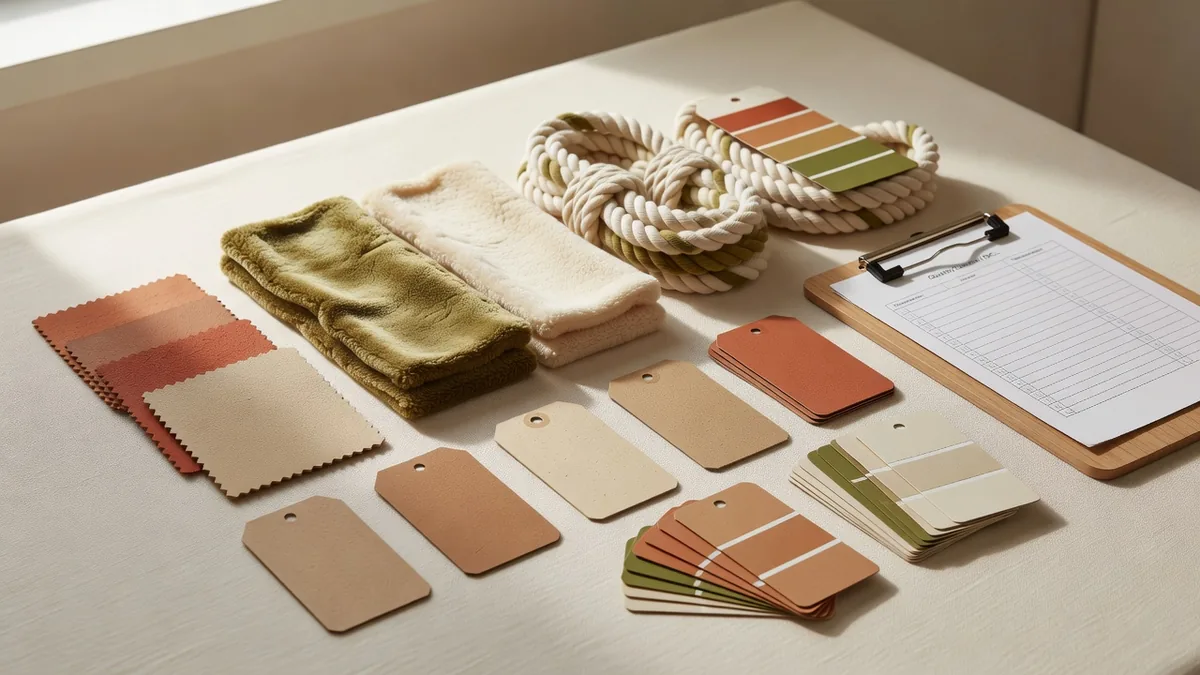
Vague briefs create samples that look fine on a desk and fail after three weeks on a hook — or after a retailer asks for GRS scope certificates. Send something a production manager can price without inventing your product.
Play and size- Dog size band (toy / small / medium / large) and play style: cuddle, fetch, light tug, or power chew
- Finished dimensions in mm; call out thin necks, ears, and limbs that tear first
- Target weight range; light units feel cheap and bruise easier in master cartons
- Material family: short plush or crystal velvet with rPET content, cotton or blended rope, natural rubber, TPR/TPE, or hybrids
- Recycled or organic percentage by weight if you will market it; ask for mill or compound certificates tied to the lot
- Fill type and weight band for soft goods; recycled fill claims only with documents if you will print them
- Seam density, bar-tacks at stress points, embroidered vs plastic eyes/nose
- Squeaker count and pocket method if the SKU is acoustic
- Hangtag, woven label, barcode, warning language for target markets
- Inner polybag thickness and print; master carton marks and drop expectations
- Mixed-SKU vs mono-SKU packing rules for wholesale programs
- Market destination (US, EU, UK, AU, etc.) and which tests you need before ship
- Whether eco certificates and lab reports must both exist before cargo booking
If you need full custom branding rather than open stock, read the ODM process and private label paths so the RFQ lands on the right commercial track.
How to vet a wholesale or factory partner on eco claims
Price screens are weak filters. Use operational questions that force a concrete answer.
Named production site. Can they put the factory name and address on the PI and packing list? Trading desks that refuse this often reshuffle plants between sample and bulk — and reshuffle certificate chains with them. Certificate ownership. Is the GRS, GOTS, FSC, or OEKO-TEX document held by the mill, the compounder, or the sewing plant? Ask for the scope and expiry, then check that your SKU construction is actually covered. A plush mill certificate does not automatically bless a rubber chew from a different building. Sample vs bulk lock. Will the pre-production sample be the reference for AQL and for the material claim, or is the “sales sample” from another lot with virgin content? Demand a signed PPS photo set and keep it with the PO. Defect honesty and reorder discipline. Ask for the last three defect codes on similar SKUs: open seams, silent squeakers, color bleed, odor, hard edges. Ask how they hold fabric dye lots and resin batches across a 90-day reorder. Eco programs die when carton 2 looks like a different product — or when the recycled percentage quietly drops.For first container programs, budget third-party inspection even if the seller “already QC’d.” You are buying process evidence, not a certificate decoration.
MOQ bands and sampling reality
MOQ for eco friendly dog toys wholesale programs depends on construction and claim documentation more than marketing language:
- Open-stock plush / rope / rubber from shared tooling. Often the lowest entry; MOQ may be per colorway or per master carton. Eco colorways can still carry a higher band if the mill MOQ on recycled yarn is stiff.
- Light private label (woven label, hangtag, custom polybag on existing body). Mid band; watch plate and packaging MOQs that quietly exceed the toy MOQ.
- New pattern or new mold with a novel recycled claim. Highest band; only worth it when the wholesale channel cannot cover your silhouette, chew grade, or documented material story.
A typical first engagement looks like this:
1. Brief review and material recommendation (a few business days)
2. Sales or first sample from open stock, or a prototype if tooling is new
3. Buyer feedback; one revision round if construction or claim wording changes
4. Pre-production sample locked against the PO
5. Bulk with in-line checks and final inspection before ship
Budget freight both ways on samples and lab timing if your market requires reports before cargo booking. If your path is custom rather than open stock, start from the ODM services overview so timeline expectations match pattern and mold work.
Quality control that protects wholesale margin

Returns erase “cheap FOB” faster than freight does. Build a simple AQL plan even on trial orders so the factory learns your defect language early.
Soft goods. Seam strength at stress points, fill weight band, embroidery or hardware attachment, squeaker pocket integrity, color match to signed card under agreed light. If you market recycled plush, confirm hand feel against the signed PPS — rPET can sew differently from virgin poly. Rope. Diameter consistency, knot security, dye bleed after a damp wipe, fray rate after a fixed abrasion cycle you define in writing. Organic cotton claims need fiber documents, not just a cream color. Rubber / TPR. Flash and sharp edges, odor after sealed bag aging, hardness band, insert push-out if the body has a squeaker. Natural rubber programs need compound clarity so “natural” does not become a blend that fails your retailer questionnaire. Pack-out. Hangtag position, barcode scan rate, carton crush after a drop that matches your warehouse reality, polybag print vs approved artwork. Eco packaging claims (recycled poly, FSC carton) need the same lot discipline as the toy.On first production runs, ask for photo or video evidence at each gate before goods leave the plant. Keep a shared issue log so the same defect does not reappear on reorder. For US or EU retail destinations, align lab test timing with production so certificates exist before the container is sealed, not after.
Packaging and common buyer mistakes
Align early on inner polybag thickness and print, hangtags, care labels, barcode placement, master carton marks, multi-language warnings, and exact sustainability wording that legal or retail compliance will accept. If you sell on marketplaces, confirm pack-out photos match the shipped unit. Mixed-SKU wholesale cartons need clearer pick lists than mono-SKU brand masters; write that into the PO if assortment is the product.
Watch for these patterns:
- Choosing on unit price without freight, testing, packaging, and expected return rate
- Treating a trading desk like a named factory with floor and certificate control
- Approving a virgin-poly sample, then switching to rPET at bulk without a new PPS
- Printing recycled percentages that the mill certificate does not support
- Ordering bulk before the pre-production sample is signed off
- Building a premium private-label brief and then shopping it as open-stock wholesale pricing
Most post-shipment disputes come from unwritten assumptions, not from bad intent. If a term is still verbal-only, pause.
When to use open stock vs private label
Use open stock / wholesale catalog when you need speed, mixed assortments, and a price point that cannot carry new tooling or new mill qualification. Use private label or ODM when brand lock, unique silhouettes, packaging IP, or a tightly documented material claim matter more than the lowest entry MOQ.
Many teams run both: a wholesale-sourced eco “good” tier for value aisles and multi-packs, plus a custom line for hero SKUs. Map that ladder before you send two conflicting briefs to the same plant. Explore assortment direction on products, development steps on ODM, and brand builds on private label.
Decision checklist before you place the PO
Walk this list before you wire a deposit:
- Spec sheet signed and versioned, including material claim language
- Sample or PPS approved in writing (photos plus physical if needed)
- Eco certificates scoped to the construction and still valid for the ship window
- QC plan and AQL agreed, including silent-squeaker or edge rules if relevant
- Packaging dieline and barcode rules approved
- Factory name and address clear on commercial documents if you care about site control
- Incoterms, payment terms, and lead time written into the PO
- Contingency for one revision cycle without killing the launch window
If any item is still handshake-only, do not treat the ship date as real.
How WagNab fits wholesale and brand programs
WagNab works with pet brands and wholesale partners on soft toys, rope, and related constructions — from material selection through sampling and bulk. Review live options on the products catalog, OEM/ODM process on ODM services, and brand builds via private label.
Teams evaluating eco friendly dog toys wholesale usually start with a short brief: target pet size, material preference, logo method, first-order quantity, destination market, and whether the program is open stock or custom. From there we map a sample plan and flag compliance and claim timing before tooling money is spent.
When you are ready to discuss MOQ and sampling windows, contact WagNab with that brief. Clear specs beat long price auctions every time.
Ready to Build Your Next Collection?
From material selection to final delivery, we help brands bring pet toys to market.