Holiday Dog Toys Bulk: Seasonal Assortment Without Missed Ship Windows

If you are sourcing holiday dog toys bulk, you are not shopping a generic plush catalog. You need cartons that hit a seasonal retail window—Halloween, Thanksgiving, Christmas, New Year—and still pass seam checks, color match, and packaging rules for the markets you ship into.
This guide is for brand buyers, marketplace sellers, distributors, and retail importers who run gift sets, end-caps, and limited-time multi-packs. It covers how seasonal programs differ from year-round open stock, what to put in an RFQ, realistic MOQ and lead-time pressure, QC that catches soft failures before cargo booking, and when shared tooling beats a full new pattern for one holiday.
Browse live assortment direction on the products catalog before you lock a silhouette. Catalog-adjacent bodies with seasonal colorways often quote cleaner and ship faster than a brand-new mold that only sells for six weeks.
What holiday dog toys bulk really means
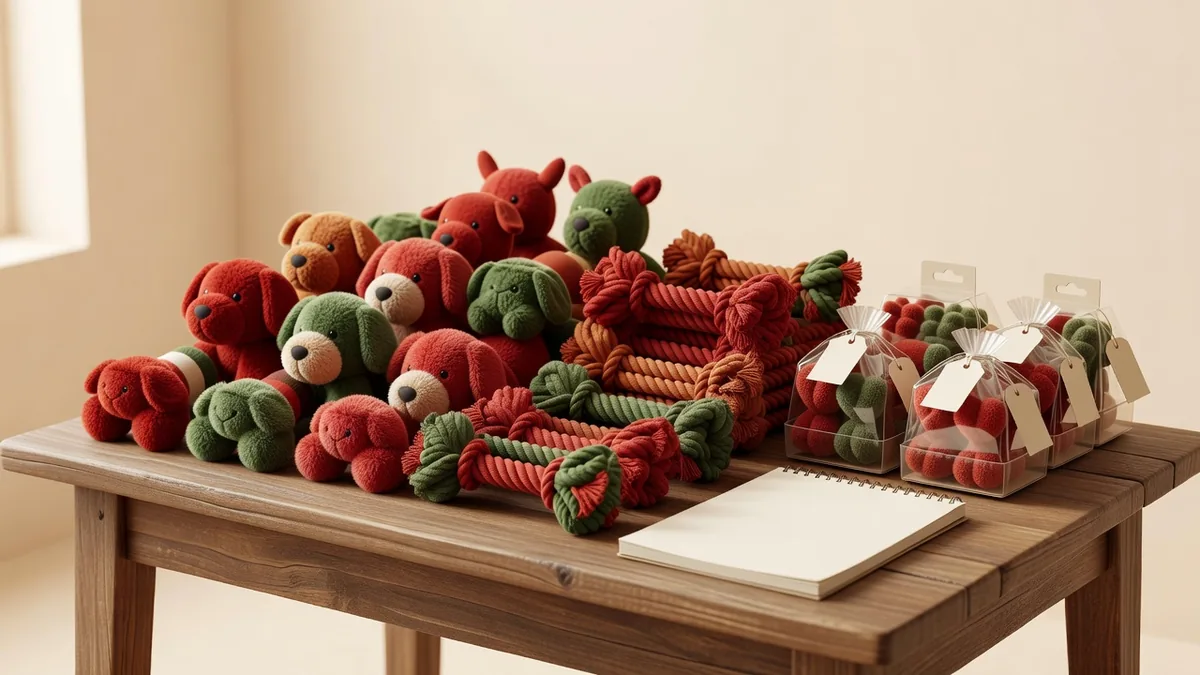
In factory English, “holiday” is a calendar problem as much as a product problem. The SKU has to look seasonal on a hook or in a gift box, and the container has to clear customs before your sell-through window closes. Buyers who treat holiday the same as everyday open stock often discover that dye lots, embroidery calendars, and carton capacity are already booked by mid-summer for Q4.
Common seasonal constructions that export well:
- Festive plush with limited colorways. Red, green, gold, snowflake prints, or character shapes that read “holiday” at three meters. Failures cluster at weak seams, sparse fill, and print that cracks after warehouse heat.
- Rope bones and knotted tugs in seasonal dye lots. Fast when you accept two or three colors. Expensive when every SKU needs a custom Pantone and the dye house is already full.
- TPR or rubber chews from shared molds with holiday colors. Lowest pattern cost if you pick existing tooling. Flash, odor, and sticky surfaces show up when a plant chases the lowest resin grade under rush pressure.
- Gift multi-packs. Three to six shapes in one retail set with ribbon, sleeve, or window box. Pack labor and barcode placement matter as much as the toy. Silent squeakers and mismatched color lots kill margin after returns.
Ask what share of a plant’s Q3–Q4 capacity is already sold. If holiday is 5% of output, your order is the training run during the busiest weeks of the year.
Who buys seasonal bulk programs
Serious traffic on holiday dog toys bulk usually falls into a few buckets:
- Retail buyers filling gift aisles, end-caps, and Advent-style pet sets under a hard retail price
- Marketplace sellers building limited-time multi-packs where ads and FBA fees leave little room for late arrivals
- Distributors stocking independent pet shops with short seasonal hooks
- Brands that want a “good / better / best” ladder and need an honest gift tier, not a defective one
If your only product is a premium private-label character with heavy embroidery and sixteen-week development, a six-week Christmas window is the wrong first program. Holiday cartons live on construction simplicity, shared tooling, early capacity locks, and carton efficiency.
Wholesale buyers also care about mixed-SKU packing and master-carton marks. Say that up front. A plant that only ships mono-SKU masters will frustrate assortment programs with eight shapes and two price points.
Spec checklist before you send an RFQ
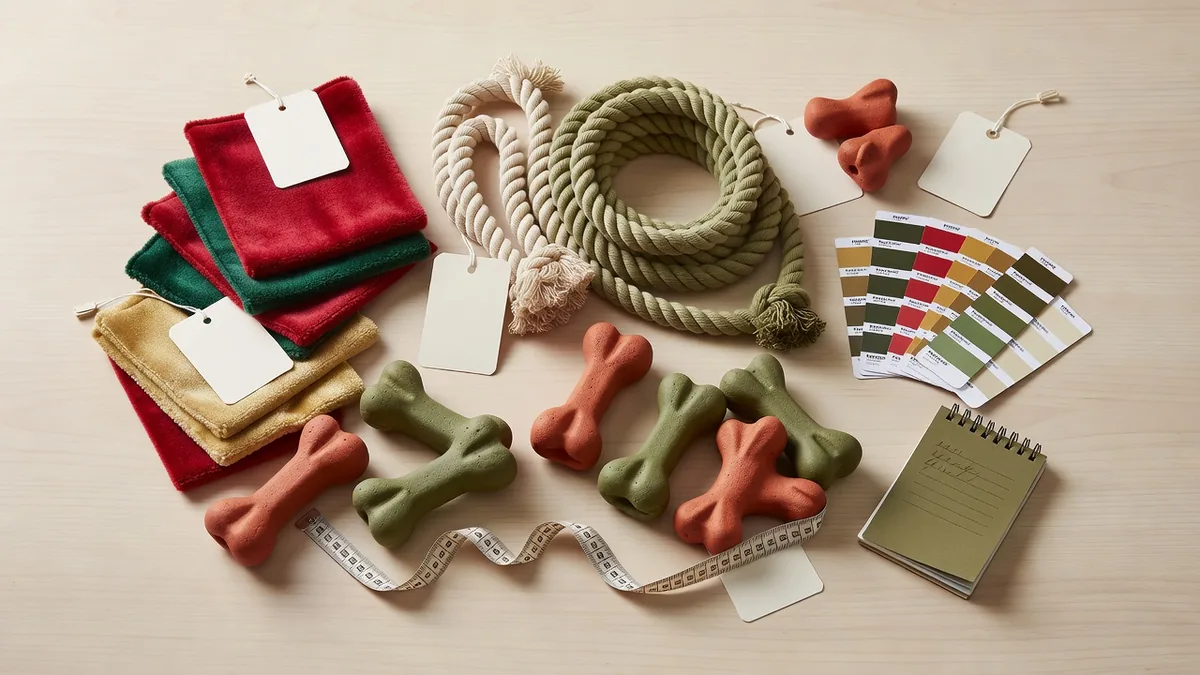
Vague briefs create samples that look fine on a desk and fail after three weeks on a hook—or arrive after the holiday is over. Send something a production manager can price and schedule without inventing your product.
Play and size- Target dog size band and play style (gentle tug, light chew, fetch, solo soft play)
- Supervised-play expectation and any small-parts risk for the markets you sell into
- Whether the SKU is a gift display piece or a daily play toy that happens to look seasonal
- Body type: plush, rope, TPR/rubber, hybrid
- Fabric or compound grade; fill type and target weight band if plush
- Squeaker model number if used; pocket sewing rules
- Color count locked with Pantone or physical swatch—not “as photo”
- Print method for snowflake, holly, or character motifs if used
- Hangtag, woven label, printed polybag, UPC/EAN placement
- Gift sleeve, window box, or multipack tray rules
- Inner pack count, master carton dimensions, mixed-SKU rules
- Warning copy for destination language (US / EU habits differ)
- In-store or online live date, not only “ship ASAP”
- Destination markets and which chemical screens you expect (CPSIA-oriented thinking for US, REACH / toy-adjacent screens when retail treats the SKU as a toy)
- No fabricated lab certificates—ask what tests the plant already runs on similar export lots and plan lab timing with production
Factories quote faster when they are not guessing fill weight, seam allowance, and whether you need cartons by October 1 or November 15.
How seasonal pricing and MOQ actually work
Unit FOB is only one slice of landed cost. Holiday dog toys bulk programs break when buyers optimize the wrong line or book too late.
| Cost driver | What seasonal looks like | What breaks later |
|---|---|---|
| Tooling / pattern | Shared open-stock body + holiday colors | Competitors buy the same mold |
| Materials | Limited dye lots, rush embroidery | Color drift; late stitch calendars |
| Colorways | 2–4 festive colors per shape | Assortment looks thin if you demand eight hues mid-season |
| Pack-out | Gift sleeve, window box, multipack | Scuffs, barcode fails, retail chargebacks |
| Capacity | Early PO locks line time | Late POs get overflow plants or missed windows |
Patterns many buyers see in current export quotes (directional, not a price list):
- Open-stock seasonal plush or rope: first MOQ often in the low hundreds per SKU or mixed color, depending on plant and how early you book
- Custom color or logo on an open-stock body: MOQ steps up with print/embroidery setup
- Full new holiday character + custom gift pack: price and schedule like development, not a rush promo
If a quote is far below other plants under a November deadline, ask which of fill weight, fabric GSM, squeaker grade, QC hours, or overtime was cut. Freight, duties, testing, and packaging can erase a “winning” FOB. A slightly higher FOB with denser cartons, honest fill, and an earlier ship window often wins the season.
Open stock vs private label for holiday lines
Not every holiday program needs full private label from day one.
Open stock / near-stock. Fastest path to a seasonal look. Existing shapes, festive colors, hangtag or polybag branding if allowed. Good for testing which silhouettes sell before exclusive tooling for next year. Private label on shared bodies. Your logo, colors, and packaging on catalog-adjacent construction. Still workable for Q4 if you avoid heavy embroidery and custom molds. Common for Amazon multi-packs and regional brands. Full ODM / new pattern. Makes sense when you need exclusive IP you will reuse across seasons. It is rarely the cheapest or fastest first carton for a single Christmas. Map sampling and tooling on ODM development so you do not pay development prices and still expect promo timing.Many programs start open stock for year one, lock the winners, then migrate packaging and color control under a private-label brief for the next holiday.
Sampling and QC that protect the season
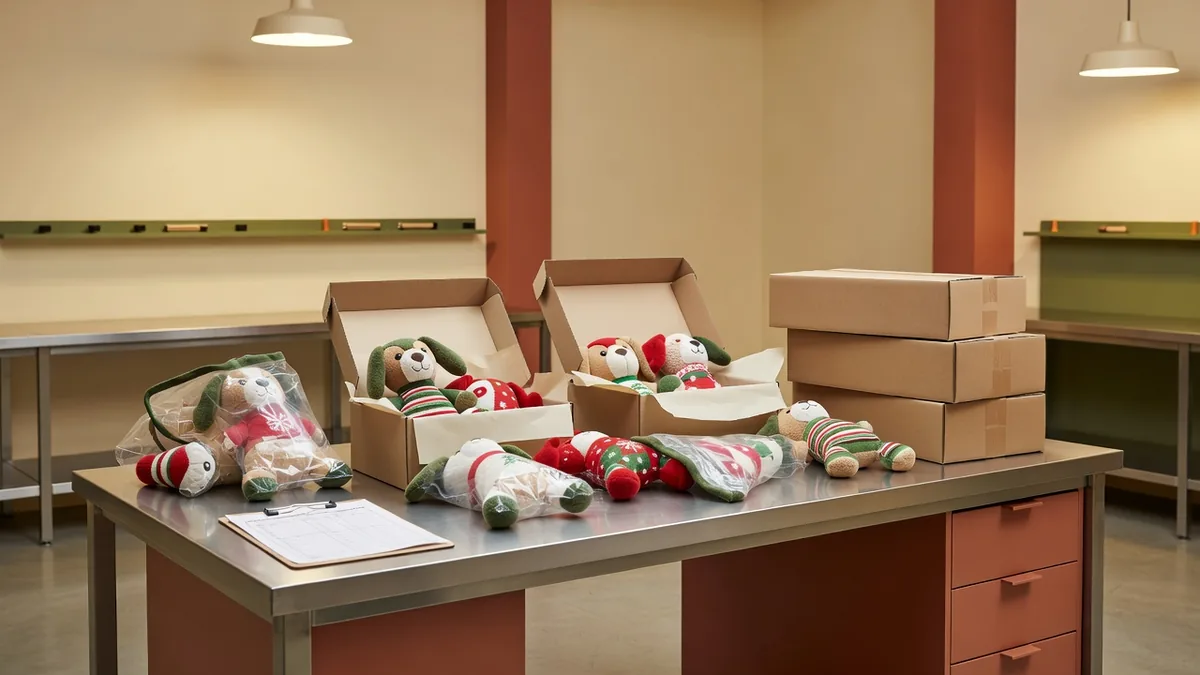
Treat the first sample as a production proxy with a calendar attached.
1. Confirm construction matches the quote: weigh plush, measure rope, check TPR hardness and edges.
2. Run a simple abuse test: compress squeakers 50–100 times, tug seams, check color rub only if you claim wet play.
3. Approve packaging with the product: hangtag, barcode, gift sleeve fit, polybag thickness, master-carton marks.
4. Lock a golden sample with photos. Reorders should match that unit.
5. Lock the ship window in writing. Sample sign-off without a capacity date is how holiday programs miss the shelf.
Build QC around seasonal failure modes:
Plush: seam strength, fill weight band, print/embroidery adhesion, eye/nose attachment (prefer embroidered features when small-parts risk matters). Rope: knot tightness, dye-lot consistency across red/green cartons, fray after tug, chemical odor after airing. TPR/rubber: flash, sticky surfaces, compression set, squeaker push-out. Gift pack: inner counts, sleeve/window scuff resistance, carton crush for your stack height, warning copy for destination markets.On first production runs, ask for photo or video evidence of each QC gate before goods leave the plant. Align lab timing so reports exist before cargo booking. Third-party inspection is not optional on a trading desk, a new plant, or a rush overtime line—budget it into seasonal landed cost.
Common mistakes and a practical path
- Starting RFQs in September for a November in-store date
- Choosing on unit price without freight, testing, gift packaging, and expected returns
- Ordering six custom colors mid-season and wondering why MOQ and dye lots exploded
- Accepting sample quality the bulk line cannot hit under overtime
- Skipping carton and hangtag approval because “it is only a gift SKU”
- Changing materials mid-sample without updating the cost sheet and the ship calendar
Practical path:
1. Define retail live date, channel, and price band first.
2. Pick construction families from live products that fit those constraints.
3. RFQ with full specs; request open-stock seasonal color and private-label pack options side by side.
4. Sample, abuse-test, lock golden sample, packaging, and capacity date.
5. Trial order with AQL and photo gates; inspect before ship.
6. Reorder only after color lots and defect rates are stable; expand for the next season.
When you are ready for a quote on seasonal assortment, private-label packaging, or a mixed gift pack, use the contact form with target markets, rough MOQ, live date, and whether you need open stock or branded packaging. Clear inputs get usable FOB ranges and honest ship windows faster than a one-line “need holiday dog toys bulk” message.
Seasonal open-stock mixes often land on gift-friendly soft shapes such as Ice Cream Cone and Donut plush—lock colorways and carton mix against live bodies before you promise an end-cap date.
Bottom line
Holiday dog toys bulk works when you buy a simpler construction on purpose and lock capacity early—not when you force premium expectations onto the lowest rush quote in the inbox. Open stock and shared tooling create the real unit-cost and calendar room. Specs, sampling, and QC keep that room from vanishing into returns, chargebacks, and empty end-caps.Start with assortment, live date, and construction. Price the full landed stack. Only then negotiate. That is how seasonal buying stays a plan instead of a warehouse full of late problems.
Ready to Build Your Next Collection?
From material selection to final delivery, we help brands bring pet toys to market.