Interactive Puzzle Plush Dog Toys Private Label: Spec Guide for Brand Buyers

If you are shopping interactive puzzle plush dog toys private label, you are not looking for a plain squeaker pillow. You want soft-goods toys that slow the dog down: hide-and-seek characters with removable pups, treat pockets, layered flaps, or multi-part bodies that reward sniffing and problem solving without hard plastic puzzles.
This guide is for brand owners, Amazon and marketplace sellers, and wholesale buyers who need puzzle plush that photographs well, survives moderate play, and can carry a private-label hangtag. It covers what the category actually is, how to write a brief a sewing line can quote, realistic MOQ thinking, QC that catches soft-toy failures, and when open-stock bodies beat full custom tooling.
What puzzle plush is (and what it is not)
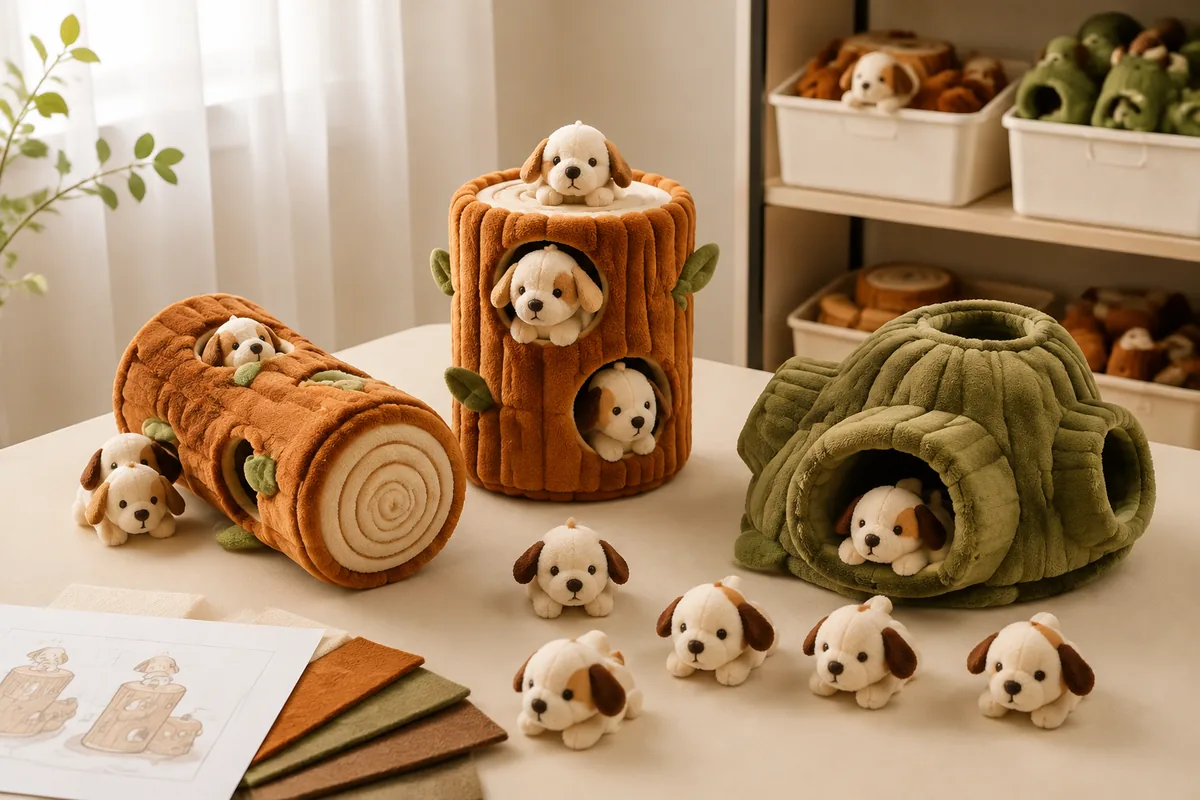
Puzzle plush sits between companion soft toys and enrichment products. The dog does not only carry the toy. It opens flaps, pulls out smaller plush pieces, or works treats from pockets. Construction is still fabric, fill, embroidery, and finishing. It is not a rigid treat maze or a nylon chew.
On export platforms you will see three seller types under the same keyword:
Trading desks with a sewing partner. Fast English and broad catalogs. Weak control once the PO leaves the showroom. Fine for simple open stock if you inspect hard. Kids-plush plants that also run pet “hide and seek” sets. Capacity is real. Pet stress points (zippers, Velcro flaps, removable limbs, pocket openings) get nursery-toy stitch density unless you write load zones into the tech pack. Pet soft-goods lines that already run puzzle SKUs. Narrower range, more honest about color MOQ, better at double-stitching high-wear zones and locking small parts. Most mid-size brands land here after one return spike on a cute but weak sample.Ask what share of output is pet vs human plush, and whether the plant has ever run multi-piece sets at your target size. If the answer is vague, assume you are the training run.
For SKU direction before you lock a body, browse the products catalog. Treat existing shapes as reference silhouettes, not as a promise that every factory can match fill density, pocket placement, or embroidery maps.
Who buys puzzle plush private label
Serious traffic on this keyword usually falls into a few buckets:
- DTC brands that want an enrichment SKU next to rope and hard chew
- Marketplace sellers refreshing private-label hide-and-seek characters without hard tooling
- Retail buyers building value multi-packs or gifting sets (mother dog + pups, food-theme pockets)
- Distributors filling independent pet-shop assortments with “smart play” soft toys
If your main product is solid TPR for power chewers, you are not in a puzzle-plush factory decision. Plush is soft goods plus toy-safety thinking. Treat it that way in the RFQ.
Wholesale buyers also care about mixed-SKU packing and carton efficiency more than brand buyers do. Say that up front. A plant that only thinks in monochrome 1,000-piece cartons will frustrate assortment programs with three colorways and two pocket styles.
Spec checklist before you send an RFQ
Vague briefs create samples you cannot sell. Send something a production manager can quote without inventing your product.
Play and size- Dog size band (toy / small / medium) and play style: gentle enrichment, moderate tug, or “photo prop until destroyed”
- Finished outer size in cm; for multi-piece sets, size of the main body and each removable piece
- Interaction type: hide-and-seek pouch, treat pocket, layered flaps, zippered compartment, Velcro “friends”
- Outer fabric: short plush, sherpa, corduroy, or canvas on high-wear flaps
- Pile height or GSM if hand-feel must match across reorders
- Fill: polyester fiberfill density range; recycled-content claims need documents, not hangtag poetry
- Closures: zipper grade, Velcro strength, magnetic snaps (rare in pet; confirm safety)
- Inserts: squeaker count and type, crinkle paper, treat-safe pocket linings
- Seam type and stitch density at pocket openings, flap hinges, and removable-piece seams
- Eyes and garnish: embroidery only vs plastic with locking washers
- How removable pieces attach and how hard a dog can yank before the join fails
- Reinforced openings if you claim washability without fill migration
- Woven label, printed hangtag, heat-transfer or embroidery logo placement
- Polybag print, carton marks, barcode, multi-language warnings for US / EU
- Whether each set ships as one unit or as master cartons of mixed pieces
- Destination markets and test expectations (commonly CPSIA-oriented chemical thinking for the US; REACH / EN71-related screens when EU retail treats the item like a toy)
- Small-parts discipline for removable pieces and any plastic hardware
A clean brief shortens sample rounds. Factories quote faster when they are not guessing fill weight, zipper length, or how many pups sit inside the mother body.
MOQ, sampling, and cost reality for private label
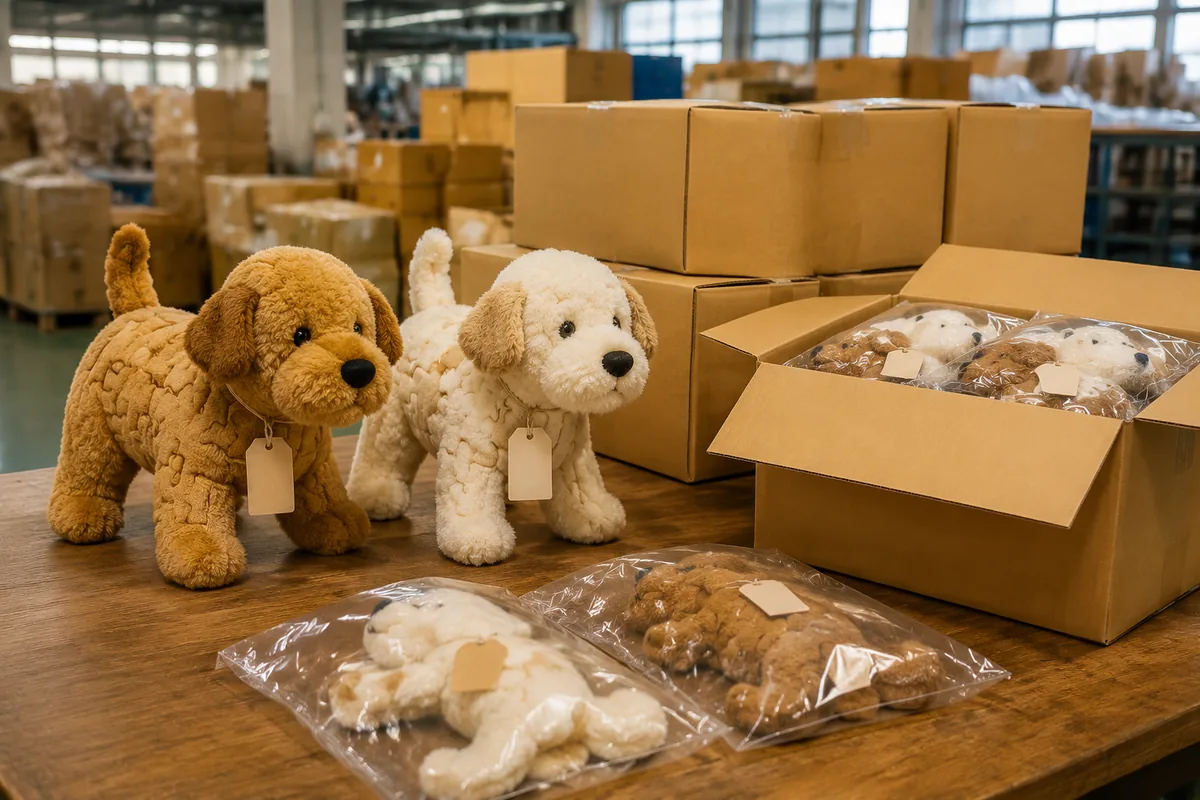
Interactive puzzle plush dog toys private label programs rarely start at pure custom cut-and-sew. Most first orders use an existing body with your logo, colors, and pack-out. That keeps tooling light and lets you test sell-through before you pay for a new silhouette.
Typical bands (order of magnitude, not a quote):
- Open stock / light brand: lower piece MOQ, limited color changes
- Private label on stock body: higher MOQ when you change fabric dye lots or embroidery maps
- Full custom shape: tooling, pattern development, and longer sample cycles; plan more cash and time
A practical first engagement looks like this:
1. Brief review and body recommendation (a few business days)
2. First sample or proto from stock pattern with your branding intent (often 1–3 weeks depending on embroidery and closures)
3. Buyer feedback: pocket size, fill firmness, removable-piece count, logo placement
4. Pre-production sample locked against the PO
5. Bulk with in-line and final inspection, including checks that every set includes the right number of inner pieces
Budget freight both ways on samples, plus lab tests if your market needs them. Cheap samples that skip closure strength or small-parts checks become expensive returns later.
If you are building a brand line rather than one-off wholesale, read how WagNab frames the brand path on private label and the development flow on ODM services. Puzzle plush benefits from a written tech pack early; verbal “make it cuter” does not travel well across shifts.
Quality control that matters for multi-piece plush
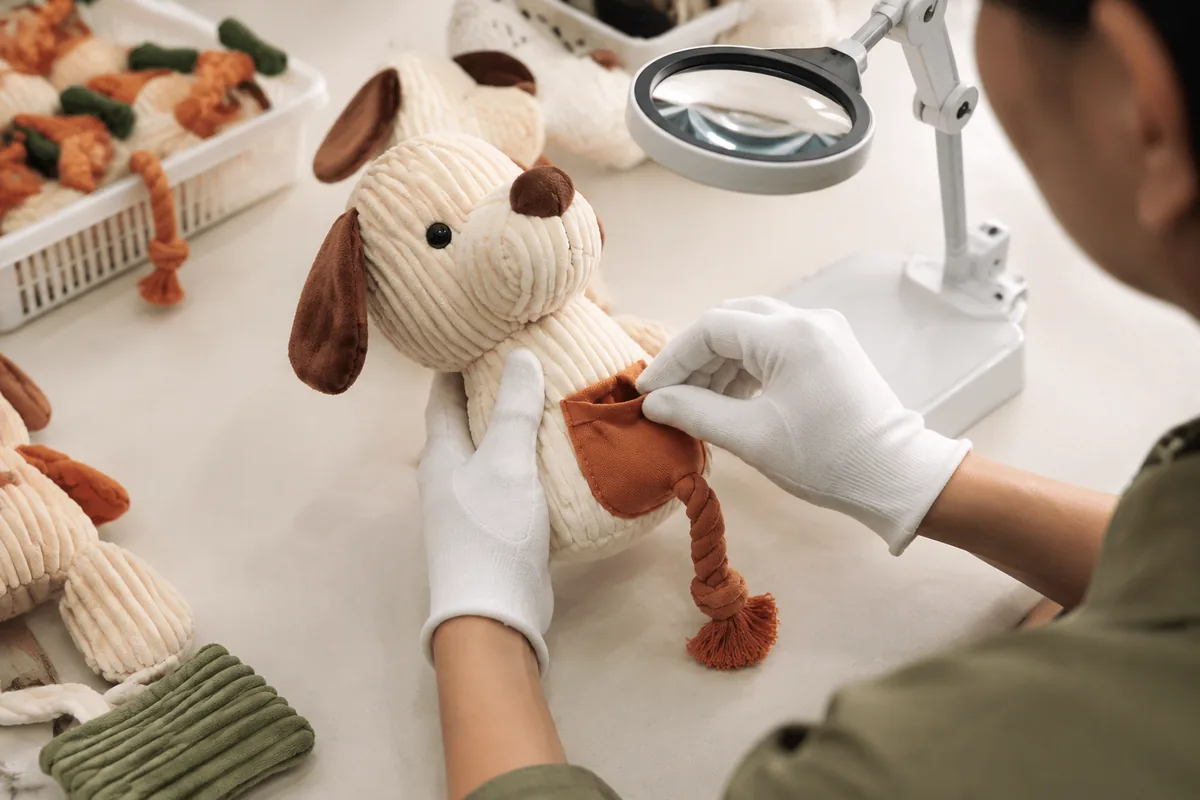
Standard plush QC (seam strength, stuffing density, eye attachment) is the floor. Puzzle SKUs add failure modes that plain soft toys do not have.
Closures and openings. Zippers that snag, Velcro that sheds after a few washes, pocket openings that tear at the corner stitch. Pull-test flaps and measure opening size against the treat or piece you claim fits. Removable pieces. Count audit every carton. Missing pups are a listing nightmare. Check that inner pieces cannot be swallowed whole by the target dog size band if your claims mention safety for that band. Fill migration. Thin pocket linings dump fiber into treat areas. If the dog is supposed to work food from a pocket, the lining must stay clean enough that buyers do not call it defective. Photo match. Listing images sell the “aha” moment of pieces coming out. If bulk fill is flatter or embroidery is smaller than the sample, return rates climb even when the toy is “fine.”On first production runs, ask for photo or video evidence of each QC gate before goods leave the plant. Keep a shared issue log so the same defect does not reappear on reorder. A simple AQL plan even on trial orders trains the factory early.
For programs destined for US or EU retail, align lab test timing with production so certificates are ready before cargo booking, not after the container is sealed.
Common mistakes brand buyers make
- Choosing on unit price without freight, testing, multi-piece packing, and return risk
- Skipping real-dog or lab proxy tests on pocket openings and removable joins
- Vague artwork files that delay logo application on small hangtags
- Ignoring packaging compliance (barcodes, warning labels, language, set-contents callouts)
- Changing fill density or Velcro grade mid-sample without updating the cost sheet
- Assuming the factory will know your market’s labeling rules for multi-piece toys
- Ordering bulk before the pre-production sample is signed off in writing
- Writing “interactive” on the listing when the product is only a squeaker with no puzzle mechanic
Packaging and retail readiness
Wholesale and brand buyers lose margin when pack-out is an afterthought. Align early on:
- Inner polybag thickness and print (set contents listed clearly)
- Hangtags, care labels, barcode placement
- Master carton dimensions and drop-test expectations
- Multi-language warning copy for target markets
- Whether removable pieces are bagged separately inside the main unit
If you sell on marketplaces, confirm that pack-out photos match the shipped unit. Inconsistent piece counts are a top driver of customer messages on puzzle toys.
How WagNab supports custom and wholesale programs
WagNab focuses on pet toy manufacturing for brand and wholesale partners, from material selection through sampling and bulk. Review live options on our products catalog, OEM/ODM process on ODM services, and brand-building path via private label.
Teams evaluating interactive puzzle plush dog toys private label usually start with a short brief: target dog size, interaction type (hide-and-seek, treat pocket, multi-piece set), logo method, first-order quantity, and destination market. From there we map a realistic sample plan and flag compliance needs before you spend money on embroidery plates or custom dyes.
Decision framework before you place the PO
Use this checklist before committing:
- Spec sheet signed and versioned (outer size, piece count, closures, fill)
- Sample approved in writing (photos + physical if needed)
- QC plan and AQL agreed, including set-contents audit
- Packaging dieline and contents labeling approved
- Incoterms, payment terms, and lead time written into the PO
- Contingency for one revision cycle without killing the launch window
If any item is still verbal-only, pause. Most post-shipment disputes on pet toys come from unwritten assumptions, not from bad intent.
Interaction mechanics are easier to QC when you can point at live puzzle or hide-and-seek references such as IQ Puzzle Eggs and Hide Food Turtle instead of a vague “enrichment” brief.
Next step
Choosing a partner for interactive puzzle plush dog toys private label is a process decision, not a price auction. Define the interaction mechanic, test samples hard on closures and piece counts, lock QC, then scale.
When you are ready to discuss MOQ and sampling timelines, contact WagNab with your brief, target markets, and whether you need open stock branding or a full custom puzzle body. Share target SKU notes and we will respond with sampling options and realistic lead times.
Ready to Build Your Next Collection?
From material selection to final delivery, we help brands bring pet toys to market.