Knitted Squeaky Dog Toy Set Wholesale: MOQ, Yarn Specs & QC

Buyers searching knitted squeaky dog toy set wholesale are usually building gift packs, value multi-packs, or a soft interactive range that looks handmade without paying handmade labor rates. A knitted set is not the same RFQ as open-stock plush. You are buying a yarn construction, one or more reed squeakers per unit, and a pack-out that keeps three to six shapes looking like one SKU on the shelf.
This guide is for brand owners, marketplace sellers, distributors, and retail buyers who need animal-style knitted squeaky sets at export volume. It covers what “knitted” means on a sewing line, how to brief a plant so the sample matches bulk, realistic MOQ for sets, QC that catches silent and unraveling units, and when a catalog set beats a full custom sculpt.
Scan soft-toy and interactive direction on the products catalog before you freeze silhouettes. Catalog-adjacent bodies often start with lower MOQ and no pattern-development fee.
What knitted squeaky sets mean in export programs
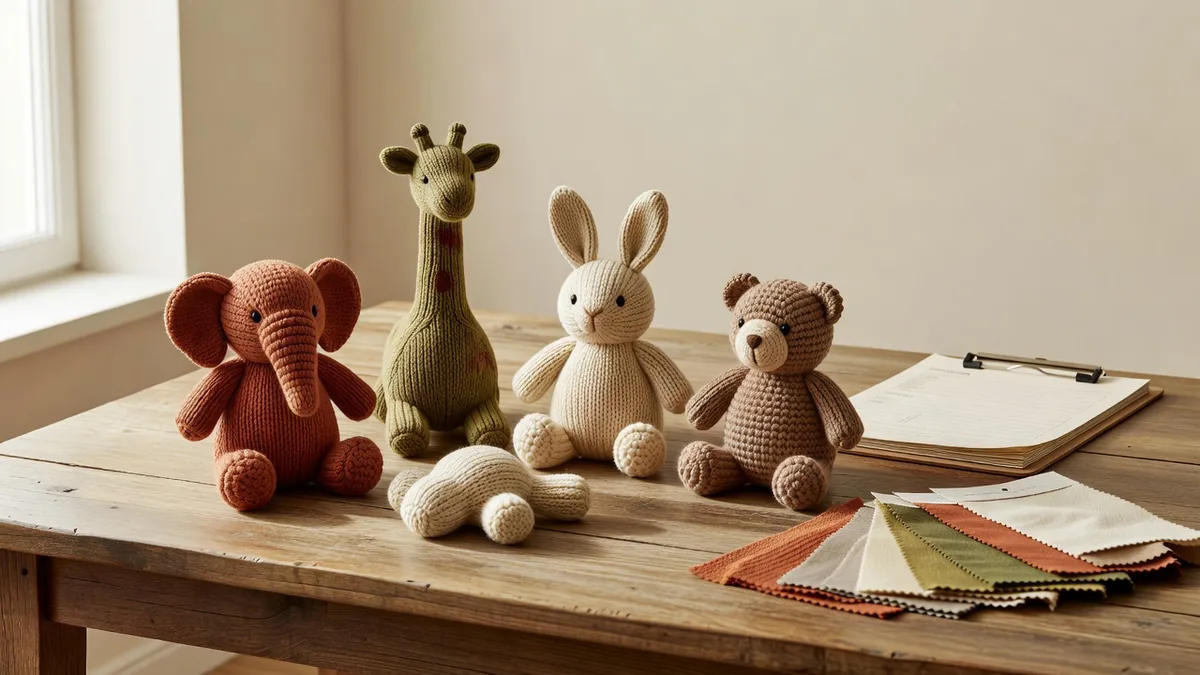
In factory English, “knitted dog toy” usually means a soft body made from knit yarn or knitted fabric panels, then stuffed and closed with a sewn squeaker pocket. It is not macrame rope, and it is not short-pile plush cut-and-sew. The look is closer to a hand-knit animal: visible stitch texture, softer drape, and a gift-set feel that photographs well for retail.
A wholesale set adds another layer. Retail buyers want a fixed assortment in one polybag or window box: often 3–6 animals (bear, bunny, duck, fox), sometimes mixed colorways, sometimes one color story. The commercial product stacks four systems: knit shell, fill, acoustic insert and pocket, and set packing.
Common constructions:
- Hand-look knit yarn animals with fiberfill and a single reed. Soft cuddle and light squeak. Failure modes: yarn snags, loose ends, open pocket seams, silent units after carton crush.
- Machine-knit panel shells cut and sewn like plush. Faster for volume; flatter texture. Failure modes: panel mismatch inside the same set, color lot drift across shapes.
- Knit body with rope limbs or ears. Hybrid for light tug. Failure modes: weak rope-to-knit joins, uneven set look.
- Multi-squeaker sets. Higher scrap if either pocket fails AQL; louder returns when one unit in the bag is silent.
Ask what share of monthly output is knitted squeaky product versus standard plush. If the answer is vague, assume your set is the training run for yarn QC and pocket discipline. Prefer plants that already ship wool-look or knit sets monthly over trading desks that cannot lock yarn and reed model numbers.
Who buys these set programs
Traffic on this keyword usually falls into a few buckets: DTC brands wanting a handmade look without artisan pricing; marketplace sellers listing 3–6 packs under one ASIN; retail buyers filling value aisles and seasonal gift sets; distributors stocking mid-price interactive soft toys.
If your only product is heavy power-chew rubber with no acoustic insert, you do not need this category. Knitted squeakers add yarn snag risk, pocket labor, reed supply risk, and returns when units go silent or unravel. Treat knitted squeaky dog toy set wholesale as knit shell plus acoustic insert plus set logistics—not “cute plush with free noise.”
Wholesale buyers care about mixed-SKU packing more than brand buyers do. Say that up front. A plant that only ships mono-SKU masters will frustrate six-shape bags.
Spec checklist before you send an RFQ
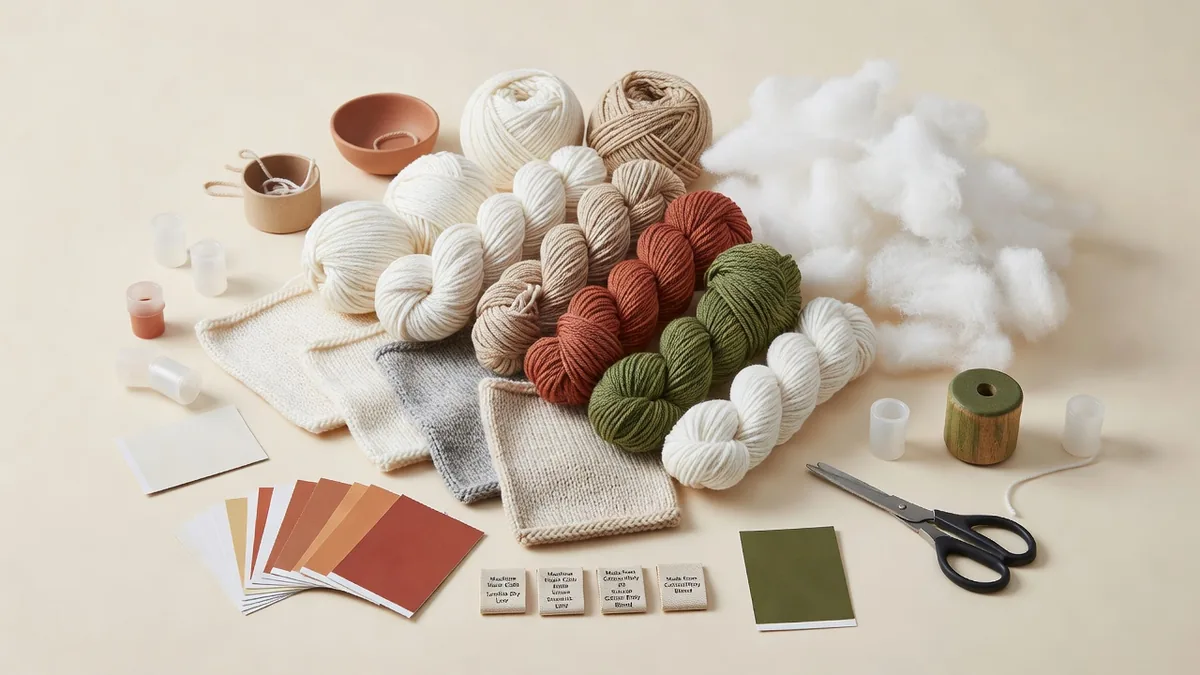
Vague briefs create samples that look handcrafted on the desk and shed yarn after three compressions in a polybag. Send something a production manager can price without inventing your product.
Play and size: dog size band and play style; finished mm per shape; weight band; exact set composition and whether substitution is allowed. Yarn / knit shell and fill: cotton, cotton blend, acrylic, or approved alternate; stitch density and how ends are finished; fill type and weight; seam density and bar-tacks; embroidered eyes/nose preferred for small-parts markets. Squeaker system: count per unit; reed model or diameter class; fully enclosed pocket with defined SPI; insert in a fabric pouch before body close when possible; acceptable silent rate at AQL (define it). Set brand and pack: logo method; polybag thickness and whether units are bagged individually then master-bagged; header or window box; sets per carton; barcodes and multi-language warnings; destination markets and test expectations (CPSIA-oriented thinking for the US; REACH / EN71-related screens when EU retail treats the item like a toy).A clean brief shortens sample rounds. Factories quote faster when they are not guessing yarn lot, reed size, and set mix on the same line.
MOQ, tooling, and cost reality for sets
Buyers often hope for fashion-level MOQs. Set programs carry floors on yarn dye lots, fill, reed minimums, and packaging. Packaging MOQ can exceed toy MOQ if you need custom polybags and hangtags for a multi-pack.
Bands you will hear (not a quote):
- Open stock / catalog knitted set: lower MOQ if the plant already runs the shapes and pocket method; color changes still cost
- Custom color on existing set bodies: yarn dye-lot minimums often drive the real floor
- New pattern or multi-squeaker layout: higher first-run MOQ, sample fees, longer lead time
- Full private label with custom pack: packaging MOQ can exceed the toy MOQ
For a test SKU, ask for a stock knitted set with your hangtag and one custom color story rather than six new sculpts. Private label programs often start that way, then move to exclusive silhouettes after sell-through. Full custom paths are better scoped under ODM services once you know which yarn and pocket method survives your market’s dogs.
Do not treat a “300 sets” email as a program if the yarn dye lot is a volume you cannot use across reorders. Ask which constraint sets the floor: sewing line, dye house, squeaker MOQ, or printed pack.
Sampling path that protects the bulk run
Treat sampling as product development, not a free gift box.
1. Material and reed board. Yarn swatches, fill sample, and the actual squeaker model you will lock.
2. Soft sample (one of each shape). Crush each unit 50+ times. Drop it. Stuff the full set in the intended polybag overnight and retest every squeaker.
3. Pre-production sample (PPS). Bulk-intended yarn, pocket method, and pack-out—including set composition.
4. Golden set. Seal one approved set. Ship one with the QC file to your warehouse so returns are judged against the same object.
Refuse “close enough” on pocket stitch length, yarn swaps, or shape substitution after PPS. Silent cartons and mismatched sets are usually a late substitute or a rushed close that skipped pocket bar-tacks. Build buffer for dyed-to-order yarn and non-stock reeds. Rush fees do not fix a missing insert SKU.
QC that catches knitted and squeaker failures
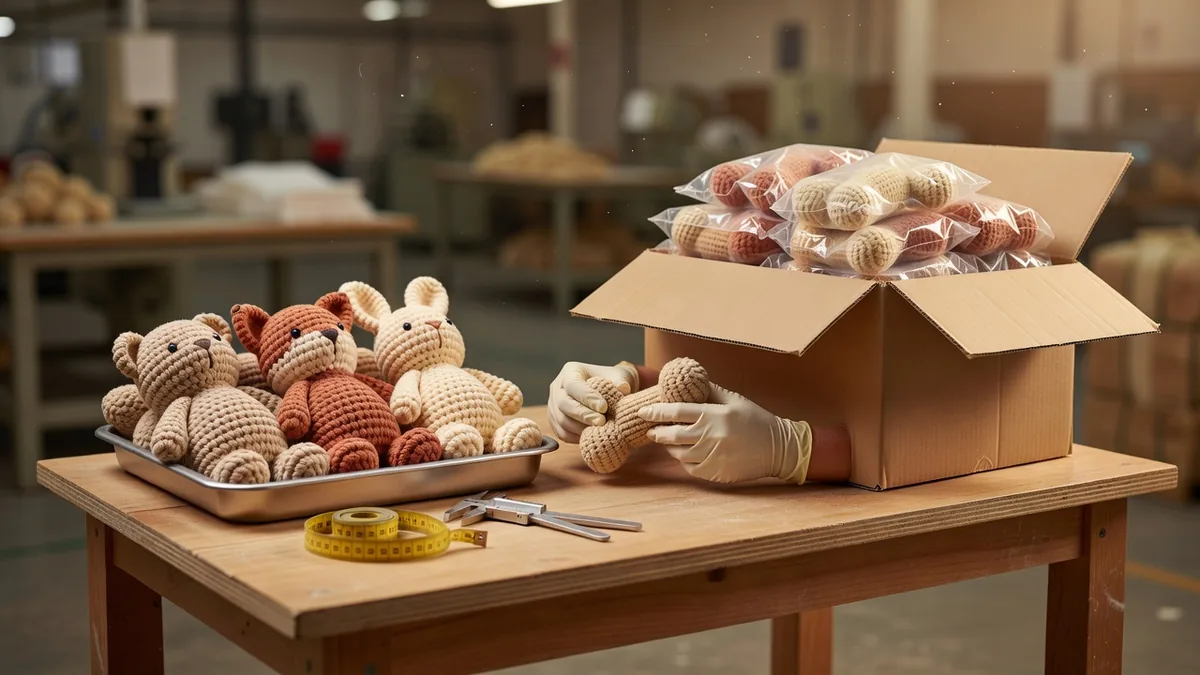
Standard plush AQL is not enough. Add checks for yarn and set packing:
- Yarn integrity: pull test on high-wear areas; loose ends, laddering, color bleed after a damp wipe
- Squeaker function: compress every sampled unit; log silent and weak units separately
- Pocket security: feel for insert migration; destructive sample if the rate looks high
- Set composition: count shapes and colorways per bag against the PPS
- Carton crush simulation: stack pressure, then retest squeakers
- Label and barcode: set-level UPC vs unit-level
Document AQL even on small trial orders. On first runs, ask for photo or video evidence of each QC gate before goods leave the plant. Align lab test timing with production so certificates are ready before cargo booking. Do not invent cert claims in marketing copy; only claim what lab reports support.
Packaging, mistakes, and the PO checklist
Align early on polybag thickness, hangtags, care labels, barcode placement, master carton drop expectations, and multi-language warnings. Marketplace returns spike when bag contents differ from the listing photo pack-out.
Common mistakes: buying on unit price without freight and set packaging; skipping yarn-snag and squeaker life tests; vague artwork across six shapes; changing yarn mid-sample without updating cost; ordering bulk before the pre-production set is signed off; allowing shape substitution without rewriting the listing and QC checklist.
WagNab works with brand and wholesale partners on soft pet toys from material selection through sampling and bulk. Review options on the products catalog, OEM/ODM on ODM services, and brand builds via private label. Teams evaluating knitted squeaky dog toy set wholesale usually start with dog size, yarn preference, set composition, logo method, first-order quantity, and destination market.
Before the PO: signed spec (yarn, reed, set mix); sample set approved in writing; AQL including silent-rate and composition; packaging dieline approved; Incoterms, payment, and lead time on the PO; room for one revision cycle without killing the launch window. If any of that is still verbal-only, pause.
When you are ready to discuss MOQ and sampling, contact WagNab with your set brief and target markets. Share shapes, yarn direction, and first-order quantity for sampling options and realistic lead times.
Ready to Build Your Next Collection?
From material selection to final delivery, we help brands bring pet toys to market.