Large Dog Toys in Bulk: Size and QC

Buyers searching large dog toys in bulk are not looking for a slightly bigger version of a terrier SKU. They need bodies that fit Labrador, Golden, Shepherd, and Mastiff mouths, survive real tug and chew, and still ship at export volume without crushing every carton. Size is the product. A 15 cm plush that works for a Chihuahua becomes a swallow risk and a one-week return spike when a 35 kg dog treats it like a snack. This guide is for brand owners, Amazon and marketplace sellers, distributors, and retail buyers who want large-breed programs that match the sample once cartons leave the plant.
Scan heavy chew, rope, and reinforced plush options on the products catalog while you lock size bands. Catalog-adjacent bodies usually start with lower MOQ than a full custom sculpt. If the silhouette still needs pattern or mold work, map an ODM path. When hangtags, cartons, and retail copy ride with the same PO, plan a private label track so packaging QC is not an afterthought.
What “large dog” means on a factory floor
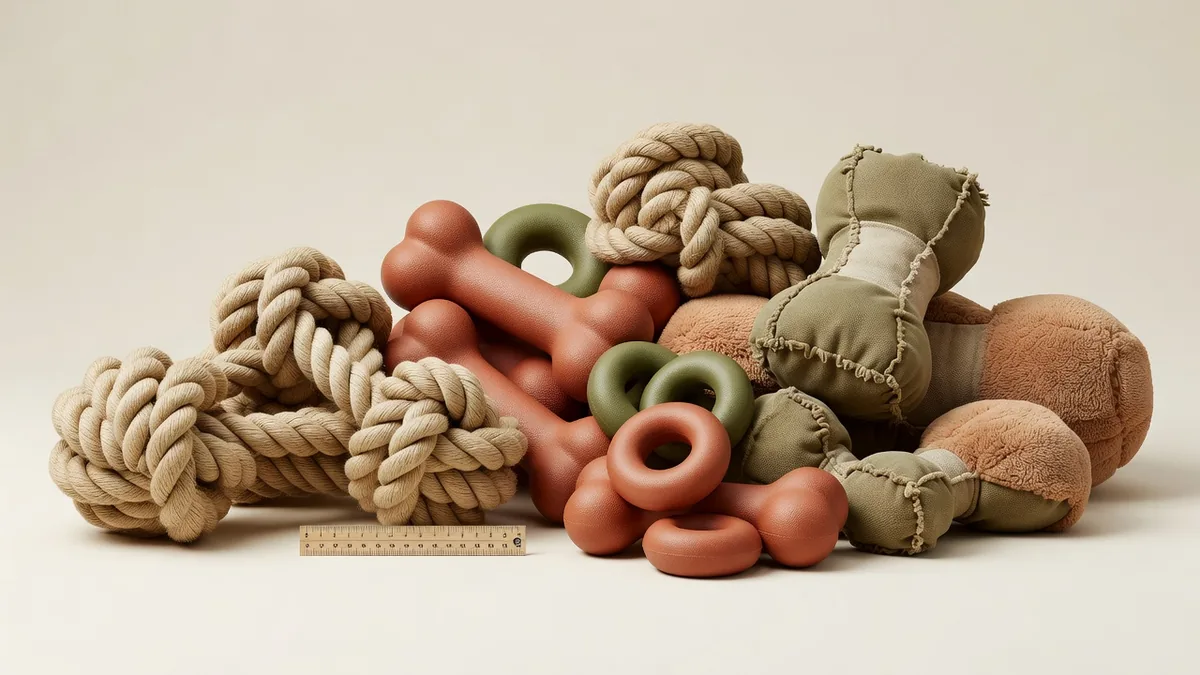
Retail copy says “for large dogs.” Production managers ask for finished length in cm, weight band, rope diameter, and which parts can detach under hard tug. Write those numbers into the RFQ.
Practical size bands many buyers use for large dog toys in bulk programs:
- Large (roughly 25–40 kg): finished bodies often 25–40 cm; rope diameter thick enough that a Labrador cannot swallow a knot whole; rubber walls sized for adult jaws
- Large-plus / giant (40 kg+): 35–50+ cm bodies; denser rubber or multi-layer canvas; avoid thin plush-only builds unless you accept fast destruction as the play style
- Shared “all sizes” listings: only if you intentionally sell one SKU across bands—and you accept that giant breeds will shred soft builds faster than the photo suggests
Do not rely on “large dog” as the only size callout on a carton. A distributor in Texas and a boutique in Berlin will interpret that phrase differently. Put cm, grams, and rope diameter on the spec sheet, then mirror the same numbers on the PPS sign-off.
Play style matters as much as length. Companion plush for apartment Labs fails differently than power-chew rubber for a determined Shepherd. If your listing promises “indestructible,” the construction has to match. Sparse stitching and light fill will not survive a Mastiff, and returns will teach you that before any dashboard does.
Who actually buys these programs
Traffic on this keyword usually falls into a few camps:
- DTC brands building a “for large breeds” collection next to soft companion SKUs
- Marketplace sellers refreshing an ASIN family with colorways that share one oversized body
- Distributors stocking mid-price tug and chew for independent pet shops that sell to Lab and Shepherd owners
- Retail buyers filling value aisles and gift sets where large-dog households shop hardest
If your only product is light puppy teething rubber molded for 8-week mouths, you are in a different tooling story. Large-dog assortments lean thick rope, dense TPR or natural rubber, reinforced canvas, and hybrid builds. Treat them like soft goods with toy-safety thinking plus real chew load, not like a scaled-up small-dog line.
Wholesale buyers care about mixed colorways in one master carton more than brand buyers do. Say that up front. A plant that only ships mono-SKU masters will frustrate assortment programs built for large-breed shelves.
Spec checklist before you RFQ
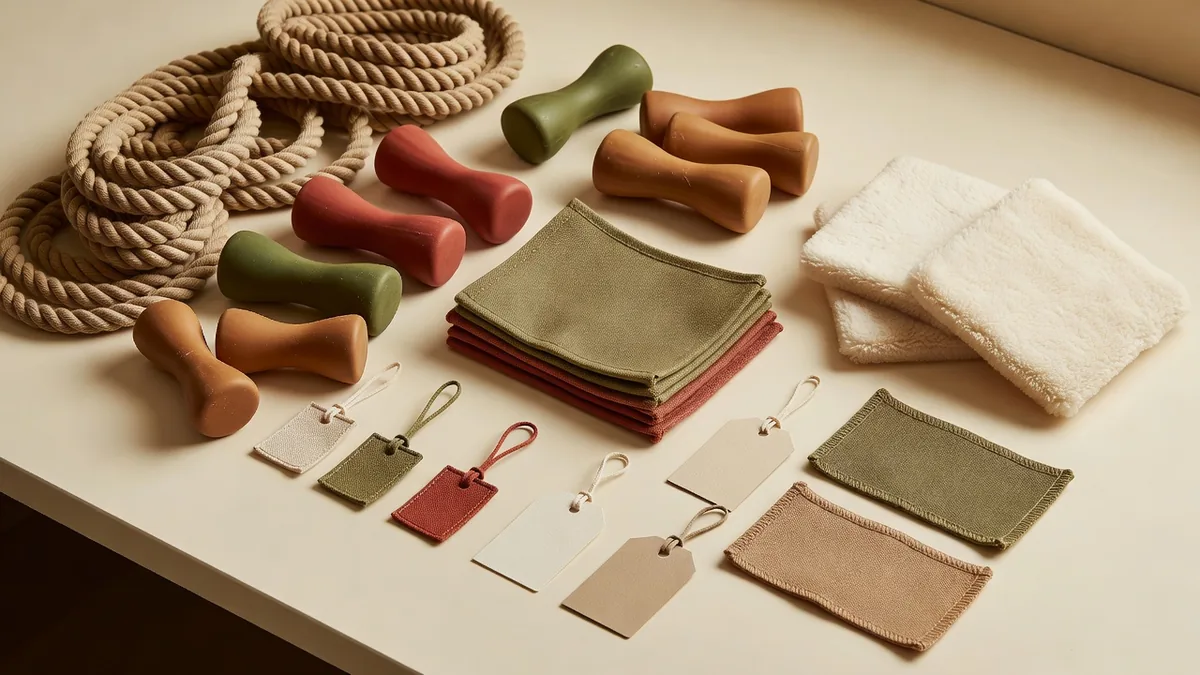
Vague briefs create samples that look tough on the desk and fail on a 35 kg dog in week one. Send something a production manager can quote without inventing your product.
Size and play- Dog weight band and mouth size assumptions
- Finished length, width, diameter, and weight targets per SKU
- Play style: hard chew, tug, fetch, or “cute until destroyed”
- Whether the SKU must pass a small-parts style screen for your channel (large toys still shed eyes, squeakers, and rope ends)
- Outer fabric: heavy canvas, ballistic-style panels, short plush with wear zones, or rubber-only shells
- Fill type and density; recycled-content claims need documentation, not hangtag poetry
- Rope yarn count, twist, and diameter sized for large jaws
- TPR or natural rubber hardness band if you mix materials
- Inserts: squeaker count/type, crinkle, no loose beads unless you own the risk
- Woven label, printed hangtag, embroidery or heat-transfer logo placement
- Polybag thickness, carton marks, barcode, multi-language warnings for US / EU
- Destination markets and the tests your channel actually requires
A clean brief shortens sample rounds. Factories quote faster when they are not guessing whether “large” means 25 cm or 45 cm.
MOQ reality for large-dog assortments
Buyers hope for fashion-level MOQs. Factories hear dye lots, rubber compound minimums, rope minimums, and packaging floors. Packaging MOQ can exceed toy MOQ if you need custom polybags and hangtags. Oversized SKUs also eat carton cube, so freight and master-pack planning matter earlier than on mini plush.
Bands you will hear (not a quote):
- Near-stock large body + your hangtag / one colorway: often a few hundred units per SKU if the body already runs
- Color change on an existing mold or pattern: mid hundreds to low thousands, depending on rubber vs sewn goods
- New mold or full pattern + private packaging: higher floors; rubber tooling and custom cartons drive cost more than the first sample fee
Ask what is locked vs negotiable. A plant that quotes “MOQ 50” on a custom large rubber bone without explaining compound and mold amortization is selling hope. Ask how reorders behave after the first container. Stable reorder MOQs matter more than a heroic first-order number that never repeats.
If you need mixed sizes in one program (large + giant), ask whether the factory can share packaging SKUs or whether each size forces its own hangtag and barcode floor. That detail shows up on the cost sheet more often than buyers expect.
Sampling that actually predicts field failure
A pretty sample is not a large-dog proof. Run a short loop before you scale:
1. Desk review: dimensions vs brief, logo placement, odor on rubber, rope twist consistency
2. Controlled chew / tug session with dogs in the target weight band, or a lab proxy your channel accepts
3. Wash or soak check if the listing claims machine-washable or outdoor use
4. Pre-production sample (PPS) locked against the PO—same materials, same stitch or mold recipe
Budget freight both ways on samples. For rubber and thick rope, smell and hardness travel poorly in photos. If your market needs CPSIA, EN71, or REACH-style documentation, align lab timing with sampling so certificates are not chasing a sealed container.
When you change hardness, rope diameter, or canvas weight mid-sample, update the cost sheet the same day. Silent material swaps are a common source of “the bulk feels softer than the sample” disputes on large dog toys in bulk programs.
QC that catches large-breed failure modes
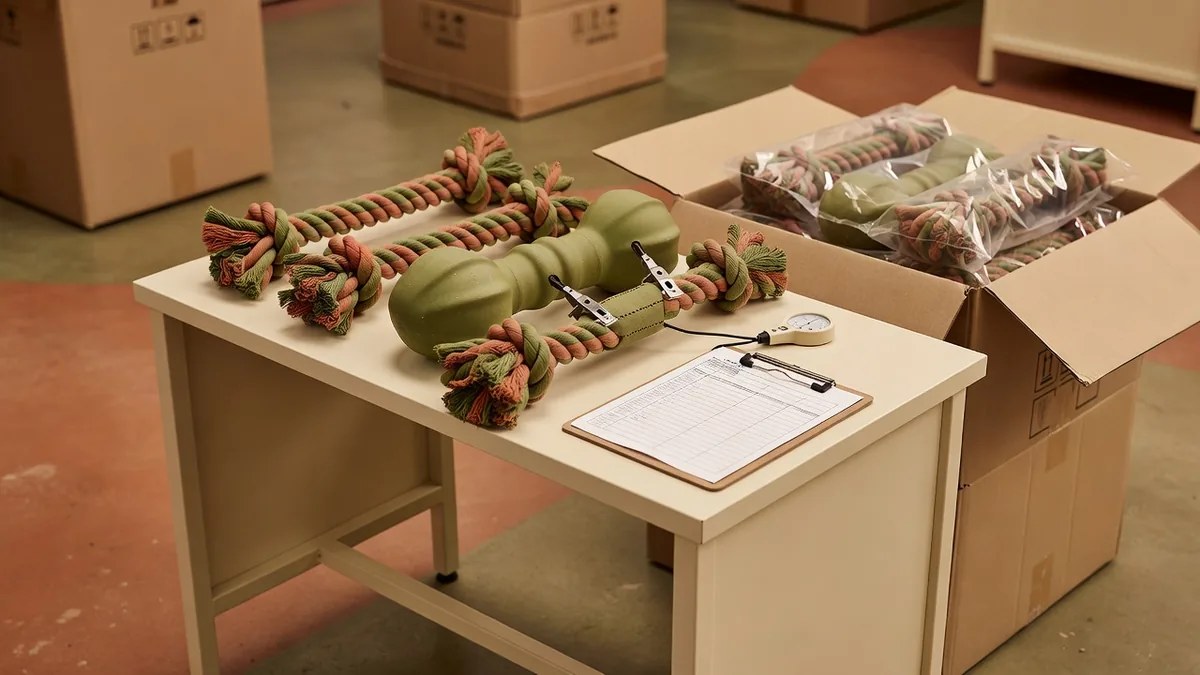
Large toys fail loudly. Rope knots loosen, rubber flashes cut gums, canvas panels peel, squeakers migrate into fill. Build a simple multi-stage plan even on trial orders:
- Incoming: compound or fabric lot checks, rope diameter and twist, hardware policy (eyes/noses)
- In-line: seam density, wall thickness on molded parts, knot security, logo placement
- Final / PSI: AQL on appearance and function, carton drop expectations for heavy units, barcode and warning labels
Document photo or video evidence of each gate before goods leave the plant. Keep a shared issue log so the same defect does not reappear on reorder. For US or EU retail, align lab test timing with production so paperwork is ready before cargo booking.
Oversized cartons crush differently than mini-plush masters. Ask for pack-out photos that match what Amazon or your DC will receive. Inconsistent polybag thickness and weak master cartons are a top return driver when heavy rubber toys shift in transit.
Packaging, labeling, and retail readiness
Wholesale and brand buyers lose margin when packaging is an afterthought. Align early on:
- Inner polybag thickness and print (large toys need stronger bags)
- Hangtags, care labels, barcode placement
- Master carton dimensions, weight limits, and drop-test expectations
- Multi-language warning copy for target markets
If you sell on marketplaces, confirm that pack-out photos match the shipped unit. A 40 cm rope toy that arrives crushed or with a swapped colorway creates reviews that no title rewrite will fix.
For private label programs, treat carton art and hangtag copy as part of the PPS, not a week-before-ship scramble. Brand buyers who skip this step often discover compliance gaps after the factory has already printed.
Common mistakes brand buyers make
- Choosing on unit price without freight, testing, and packaging for oversized SKUs
- Skipping real-dog or lab durability checks on “tough” claims
- Vague artwork files that delay logo application on dark rubber or thick rope
- Ignoring packaging compliance (barcodes, warning labels, language)
- Changing rubber hardness or canvas weight mid-sample without updating cost
- Assuming the factory will “just know” your market’s labeling rules
- Ordering bulk before the pre-production sample is signed off
- Listing one soft plush as “for large dogs” without a reinforced wear path
How Wagnab supports custom and wholesale programs
Wagnab focuses on pet toy manufacturing for brand and wholesale partners—from material selection through sampling and bulk. Review live options on the products catalog, OEM/ODM process on ODM services, and brand-building path via private label.
Teams evaluating large dog toys in bulk usually start with a short brief: target breed weight band, material preference, logo method, first-order quantity, and destination market. From there we map a realistic sample plan and flag compliance needs before tooling money is spent.
Decision checklist before you place the PO
Use this list before committing:
- Spec sheet signed and versioned (cm, grams, diameter, hardness)
- Sample approved in writing (photos + physical if needed)
- QC plan and AQL agreed
- Packaging dieline approved
- Incoterms, payment terms, and lead time written into the PO
- Contingency for one revision cycle without killing the launch window
If any item is still verbal-only, pause. Most post-shipment disputes on pet toys come from unwritten assumptions, not from bad intent.
When you are ready to discuss MOQ and sampling timelines for a large-breed assortment, contact Wagnab with your brief and target markets. Share the weight band, play style, and first-order quantity—we will respond with sampling options and realistic lead times.
Ready to Build Your Next Collection?
From material selection to final delivery, we help brands bring pet toys to market.