Mini Plush Dogs Bulk: Specs, MOQ, Sampling & QC

If you are buying mini plush dogs bulk, you are usually hunting for small soft shapes that photograph cute, pack dense in a carton, and still survive moderate play without dumping fill on the first ear pull. That is a different brief from a large cuddle plush or a heavy chew rubber bone.
This guide is for brand owners, Amazon and marketplace sellers, distributors, and retail buyers who need mini plush dog assortments at volume. It covers what “mini” actually means in export factories, how to write a brief a sewing plant can quote, realistic MOQ thinking, QC that catches underfill and weak seams, and when open-stock bodies beat full custom patterns.
Browse current soft-toy direction on the products catalog before you freeze a silhouette. Catalog-adjacent bodies often start with lower MOQ and no pattern-development fee.
What mini plush dogs mean in export programs
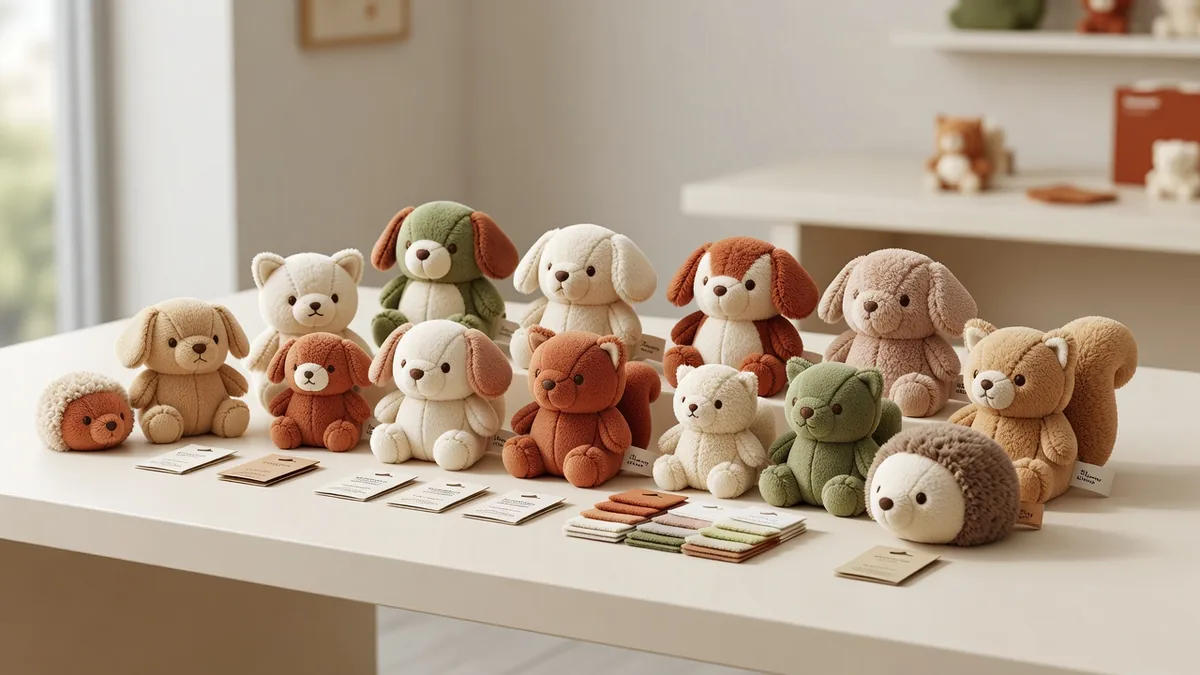
In factory English, “mini plush dog” usually means a short-pile soft toy in a dog or puppy silhouette sized for small breeds, gift sets, or multi-packs—not a life-size companion plush. Finished length often lands roughly in the 8–20 cm class once you exclude loose ears. Buyers who only write “mini” without mm get three different scales from three plants.
Common export constructions:
- Short plush shell + fiberfill + optional squeaker pocket. Most gift and value multi-packs. Failure modes: underfill, ear seam pop, pocket open seam, silent reed after carton crush.
- Crystal or crushed velvet face on a small body. Looks premium in photos; dye lot and pile direction matter more than on matte short plush.
- Multi-SKU breed or color sets. Shared fabric family, different embroidered faces. Scrap rises if each face needs a new digitizing file and the line changes color every carton.
- Mini with rope limbs or TPR accents. Hybrid appeal for “soft but tug.” Bonding points and safety claims need extra attention.
On platforms you will meet three seller types under the same keyword:
Trading desks with a soft-toy partner. Fast English, mixed factories. Acceptable for open stock if you own inspection. Plush plants that already run mini animal lines. Real capacity. Fill-weight discipline and ear bar-tacks vary. Ask for a size chart and a weight band per SKU, not only a photo. Pet lines that ship mini assortments every month. Narrower catalog, more honest about carton density and return patterns on “cute but empty” units. Mid-size brands often land here after one season of soft returns.Ask what share of monthly output is under 20 cm finished length. If the answer is vague, assume your order is the training run for mini fill QC.
Who buys mini plush dogs bulk
Serious traffic on this keyword usually falls into a few buckets:
- DTC brands building gift multi-packs (3–6 minis) without two factories
- Marketplace sellers who need dense carton value and photo-ready puppy shapes
- Retail buyers filling value aisles, seasonal gift sets, and impulse endcaps
- Distributors stocking independent pet shops with mid-price soft toys for small dogs
If your only product is a large power-chew rubber with no soft shell, you may not need this category. Mini plush adds fill-weight risk, small-parts thinking on plastic eyes, and returns when units feel hollow. Treat mini plush dogs bulk as a fill-and-seam program, not as “cute PDF plus freight.”
Wholesale buyers care about mixed-SKU packing and units per carton more than brand buyers do. Say that up front. A plant that only ships mono-SKU masters will frustrate assortment programs with six puppy faces and three colorways.
Spec checklist before you send an RFQ
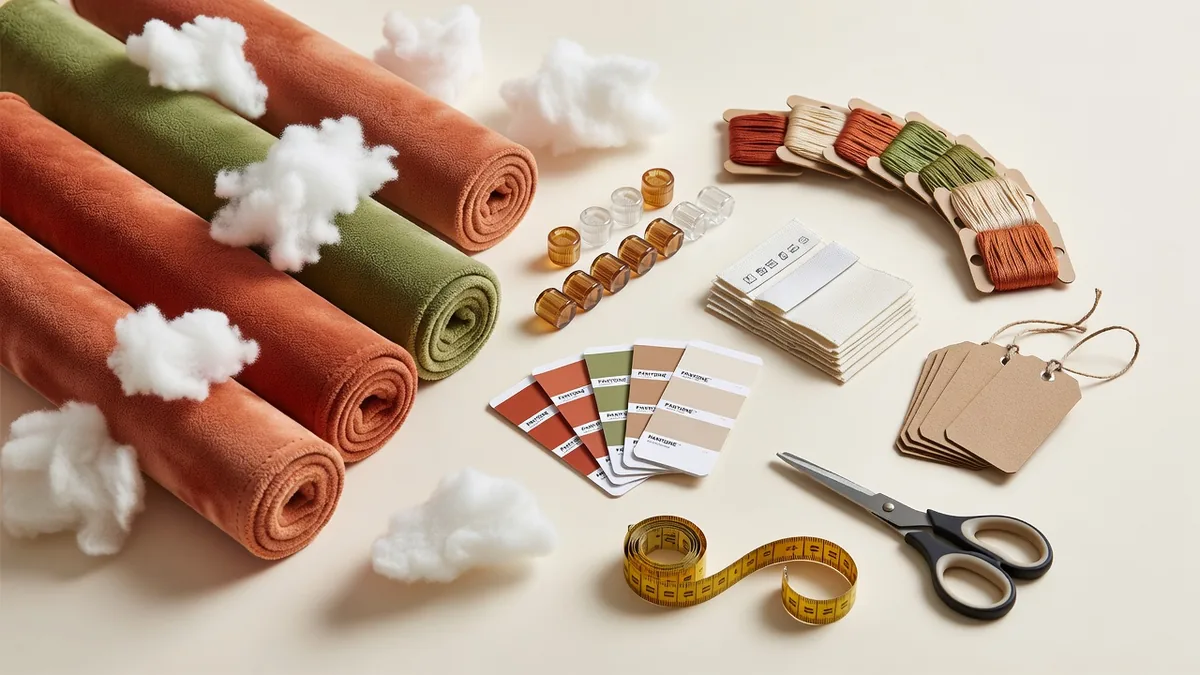
Vague briefs create samples that look fine on a phone and feel empty in the hand. Send something a production manager can price without inventing your product.
Size and play- Dog size band the toy is meant for (toy / small / gift display only)
- Finished dimensions in mm; call out ears, limbs, and thin necks
- Target weight range per size; light minis feel cheap and bruise easier in master cartons
- Play style: gentle cuddle, moderate toss, light tug, or “will be destroyed eventually”
- Fabric: short plush, crystal or crushed velvet, cotton blend, or approved alternate with GSM notes
- Fill type and weight band per size; recycled fill only with documents if you will market it
- Seam density and bar-tacks at ears, neck, and limbs
- Eyes/nose: embroidered only vs plastic hardware (plastic = stricter small-parts thinking)
- Count per unit (0 / 1 / multi)
- Reed model preference or diameter class
- Pocket fully enclosed; stitch type around the pocket
- Rope limbs, crinkle paper, or TPR accents if any—list bonding method
- Logo method: embroidery, woven label, heat transfer, hangtag art
- Polybag thickness and print; header card if retail hanging
- Master carton size, units per carton, barcode, multi-language warnings for US/EU
- Destination markets. US programs often need lead and phthalates thinking (CPSIA-style discipline). EU retail often wants REACH and mechanical/chemical screens when the item is treated like a toy. Do not invent lab results in listings; schedule real tests to match the claim.
A complete brief shortens sample rounds. Factories quote faster when they are not guessing your product.
Open stock vs private label vs ODM for mini plush
Buyers mix these paths and then argue about MOQ that never matched the path they chose.
Open stock / catalog body. Factory already runs the puppy shape. You pick color, logo method, hangtag, and inner bag. Fastest path for a first season of mini plush dogs bulk. Limited exclusivity. Good when you need photo-ready SKUs before a gifting window. Private label on proven tools. Colorway, embroidery or woven label, pack-out, sometimes a minor pattern tweak. You brand a body that already survived bulk sewing. Lower pattern risk. Details and service scope live under private label. ODM. Factory or partner proposes silhouettes from a development library; you brand and adjust materials. Useful when you want a mini breed set or food-adjacent puppy shapes without hiring a pattern maker. See ODM services. Full OEM. Your pattern, your BOM, your workmanship standard. Highest control, longer sampling, fabric MOQ often dominates cost. Only worth it when the shape is core IP or you need a multi-year exclusive look.For mini assortments, embroidery digitizing and carton mix often drive cost as much as the sewing line. A “500 pcs” quote that forces six separate face digitizing fees is not the same program as 500 pcs of one face.
MOQ reality for mini plush programs
MOQ is usually fabric dyeing, embroidery digitizing, and line changeover—not how polished the sales deck looks.
What brand buyers often see in this category:
- Private label on an existing mini body: a few hundred units per SKU can work if the dye lot is shared or stock fabric is already on the shelf
- New color on short plush: mid-hundreds depending on mill minimums; ask for per colorway MOQ, not only per style
- Multi-SKU puppy set (3–6 faces, shared fabric family): negotiate shared dye lots and shared fill so per-SKU volume stays workable
- Full custom pattern + exclusive fabric: expect fabric MOQ and pattern fees to dwarf the first sewing run
Questions that save rework:
1. Is fabric in stock or made to dye?
2. What is scrap rate on ear and limb sewing for this size?
3. Can leftover fabric from dye lot be held for reorder, and for how many months?
4. Does “500 pcs” mean 500 total or 500 per face / color?
If your first season needs unique faces and dense multi-packs, map development on ODM or private label before you lock a number that only works in a spreadsheet.
Sampling timeline and what you should pay for
A realistic first engagement for mini plush dogs bulk looks like this:
1. Brief review and material recommendation (2–5 business days). Swatches and a size chart beat phone photos.
2. Proto or first soft sample (about 7–18 days depending on pattern work and whether fabric is stock).
3. Revision sample after you weigh, pull ears, and photograph the unit (optional but common).
4. Pre-production sample (PPS) locked against the PO—same fabric lot family, same fill weight, same logo placement.
5. Bulk with in-line and final inspection.
Budget for sample freight both ways and for lab tests if your market and claims require them. A cheap mini sample that skips fill-weight and seam checks often becomes a return spike after launch.
Approve PPS against a written checklist: dimensions, weight, color under store light if you care, logo placement, squeaker function, polybag and hangtag match. Verbal “looks fine” on WeChat is not a PPS sign-off.
QC that catches mini plush failures
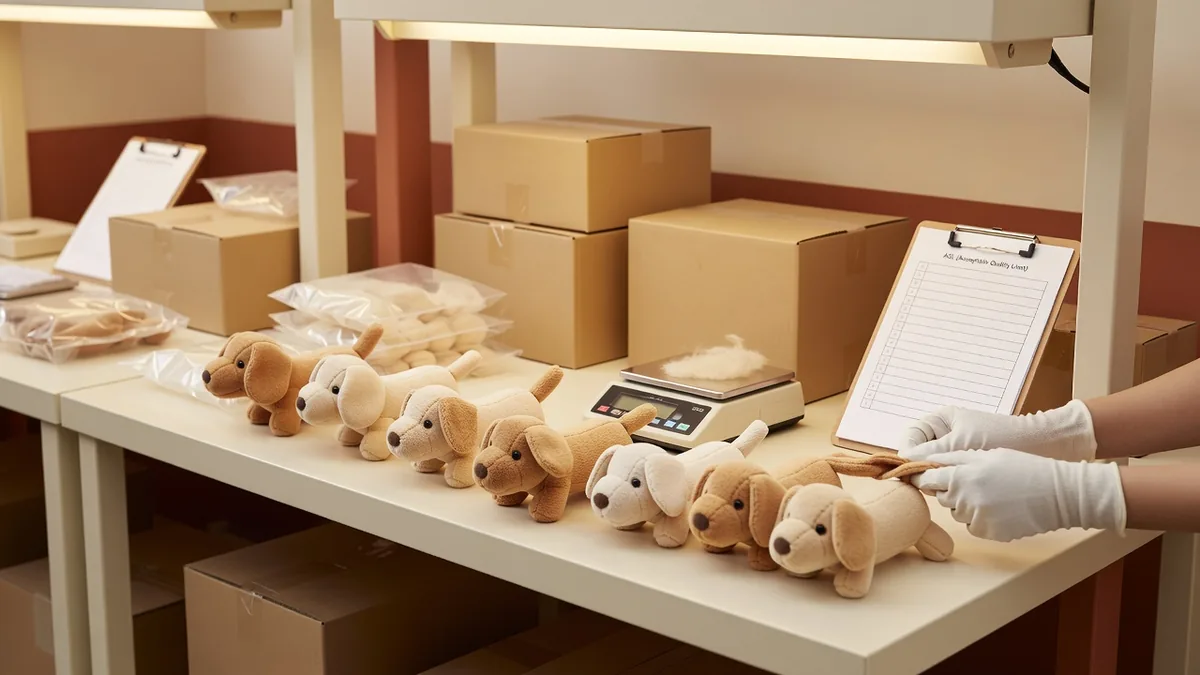
Multi-stage QC still applies: incoming fabric and fill, in-line sewing, final random pull, pre-shipment carton check. For mini plush dogs, add checks humans skip when they only look at “cuteness.”
Incoming- Fabric width, GSM, shade vs approved swatch
- Fill cleanliness and clump risk
- Squeaker batch function sample if used
- Seam density on ears and limbs
- Stuffing weight vs size chart (underfill = cheap hollow feel; overfill = hard body and seam stress on a small shell)
- Logo placement tolerance on a short body
- Loose threads and needle detection if you sell into chains that require it
- AQL plan even on small trial orders—it trains the line early
- Photo evidence of cartons, labels, and random open units before booking
- Press checks on polybag pack-out so small faces are not permanently crushed in transit
- Count audit on mixed assortments so face ratios match the PO
Document defects in a shared log. The same ear seam that failed on trial should not reappear on reorder because nobody wrote it down.
For programs headed to US or EU retail, align lab timing with production so certificates are ready before cargo booking, not after the container is sealed. Do not claim EN71, REACH, or CPSIA numbers you have not tested.
Packaging and carton density
Wholesale and brand buyers lose margin when packaging is an afterthought. Mini plush photographs well in a set; a wrinkled thin polybag and a crooked hangtag undo that in the first unboxing video.
Align early on:
- Inner polybag thickness and whether anti-crush inserts are needed for larger minis in the same set
- Hangtags, care labels, barcode placement, and warning copy language
- Master carton dimensions, packing ratio, and drop-test expectations
- Consistency between listing photos and shipped unit (top reason for marketplace returns on soft toys)
- Mixed-SKU pack-out drawings when you sell multi-face sets
If you run private label across several marketplaces, keep one master pack-out drawing. Regional sticker variants are fine; three different polybag prints are not.
Dense packing helps freight cost on mini plush dogs bulk. It also increases crush risk. Ask the plant how they balance units per carton against pile recovery after ocean transit.
Common mistakes on mini bulk programs
- Choosing unit price without fabric MOQ, testing, and packaging in the landed cost
- Approving a sample under phone flash only, then arguing shade on bulk under daylight
- Ignoring fill weight so two units from the same carton feel different
- Plastic eyes on a “chew-friendly” claim without small-parts discipline
- Changing fabric mid-sample without updating the cost sheet
- Ordering bulk before PPS is signed against a written checklist
- Assuming the factory “just knows” US or EU labeling rules for pet toys
- Mixing six faces in one PO without locking digitizing and color changeover fees
How to start a trial order without burning the season
1. Lock use-case and size band (who plays, how hard, gift vs daily toy).
2. Pick path: open stock, private label, ODM, or full OEM.
3. Send a full brief (size mm, fabric, fill weight band, brand, pack, markets).
4. Approve fabric swatches and a size chart before full soft samples when color and scale are critical.
5. Run weigh, pull, and photo checks on samples.
6. Sign PPS, then PO with QC gates and ship window.
7. Keep reorder fabric lot and fill notes for season two match.
When you are ready for a concrete quote path, use the contact form with target markets, rough annual volume, preferred path (private label vs OEM), and any reference photos. For catalog-adjacent bodies and existing soft lines, start on products; for co-developed shapes see ODM; for branding on proven tools see private label.
Mini soft programs need mm and fill locked early—use compact catalog bodies like Little Duck and Cute Goofy Chicken as size/weight baselines before you scale a multi-SKU carton.
Bottom line
Mini plush dogs bulk works when size mm, fill weight, and ear seams get the same attention as the marketing photo. Soft cute sells the first click. Consistent weight, seam strength, and carton mix sell the reorder. Write the brief like a production manager will read it, lock PPS before bulk, and treat fill and face ratios as quality parameters—not decoration.
That is the difference between a gift-looking mini set that holds a brand margin and a pretty sample that never matches the second container.
Ready to Build Your Next Collection?
From material selection to final delivery, we help brands bring pet toys to market.