Nylon Bone Dog Toys: Sizes and MOQ

Buyers searching nylon bone dog toys wholesale usually want one durable bay that is not a pile of lookalike bones. In the Classic Chew line, start with the Coated Bone Chew (SKU MN-1202, featured). Catalog materials are PA with a PU coating, color green, sizes S 13.3×4.6×2.8 cm, M 16.5×5.6×3.7 cm, and L 19.5×6.6×4 cm. Weights on file are about 65 g, 145 g, and 200 g. MOQ is 120. That is the hero peg. It is not a lab certificate.
Two active neighbors finish the family. The Fiber Bone Chew (MN-1211) is PA plus cowhide fiber, beige, with S/M/L and a large listed around 310 g. The Real Bone Chew (MN-1203) is PA plus TPR, orange, in S and L only, large about 260 g. Same catalog MOQ, 120, on all three. None of them should be sold as indestructible, and none of them is a rawhide chew.
If you already briefed the coated bone as a single SKU, this page is the assortment decision: which bone, which size, and what not to mix into the same claim.
Three PA bones, three different claims
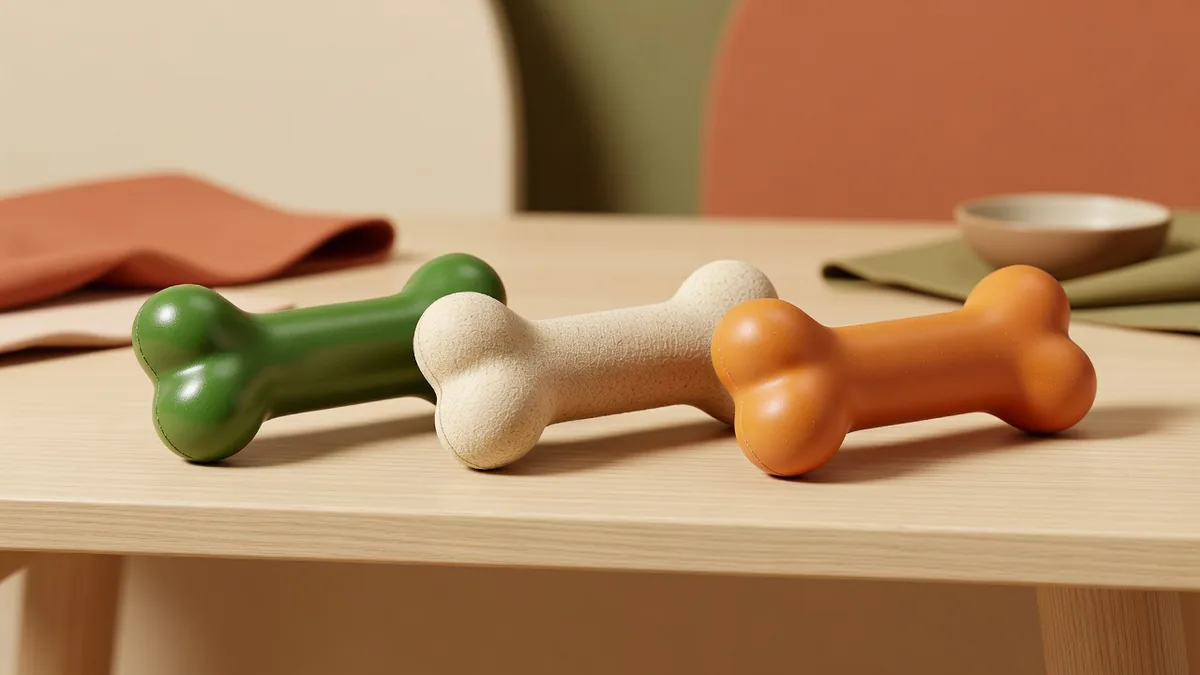
Treat "nylon bone" as a shelf name, then write the material line from the database. PA (nylon) is the common body. The second material is what the shopper can actually see.
| SKU | Materials | Color | Sizes on file | Weight on file | MOQ |
| --- | --- | --- | --- | --- | --- |
| Coated Bone Chew, MN-1202 | PA, PU coating | Green | S 13.3×4.6×2.8; M 16.5×5.6×3.7; L 19.5×6.6×4 cm | 65 g / 145 g / 200 g | 120 |
| Fiber Bone Chew, MN-1211 | PA, cowhide fiber | Beige | S 13.5×5×3.5; M 16×6.2×4.2; L 20.5×7.5×5.8 cm | S about 95 g; M 170 g; L 310 g | 120 |
| Real Bone Chew, MN-1203 | PA, TPR | Orange | S 12.5×4.8×4; L 16.5×6.8×5.5 cm | 110 g / 260 g | 120 |
The coated bone is the smooth green one. Use it when the buyer wants a clean color story and a three-step size ladder. Do not call the coating "natural" or "leather." PU is a coating on PA.
The fiber bone is the only one with cowhide fiber on the material line. If a retailer asks for a bone that looks closer to a hide chew, this is the SKU to sample, not the green coated one. Still do not print "edible," "digestible," or a vet endorsement. Those words are not in the catalog.
The real bone is PA with a TPR skin, orange, two sizes. The name is a merchandising name. It is not a cooked bone and not a rawhide alternative unless your own packaging lawyer says so. Catalog copy frames it as tug and repeat chew, not a destruction test.
Pet type on all three is dogs. Do not drop a 200–310 g bone into a cat planogram because the silhouette photographs well.
Who should open with which bone
A pet specialty or farm store that wants one peg with a real size run should open on the coated bone in M, then add S and L only if the fixture can hold three facings. Marketplace brands that need stable dimensions for listing photos have the same problem: three sizes means three image sets, three weights, and three carton counts. Pick the size you can actually photograph before you reserve all three.
Distributors whose plush returns are already high often want a firmer chew next to rope. A bone does that job. It does not replace rope. If the account also buys cord, keep Nylon Rope Stick (PA and nylon, about 17×4.5 cm, 200 g, MOQ 120) on a separate line of the sheet so nobody merges "nylon bone" and "nylon rope" into one SKU.
Skip the large bones if the brand promise is gentle puppy teething. A 200 g coated L, a 260 g real-bone L, or a 310 g fiber L is the wrong hero for a soft-mouth kit. Lead those programs with Puppy Rope Knot (TPR and cotton, 9.8×7.8×4.3 cm, about 29 g, MOQ 120) and move up to a bone only after the chew style is obvious.
Power chewers are a different conversation, and it is one the catalog cannot finish for you. There is no Shore hardness, no chew-hours rating, and no bite-force number on these records. If a buyer needs that language, put it on the RFQ and test the sample. Do not invent it on the sell sheet.
Specs to lock before the PO
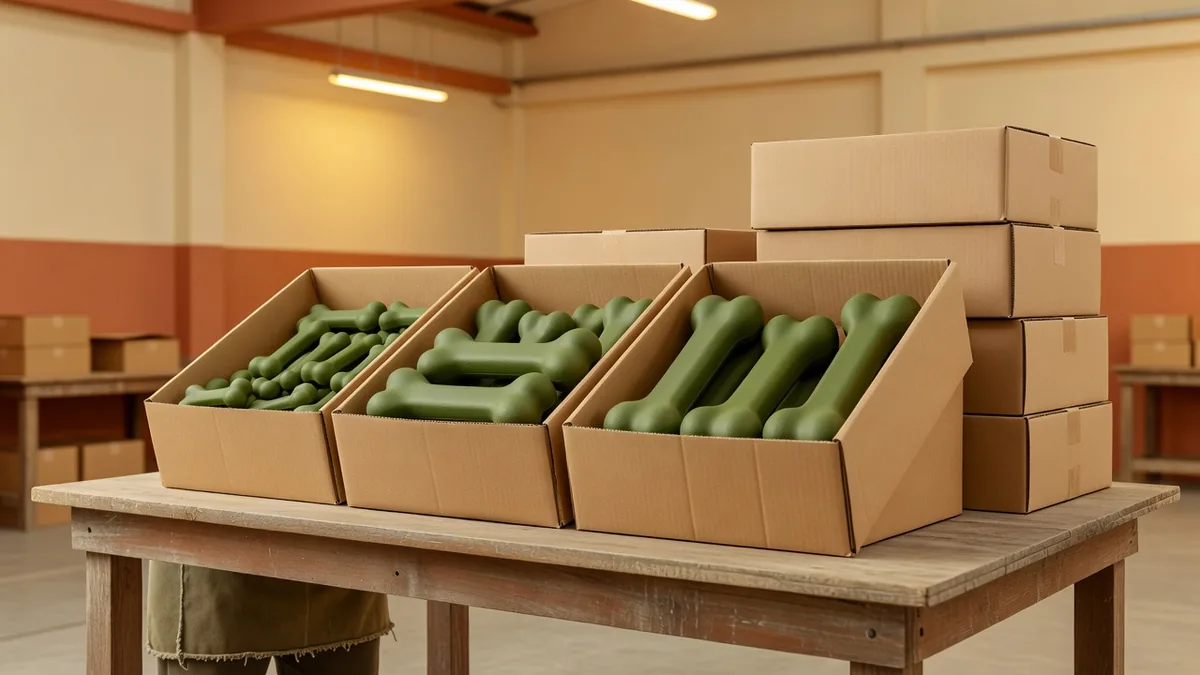
Write the PO from the table above, then mark gaps as "confirm on quote."
Size codes are not interchangeable across the family. Coated M is 16.5×5.6×3.7 cm. Fiber M is 16×6.2×4.2 cm. Real bone has no M at all; its L is 16.5×6.8×5.5 cm, closer to someone else's medium. If you print one hangtag template that says "Medium" for all three, the warehouse will pick the wrong unit. Name the SKU and the centimeter string on the carton mark.
Weights matter for freight and for "heavy chew" copy. Fiber L at about 310 g is the heaviest piece in this trio. Coated S at 65 g is the lightest. A buyer who says "same as the green one, just natural color" is asking for a different gram weight and a different material. Quote them separately.
Color on file is one swatch each: green, beige, orange. A second colorway is a development question, not a checkbox on the open-stock PO. Stock color on the first order keeps the MOQ at the catalog 120. A custom color usually means a new minimum and a new sample. Ask before you promise the retailer a brand blue.
The fiber weight string in the database is stored a bit messily ("L:310 M:170 5:95g"). Read S as about 95 g unless the pre-production sample scale says otherwise, and weigh the PPS yourself. Do not let a typesetting error become the master-carton math.
Fields the catalog does not have: unit price, inner-pack count, carton cube, barcode, warning copy, and any certification. Those stay blank until the quote. CPSIA, EN71, or REACH language belongs on a test plan you order, not as a badge copied from a blog.
How the bones sit in Classic Chew
Classic Chew is the durable series: molded chews, rope, and these bones. The Classic Chew collection is the right parent link on a line sheet. Studio Warmth plush and Smart Play mats are different programs. A nylon bone does not belong in a snuffle-mat bundle just to raise the average price.
A workable first bay, if the fixture is short:
- Coated bone in the one or two sizes you can face. M is the usual open if you only take one.
- Fiber M or L as the hide-look alternate, not as a silent colorway of the green bone.
- Real bone L only if you still have a peg and you are willing to explain PA + TPR in training.
A fourth bone shape usually creates returns. Shoppers cannot tell them apart from the aisle, and staff start scanning the wrong barcode. If you need a lighter chew beside the bones, use a TPR piece such as Key Chew Long (TPR, 21×2.5×2.5 cm, about 33 g, MOQ 120) rather than another PA bone.
Soak-water toys are a summer story, not this one. Soak Water Bone is TPR, 16×7.8×3.9 cm, about 90 g. It shares a bone silhouette and almost nothing else. Keep it off the nylon-bone planogram so "freeze it" instructions do not land on a PA chew.
MOQ 120 is per SKU in the catalog, not a blended 120 across colors and sizes. Three sizes of coated bone can mean three minimums. Confirm the split on the quote if you want to mix S/M/L inside one 120. Assuming the factory will blend them is how trial orders stall.
Sampling, private label, and what not to change
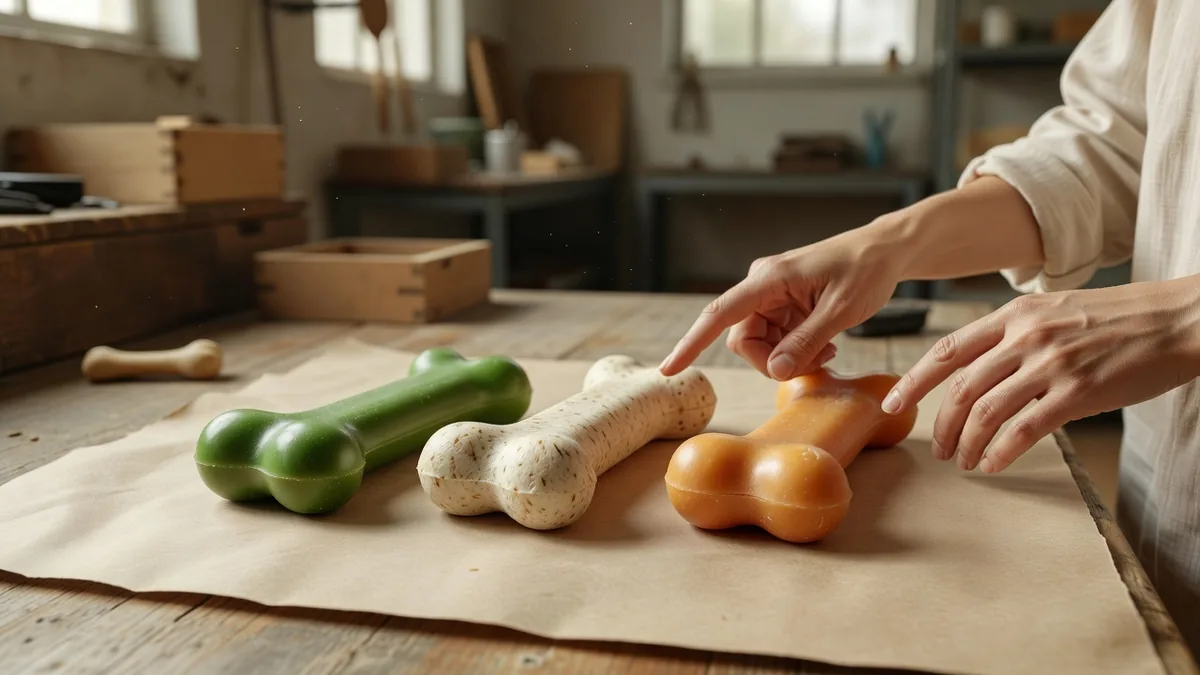
Sample the surface, not just the photo. On a desk the green coated bone should feel smoother than the beige fiber bone, and the orange real bone should feel more like a TPR skin than a painted nylon. If a sample arrives with the wrong hand-feel, stop the PO. Color photos hide that mistake.
A sensible first sample set for a new account is coated M, fiber M, and real-bone S or L. That is three units, three materials, and enough to brief a buyer meeting. You do not need every size before you know which claim the brand wants.
Open stock can ship in the catalog colors with your hangtag and carton mark. That path is private label pet toys: packaging, barcode, and warning copy you supply, product geometry you do not redraw. If the brand wants a new length, a new knob shape, or a molded logo in the bone, that is tooling. Talk to ODM pet toy manufacturing before you promise a unique silhouette for the next catalog.
Things that routinely blow a bone program:
- Calling all three "the nylon bone" on one listing, then arguing with customers about fiber versus coating.
- Printing chew-strength stars with no test behind them.
- Using puppy lifestyle photos on a 310 g fiber L.
- Changing PU coating thickness after the price is locked. Coating is part of the material cost.
- Mixing nylon rope stick units into the bone carton because both say nylon.
Incoming check on bulk is simple and worth writing down: SKU, color, centimeter size against the PPS, weight within an agreed tolerance, coating or fiber surface matching the signed sample, and no sharp gate marks on the mold parting line. Photo the lot before it leaves. You do not need a novel QC system. You need the same three bones you approved.
Packaging stays plain until legal copy is ready. Inner bag, hangtag, and master carton dimensions are quote fields. If you sell on a marketplace, the pack-out photo has to match the unit in the carton. A green coated bone in the listing and a beige fiber bone in the box is a return, not a "natural upgrade."
What to ask on the RFQ
Send this, not a mood board:
1. SKU list with centimeter size and color, copied from the table, not nicknames.
2. Quantity per SKU, and whether S/M/L may combine toward MOQ.
3. Packaging: stock polybag versus custom hangtag, and who owns the dieline.
4. Destination market, and whether you will book CPSIA, EN71, or REACH on this lot. Say who pays the lab.
5. Whether you need a pre-production sample weighed and signed before bulk.
6. Ship window and port. Bones are small, but 310 g fiber larges add up across a full MOQ.
The full pet toy catalog is where the rest of Classic Chew sits if the account also needs rope or a TPR chew after the bones are chosen.
FAQ
Are these nylon bones the same as rawhide?No. Coated is PA with a PU coating. Real bone is PA with TPR. Only the fiber bone lists cowhide fiber, and even that is a molded chew with fiber in the compound, not a rolled hide stick. Do not use edible or digestible claims from this page.
Can I order one mixed carton of all sizes under MOQ 120?Catalog MOQ is 120 on each of these SKUs. A mixed size run inside one SKU has to be confirmed on the quote. Do not assume 40/40/40 is accepted just because the total says 120.
Which size should a first wholesale order take?If you stock one coated size, M (16.5×5.6×3.7 cm, about 145 g) is the middle of the ladder. Add S for smaller dogs only when you can fixture it. Leave L for accounts that already sell heavy chews and can explain a 200 g bone to their staff.
Can the green bone be recolored for private label?Stock green, beige, and orange are the open-stock colors. A new colorway is a separate sample and usually a separate minimum. Geometry changes belong on an ODM brief, not on a recolor note.
If you want a quote on coated, fiber, and real bone together, send the SKU list and quantities through contact. We will confirm MOQ splits, packaging, and which tests your market actually needs before anyone cuts a new tool.
Ready to Build Your Next Collection?
From material selection to final delivery, we help brands bring pet toys to market.