Pet Educational Toy Factory OEM: What a First Carton Can Actually Be

A pet educational toy factory OEM search usually means one of two jobs. Either you want a factory to invent a new puzzle from a sketch, or you want an open-stock enrichment body you can hangtag and ship before the next Amazon restock. Most first orders are the second job. The first one eats months and a mold or a new pattern, and the listing still has to photograph like a toy a dog will sniff.
This note is for brand owners, marketplace sellers, and small distributors building an indoor enrichment slot. It uses three catalog toys you can sample now, plus a fleece mat if the carton needs a larger face. Specs below come from the product record. Anything the record does not store, you confirm on the quote.
Three bodies that already exist
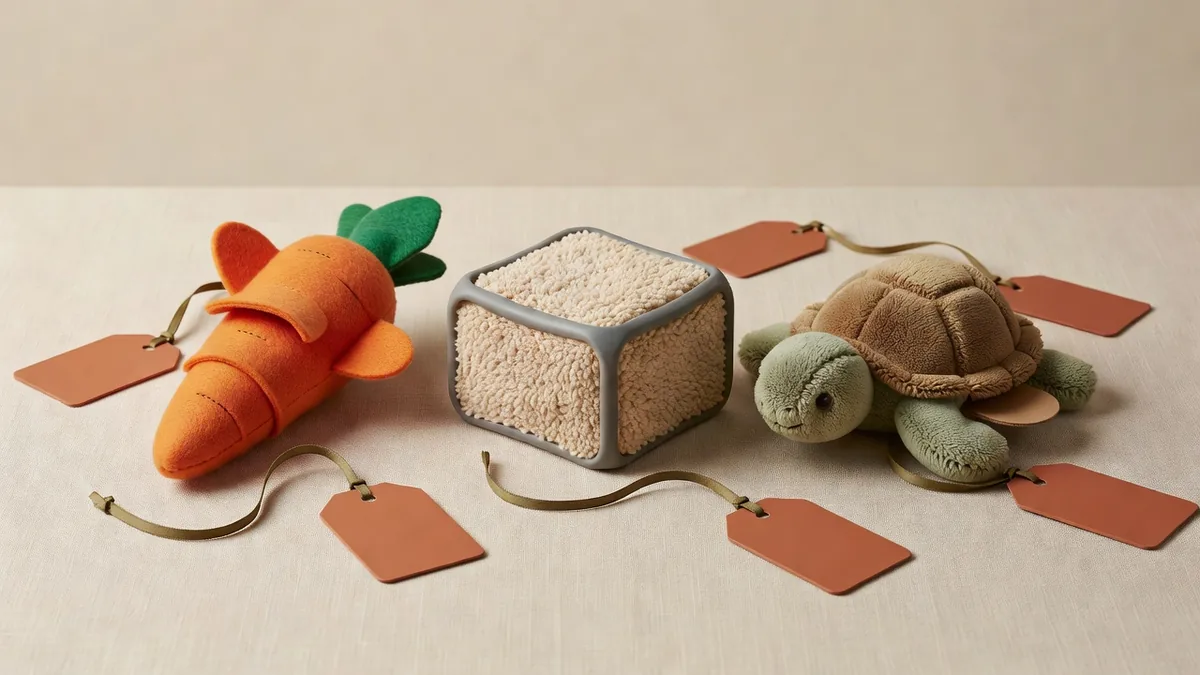
Start with shapes a sewing line already runs. Dog Carrots IQ Toy is fleece and felt, listed size 21.9×29×13, orange, dogs, MOQ 120, in Smart Play. It is a layered soft puzzle, not a rigid treat maze. Buyers use it when the listing photo needs a recognizable food shape and a piece the dog can pull.
Magic Snuffle Box is smaller and stiffer in the hand: cotton and TPR, 10×10, yellow or green, dogs, MOQ 120. The cotton face is the sniff surface. The TPR is the frame that keeps a palm-size box from collapsing in a carton. Weight is not on the record, so do not invent a gram claim for the bullet points. Hide Food Turtle sits between those two. Plush and TPR, 23×18, about 120 g, blue, green, or black, dogs, MOQ 120. The plush body is the shelf read. The TPR is there so a treat pocket does not turn into a flat pillow after one wash cycle at the customer's house. Unit weight is on file. Fill composition is not.All three are open stock at MOQ 120. That number is the catalog minimum, not a promise that a new colorway, a woven label, or a custom pocket ships at the same count. Color changes and branding are a separate line on the PO.
The rest of the enrichment wall is in the products catalog. Pull two or three silhouettes you would actually photograph. A twelve-toy mood board is not a brief.
What "educational" means on a factory PO
Factories do not sew "educational." They sew layers, pockets, flaps, and snuffle strips. If the tech pack says "IQ toy for smart dogs," the quote comes back as a plain plush with a squeaker. Write the interaction instead.
Useful lines look like this:
- Carrot: fleece outer, felt pieces a dog can tug out, orange as the stock color, size locked to 21.9×29×13 unless you approve a grade.
- Snuffle box: cotton face, TPR edge, 10×10, yellow or green. Say whether treats sit in the cotton or in a pocket you have not drawn yet.
- Turtle: plush shell, TPR contact piece, 23×18, target about 120 g. Name the hide spot. "Treat toy" is not a stitch map.
Also say what the toy is not. These SKUs are soft goods and light TPR. They are not nylon bones, and they are not a substitute for a heavy chewer program. If your PDP copy promises "indestructible puzzle," you will own the returns. The product record does not include a chew-grade test.
A sniff box slows a meal. A hide turtle gives the dog a pocket to work. Write the listing to the motion you can film, not to a training claim the sample cannot show.
Channel mix: one hero, two neighbors
Marketplace sellers want one SKU for the main image and two that keep a bundle from looking thin. Pet boutiques want the same trio on a table without three competing "IQ" stories.
A workable first mix from this set:
| Role | SKU | Why it is in the carton |
| --- | --- | --- |
| Hero photo | Dog Carrots IQ Toy | Larger fleece/felt body, food shape, easy to crop |
| Add-on / bundle | Magic Snuffle Box | Small cotton + TPR, different hand-feel, low cube |
| Mid price story | Hide Food Turtle | Plush character plus a TPR hide, 120 g on file |
Mat Slow Feeding is the piece to add when the channel is a shop floor rather than an FBA cube. Fleece, dogs, gray, teal, or yellow, MOQ 120, featured in Smart Play. Size and weight are blank on the record, so the mat is a sampling conversation, not a spec you paste into a flat file. It photographs as a surface. The carrot and the turtle photograph as objects. That split matters when one listing is a "puzzle" and another is a "slow feed."Mushroom IQ, Strawberry IQ, and IQ Puzzle Eggs are the same fleece-and-felt family. Fine as later shape extensions. On a first educational slot they blur the hero.
If the account also needs a chew, keep that on its own PO line. A TPR bone packed as a sniff toy is how the wrong customer gets the wrong box.
OEM versus a hangtag on open stock
Private label on these bodies usually means a hangtag, a polybag print, and maybe a woven label if the sewing line will stop the line for it. The silhouette stays. You are not paying for a new pattern. ODM starts when you change the interaction. Examples that leave open stock:- A new pocket count on the carrot, or felt pieces in a shape the pattern does not have.
- A snuffle box face in a yarn that is not the cotton on file, or a TPR shore you want matched to another SKU.
- A turtle hide that uses a zipper, a Velcro flap, or a removable pup. Those are new operations, not a color dip.
- Any recycled-content or "vet recommended" sentence. The records here do not carry those claims.
Color on file is narrow. Carrot is orange. Snuffle box is yellow or green. Turtle is blue, green, or black. A boutique that needs blush and cream is asking for a dye lot, not a warehouse pick. Ask whether that color stays at MOQ 120 or jumps because the fabric is bought by the roll.
Packaging is the other silent OEM. A mailer that fits the 10×10 box will not fit the carrot at 21.9×29×13, and it will not fit a fleece mat. If Amazon prep is your channel, send the carton dimensions you actually use. If you sell DTC, say whether the toy ships in a mailer or needs a hangtag hole.
Sampling before you book 120
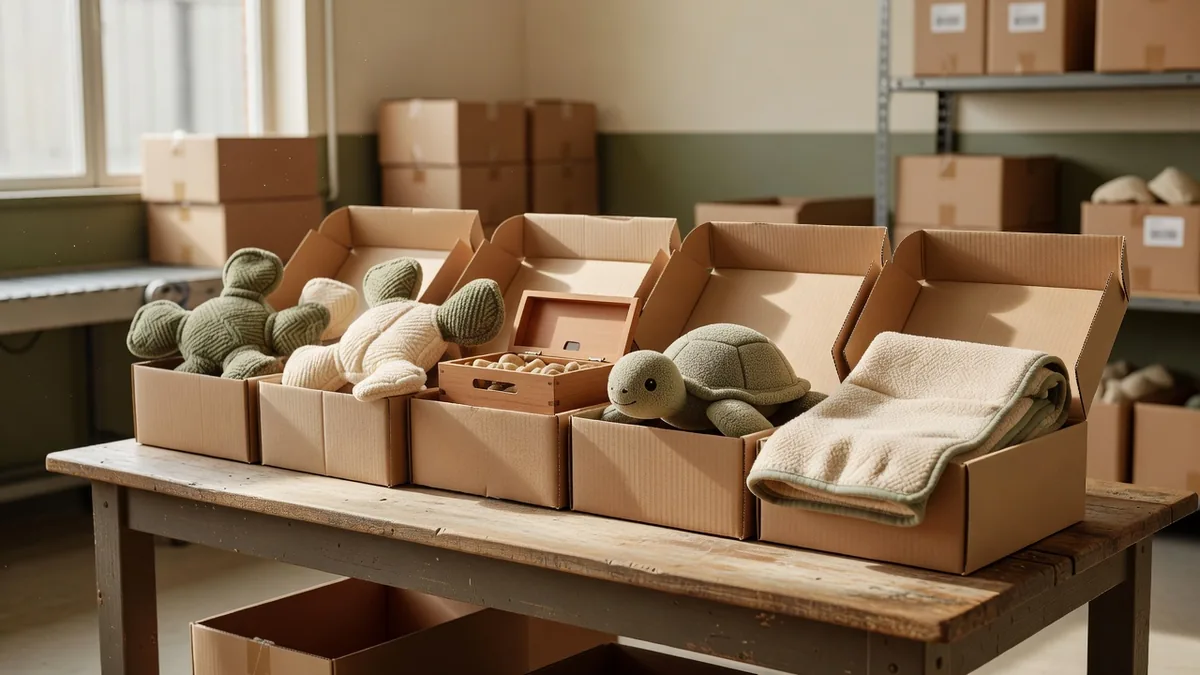
Order one of each hero before you talk about a mixed master carton. On the samples, check the things the product page cannot show:
- Carrot: do the felt pieces stay attached the way the photo implies, or do they pull off in one tug? Measure against 21.9×29×13. A "about 22 cm" sample that arrives at 18 cm will miss your infographic.
- Snuffle box: is the TPR edge the structural part, and is the cotton the only sniff face? Press it. A 10×10 box that collapses is a different product than the one in the size field.
- Turtle: weigh it. The record says about 120 g. If the sample is far off, the fill or the TPR insert changed. Open a seam only if the factory agrees; otherwise ask them to show the hide construction on a cut sample.
- Mat, if you include it: lay it flat and photograph the footprint yourself. Do not publish a size you were not given.
These three records do not list a squeaker. If a sample squeaks, someone added a part. Note it before it becomes the production default.
Sample lead time is not the lead time for 120 of each. Put both dates in the email. A seller who needs FBA stock in five weeks cannot open with a new pattern.
QC that fits soft enrichment, not chew toys
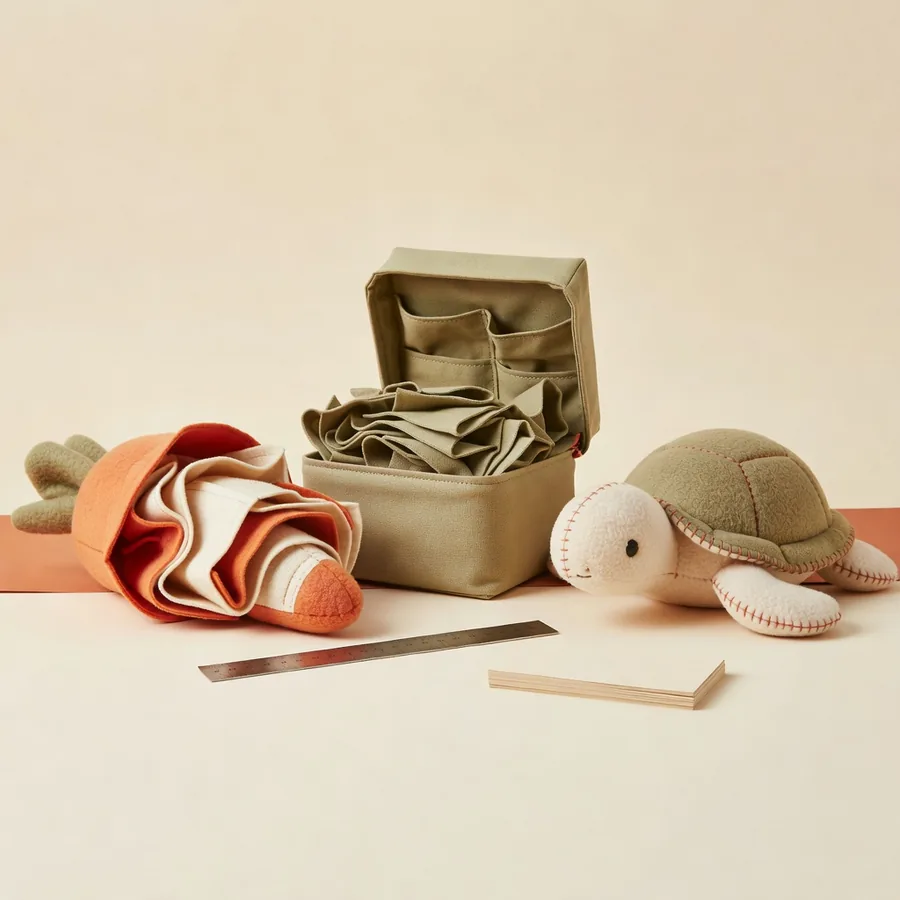
Hard-chew QC (tooth marks, slab thickness, nylon flash) does not catch the failures on this assortment. The failures are soft:
- Felt or fleece layers that shed at the cut edge.
- A snuffle face sewn so tight the dog cannot work a treat into it, or so loose the cotton pills off the TPR frame.
- A turtle pocket that is a stitched slit with no depth, so the "hide" is a marketing word.
- Color drift between the orange carrot and the yellow-green box when they sit in one bundle photo.
- Polybag pressure that creases the plush shell. That shows up on the Amazon main image even when the toy is fine.
Ask the plant for the last boring defect list on similar fleece puzzles and snuffle goods: open seam, fill leak, wrong color, missing piece in a multi-part toy. A line that already ships Smart Play volume will have that list. A trading desk reading from a catalog will tell you the toys are "high quality."
For a first mixed carton, inspect at least one unit per SKU from the production lot, not the sample you approved in March. Piece-count errors are the quiet killer on IQ sets. If the carrot is supposed to ship with a set of felt pieces, count them.
We do not publish lab scores for these SKUs. If your retailer asks for CPSIA, EN71, or a chemical test, that is a quote item with a named lab and a named material lot. Do not paste a certificate from a different plush onto this turtle.
What to put in the RFQ
Keep the email short enough that a merchandiser can answer it without a meeting.
1. Channel: Amazon FBA, own site, boutique, or distributor assortment. One primary.
2. SKUs and counts. Example: carrot 120, snuffle box 120, turtle 120. Mat only if you have measured a sample.
3. Branding: none, hangtag, polybag, woven label. If woven, say which bodies can take it.
4. Color: stock only, or a new color you accept may move MOQ.
5. Claims you will print. If the list includes recycled content, "educational certified," or a chew grade, stop and move that SKU to a development brief.
6. Pack: units per inner, inners per master, and whether SKUs can mix.
7. Sample address and the date you will approve or kill the order.
Send links, not adjectives. Dog Carrots IQ Toy, Magic Snuffle Box, and Hide Food Turtle are enough for a first educational slot. Link the mat only after a sample, using Mat Slow Feeding.
Where this goes wrong
The usual miss is a photo of a hard plastic puzzle sent to a sewing floor. Match the photo to fleece, felt, cotton, plush, or TPR, or expect a no.
The next miss is one listing that mixes a chew, a rope, and a snuffle. Split the copy. The 10×10 box and the 29 cm carrot also do not share a unit cost just because both start at 120. And a cognition or vet line does not belong on the hangtag because the category name sounds scientific. The factory can sew a pocket. It cannot sew a study.
New mechanism: ODM, and budget a sample that can fail. Listing this quarter: open stock, branded through private label.
A practical close
Pick the carrot as the photo hero, the snuffle box as the small add-on, and the turtle as the character hide. Sample all three. Measure the carrot, press the box, weigh the turtle against about 120 g. Add the fleece mat only when you have a footprint. Then book MOQ 120 on the SKUs that matched the listing, and leave new pockets and new colors for the reorder.
Browse the wider line on products before you send a sketch. If you want a quote on this mix, or you need to know whether a hangtag stays at 120 pieces, use contact and name the three SKUs. A short RFQ with sizes beats a paragraph about smart dogs.
Ready to Build Your Next Collection?
From material selection to final delivery, we help brands bring pet toys to market.