Pet Toy Manufacturing Plant Cost: CapEx, OpEx, and What Buyers Should Ask

Brand owners and distributors searching pet toy manufacturing plant cost are rarely looking for a glossy brochure number. They want to know why one factory quotes $1.80 FOB on a plush squeaker and another quotes $2.40 for what looks like the same sketch — and whether the cheaper plant can still pass QC, lab tests, and a retailer’s vendor form.
This guide walks through how plant costs are built in Chinese (and other Asian) pet toy factories, which CapEx and OpEx lines actually move your unit price, and what to ask before you lock a PO. It is written for buyers placing real orders, not for people daydreaming about opening a factory tomorrow. If you are still mapping constructions, start with the live products catalog so the cost talk is tied to materials you can actually buy.
What “plant cost” means in pet toy manufacturing
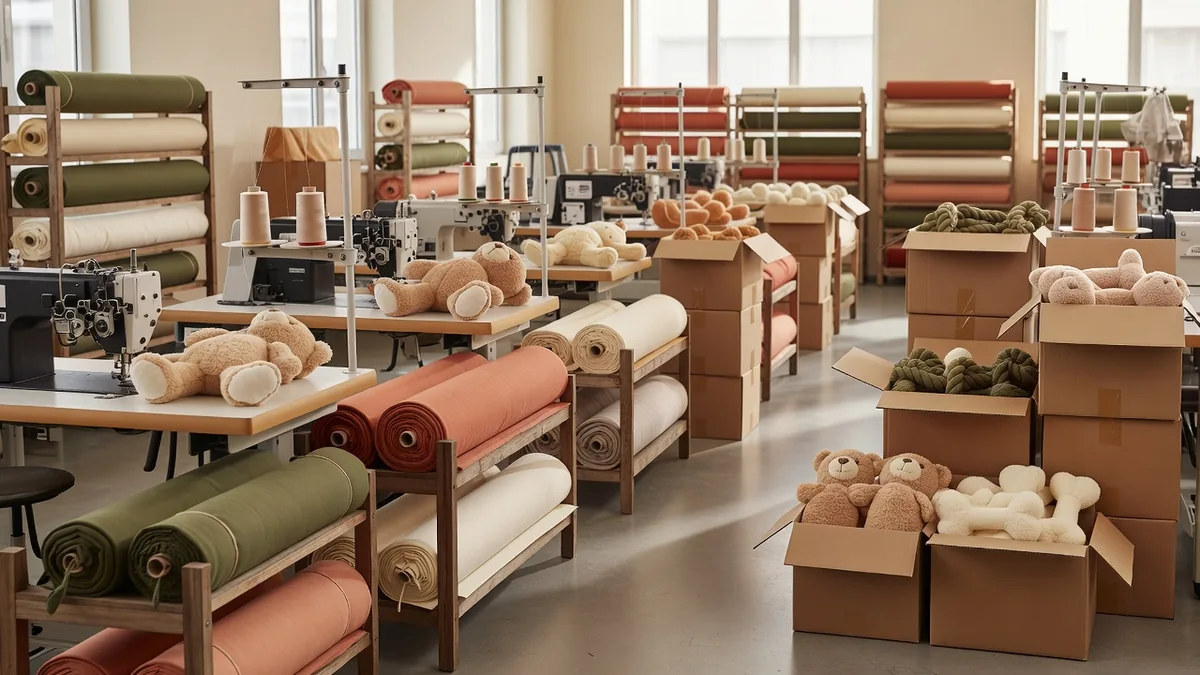
In RFQs, “plant cost” gets used three different ways. Mixing them up wastes weeks.
1. Facility CapEx — rent or ownership of the building, utilities hookup, fire safety, sewing or molding lines, QC benches, warehouse racking.
2. Program CapEx — molds, cutting dies, embroidery disks, custom packaging plates, first-article lab fees for your SKU.
3. Ongoing OpEx baked into FOB — labor, fabric or rubber lots, electricity, scrap rate, in-line QC, carton and freight to port.
Most brand buyers care about (2) and (3). Factory owners and serious private-label teams also care about (1), because a plant that under-invested in ventilation, needle detectors, or rubber compounding will eventually show it in defect rates — or in a failed audit.
When a salesperson says “our plant cost is low,” ask which of the three they mean. Low rent in a secondary city does not automatically mean low total landed cost if scrap is 8% and every reorder needs a retest.
CapEx ranges buyers actually see (directional, not quotes)
Nobody honest publishes a single “pet toy plant cost” figure that fits every category. A rope-and-knot workshop and a multi-cavity TPR molding plant are different businesses. Treat the bands below as conversation starters for RFQs, not as WagNab price sheets or certified appraisals.
Plush / soft toy line (sewing-led)- Building fit-out and sewing capacity: often the largest fixed spend after rent deposits
- Stuffing machines, needle detectors, metal detectors, packaging tables
- Sample room and photo corner (buyers underestimate how much time sample rooms burn)
- Molding presses, chillers, grinders for regrind control
- Tooling vault and mold maintenance benches
- Stronger environmental and chemical handling spend than a pure sewing floor
- Braiding or twisting equipment, cutting and finishing stations
- Hybrid SKUs (rope + plush + squeaker) inherit both sewing and small-parts QC costs
Program-level CapEx for a buyer’s first custom SKU is usually dominated by molds or embroidery setup, packaging tooling, and lab work — not by the factory’s mortgage. If a quote hides tooling inside a “free sample” story, get the amortization schedule in writing: how many units until the mold is paid down, and what happens if you change the shape mid-run.
For development-heavy programs where the shape is still moving, an ODM path keeps CapEx conversations attached to measurable constructions instead of vague sketches. When packaging and brand assets are part of the same deal, price a private label track so carton plates and hangtags are not surprise line items after the PO is signed.
OpEx that shows up in your FOB
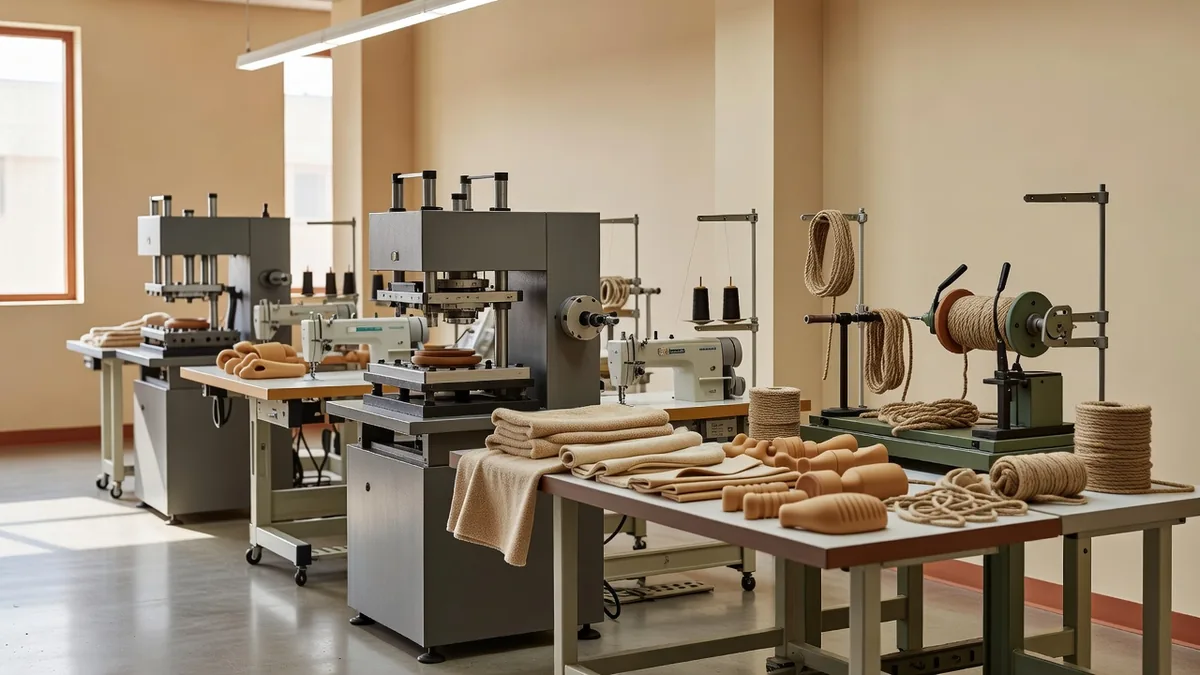
Unit price is mostly OpEx plus amortized CapEx. The lines that move pet toy quotes the most:
- Labor minutes per unit — plush with complex ears and appliqué burns more minutes than a simple bone shape. Ask for a rough process map, not only a price.
- Material yield — fabric width utilization, rope scrap, rubber flash. A factory that quotes aggressive fabric prices but runs poor nesting will claw it back in MOQ or “yield loss” fees.
- QC intensity — incoming checks, in-line, AQL pre-shipment. Cheap plants sometimes skip photo evidence until something goes wrong.
- Energy and curing — rubber and silicone cycles are energy-sensitive; summer power rationing in some regions can stretch lead times.
- Compliance overhead — retaining lot codes, filing declarations, coordinating third-party labs. This is OpEx even when the lab invoice is paid by the buyer.
A factory with higher OpEx per hour can still win on total cost if its scrap rate and rework are lower. That is why comparing plant cost on rent alone is a trap.
How plant economics shape MOQ
MOQ is not a personality quirk. It is the factory protecting changeover cost and material lot size.
- Dye lots and rubber compounds have minimum buy quantities from upstream mills.
- Sewing lines lose efficiency every time they switch thread colors and needle setups.
- Molding tools need warm-up and first-article checks; tiny runs pay for that in the unit price.
If you need a low first order, expect either a higher unit price, a tooling surcharge, or a shared-material constraint (using stock colors the plant already runs). Fighting MOQ without changing the construction is arguing with the plant’s OpEx math.
Share your reorder cadence in the brief. Factories price differently when they believe you will reorder quarterly versus when they think this is a one-shot Amazon test.
Hidden costs buyers miss when they only compare FOB
The plant cost conversation that stays on FOB ignores:
- Sample freight both ways and revision rounds
- Lab tests timed against the golden sample (rush fees if you book late)
- Packaging dielines, barcodes, and multi-language warnings
- Pre-shipment inspection (third-party or buyer travel)
- Carton cube and how it affects ocean freight
- Payment terms that shift working capital back onto you
Two plants can have similar sewing wages and still deliver very different landed costs once packaging and compliance are honest. Put those lines on the same spreadsheet as the FOB number before you declare a winner.
Questions that expose real plant cost discipline
Use these in factory calls and audits:
1. Which processes are in-house versus subcontracted (embroidery, printing, rubber compounding)?
2. How do you amortize molds or plates — by PO, by annual volume, or prepaid?
3. What scrap rate do you budget for this construction family?
4. Can we see last month’s in-line QC photos for a similar SKU (faces blurred if needed)?
5. Who owns failed lab retests after a material swap we requested?
6. What is your peak-season capacity lock window for Q4 pet retail?
Vague answers on subcontracting and scrap are more informative than a polished CapEx slide deck. A plant that cannot explain its own cost stack will struggle to protect yours when something changes mid-PO.
Sampling timeline that respects plant cost reality
A practical first engagement looks like this:
1. Brief + material recommendation (a few business days) — factory flags expensive process steps early (hand embroidery, multi-cavity molds, glitter coatings).
2. Prototype — judge play feel before burning full tooling budget.
3. Revision sample — lock Pantone, fill weight, Shore hardness, seam method.
4. Pre-production / golden sample — this is the cost baseline for bulk.
5. Lab booking aligned to cargo cut-off
6. Bulk with photo evidence at QC gates
Budget for freight and at least one revision. Plants that “gift” endless free samples are recovering that cost somewhere — often in opaque packaging fees or soft MOQ inflation later.
QC gates that keep cheap plants from getting expensive
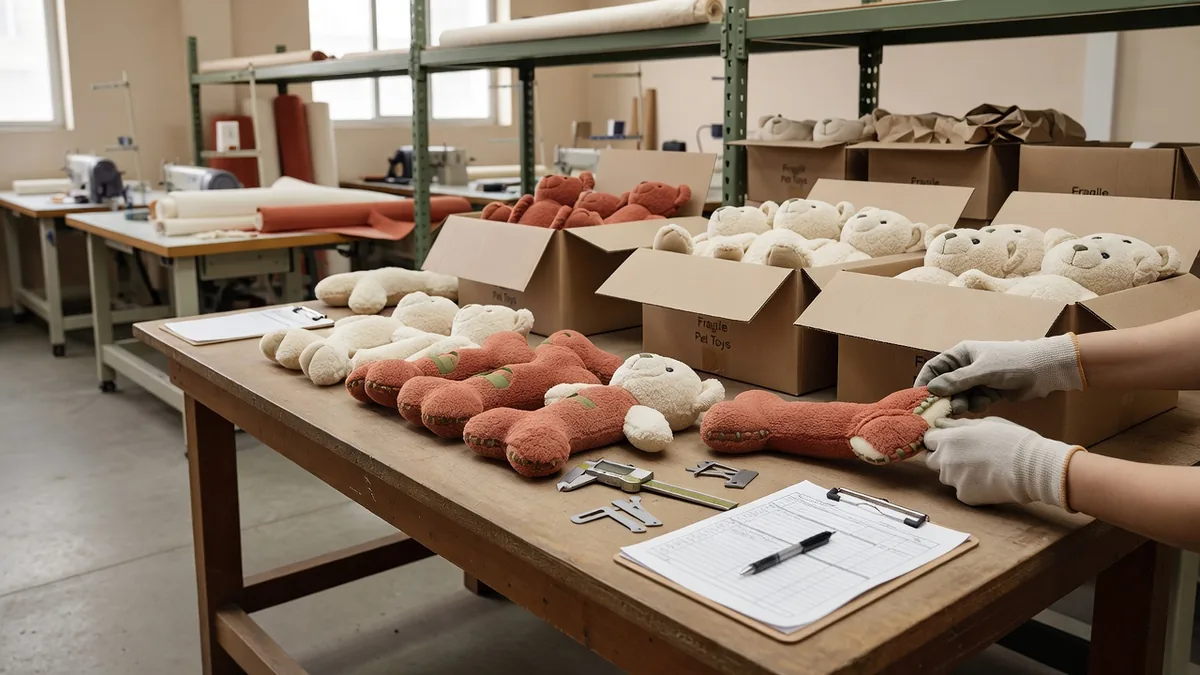
Low plant overhead that skips QC is not a savings; it is a deferred invoice.
Incoming- Fabric GSM and dye lot vs approved lab dips
- Rubber/TPR batch IDs matched to what the lab saw
- Eyes, squeakers, and coatings with declarations when your market needs them
- Seam strength on load zones, join strength on rope, flash cleanup on molded parts
- Stuffing weight tolerances and squeaker pocket integrity
- Logo placement against the signed golden sample
- AQL against the approved sample
- Carton drop expectations and barcode scans
- Photo or video pack-out for marketplace sellers
Write the QC plan into the PO. Verbal “we always check” is not a cost control.
How WagNab frames plant cost with buyers
WagNab runs pet toy manufacturing for wholesale and brand partners. We would rather map process minutes and material yield with you up front than win a quote that breaks on the first reorder. Browse constructions on the products page, walk the custom path on ODM, or plan branded packaging through private label.
When you contact WagNab, send: target pet and play style, material preferences, logo method, first-order quantity, destination markets, and whether you need factory-system docs or product-level lab reports. That brief lets us separate facility storytelling from the CapEx and OpEx that actually hit your P&L.
Decision checklist before you commit CapEx or a large PO
- Spec sheet versioned and signed
- Golden sample approved in writing
- Tooling amortization and ownership written down
- QC plan and AQL agreed
- Packaging dieline approved
- Incoterms, payment terms, and lead time on the PO
- Lab timing booked before cargo cut-off
- One buyer-side decision owner for revisions
If any of those are still “we’ll figure it out,” pause. Most expensive surprises in pet toy manufacturing plant cost work come from unwritten assumptions, not from bad faith.
Choosing a plant is choosing a cost structure you will live with for every reorder. Define the construction, test the sample, lock QC and tooling math, then scale. When you are ready to talk MOQ and sampling against a real brief, contact WagNab and we will map a realistic plan — without inventing CapEx fairy tales.
Ready to Build Your Next Collection?
From material selection to final delivery, we help brands bring pet toys to market.