Pet Toy Wholesale China: Buyer Guide to MOQ, QC & Cartons

If you are searching pet toy wholesale China, you are probably past the “pretty Alibaba photo” stage. You need cartons that land on schedule, pass basic chemical and construction checks for US or EU shelves, and leave enough margin after freight, duty, and returns. That is a different job from browsing lifestyle plush for inspiration.
This guide is for brand owners, Amazon and marketplace sellers, distributors, and retail importers who buy wholesale pet toys from Chinese plants or trading desks. It covers who actually sits behind the keyword, how to write an RFQ that prices cleanly, realistic MOQ and sampling patterns, QC that catches soft failures early, and when open-stock wholesale beats a full private label build. For SKU direction before you lock shapes, skim the live products catalog.
What pet toy wholesale China usually means on the ground
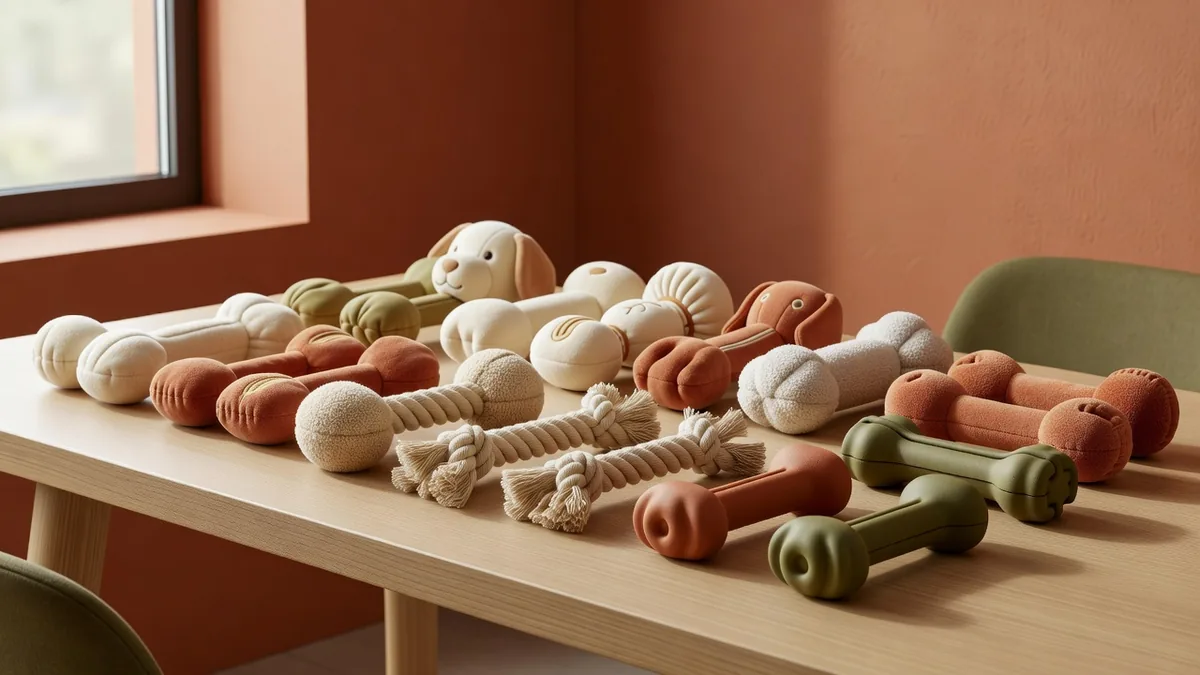
On export platforms, almost anyone with English and a warehouse photo can claim wholesale. In practice you will meet three different businesses under the same phrase.
Trading companies with factory partners. Fast quotes, flexible SKU mixes, thin control once the PO leaves their desk. Fine for first samples if you name the plant, lock the construction sheet, and run third-party inspection. Weak if you need consistent embroidery or a character that must match across reorders. Mixed soft-goods or rubber plants that also run pet lines. Real capacity. Pet durability is not always the default. Ears, limbs, squeaker pockets, and rope joins get the same construction as nursery or housewares toys unless you write stress points into the tech pack. Pet-focused export lines. Narrower catalog, more honest about MOQ on custom colors, and usually better at double-stitching load zones or flash cleanup on TPR. Mid-size brands often land here after one bad return spike from a “too cheap” container.Ask early what share of monthly output is pet versus apparel, kids plush, or general rubber. If the answer is vague, assume your order is the training run.
Wholesale programs also behave differently from a single branded SKU. Distributors care about mixed-SKU masters, hangtag uniformity across shapes, and carton marks that warehouse scanners can read. Brand buyers care more about Pantone lock and logo placement. Say which you are in the first email.
Who buys wholesale programs (and what they need)
Serious traffic on pet toy wholesale China tends to fall into a few buckets:
- Retail buyers filling value aisles, seasonal gift sets, and end-caps under a hard retail price
- Marketplace sellers building multi-packs where unit cost has to leave room for ads and fulfillment fees
- Distributors stocking independent pet shops with rope basics, squeakers, and mid-price plush
- Brands that want a good / better / best ladder and need an honest wholesale tier next to a premium private-label character
If your only product is a heavy-embroidery mascot with custom packaging and a new mold, this keyword is still useful—but you are not shopping “open wholesale.” You are shopping development capacity. Treat ODM and private-label paths as a separate commercial track so quotes do not get compared to open-stock FOB.
Wholesale buyers who skip that distinction often accept a low unit price that only works because fill weight, fabric GSM, or QC hours were cut. The failure shows up after the first sell-through wave, not on the sampling desk.
Spec checklist before you send an RFQ
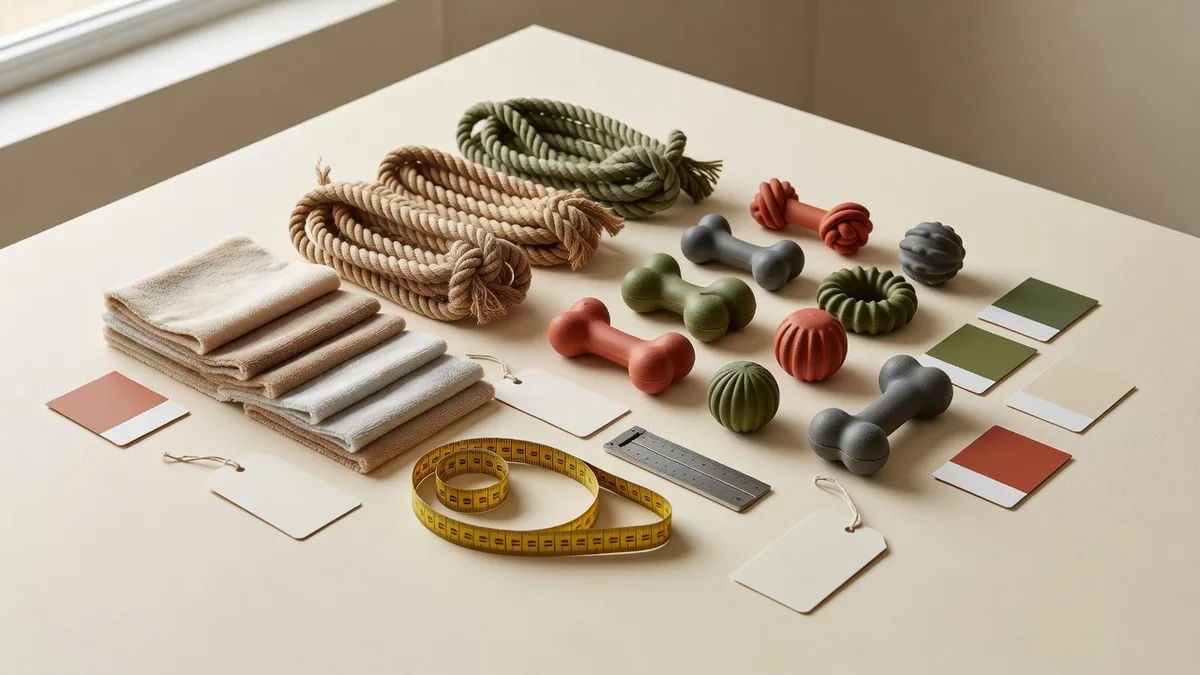
Vague briefs create samples that look fine under office light and fail after three weeks on a retail hook. Send something a production manager can price without inventing your product.
Play and size- Target pet (dog / cat), size band, and play style (gentle tug, light chew, fetch, solo soft play)
- Supervised-play expectation and any small-parts risk for the markets you sell into
- Body type: plush, rope, TPR/rubber, hybrid
- Fabric or compound grade (not only “soft plush”); fill type and target weight band if plush
- Squeaker model if used; pocket sewing rules
- Color count: mono vs multi; Pantone or physical swatch preferred over “as photo”
- Hangtag, woven label, printed polybag, UPC/EAN placement
- Inner pack count, master carton dimensions, mixed-SKU rules
- Warning copy for destination language (US and EU retail habits differ)
- Destination markets and which chemical screens you expect (CPSIA-oriented thinking for US; REACH / toy-adjacent screens when retail treats the SKU as a toy)
- No fabricated certificates—ask what tests the plant already runs on similar export lots and plan lab timing with production
A clean brief shortens sample rounds. Factories quote faster when they are not guessing fill weight and seam allowance. If you already know you need custom molds or full character ownership, say so and move the conversation toward ODM rather than forcing a wholesale open-stock quote to stretch.
MOQ, pricing bands, and carton economics
Unit FOB is only one slice of landed cost. Pet toy wholesale China programs break when buyers optimize the wrong line.
| Cost driver | What cheap looks like | What breaks later |
|---|---|---|
| Tooling / pattern | Shared open-stock body | You cannot own the silhouette; competitors buy the same mold |
| Materials | Lower GSM fabric, thinner rope, budget TPR | Tear, odor, color bleed, early returns |
| Colorways | 1–2 colors per shape | Assortment looks thin if you need six hues on shelf |
| Labor | Fewer embroidery steps, simpler seams | Brand look suffers; QC still needed on basic seams |
| Pack-out | Thin polybag, weak hangtag | Damaged hooks, barcode scuffs, retail chargebacks |
| MOQ | Lower first carton on open stock | Reorder color drift if dye lots are not locked |
Patterns many buyers see in current export quotes (directional, not a price list):
- Open-stock plush, rope, or simple rubber: first MOQ often in the low hundreds per SKU or mixed color, depending on plant and season
- Custom color or logo on an open-stock body: MOQ steps up with print or embroidery setup
- Full new pattern + custom pack: price like development, not like a promo wholesale fill
Carton density matters more than buyers admit. Soft plush that ships half-empty masters burns ocean freight. Rope and rubber pack tighter but crush hangtags if polybags are thin. Ask for master carton dimensions and estimated CBM early, then run landed cost with freight and duty—not only the FOB line on the quotation.
Payment terms on wholesale programs are usually 30% deposit and 70% before shipment (or against shipping documents). Letters of credit show up on larger retail programs. Do not treat “sample free forever” as a quality signal; serious plants charge sample fees and credit them against the first PO.
Quality control that wholesale cartons actually survive
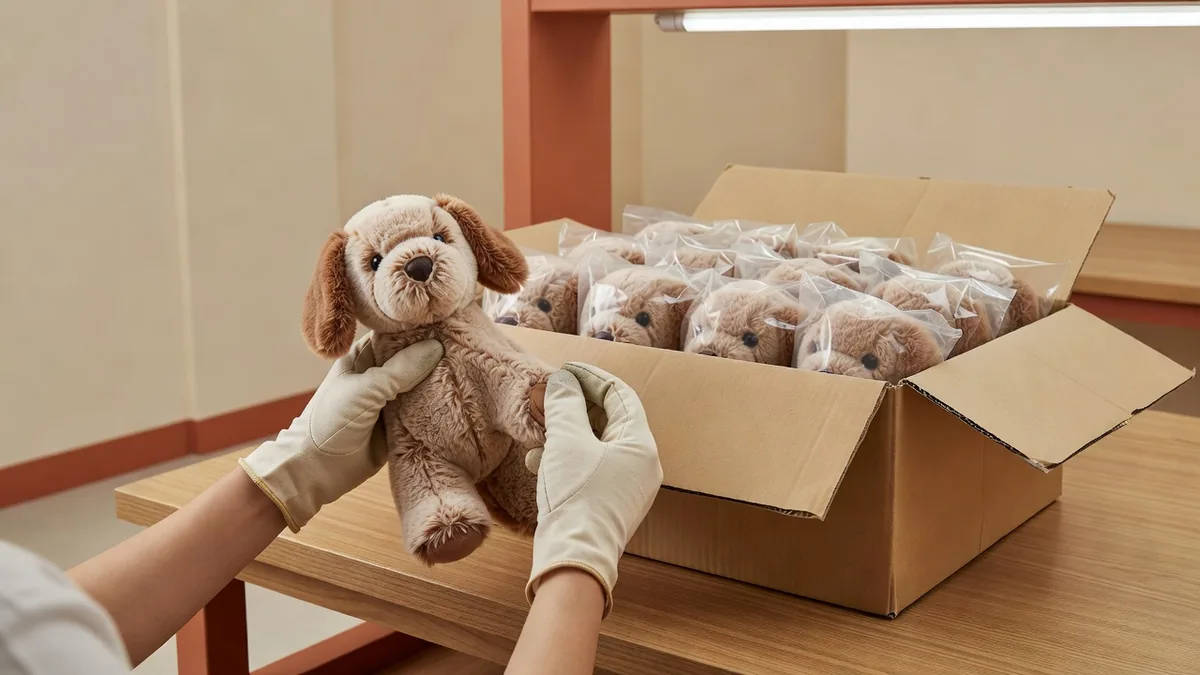
Returns kill wholesale margin faster than a slightly higher unit cost. Build a simple multi-stage plan even on trial orders so the factory learns your defect language early.
Incoming materials. Fabric GSM or compound grade, color lot, odor, stuffing density samples, rope diameter, squeaker model match. In-line. Seam strength on ears, limbs, and rope joins; flash and hard edges on molded parts; embroidery registration; pocket sewing for noise makers. Final random inspection. AQL sampling on visual defects, function (squeaker, tug, bounce where relevant), barcode scan, and master carton marks. Photograph issues against the signed sample—not against memory.For chew-heavy SKUs, add a pull or bite proxy that matches how you describe the toy in marketing. “Indestructible” language without a construction that survives real jaws is how wholesale buyers inherit marketplace one-star clusters.
Lab timing belongs on the production calendar. Certificates that arrive after the container is sealed are useful for the next PO, not for the cargo already on water. Align test scope with destination markets; do not invent MOQ-linked “cert packages” that the plant never offered.
Keep a shared defect log across reorders. The same loose eye or underfilled belly that you waived once will reappear if nobody wrote it down.
Open stock vs private label vs ODM
Not every wholesale buy needs a full brand build.
Open stock / catalog wholesale. Fastest path to cartons. You pick existing bodies, maybe change hangtag or polybag print. Lowest ownership of the silhouette. Best when you need assortment depth quickly or a value tier under a premium hero SKU. Private label on an existing body. Your logo, colorway, and packaging on a plant’s open tooling. Good middle ground for marketplace brands that need shelf presence without new molds. MOQ usually rises with branding setup. See how private label programs are scoped when packaging and hangtags matter as much as the toy. Full ODM / new development. New pattern or mold, owned artwork, packaging system, and often longer sampling. Use this when the SKU is the brand, not a fill-in. Start from ODM if you need design collaboration rather than a carton of stock shapes.Many programs mix all three: open-stock rope and squeakers for volume, private-label plush for margin, and one or two ODM heroes for differentiation. Write the commercial model into the RFQ so purchasing does not compare an ODM quote to an open-stock FOB and reject the wrong line.
Shipping, compliance paperwork, and launch cadence
FOB remains the common Incoterm for pet toy wholesale China. You take freight, insurance, and import clearance after the plant clears export. DDP looks simpler on a quote and hides more markup; use it when you lack a forwarder, not as a quality upgrade.
Sea freight wins on CBM once cartons fill a meaningful share of a container. Air and express fit samples and urgent refill. Around Chinese New Year and peak pet-gift seasons, lock capacity earlier than your retail calendar suggests—plants that still have open sewing or molding slots in October are not always the ones you want for a branded reorder.
Compliance paperwork is market-specific. For US-bound goods, think chemical limits and labeling discipline even when the SKU is sold as a pet product. For EU, REACH and toy-adjacent expectations show up when retailers treat soft toys like children’s products. Labels need country of origin, importer identity where required, and warning copy that matches how you sell the item. Do not claim lab results you have not ordered.
A workable first engagement often looks like this:
1. Brief and construction sheet (a few business days)
2. First sample (one to three weeks depending on tooling)
3. Feedback and optional revision sample
4. Signed pre-production sample against the PO
5. Bulk with in-line photos and final inspection before cargo booking
Weekly production updates once the PO is live—materials in, line progress, QC photos, ship window—beat silence followed by a surprise delay email.
Cross-check construction families on live SKUs—rope programs like the Woodland Rope Set and molded rubber such as the Rubber Chew Ball—before you treat a trading-desk PDF as your assortment.
How to choose a wholesale partner without burning a season
Price the landed carton, not the pretty listing. Prefer plants that can show a named production line, a sample policy with clear fees, and a QC story that includes photos against a signed golden sample. Trading desks can still work if you insist on the factory name, audit access, and third-party inspection before balance payment.
Cross-check that the business scope on their license actually covers toys or pet products. Ask for two client references in your market type (retail vs marketplace) and listen for how they handle reorders and color drift—not only how friendly the first WhatsApp felt.
Browse construction families on the products page, then decide whether you need open wholesale, private label, or full ODM. When you are ready for a trial carton, assortment quote, or sampling plan, contact the WagNab team with your destination market, target MOQ band, and construction notes. A clear brief gets a clearer production path than a vague “send me your cheapest wholesale list.”
Ready to Build Your Next Collection?
From material selection to final delivery, we help brands bring pet toys to market.