Pet Toys HS Code: What Buyers Should Put on the Invoice

Pet toys HS code questions show up the week a first container is booked, which is late. A brand buyer sends one commercial invoice that says "dog toys" and one carton that actually holds a crystal plush character, a nylon rope stick, and a TPR chew. The forwarder asks for an HS code. Someone pastes a heading they found on a forum. That is how a cheap line item becomes a customs hold.
This note is for importers, Amazon sellers, and distributors placing a PO with a Chinese pet toy factory. It is not a tariff ruling. Harmonized System headings are shared worldwide at six digits, then each country adds its own statistical suffix and duty treatment. Your customs broker, not the sewing line, signs the classification. If a number below conflicts with a current ruling for your exact goods, follow the ruling.
Wagnab's live catalog is a useful way to see why one code rarely covers a mixed order. Monster Series crystal plush dog toys is crystal plush, about 25×15×7 cm and 120 g, dogs and cats, MOQ 120. Nylon Rope Stick for everyday chew and tug is PA and nylon, 17×4.5 cm, about 200 g, dogs, MOQ 120. Key Chew Long for slim TPR chew programs is TPR, 21×2.5×2.5 cm, about 33 g, dogs, MOQ 120. Same factory floor, three constructions. Treat them as three invoice lines until a broker tells you otherwise. The products catalog is the place to pick the mix before the paperwork starts.
Why "pet toys HS code" is a bad single answer
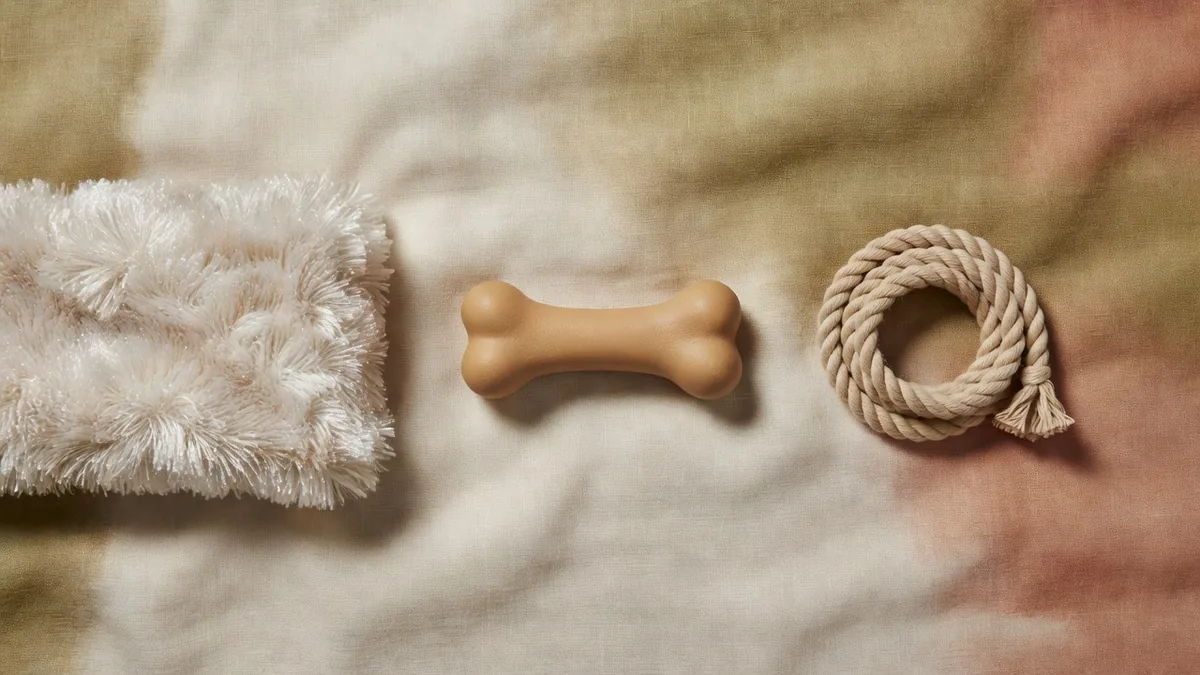
Buyers search for one code because the PO has one supplier. Customs classifies the goods, not the supplier relationship. A heading that fits a stuffed character can be a poor fit for a nylon chew, and a heading that fits pet accessories (leads, collars, harnesses) is a poor fit for a toy that is meant to be chewed or tugged.
The six-digit heading people reach for first is often 9503.00, the toys heading that covers dolls, wheeled toys, puzzles, and "other toys." Importers then pick a national suffix. In the United States that suffix lives in the HTS published by the USITC, and the breakouts under 9503.00 get revised. A page that quotes 9503.00.0073 or 9503.00.0090 may be describing a statistical line that has already moved. Open the current schedule before you print the invoice. This article does not state a duty rate. Chapter 99 measures and origin rules change, and a percent copied here would go stale.
Heading 4201 is the one buyers mix in by accident. It covers saddlery and harness, including leads and similar dog or cat accessories. A nylon chew is not a leash because it is rope. Do not move a toy onto 4201 because a forum said the duty looked quieter.
Two other chapters show up in the same email thread. Chapter 63 (made-up textile articles) gets proposed for plush and sometimes for rope when the product looks more like a textile good than a plaything. Chapter 40 gets proposed for solid rubber that was not sold as a toy. A TPR chew with a hangtag that says dog toy is a different product from an industrial rubber part. Say how it is packed and sold.
EU and UK shipments should not reuse a US statistical suffix. TARIC and the UK Trade Tariff share the six digits and then split. The same SKU going to Los Angeles and to Rotterdam needs two classifications.
What to put on the commercial invoice
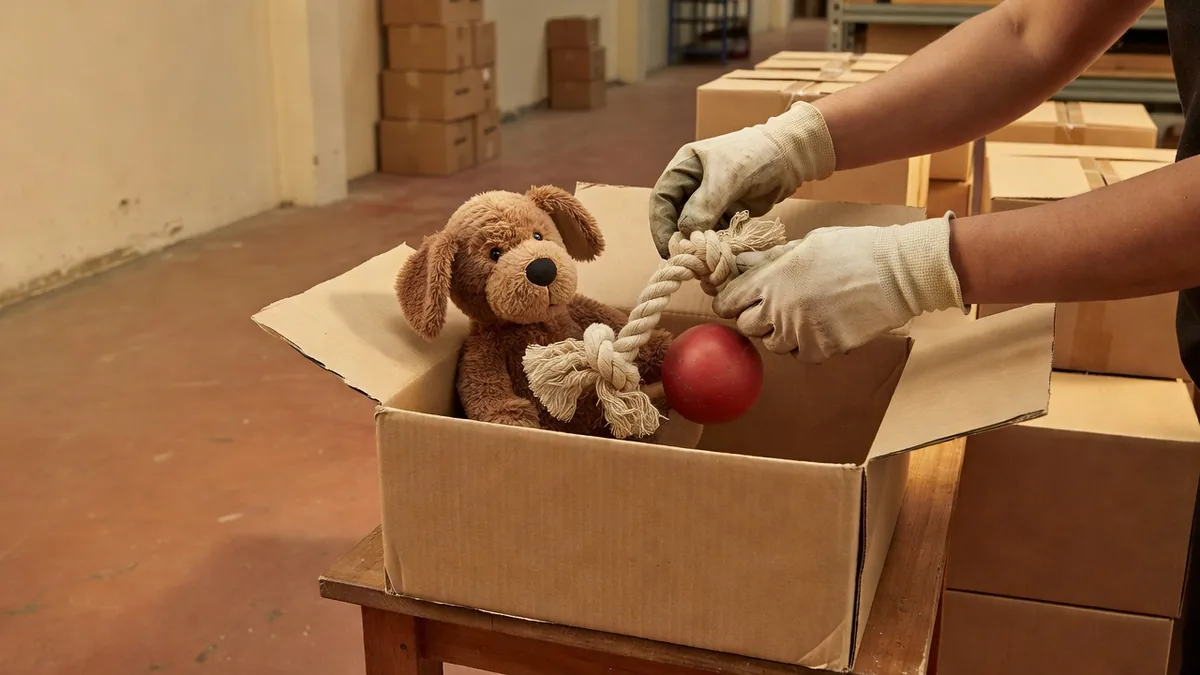
The factory commercial invoice is what customs reads. Vague descriptions fail more often than a missing logo.
Write one line per construction, not one line per PO. Description should be material, what the item is, and species. Skip "pet supplies" and "dog toys assorted." Material comes from the spec, not a marketing word like eco or premium. Quantity is pieces, and cartons if you know them. Value is the Incoterm you actually sold, in a real currency. Origin is the country of manufacture, not the trading company's office. Suggested HS is six digits, plus a national suffix only if the broker already agreed. Do not copy a code off someone else's listing.
For the three SKUs above, a usable description set looks like this:
1. Crystal plush stuffed dog toy, polyester plush shell, about 25×15×7 cm, 120 g, for dogs and cats. Monster Series.
2. Nylon rope dog chew stick, PA/nylon, 17×4.5 cm, about 200 g, for dogs.
3. TPR dog chew, slim stick, 21×2.5×2.5 cm, about 33 g, for dogs.
Catalog price fields on these SKUs are stored at zero. Do not invent an FOB from a blog. Use the quote. A "sample price" on a commercial shipment is how you earn a value inquiry.
Packing list detail should match the invoice lines. If carton 4 holds 40 plush and 20 rope, say so. A mixed master carton is fine commercially. It is a mess if the only description is "120 pcs dog toy." Weight matters here too. Key Chew Long at about 33 g and Nylon Rope Stick at about 200 g do not produce the same chargeable weight. Freight quotes built on the light sample will not match the export booking.
MOQ on all three is 120 pieces in the product record. That is a factory opening quantity, not a customs quantity. You can still split the commercial invoice by material inside one 120-piece assortment, or ship three separate 120-piece lines. Tell the factory which way you want the paperwork before production, not when the truck is at the port.
Mixed materials are where classification arguments start

A single-material toy is the easy case. Hybrids are the ones that sit in email for a week.
Puppy Rope Knot for light tug is recorded as TPR plus cotton, 9.8×7.8×4.3 cm, about 29 g, dogs, MOQ 120. The rope is not a decoration and the TPR is not a tag. Brokers look at essential character: what the product is for, which material dominates by bulk, weight, or role, and how it is marketed. Send a photo of the finished unit, a material bill, and the weights you have. Do not send only the plush swatch if the thing the dog actually pulls is rope.Name both materials when the toy is a hybrid. "Cotton rope dog toy with TPR ends" is a description. "Rubber toy" is not, if half the weight is rope.
Fleece slow feeders get pulled toward textile articles more often than a squeaker plush does. Mat Slow Feeding is fleece, dogs, MOQ 120, and the product record has no size. Confirm dimensions on the quote and send the broker a photo before you reuse a plush code.
Hard nylon chews are their own line. Coated Bone Chew is PA and PU, three sizes on file, weights about 65 g, 145 g, and 200 g, MOQ 120. Pick S, M, or L on the invoice. A bone is not a stuffed toy.
Sets are their own trap. If you retail a "puppy starter kit" with a plush, a rope, and a chew in one printed box, the set may classify as a set. If you only consolidate them into an export carton and sell them as separate SKUs, they usually stay separate lines. The printed retail box is the fact that changes the answer. Decide that before art goes to print. Packaging development on the private label path should include the customs description, not only the hangtag layout.
What the factory should hand you, and what it should not
A factory can give you facts. It should not give you a legal classification dressed up as a product spec.
With the pre-production sample, ask for a plain material list, the size and weight of the exact version you are buying, a photo of the retail pack and the master carton, and the country where the goods are made. That country is the factory country, not the trader's showroom.
This catalog does not store certifications on the SKUs named above. If you need a CPSIA, EN71, or REACH report, ask for the current one on that material and that mold, and read the date. A missing PDF is not a certificate. A certificate is not an HS code.
Do not ask the factory to print 9503.00 "so the duty is zero." Base rates and any extra tariffs are the importer's problem. A supplier who types whatever code you want is building a file that will not match the goods if you are audited.
If you are cutting a new shape instead of buying open stock, lock the description when you lock the sample. An ODM brief that says "fun dog toy, mixed materials" cannot be classified. A brief that says "TPR chew, 21 cm, no textile, sold as a dog toy, polybag plus hangtag" can go to a broker while the mold is still cheap to change.
A short checklist before the forwarder asks
Run it on the draft invoice.
Every SKU on the packing list needs its own line, split by material, with size and weight you can point to on the spec. Use six digits you can defend. Add a national suffix only after the broker has agreed it for this season's tariff. Mixed cartons get broken out. "Assorted" is not a description. Customs value should match what you actually pay, including tooling or packing if the broker says those count. Toy-safety paperwork is a separate stack. A heading clearance does not clear a product-safety hold.
One person on your side tells the forwarder the final code. A group chat will give you three.
A new plush colorway is usually the same classification conversation. A rope hybrid you have never shipped is a new line. Book the broker before you book the space.
If you want invoice lines written against catalog SKUs instead of a generic "pet toy" quote, send the destination country, the SKU list, and whether the goods ship as open stock or as a retail set. Contact Wagnab with that brief and the current sample photos. We will map materials and weights from the product record. Your broker still owns the code.
Ready to Build Your Next Collection?
From material selection to final delivery, we help brands bring pet toys to market.