Plush Paw Rope Slipper Dog Toy Bulk Supplier: Specs, MOQ & QC

Buyers typing plush paw rope slipper dog toy bulk supplier usually want one thing: a soft slipper-shaped toy with a paw print face or sole motif, plus enough cotton rope at the heel, tongue, or loop that dogs will tug without the join ripping on week two. It is a hybrid SKU. Plush softness sells the photo. Rope construction decides whether you get reorderable durability or a returns spike.
This guide is for brand owners, Amazon and marketplace sellers, distributors, and retail buyers who need that silhouette at export volume. It covers what the product actually is on a sewing line, how to brief a plant so the sample matches bulk, realistic MOQ, QC that catches rope-to-plush failures early, and when a near-stock body beats a full custom sculpt.
Scan soft-toy and interactive direction on the products catalog before you freeze a silhouette. Catalog-adjacent bodies often start with lower MOQ and no pattern-development fee.
What a plush paw rope slipper actually is
In factory English, this SKU sits between companion plush and light tug. The body is a soft slipper or mule shape: short-pile or crystal-velvet shell, fiberfill, embroidered or printed paw motif, sometimes a squeaker in the toe. Rope shows up as a heel loop, tongue braid, sole trim, or side handles. Dogs treat it like a chewable house slipper; buyers treat it like two supply chains stapled together.
Common builds you will see:
- Plush slipper body + rope heel loop. Soft cuddle with a tug handle. Failure modes: open heel seam, rope pull-out, fill migration into the loop channel.
- Plush upper + rope sole or toe bumper. Better abrasion on floors. Failure modes: rope abrasion through thin sole fabric, uneven sole thickness across a dye lot.
- Paw-print embroidery or appliqué on the vamp. Looks retail-ready. Failure modes: thread snags, appliqué edges that peel after wash claims, color mismatch vs the pantone card.
- Optional reed squeaker in the toe. Fun for light play. Failure modes: silent units after carton crush, pocket seams that open under tug.
Ask what share of monthly output is plush-rope hybrid versus pure plush. If the answer is vague, assume your slipper is the training run for join reinforcement. Prefer plants that already ship rope-limb or rope-handle plush monthly over trading desks that cannot lock rope diameter and stitch density on paper.
Who buys these programs
Traffic on this keyword usually falls into a few buckets: DTC brands wanting a lifestyle SKU next to hard chew; marketplace sellers listing “fuzzy slipper dog toy” under one ASIN with color variants; retail buyers filling gift and value soft-toy aisles; distributors stocking mid-price interactive plush for independent pet shops.
If your only product is heavy power-chew rubber with no fabric, you do not need this category. A plush paw rope slipper dog toy bulk supplier relationship adds fabric dyeing, embroidery digitizing, rope sourcing, and join labor. Treat it like soft goods plus light tug—not “cute plush with free rope.”
Wholesale buyers care about mixed colorways in one master carton more than brand buyers do. Say that up front. A plant that only ships mono-SKU masters will frustrate assortment programs.
Spec checklist before you send an RFQ
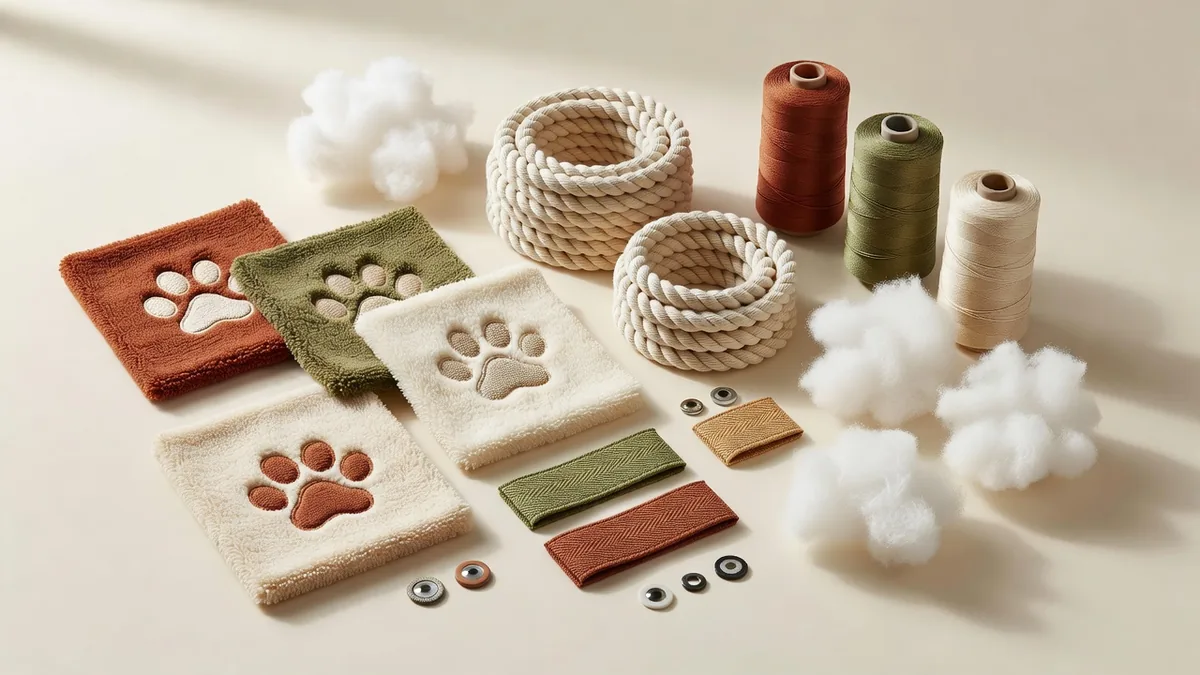
Vague briefs create samples that look adorable on the desk and split at the heel after three hard tugs. Send something a production manager can price without inventing your product.
Play and size- Dog size band (toy / small / medium) and play style: gentle companion, moderate tug, or “cute until destroyed”
- Finished length in cm (toe to heel), width at vamp, weight band
- Whether the rope is decorative, structural for tug, or both
- Outer fabric: short plush, crystal velvet, sherpa, or canvas panels on high-wear zones
- Pile height or GSM if hand-feel must match across reorders
- Fill type and target weight; recycled-content claims need documentation, not a hangtag sentence
- Paw motif: embroidery only vs print vs appliqué; thread count and stitch map if embroidery
- Fiber (cotton, cotton blend, approved alternate), strand count, diameter
- Attachment method: bar-tack, boxed X, channel sew-in, or through-body loop
- Minimum pull strength you will accept on a simple tug test (define the method)
- End finishing so strands do not fray into a swallow risk for small dogs
- Woven label, printed hangtag, embroidery or heat-transfer logo placement
- Polybag thickness, carton marks, barcode, multi-language warnings for US / EU
- Destination markets and test expectations (CPSIA-oriented chemical thinking for the US; REACH / EN71-related screens when EU retail treats the item like a toy)
A clean brief shortens sample rounds. Factories quote faster when they are not guessing rope diameter and embroidery map on the same line.
MOQ and cost reality for hybrid slippers
Buyers often hope for fashion-level MOQs. Hybrid programs carry floors on fabric dye lots, embroidery digitizing, rope minimums, and packaging. Packaging MOQ can exceed toy MOQ if you need custom polybags and hangtags.
Bands you will hear (not a quote):
- Near-stock slipper body + your hangtag / one colorway: often a few hundred units per SKU if the body already runs
- New fabric color on an existing shape: mid-hundreds upward depending on dye lot size
- New rope diameter or new join method: adds sample fees and sometimes a higher first-run floor
- Fully custom silhouette + exclusive paw map: higher MOQ and longer sampling; some plants want low thousands if the shape is complex
For a test SKU, ask for a stock or near-stock plush slipper with your label and one custom color story rather than a brand-new sculpt. Private label programs often start that way, then move to exclusive silhouettes after sell-through. Full custom paths are better scoped under ODM services once you know which fabric and rope join survives your market’s dogs.
Do not treat a “300 pieces” email as a program if the fabric dye lot is a volume you cannot use across reorders. Ask which constraint sets the floor: sewing line, dye house, rope MOQ, or printed pack.
Freight, testing, and packaging can erase a small unit-price win. Build a landed cost sheet before you celebrate a quote.
Sampling path that protects the bulk run
Treat sampling as product development, not a free gift.
1. Material board. Fabric swatches, fill sample, rope diameter sample, and the embroidery stitch map you will lock.
2. Soft sample. Crush it. Tug the rope hard. Wash or wet-wipe if you claim washability. Photograph any fill migration or seam creep.
3. Pre-production sample (PPS). Bulk-intended fabric lot, rope lot, and join method—including pack-out.
4. Sign-off in writing. Photos plus physical if needed. Verbal “looks fine” is how disputes start.
Budget freight both ways on samples plus lab tests if your channel needs certificates before intake. Signing off a pretty photo sample and then changing rope mid-PO is how ship windows slip.
A typical first engagement with a plush paw rope slipper dog toy bulk supplier runs brief review in a few business days, first sample in roughly 10–20 days depending on embroidery and fabric stock, one revision round, then PPS locked against the PO.
Quality control that catches hybrid failures early
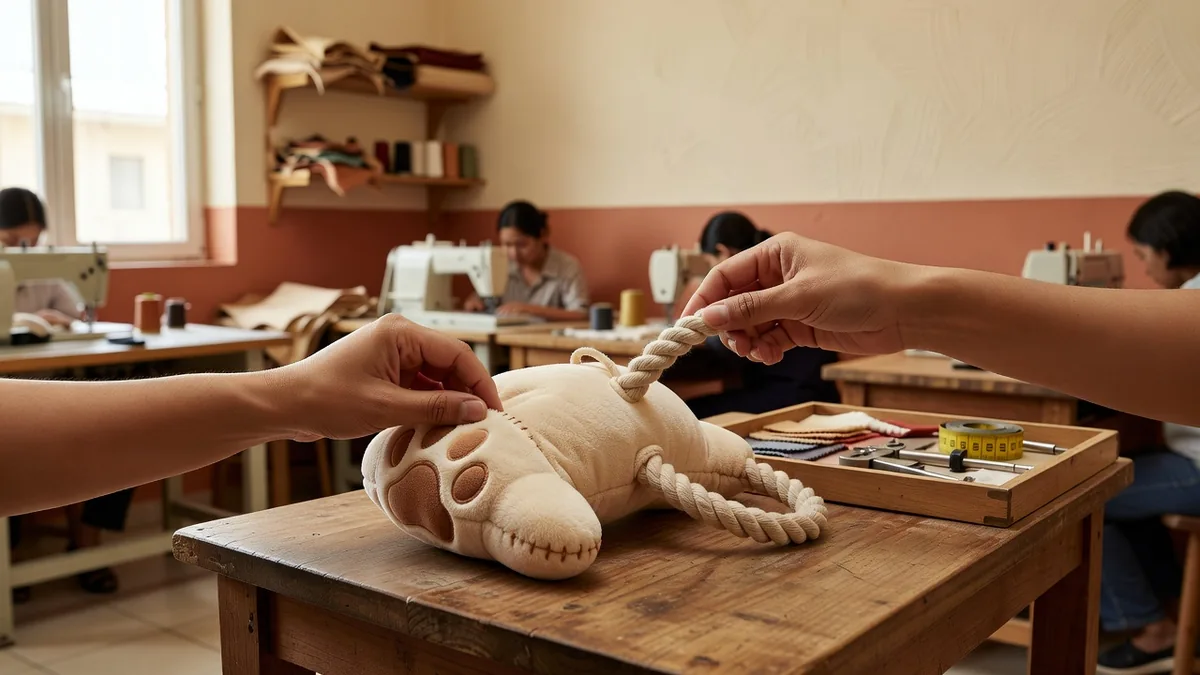
Hybrid slippers fail in predictable ways: open heel seams, rope pull-out, frayed strand ends, embroidery that snags, squeakers that go silent, fill that clumps after a wash claim.
Insist on multi-stage QC even on trial orders:
- Incoming fabric, fill, and rope checks (color, diameter, odor, moisture)
- In-line seam and join checks during sewing—especially bar-tacks at rope anchors
- Finished-goods inspection against a written AQL (define silent squeaker rate if you use reeds)
- Pre-shipment carton count and pack-out photos
Document a simple AQL plan early. It trains the factory before volume grows. On first runs, ask for photo or video evidence of each gate. Keep a shared defect log so the same heel join does not reappear on reorder.
For US or EU retail programs, align lab test timing with production so certificates are ready before cargo booking, not after the container is sealed. Do not invent cert numbers in your listing copy; only claim what the lab report covers for that SKU and lot.
Packaging and retail readiness
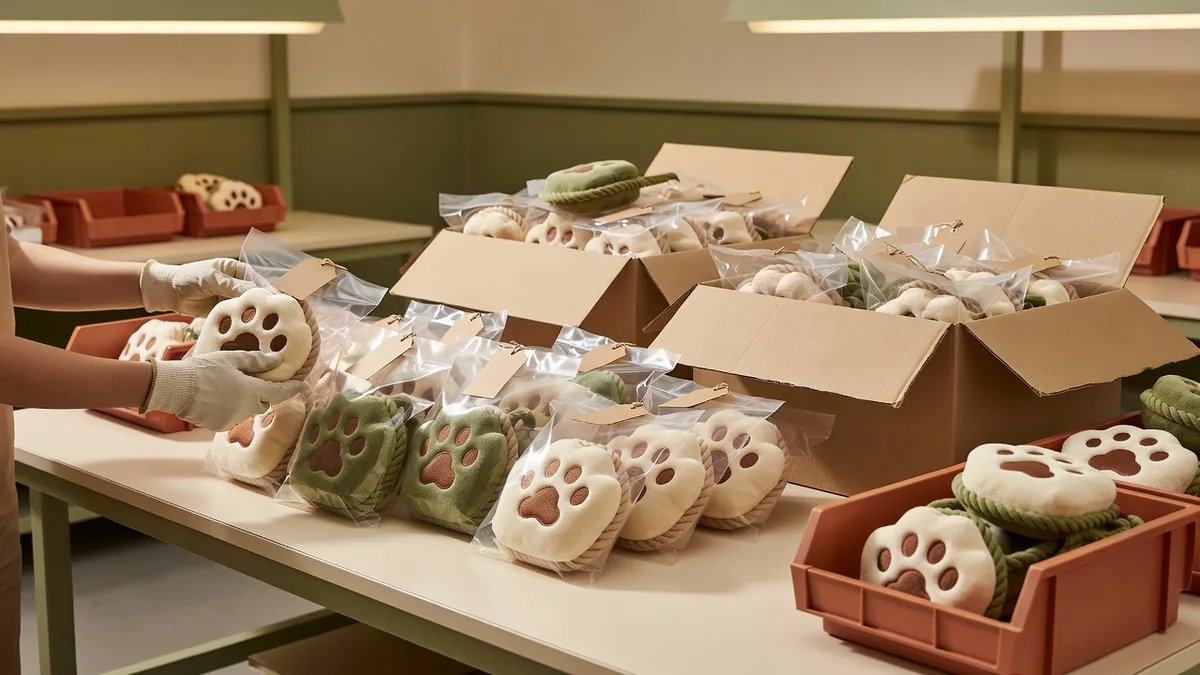
Wholesale and brand buyers lose margin when packaging is an afterthought. Align early on:
- Inner polybag thickness and whether the rope loop needs a sleeve so it does not snag the bag
- Hangtags, care labels, barcode placement
- Master carton dimensions and drop-test expectations
- Multi-language warning copy for target markets
If you sell on marketplaces, confirm that pack-out photos match the shipped unit. Inconsistent packaging is a top reason for customer returns on soft pet toys. Export pack-out stations that bag, tag, and carton on the same line reduce mix-ups when you ship three colorways in one PO.
Communication cadence that protects launch dates
Factory silence is a risk signal. Agree on a weekly production update once the PO is live: materials in, sewing progress, QC photos, and ship window. For seasonal peaks (Q4 gifting, spring lifestyle drops), lock capacity earlier than you think you need.
Share one decision owner on the buyer side. Multiple conflicting revision requests from different stakeholders are the fastest way to miss a ship date.
How WagNab supports slipper and hybrid programs
WagNab works with brand and wholesale partners on pet toy manufacturing—from material selection through sampling and bulk. Review live options on our products catalog, map longer custom paths on ODM services, and start brand-facing lines via private label.
Teams evaluating a plush paw rope slipper dog toy bulk supplier usually start with a short brief: dog size band, fabric preference, rope placement, logo method, first-order quantity, and destination market. From there we map a realistic sample plan and flag compliance needs before you spend on exclusive tooling.
Decision checklist before you place the PO
Use this before you commit money:
- Spec sheet signed and versioned (fabric, fill, rope diameter, join method, embroidery map)
- Soft sample and PPS approved in writing
- QC plan and AQL agreed, including join pull checks
- Packaging dieline approved
- Incoterms, payment terms, and lead time written into the PO
- Contingency for one revision cycle without killing the launch window
If any item is still verbal-only, pause. Most post-shipment disputes on hybrid plush toys come from unwritten assumptions, not from bad intent.
When you are ready to talk MOQ and sampling timelines, contact WagNab with your brief and target markets. Share the silhouette, rope placement, and first-order quantity; we will respond with sampling options and a realistic lead-time window.
Ready to Build Your Next Collection?
From material selection to final delivery, we help brands bring pet toys to market.