Private Label Dog Toys Low MOQ: How Brands Start Without Overbuying

Search traffic for private label dog toys low moq usually comes from people who already know they want branded hangtags and their own colorway—but do not want to buy 5,000 units of a SKU that might flop on Amazon or in a boutique test. Low MOQ is real in this category. It is also easy to misunderstand. Factories quote “low” against different baselines: catalog-adjacent colorways sit in one band; fully custom shapes sit in another. This guide is for brand owners, FBA sellers, distributors, and indie retailers who need a first run that matches the sample without locking cash in dead inventory.
Browse construction families on our products catalog while you read. If the SKU still needs design work, start on an ODM path. When logos, cartons, and retail copy are part of the same PO, plan a private label track so packaging QC rides with the toy—not as a last-minute scramble.
What “low MOQ” actually means for dog toys
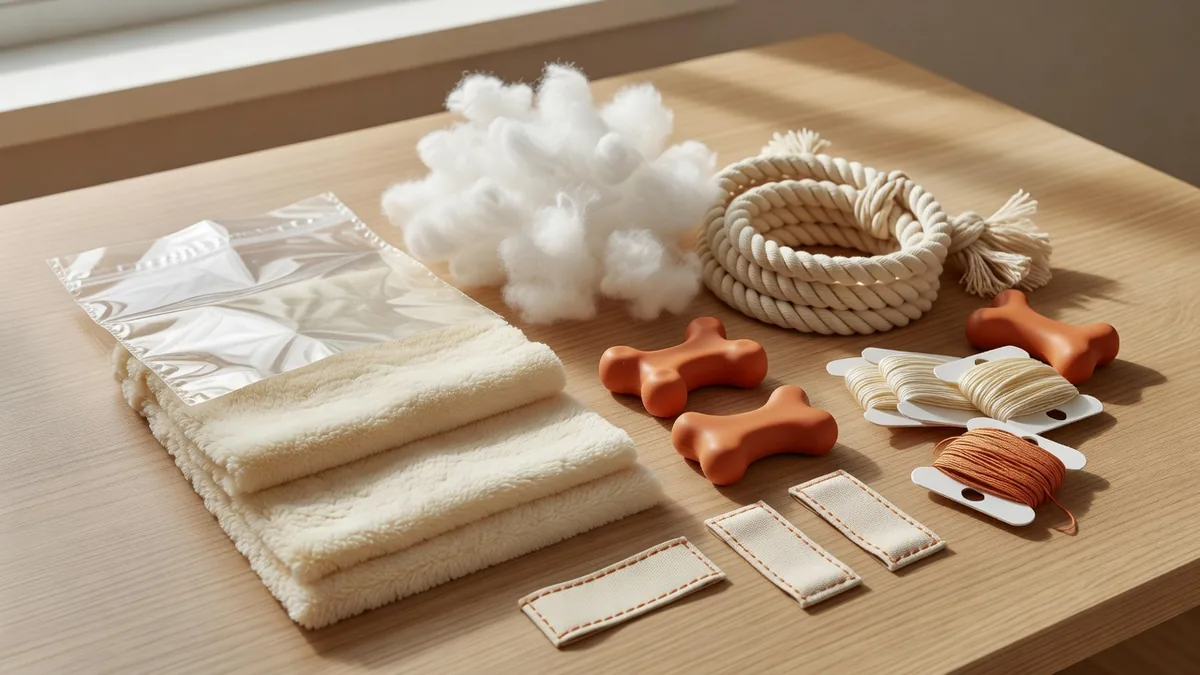
Buyers hear “low MOQ” and picture a friendly number. Factories hear changeover cost, dye lot minimums, embroidery digitizing, and whether the body already runs on their line.
Rough patterns many brand buyers see in China pet toy programs:
- Catalog body + your label / hangtag / colorway: often a few hundred units per SKU when the factory already sews or molds that shape
- Minor construction tweak (extra squeaker, reinforced ear seams, different rope diameter): still manageable, but expect a sample round and a higher floor than pure rebrand
- New shape + new fabric dye + custom carton: usually mid-hundreds to low thousands depending on complexity and fabric dyeing
If someone promises 50 units of a fully custom plush with a new dye lot, ask what is subsidized and what happens on reorder. Trial MOQs that only work once create ugly surprises when you scale.
For private label dog toys low MOQ work, write the RFQ with three numbers: trial quantity, expected reorder quantity, and how many SKUs share the same fabric or mold. Shared materials keep the true MOQ lower than treating every SKU as a standalone dye job.
Who this search is really for
Most people landing on this keyword fall into a few camps:
- DTC brands testing a signature plush or rope before a bigger drop
- Amazon / marketplace sellers refreshing a private-label set without inventing tooling from scratch
- Boutiques and distributors building a seasonal assortment with limited cash at risk
- Brands that already sell hard chews and want a soft SKU to round out the line
If you need heavy power-chewer rubber with custom molding, you are in a different tooling story. Plush and rope private label is fabric, fill, stitch density, and finishing. Treat it like apparel plus toy safety, not like injection molding alone.
Spec checklist before you RFQ
Vague briefs create expensive samples. Send something a production manager can quote without guessing.
Product and play style- Dog size band (toy / small / medium / large) and play intensity
- Finished size targets (for example 18 cm body, 25 cm with limbs)
- SKU role: gentle living-room plush, moderate chew, interactive tug, or “cute until destroyed”
- Outer fabric: short plush, sherpa, corduroy, canvas wear panels
- Fill density range; note any recycled-content claims only if you can document them
- Rope yarn count and twist; TPR hardness band if you mix materials
- Optional inserts: squeaker count/type, crinkle, rope limbs
- Woven label, printed hangtag, embroidery or heat-transfer logo placement
- Polybag print, carton marks, barcode, multi-language warnings for US/EU
- Destination markets and the tests your channel actually needs (US chemical / mechanical thinking, EU REACH and toy-adjacent screens when retail treats the SKU like a toy)
A complete brief shortens sample rounds. Factories quote faster when they are not inventing your product for you.
Sampling timeline and cost reality
A typical first engagement for private label dog toys low MOQ looks like this:
1. Brief review and material recommendation (a few business days)
2. Prototype or first sample (often 1–3 weeks depending on embroidery, dye, or soft tooling)
3. Buyer feedback and one revision sample if needed
4. Pre-production sample locked against the PO
5. Bulk with in-line checks and final inspection
Budget freight both ways on samples, plus lab fees when your market requires them. Cheap samples that skip compliance often become expensive returns later. Sign the pre-production piece in writing—photos plus physical if the channel is picky—before you release bulk fabric or yarn.
Quality control that still works on small runs
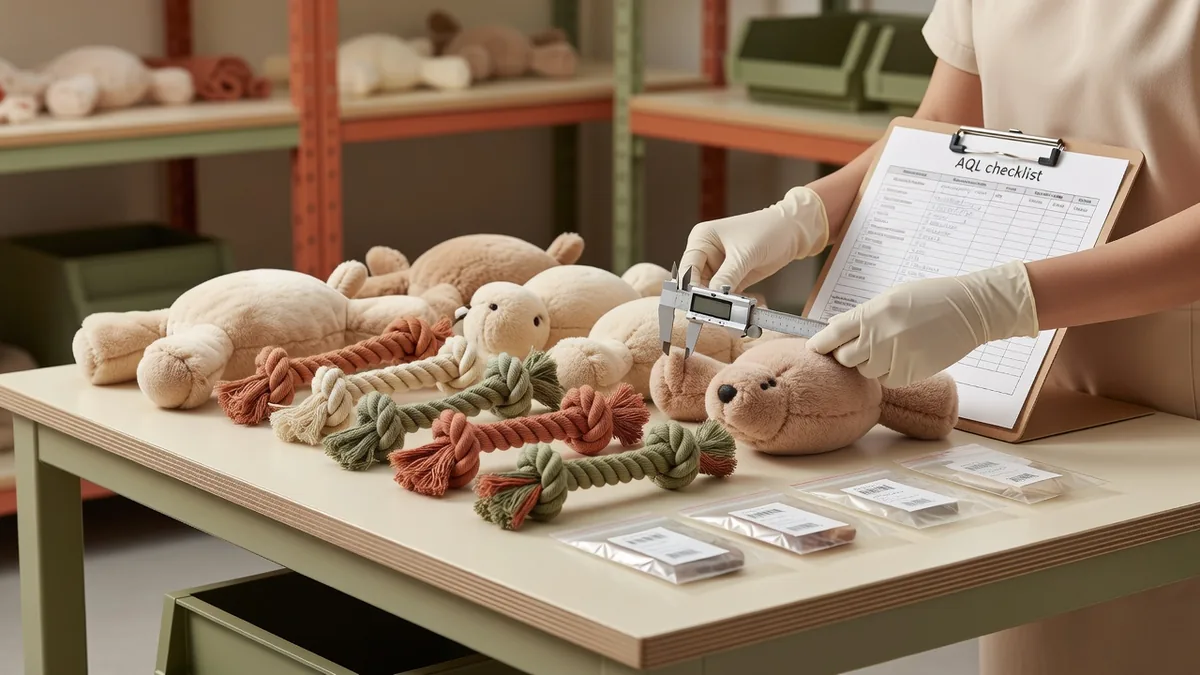
Small MOQ does not mean “skip AQL.” It means you write a lighter plan that still catches the defects that kill reviews: open seams, loose eyes, squeaker migration, dye bleed, wrong hangtag, soft fill that collapses after two washes.
Insist on three gates even on a trial PO:
- Incoming materials: fabric GSM / pile, rope lot, rubber batch codes mapped to what the lab saw
- In-line: stitch density at stress points, fill weight spot checks, logo placement
- Pre-shipment: carton count, barcode scan sample, photo evidence against the golden sample
Keep a shared issue log. The same seam failure should not reappear on reorder because nobody wrote it down. For programs headed to US or EU retail, align lab timing with production so certificates exist before cargo booking—not after the container is sealed.
If you want a deeper gate plan, pair this article with how you write RFQs for pet toy QC; the same discipline applies whether the PO is 300 or 3,000 units.
Packaging and retail readiness on a low MOQ budget
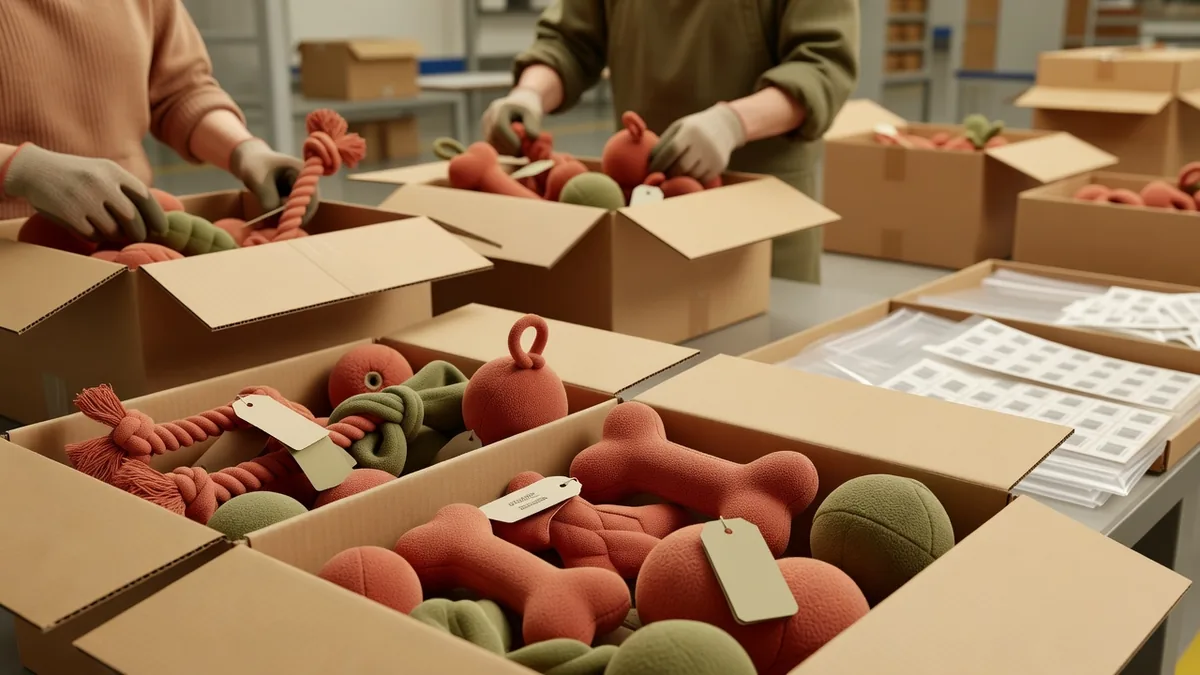
Wholesale and brand buyers lose margin when packaging is an afterthought. Align early on:
- Inner polybag thickness and print
- Hangtags, care labels, barcode placement
- Master carton dimensions and drop expectations
- Warning copy for target markets
Marketplace sellers: confirm pack-out photos match the shipped unit. Inconsistent packaging is a top return driver on pet toys. Low MOQ programs often share carton art across SKUs—plan that up front so you do not reprint mid-run.
Common mistakes on first private-label POs
- Choosing on unit price without freight, testing, and packaging
- Skipping durability checks with real dogs or lab proxies
- Vague artwork that stalls logo application
- Changing materials mid-sample without updating the cost sheet
- Assuming the factory “just knows” your market’s labeling rules
- Ordering bulk before the pre-production sample is signed
- Treating a one-time promotional MOQ as the forever reorder price
How WagNab supports low-MOQ brand programs
WagNab works with brand and wholesale partners on pet toy manufacturing—from material selection through sampling and bulk. Review live options on the products catalog, development flow on ODM services, and brand packaging path via private label.
Teams evaluating private label dog toys low MOQ usually start with a short brief: target pet, material preference, logo method, first-order quantity, and destination market. From there we map a realistic sample plan and flag compliance needs before tooling money is spent.
Decision checklist before you place the PO
Use this before you commit cash:
- Spec sheet signed and versioned
- Sample approved in writing
- QC plan and AQL agreed for the trial size
- Packaging dieline approved
- Incoterms, payment terms, and lead time written into the PO
- One revision cycle budgeted without killing the launch window
- Reorder MOQ and shared-material plan written down so trial pricing does not surprise you later
If any of that is still verbal-only, pause. Most post-shipment disputes on pet toys come from unwritten assumptions, not from bad intent.
When you are ready to talk trial quantities and sampling windows, contact WagNab with your brief and target markets. Share the SKU role, material preference, and first-order band—we will come back with sampling options and lead times that match how low MOQ actually works on the floor.
Ready to Build Your Next Collection?
From material selection to final delivery, we help brands bring pet toys to market.