REACH Compliant Pet Toys Manufacturer: What EU Buyers Should Lock Before Bulk

A REACH compliant pet toys manufacturer is not a factory that prints “REACH” on a quotation. It is a plant that can name the material in each SKU, keep a sample that matches bulk, and hand a lab the same compound you approved. REACH (Registration, Evaluation, Authorisation and Restriction of Chemicals) is an EU chemicals rule. It is not a pet-toy certificate you hang on a peg. If a supplier’s only proof is a logo on a slide, treat the claim as unfinished.
This note is for brand owners, importers, and distributors shipping plush, TPR, rope, and bone shapes into the EU. It sits next to the longer importer checklist on CPSIA, EN71, and REACH. That page covers the legal frame. This one covers the factory conversation: which catalog lines you can brief, which fields are already in the product record, and which tests you must confirm on quote. Browse live shapes on the products catalog before you invent a compound that is not in production.
What “REACH compliant” can and cannot mean on a pet toy PO
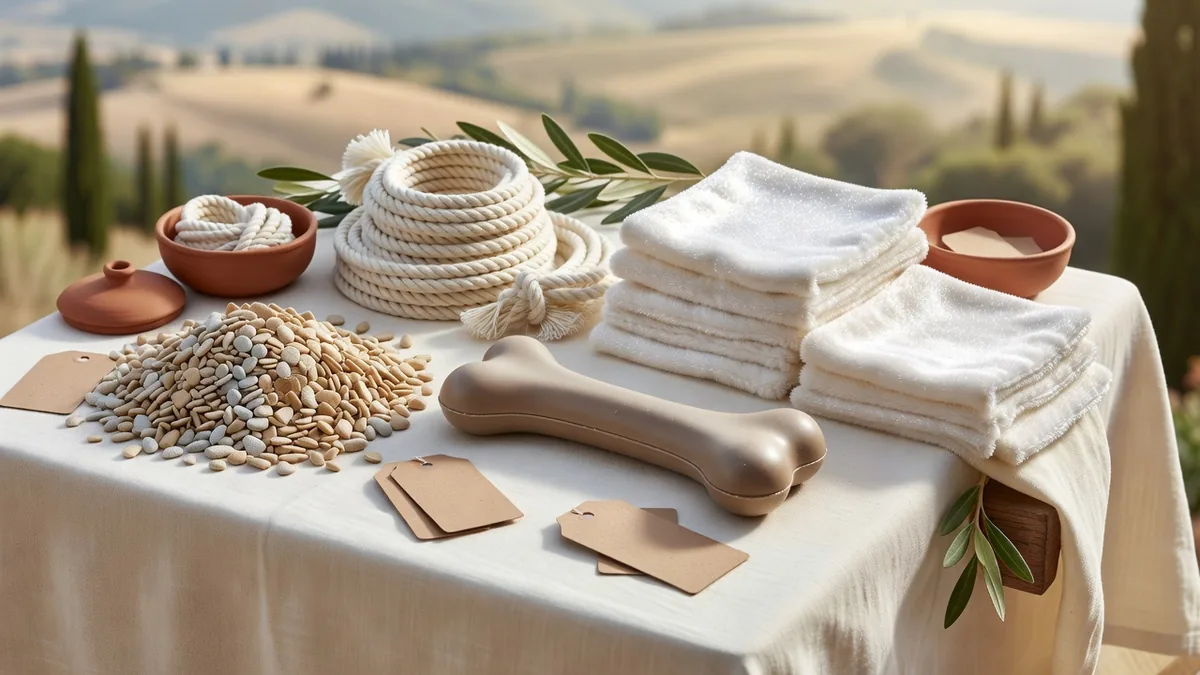
Buyers often want one sentence: “This toy is REACH compliant.” A usable factory answer is narrower.
What you can ask for. Restricted substances and Substances of Very High Concern (SVHC) relevant to the materials actually used: TPR or other elastomers, PA, PU coatings, cotton or nylon cord, crystal plush face fabric, polyester fill, and any ink or coating on packaging that a child might mouth. You can ask which lab, which report date, and whether the report covers this color lot or only a previous white compound. What you should not accept as proof. A generic “we pass REACH” line with no report number. A report for a different product family. A promise that EN71 and REACH are the same test. They are not. EN71 is a toy-safety standard family. REACH is chemicals law. Retailers sometimes ask for both. The private label path is where you decide which market’s lab panel is in the first PO, not after the container is booked.WagNab’s live catalog does not store certification fields on SKUs. Do not read a blank cert column as a pass or a fail. It means confirm on quote: substance scope, lab, and whether the approved sample’s compound is the bulk compound.
Which material families change the REACH brief
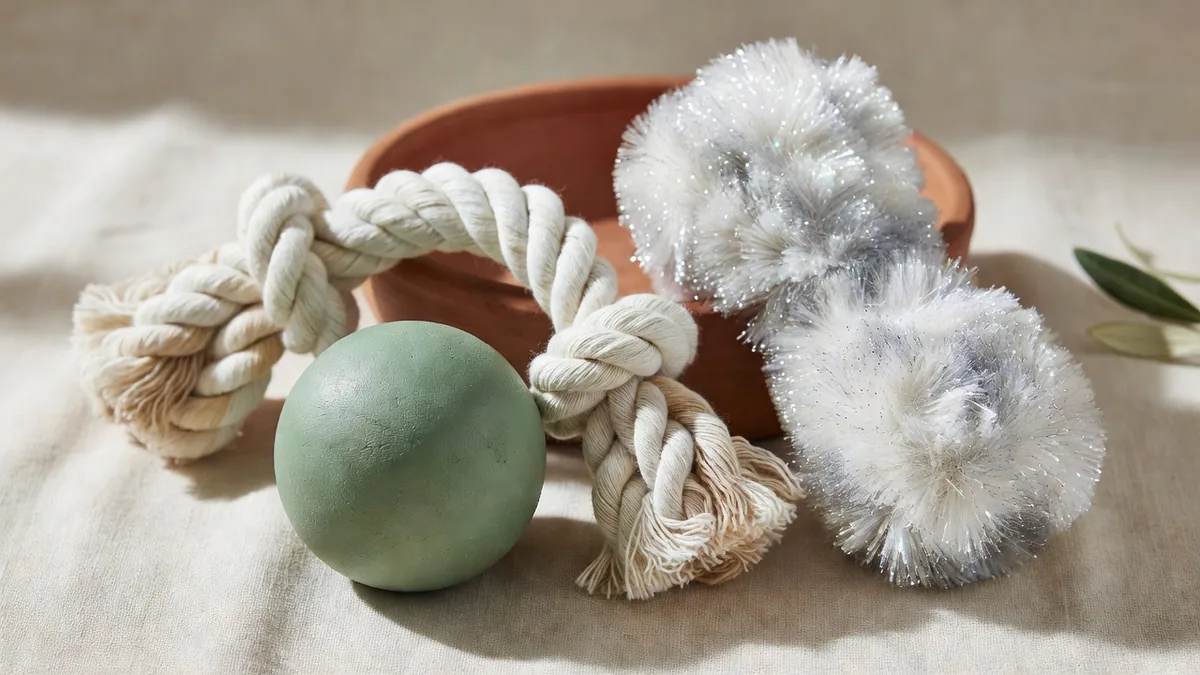
Split the brief by what the dog (and a child in the same room) can touch. Three families already on the floor cover most first orders.
Elastomer / chew. Roll Rubber Ball is TPR, 7.8 cm, about 148 g, MOQ 120, in the Smart Play series. Treat Rubber Ball is also TPR, 8.5 cm, about 280 g, MOQ 120. Heavier mass means more compound per unit — useful when a lab asks for a minimum sample weight, useless as a “safer” claim. Coated Bone Chew is PA with a PU coating, sizes S 13.3×4.6×2.8 cm, M 16.5×5.6×3.7 cm, L 19.5×6.6×4 cm, weights about 65 g / 145 g / 200 g, MOQ 120. A coating is a second material. If your SVHC question only names the PA core, you have not briefed the toy the dog actually chews. Rope and hybrid. Puppy Rope Knot is TPR plus cotton, 9.8×7.8×4.3 cm, about 29 g, MOQ 120. Tug Of War is linen and nylon, size listed as 9×29, MOQ 120, Studio Warmth. Cord, knot glue, and any dip are separate from the face fabric. Ask the factory to list each, not “rope toy.” Plush. Monster Series is crystal plush, 25×15×7, about 120 g, MOQ 120. Face fabric, embroidery thread, eye hardware, and fill can each carry a different chemistry. A squeaker or rattle, if you add one later, is another part. None of those parts are implied by the word “plush” on a line sheet.There is no hemp-only or RPET-only chew in the active catalog today. If a buyer brief says “natural rubber” or “recycled face fabric,” map it to a real material name (TPR, cotton, crystal plush) or treat it as a development item under ODM, not as an open-stock reorder.
How to structure the first trial so the lab sample matches bulk
MOQ 120 is the recorded trial band on the SKUs above. That quantity is a sewing and molding floor, not a testing strategy. Labs need pieces from the same lot you intend to ship. A practical first EU order looks like this:
1. Pick two or three SKUs that share a compound where possible (two TPR balls, or one coated bone size ladder) so you are not paying five unrelated panels.
2. Approve color on a physical sample. Dark masterbatch and fluorescent inks are where substance surprises show up. Do not approve color from a photo.
3. Write the test list into the PO: which REACH restrictions, whether an SVHC declaration is required by your retailer, and whether EN71 parts are in or out. Confirm scope on quote.
4. Hold shipment until the report matches the PO color and the material list, not a cousin SKU from last season.
Contact WagNab with destination market, SKU shortlist, and whether you need a retailer-specific substance list. We will not invent a pass result to speed the booking.Private label and open stock are different risk levels
Open catalog colorways already in production are easier to document because the compound is not being invented for your logo. A new Pantone on TPR, a new PU coating, or a metallic thread on plush is a new substance question even when the shape is unchanged. That is the boundary between reordering products and opening a private label color program.
If the shape itself does not exist — a custom cavity, a new rope construction, a plush with an added squeaker — move the conversation to ODM and budget lab time before tooling, not after the mold is cut. Tooling does not make a compound compliant.
What to put in the RFQ (and what to leave out)
Ask for:
- Material names as stored on the SKU (TPR, PA, PU, cotton, nylon, linen, crystal plush), plus any coating, ink, or hardware not in that list
- Recorded size and weight, so the lab sample is identifiable
- MOQ and whether a lab retain is inside the 120 or extra
- Who pays for the first fail and the retest
- A statement of which substances were actually screened — not “full REACH” with no annex
Leave out:
- Invented ppm limits in consumer-facing copy
- Claims that a blank certification field equals compliance
- Promises that one report covers every color you might add next year
FAQ
Does MOQ 120 include lab samples?Not automatically. MOQ 120 is the catalog order floor on these SKUs. Say in the RFQ whether retains come out of that 120 or sit on top.
Is TPR the same as natural rubber for REACH?No. Several catalog “rubber” toys are recorded as TPR (Roll Rubber Ball, Treat Rubber Ball, Coated Bone Chew’s coating is PU on PA). If your retailer requires a natural-rubber declaration, confirm the compound on quote. Do not relabel TPR as natural rubber in the listing.
Can one report cover plush and chew?Only if the report lists each material in that toy. A TPR ball report does not cover crystal plush, cotton cord, or a PU coating on a different SKU.
Do you upload the report to the website?No. Reports stay with the buyer’s compliance file. Public pages should not publish lab numbers we do not hold.
If you are placing an EU-bound first order, request a quote with the SKU list and the retailer’s substance sheet. We will map each line to a recorded material and flag anything that is confirm-on-quote before you pay for the wrong panel.
Ready to Build Your Next Collection?
From material selection to final delivery, we help brands bring pet toys to market.