Reliable Pet Toy Supplier for Amazon FBA: What Sellers Actually Need

If you sell pet toys on Amazon, you already know the pain: a sample that looked perfect on your kitchen table, a 500-piece lot that arrives two shades off, and a week later the return queue is full of “not as pictured.” A reliable pet toy supplier for Amazon FBA is not the cheapest Alibaba listing. It is the plant that can hold color, stick barcodes, pack for Amazon inbound rules, and ship the same SKU six months later without rewriting your main image set.
This guide is for FBA private-label and brand sellers who need a production partner, not a one-shot trader. It covers what reliability means in Amazon terms, how to brief a factory, sampling that freezes your listing photos, MOQ and inventory math, pack-out, QC, and red flags before you wire a deposit.
Why Amazon FBA changes the supplier conversation
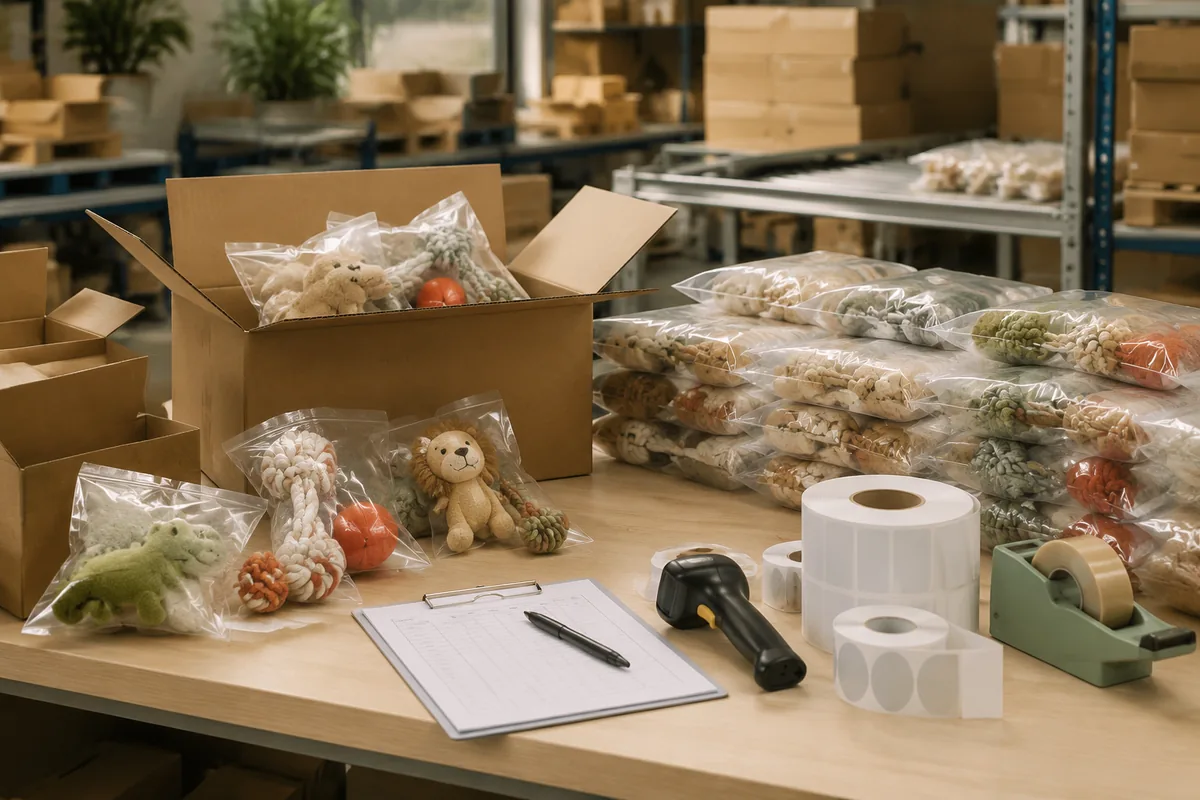
Retail buyers care about shelf packs and case packs. Amazon sellers care about something narrower and meaner: listing truth, inbound compliance, and return rate.
A supplier that works for FBA usually does these without a long lecture:
1. Matches production color and size to the photo sample you shot for the listing.
2. Applies your FNSKU / barcode placement rules so Amazon does not reject or rework cartons.
3. Keeps dye lots and fabric piles consistent so reorders do not force a full reshoot.
4. Documents materials and safety so you are not inventing claims for A+ content.
Unit price still matters. Returns, stranded inventory, and “item not as described” claims cost more than a 10–15% gap on a plush or rope SKU. If a factory only wants to talk about the lowest landed cost and never asks about your listing photos or carton marks, keep looking.
You can start with shapes already in production on the products catalog. Catalog-adjacent bodies often get an FBA test SKU live faster than a full custom mold.
What “reliable” means for an FBA pet toy program
Reliability is a process, not a promise on a chat app.
| Area | Weak supplier | Reliable FBA-ready partner |
|---|---|---|
| Sample vs bulk | “Close enough” on color | Signed photo sample + lot-to-lot color control |
| Labels | You discover errors at the warehouse | Barcode proof and placement signed before mass pack |
| Reorders | New dye lot, new look | Material and color codes on every PO line |
| Communication | Ghosting between deposit and ship | Weekly status with QC photos and ship window |
| Docs | Certificates appear “later” | Test plan timed to production, not after cargo is sealed |
Amazon customers review fast. A supplier who treats your first order as a disposable trial will burn ad spend you already paid for. Ask for recent re-order examples (even anonymized) and how they handle a color complaint after bulk ships.
For brand-owned lines and white-label paths, compare private label vs full custom development under ODM services before you lock tooling money.
Brief the factory like an Amazon listing, not a trade-show chat
Factories quote what you write. Vague briefs produce pretty samples and ugly reorders.
Product and listing truth
- Listing title intent and hero claim (“soft plush for puppies,” “tug rope for medium dogs”)—only claim what you will test
- Target species, size band, finished dimensions in mm
- Material stack: pile height, fill density, TPR Shore, rope fiber, squeaker yes/no
- Colorways with Pantone or physical swatch, not “blue-ish”
Amazon pack and identity
- FNSKU vs manufacturer barcode plan
- Poly bag thickness, transparency, suffocation warning if required
- Insert cards, care labels, country of origin placement
- Master carton dimensions, weight limits, mixed-SKU tolerance
- Destination: Amazon FBA, prep center, or your 3PL first
Ops and QC
- Sample lead time and bulk lead time in calendar days
- AQL level, pull tests, color check method under agreed light
- Who pays for third-party inspection and when it runs
Send one versioned brief. Chat screenshots alone create “I thought you meant…” moments that delay your launch window.
Sampling that freezes your main images
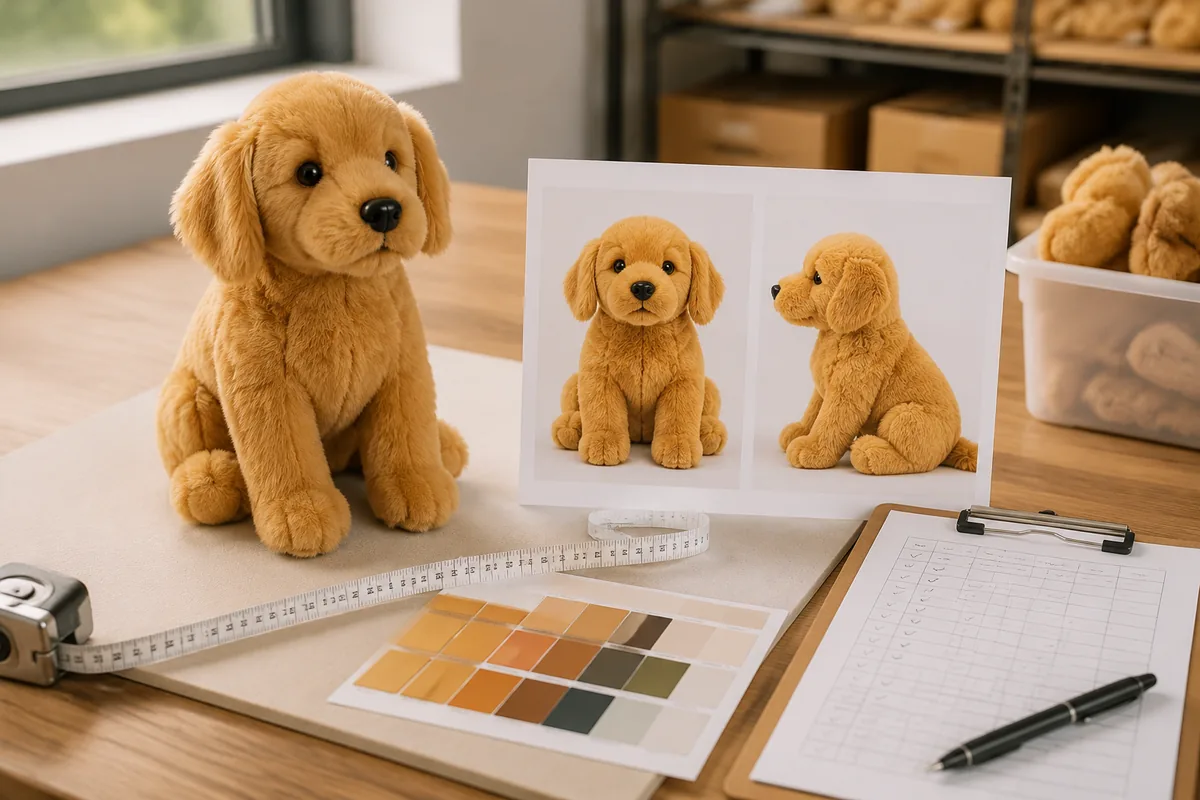
FBA sampling has one job: freeze the product you will photograph and sell.
A process that works for most Amazon pet toy launches:
1. Proto sample — shape and function. Kill bad scale or chew feel early.
2. Photo sample — production materials, correct color, correct hangtag/pack. Shoot main images, lifestyle, and infographics from this unit.
3. PP / pre-production sample — signed off before bulk. Keep one sealed unit as the re-order gold standard.
4. Production pull — open a unit from the first inbound carton under the same light you used for photos. Compare to the sealed gold sample before you scale ads.
Label every sample with date, material lot, and color code. When a buyer says “mine is darker,” you need a paper trail.
If you need a new hybrid shape or exclusive material stack, walk written milestones on the ODM process instead of open-ended “we’ll tweak it after deposit.”
MOQ, ads, and inventory risk on Amazon
Amazon kills cash flow when slow colors sit in FBA bins while ads still run on the hero image.
Practical patterns for pet toy FBA programs:
- Hero + two variants often beats six unproven shapes. Prove one body before expanding the family.
- Color MOQ vs style MOQ. Dye lots and embroidery setups often set the floor more than the sewing line.
- Re-order floor in writing. A first order of 300 that becomes 1,500 next time changes your PPC plan.
- Mixed cartons help test kits; they hurt pure FBA if packing lists and labels are sloppy.
- Safety stock for rank. Plan a buffer so a two-week ship slip does not zero out available inventory mid-campaign.
Low MOQ only helps if re-orders stay available at a sane floor. A plant that does 100 pcs once and ghosts you at 800 is not an FBA partner.
Browse ready-to-adapt SKUs on products when you want a faster first listing before full exclusive tooling.
Pack-out, cartons, and inbound friction
Amazon prep is where “good factories” still drop the ball.
Align early on:
- Poly bag seal quality and print that survives rough sortation
- Barcode scan rate on dark fabric or busy hangtags (test scans before mass pack)
- Carton mark format Amazon expects for your prep path
- Inner count consistency so ASN / packing lists match reality
- Fragile or squeaker SKUs: extra packing so units do not crush in transit
If you use a prep center, share their SOP with the factory in the same PO packet. Two versions of “how we pack” is how you get unplanned prep fees.
QC that protects reviews, not only the inspection report
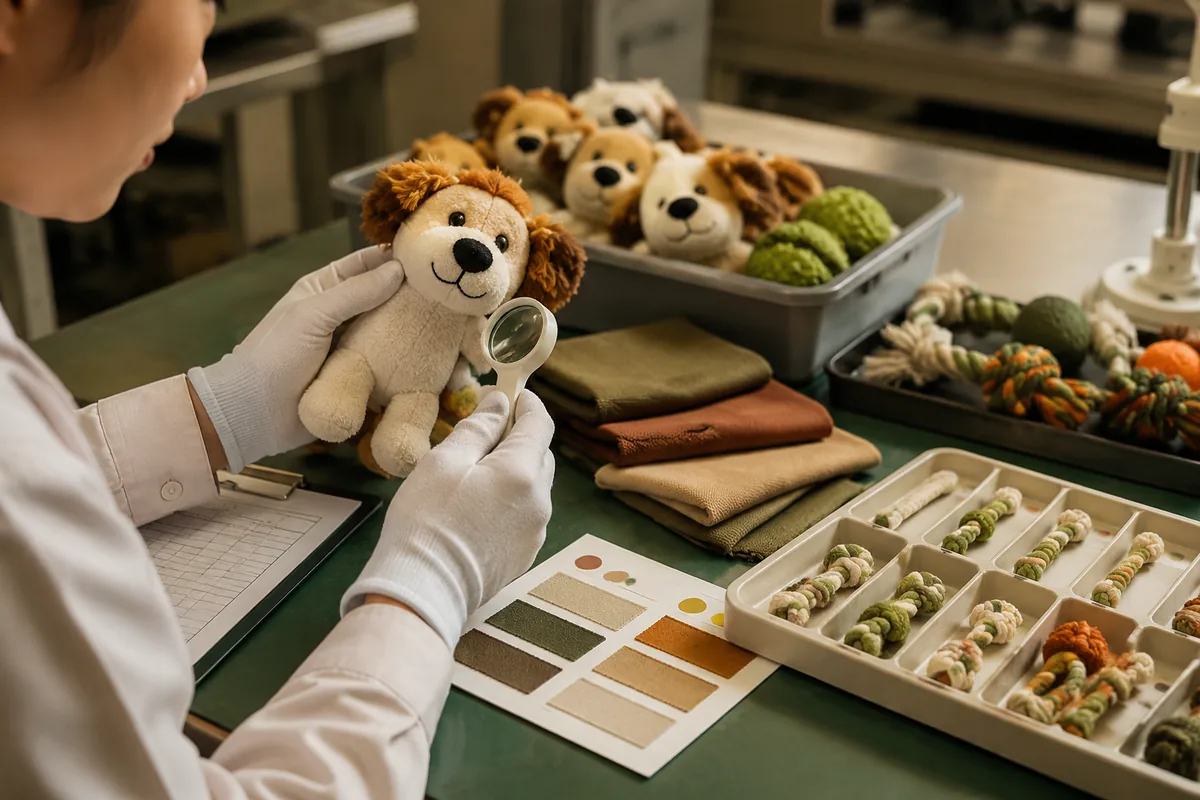
Multi-stage QC still applies: incoming materials, in-line checks, final inspection. For FBA you add a listing-truth check.
For plush: seam strength, stuffing density, eye/nose attachment, color vs gold sample.
For rope: braid tightness, end finishing, dye bleed risk.
For rubber/TPR: Shore hardness, odor, flash, and dimensional drift.
Document a simple AQL even on trial orders. It trains the factory early. On first production runs, ask for photo or video evidence of each QC gate before goods leave the plant. Keep a shared issue log so the same defect does not reappear on reorder.
For US and EU destinations, align lab timing (CPSIA, EN71, REACH where relevant) with production so certificates exist before cargo booking—not after the container is sealed. Do not invent test results; schedule real tests against the claims you will put on the listing.
Red flags that show up before the first deposit
Walk away—or at least slow down—if you see:
- No questions about your listing photos, barcode rules, or destination warehouse type
- “Any color, no problem” without talking dye lots or minimum per color
- Sample price so low that materials clearly will not match bulk
- Refusal to put re-order MOQ and lead times in the PI
- Certificates that “come with every order” with no lab name or SKU linkage
- Multiple decision makers on their side with no single production owner
Reliability is boring on purpose: clear specs, signed samples, predictable pack-out, honest lead times.
How WagNab works with Amazon-focused buyers
WagNab manufactures pet toys for brand and wholesale partners, including sellers who ship into Amazon FBA and prep centers. Review live options on the products catalog, development paths on ODM services, and brand-build options on private label.
Teams looking for a reliable pet toy supplier for Amazon FBA usually start with a short brief: target pet and size, material preference, logo method, first-order quantity, FBA vs 3PL destination, and the claims you want on the listing. From there we map a sample plan, flag compliance needs before tooling spend, and lock pack-out rules before bulk.
When you are ready to talk MOQ, sampling, and FBA-ready pack-out, contact WagNab with that brief and your target markets.
Decision checklist before you place the PO
Use this before you wire money:
- Spec sheet signed and versioned (materials, dimensions, color codes)
- Photo sample approved; gold sample sealed for re-orders
- Barcode / FNSKU placement proof approved
- Packaging dieline and carton marks approved
- QC plan and AQL agreed; who inspects and when
- Lab tests scheduled against listing claims (not promised “later”)
- Incoterms, payment terms, bulk lead time, and re-order MOQ on the PO
- One buyer-side decision owner for revisions
If any of those is still verbal-only, pause. Most post-inbound disputes on Amazon pet toys come from unwritten assumptions, not from bad intent on either side.
FBA-ready trials usually start from packable open-stock bodies—try a Busy Ball interactive SKU and a Treat Rubber Ball chew—so barcode placement and master-carton marks are tested on something that already exists.
Choosing a reliable pet toy supplier for Amazon FBA is a process decision. Define the listing truth, freeze samples, lock pack-out and QC, then scale ads. Share your SKU brief via contact when you want sampling options and a realistic production window.
Ready to Build Your Next Collection?
From material selection to final delivery, we help brands bring pet toys to market.