RPET Plush Dog Toys Manufacturer: What You Can Actually Order

If you typed RPET plush dog toys manufacturer into a search bar, you already have a hangtag sentence in mind. Most open-stock plush is still conventional polyester. Recycled content is a mill purchase, not a switch the sewing floor flips on Thursday.
This note is for buyers who need a first carton. It uses three catalog toys, says what the material field does not claim, and covers the sampling questions that decide whether an RPET face is a reorder or a development.
Start from a plush you can measure
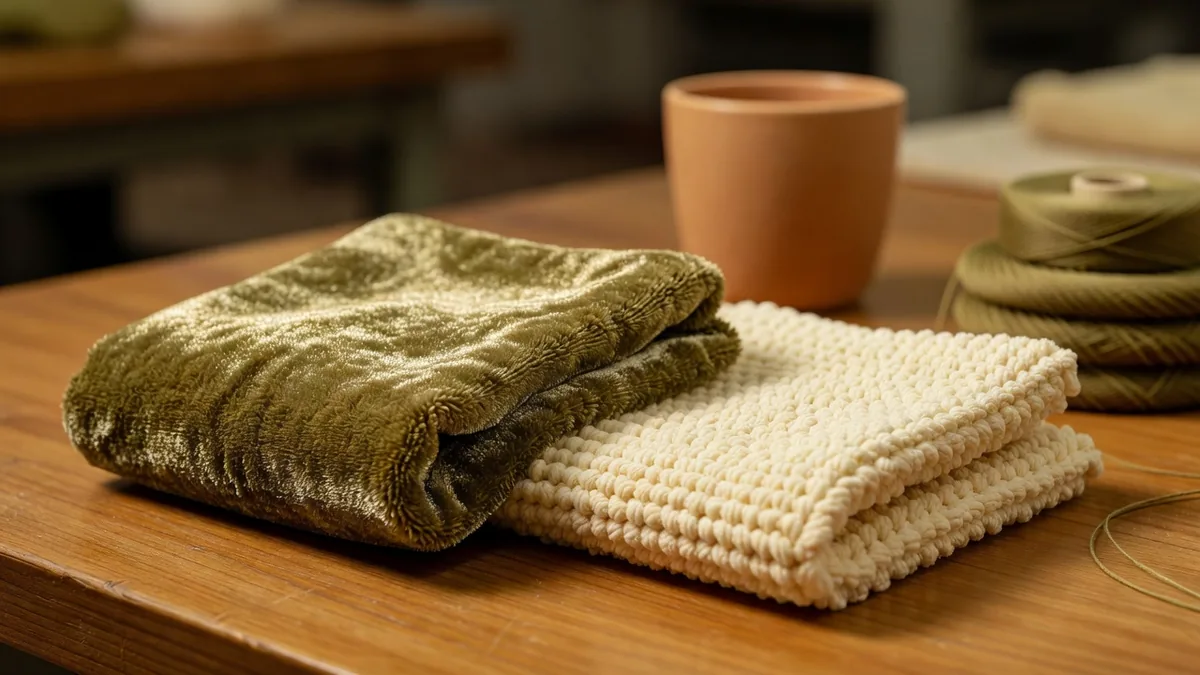
A useful brief starts with a body the factory already sews. Big Shape Animal is a Studio Warmth plush listed as crystal plush and polyester, size 40×33, about 150 g, MOQ 120, for dogs and cats. Colorways on file are gray, pink, and beige. That is a large gift silhouette. It eats more face fabric than a palm toy, which is exactly why buyers use it when they want to see how a new yarn behaves across a big panel.
Naughty Pig sits at the other end of the same material line: corn texture and polyester, 18×23, about 85 g, MOQ 120, pink and brown. Corn texture here is a surface knit, not a recycled-content claim and not a corn-fiber certificate. It is useful as a contrast sample. If your RPET yarn is smoother than that nub, say so before the mill knits a trial. Bear is crystal plush and polyester again, 15×25 cm, about 72 g, MOQ 120, orange and brown, dogs and cats. Smaller panel, lower fabric consumption, easier to drop into a mixed first carton beside the large animal. None of these three records a recycled percentage, a GRS scope, or a mill lot. If your packaging needs those words, they are a development item, not a hidden field on the product page.The rest of the open line lives in the products catalog. Pull two or three silhouettes you would actually photograph. Do not send a mood board of twelve characters and ask which ones "can be RPET."
What RPET means on a plush PO
RPET is recycled polyethylene terephthalate, usually bottle flake spun into face fabric. On a dog toy it almost always means the outer only. Filling, binding, squeaker housing, and the polybag are separate purchases. "Made from recycled materials" is the sentence retailers bounce. "Face fabric: recycled polyester, transaction certificate for lot X" is the one a compliance person can file.
Distinctions that keep quotes honest:
- Crystal plush on our catalog is a short pile. It is polyester. It is not RPET unless a mill document says the filament came from recycled flake.
- Corn texture is a hand-feel. Naughty Pig reads nubbly. That nub can be conventional polyester. Texture is not provenance.
- Filling is rarely called out on these SKUs. The 150 g on Big Shape Animal is unit weight, not a composition table. Recycled fill is a separate line, and it moves hand-feel and cost.
- A partial claim is fine if it is narrow. Outer recycled, fill virgin. Write the narrow sentence.
We do not print a recycled-content number on these three toys because the database does not have one. If the job is a certified face yarn, treat it as custom material under ODM: mill MOQ, lab dip, and a sample in the actual silhouette before anyone draws a leaf.
Sampling when the yarn is not on the shelf
Open-stock crystal plush and corn texture can sample from existing fabric. An RPET face usually cannot. The mill's minimum is often larger than your toy MOQ, and the color you want may not be a stock dye lot.
A practical first loop:
1. Lock size and weight from the catalog line, then confirm centimeters on the quote. Big Shape Animal is 40×33; Bear is 15×25 cm; Naughty Pig is 18×23. The catalog does not print a unit on every size string, so do not assume inches.
2. Send a face-only composition: recycled polyester percentage, and whether you need a transaction certificate or a mill declaration.
3. Approve a lab dip before anyone cuts a full body. Recycled flake shifts shade more than virgin chip, especially in beige and gray. Big Shape Animal's beige and gray are the colors most likely to argue with you.
4. Sew one pre-production sample in the approved yarn, at the real size. A swatch that feels soft can still pucker on a 40 cm panel.
5. Only then talk carton quantity. MOQ 120 is the sewing minimum on the current material. It is not a promise that an RPET mill will sell you 120 toys' worth of yarn.
Colorways on file are conventional lots: Naughty Pig pink and brown, Bear orange and brown, large animal gray, pink, and beige. Recycled equivalents need their own dip. Brand guidelines do not shorten that step.
Construction checks that matter more than the leaf
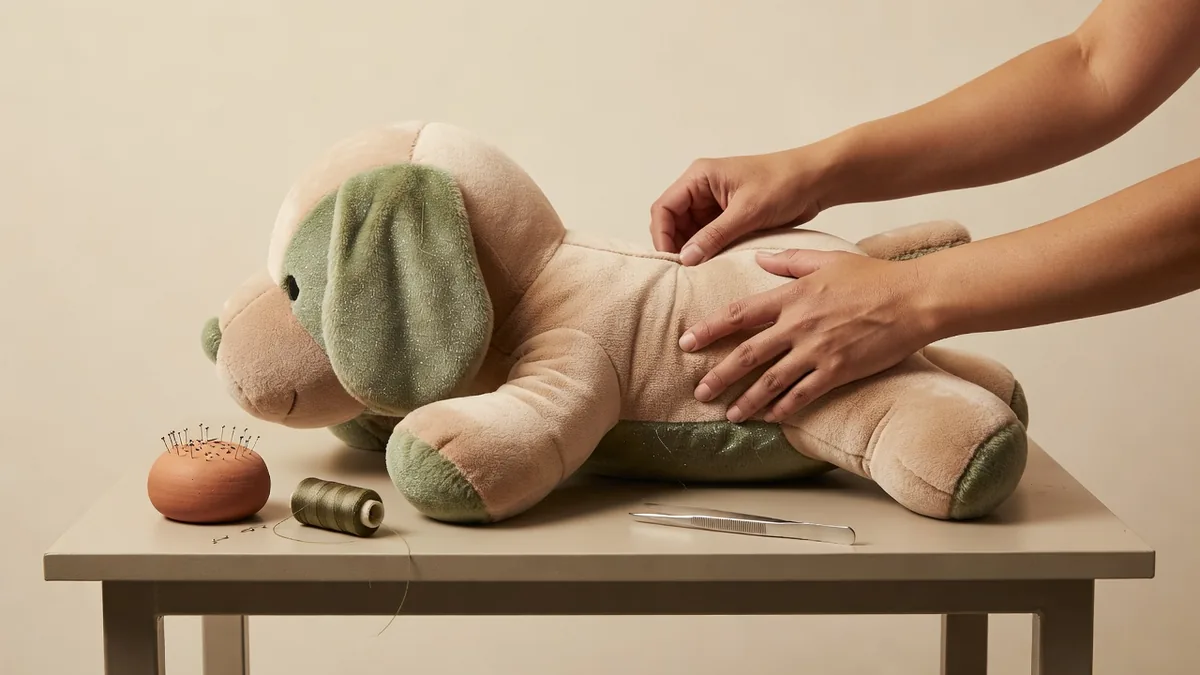
Recycled face fabric fails in ordinary ways. The yarn can be slightly weaker at the same denier. Pile can crush in the carton. Dye can crock onto a light sofa, which is the return photo your marketplace team will actually see.
Checks worth writing into the PO:
- Seam allowance on the longest seam. Big Shape Animal has more seam than Bear. A thicker RPET pile can leave a raw edge inside the curve if the stitch setting stays the same.
- Hard trim. These records do not list a squeaker. If you add one, say whether the housing is virgin PP and keep it out of the recycled sentence.
- Weight tolerance around the recorded 150 g, 85 g, and 72 g. Ask for a band on the pre-production sample.
- Odor after a day out of the polybag. Recycled flake can smell hotter off the extruder. It should not still be obvious in your office.
- Crocking, wet and dry, on the lightest colorway. Beige is the one that marks carpet.
None of that is a lab report attached to this page. If a retailer wants CPSIA, EN71, or a chemical screen, book it against the approved material, not the open-stock polyester you sampled first. A test on the wrong fabric is a PDF you cannot use. Packaging and test scope for a documented file sit under private label, with the same material line on the lab form and the hangtag.
This pile is supervised soft play. Crystal plush and corn texture are not power-chew constructions. If the channel sells to heavy chewers, pair the face story with a different body and say so on the line sheet.
How a first carton usually gets built
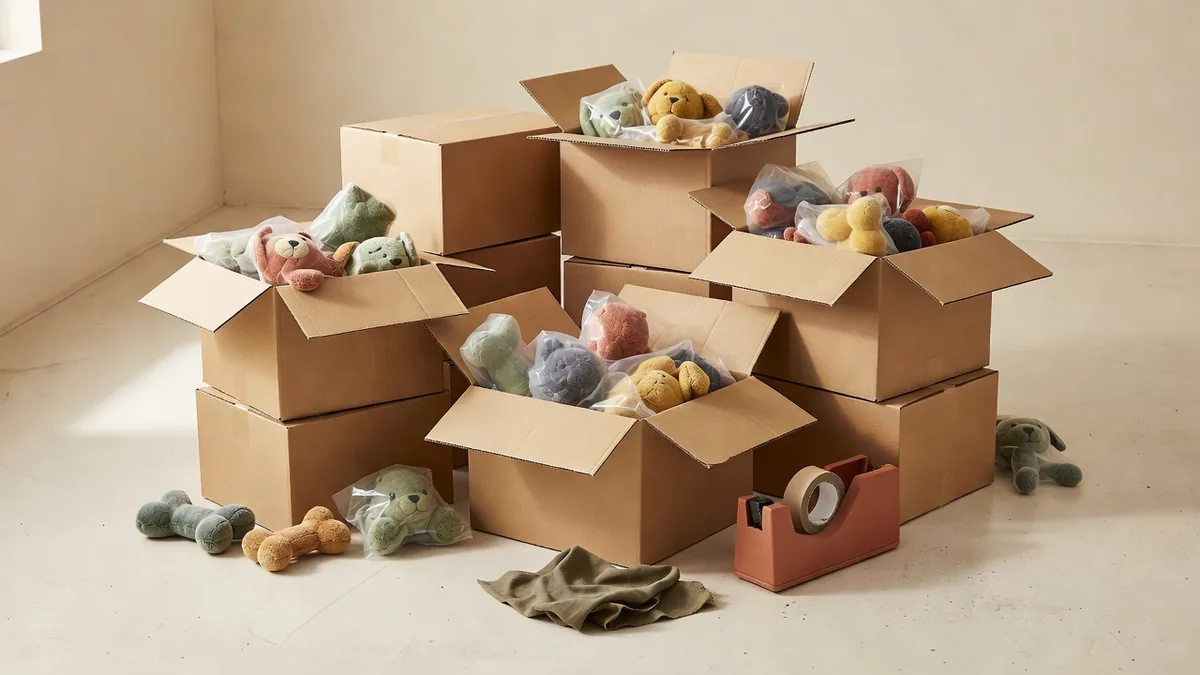
MOQ on Big Shape Animal, Naughty Pig, and Bear is 120 each on the current record. Other plush in the same studio can sit at 360 or 480, so do not copy 120 onto every shape. A first order of 120 large animals plus 120 bears is easier to explain than 120 of a yarn the mill has not dyed.
Points that move the calendar more than the unit price:
- Mill MOQ versus sewing MOQ. If the RPET supplier sells by the kilo, the first dye lot may cover more than 120 toys. You either hold the balance or accept a larger first cut. Ask which one before you promise a retailer a small drop.
- Reorder shade. The second cut is where beige drifts. Keep a retained swatch from the approved dip, not a photo.
- Packaging copy. Hangtag, carton mark, and the marketplace bullet have to use the same narrow claim. If only the face is recycled, every surface should say face, not toy.
- No invented percentage on the tag, and no "ocean plastic" unless a certificate names that feedstock.
Open-stock polyester versions can ship while the RPET dip is still in the lab. Some brands prove the shape in crystal plush, then switch the face on reorder once the certificate is in the file. Change the listing copy the same day the material changes. A 150 g animal and a 72 g bear also do not cube the same, so compare landed cost on one size, not a blended average.
What to send in the RFQ
A short brief gets a usable answer. A mood board does not.
Include the silhouette with catalog size and weight, pet type (dogs and cats on these three), face composition and whether fill stays as-is, one light color and one saturated color for the first dip, the exact claim sentence plus the certificate type, first quantity and whether you can take mill overage, and the date you need the pre-production sample in hand.
Skip a 12-SKU assortment and a request for "the same price as regular polyester" until that sample exists. Recycled filament is a different purchase. If the number comes back flat, ask what was substituted.
Adjacent shapes are in Studio Warmth if the bear or the pig is the wrong scale. Keep the material sentence identical across the set. When the sample lands, check shade against the retained dip, the seam on the tightest curve, and whether pile direction matches on the left and right panels. If the certificate is late, do not print the hangtag. Ship it as polyester until the document matches the lot in the carton.
A straight answer on this keyword
An RPET plush dog toys manufacturer can sew the shapes. The recycled part is a yarn decision with its own MOQ, shade risk, and paperwork. Big Shape Animal, Naughty Pig, and Bear are the polyester and corn-texture bodies already on file, MOQ 120, with weights and sizes you can put on a line sheet today. They do not carry a recycled percentage.
If you want the face swapped, send the silhouette, the exact claim sentence, and the certificate you need. Contact the factory with those three. Say whether you are still choosing between open-stock polyester and a certified face. The quote is different.
Ready to Build Your Next Collection?
From material selection to final delivery, we help brands bring pet toys to market.