Rubber Dog Toy Manufacturer: Specs, Sampling, and QC for Brand Buyers

If you are searching for a rubber dog toy manufacturer, you are probably not looking for a random catalog SKU. You need molded chew toys that hold Shore hardness, color, and shape from first sample through the third reorder—without soft spots, flash on edges, or a chemical smell that tanks reviews.
This guide is for brand buyers, Amazon private-label sellers, and distributors who source TPR, natural rubber, and hybrid rubber chews from China (or dual-source plants that also run plush and rope). It covers material reality, what to put in an RFQ, mold and MOQ math, sampling, QC, packaging, and red flags before you wire a deposit.
Start with the rubber family, not a single keyword
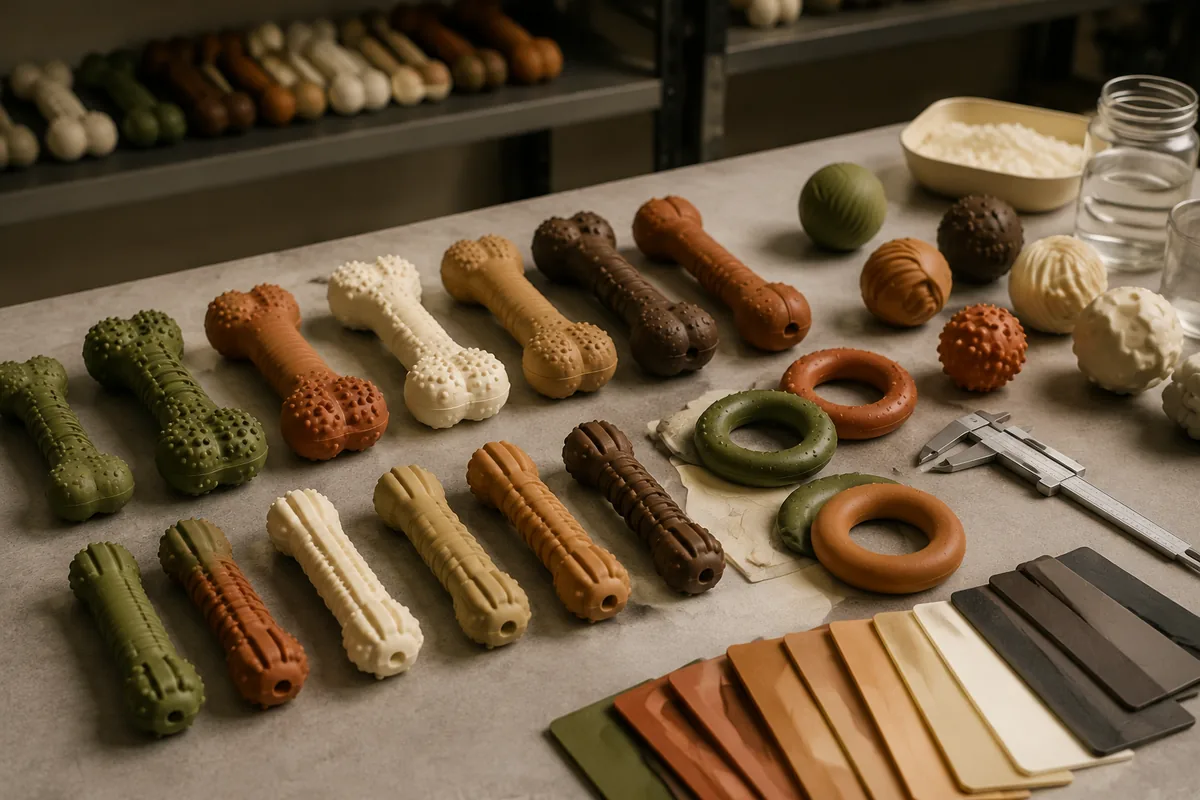
“Rubber” is several product families under one search. Treat them as separate programs when you set MOQ, tooling, and QC.
TPR (thermoplastic rubber). Common for bones, rings, sticks, and food shapes. Injection molded, colorable, good for moderate chewers. Hardness is usually specified in Shore A. Cheap TPR that is too soft tears early; too hard and dogs lose interest. Natural rubber. Higher bounce and stretch feel on some balls and fetch toys. Price and odor control vary by compound. Ask what is actually in the blend—not just the marketing word “natural.” TPE / soft elastomer blends. Softer mouthfeel, often used for puppy lines or multi-texture toys. Can mark floors or pick up lint if the surface is sticky. Spec surface finish in the sample sign-off. Rubber + textile hybrids. TPR body with rope handles, nylon webbing, or fabric sleeves. Two process lines in one SKU. Plan dual QC: molded body and sewn/rope attachment. Filled or multi-shot toys. Dual hardness, squeaker cavities, treat pockets. More tooling and more failure modes. Only start here after a simple mono-material body ships clean.Before you freeze a mold, browse live shapes in the products catalog. Catalog-adjacent bodies often start with lower MOQ and no full new-tool cost compared with a from-scratch cavity.
What a serious rubber dog toy manufacturer actually does
A factory that can run your program usually owns these, without a long sales speech:
1. Compound control: hardness windows, color masterbatch codes, and batch records you can reference on reorders.
2. Mold discipline: venting, flash limits, and cavity balance so piece weight stays stable.
3. Post-mold finish: trim, deflash, and surface clean enough for retail photos.
4. Written sample-to-bulk lock: the approved unit is measured, weighed, and photographed—not “close enough.”
5. Lab timing that matches production, not certificates that appear after the container is sealed.
Unit price still matters. Soft-fail returns, odor complaints, and “broke in two days” reviews cost more than a 10–15% gap on a mid-tier TPR bone. If a plant only wants to talk lowest FOB and never asks about Shore target, dog size band, or edge flash, keep looking.
For brand-owned lines and white-label paths, compare private label vs full custom development under ODM services before you lock tooling money.
Spec checklist before you send the RFQ
Vague briefs create pretty samples and ugly reorders. Send something a production manager can quote without inventing your product.
Body and performance
- Style: bone, ring, stick, ball, food shape, multi-arm, hybrid handle
- Finished dimensions in mm (length, diameter, wall thickness targets)
- Target dog size band and play style (gentle chew, power chewer, fetch)
- Shore A hardness window (e.g. 55–65A), not only “medium soft”
- Hollow vs solid; wall thickness map if hollow
- Squeaker / rattle yes or no; cavity design if yes
Compound and color
- Base: TPR, natural rubber, TPE blend—plus any filler or fragrance claims (only if you will document them)
- Color: Pantone or physical chip; matte vs glossy finish
- Odor: after 24–48h airing, bulk should not smell like a chemical warehouse
- Color migration: wet-wipe and saliva-proxy expectations if you will claim “color safe”
Safety and markets
- Destination markets: US (CPSIA-oriented chemical thinking), EU (REACH / toy-adjacent screens when retail treats it as a toy)
- Small-parts risk if multi-piece assemblies or loose inserts
- Warning copy: supervised play, inspect for damage, discard when torn
- No fabricated certs—plan tests to the markets you actually sell
Brand and pack
- Logo method: emboss in mold, pad print, heat transfer, hangtag only
- Polybag, header card, hangtag, UPC/EAN placement
- Inner pack count and master carton dimensions
- Mixed-SKU packing rules if you ship assortment cartons
A clean brief shortens sample rounds. Factories quote faster when they are not guessing wall thickness and hardness.
Mold, MOQ, and cost reality (what quotes actually do)
Rubber programs behave differently from plush or rope. Tooling drives first cost; compound and cycle time drive unit cost.
Patterns many buyers see in current export quotes:
| Program type | Typical first-order band | Cost drivers |
|---|---|---|
| Near-stock mold, your color/logo | 500–2,000 pcs per color | Color changeover, pack-out |
| Shared family mold, new colorway | 1,000–3,000+ | Masterbatch, scrap on color lock |
| New single-cavity custom shape | Tooling + 1,000–5,000+ first run | Steel, cavity count, trial shots |
| Multi-cavity or multi-shot | Higher tooling, lower unit later | Complexity, yield, secondary ops |
If your first order is under a few hundred pieces of a fully new shape with dual hardness and a new logo cavity, expect sample-level pricing or a hard MOQ push. Factories price mold amortization and changeover, not only grams of compound.
Ask for:
- Tool ownership and storage terms after you pay
- Estimated cavity life (cycles) and maintenance responsibility
- Scrap allowance on first production (written)
- Color-lot size if you will reorder the same Pantone six months later
Catalog or semi-custom bodies on products often get you to market while a full custom mold is still in design.
Sampling that freezes photo truth and bite feel
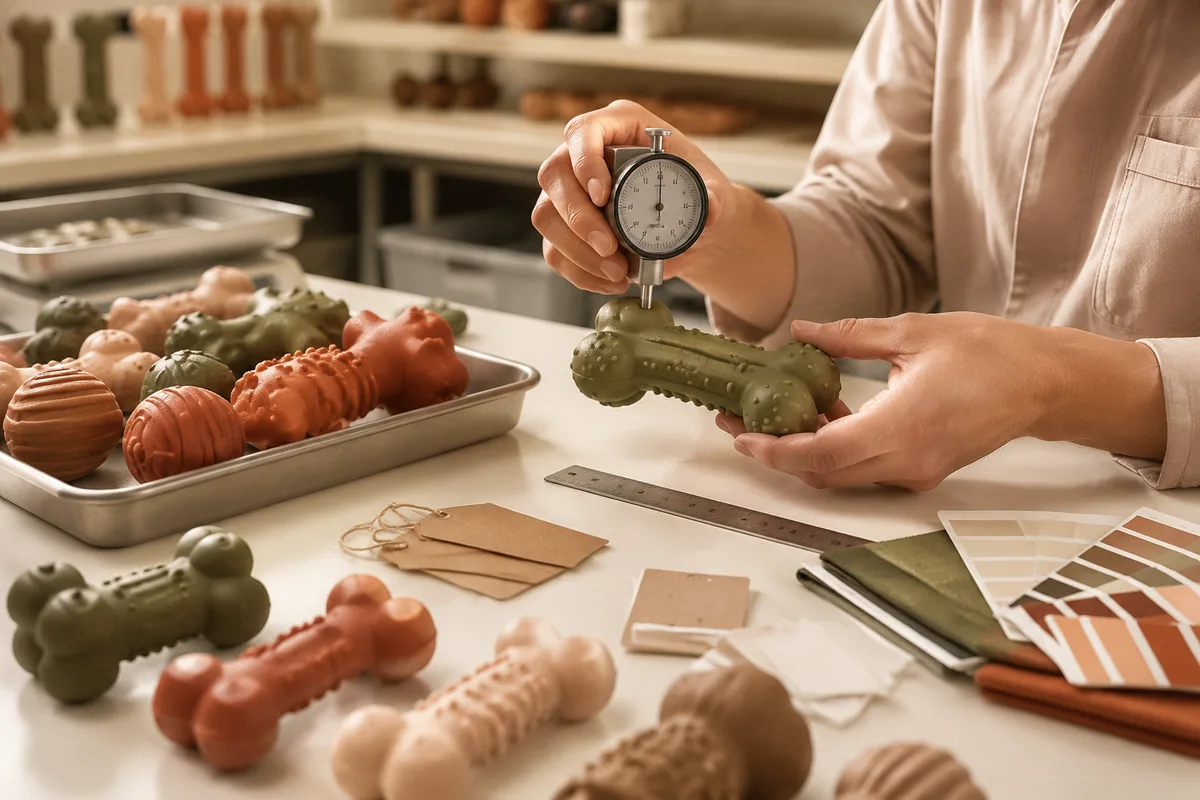
Rubber samples fail in ways that photos hide. Plan rounds with physical checks, not only email images.
Round 1 — material and shape intent. Hand sample or first mold shot for silhouette, weight, and hardness. Reject if Shore is outside your window or edges are sharp. Round 2 — production process sample. Same mold and compound path you will use for bulk. Check flash, knit lines, sink marks, and color vs chip under daylight and indoor light. Round 3 — pre-production (PPS) lock. Signed unit: dimensions, weight, Shore, finish, logo placement, packaging mock. This is the unit your factory and your warehouse both keep.Durability checks buyers actually run:
- Controlled chew / bite proxy or supervised real-dog test on the approved hardness
- Tear at thin walls and holes (rope tunnels, treat openings)
- Flex cycles on thin sections if the design bends
- Odor after sealed bag + open air for 24–48 hours
- Color rub if you pad-print logos
Budget freight both ways on samples, plus lab tests if your market requires them. A free sample that skips hardness and odor often becomes a paid problem at 2,000 pieces.
For custom development paths, map timeline and decision gates under ODM. For logo-on-existing-body programs, private label is usually faster.
QC gates that catch rubber defects early
Insist on multi-stage QC even on trial orders. It trains the line before you scale.
Incoming compound. Batch ID, hardness check on cured plaques or first shots, color vs masterbatch code, reject sticky or off-odor lots. In-line molding. First-article check per cavity, flash and trim audit, piece weight spot checks, logo/print registration if secondary process. Final / pre-shipment. AQL on appearance (flash, voids, burn marks, dirt), function (squeaker if any), pack completeness, barcode scan sample, carton drop if retail requires it.For rubber dog toy manufacturer programs, common bulk defects to write into the checklist:
- Soft spots or uneven hardness across the piece
- Heavy flash on seams that dogs can peel
- Oil bloom or white surface haze after packing
- Color drift between cartons of the same PO
- Weak rope or fabric joints on hybrids
- Residual mold release smell after airing window
On first production runs, ask for photo or video evidence of each QC gate before goods leave the plant. Keep a shared issue log so the same defect does not reappear on reorder.
Packaging, labeling, and retail / FBA readiness
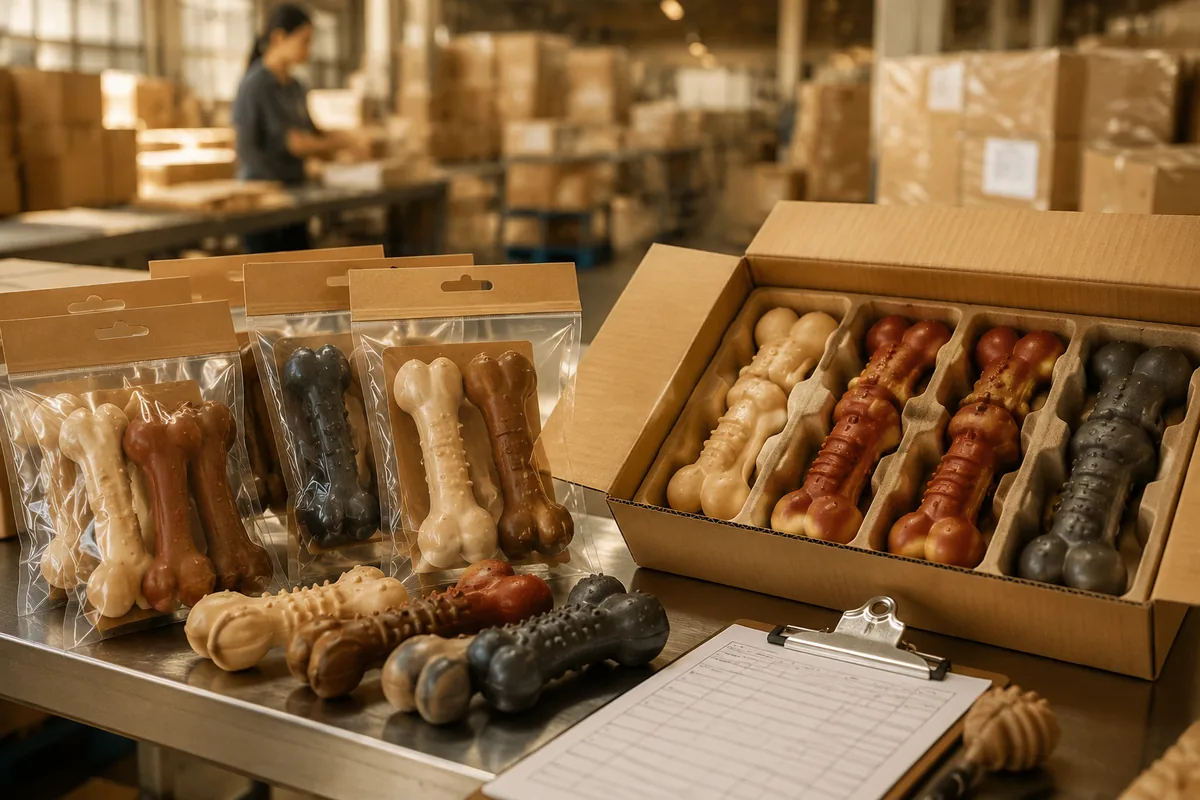
Wholesale and brand buyers lose margin when packaging is an afterthought. Align early on:
- Inner polybag thickness and whether toys need anti-stick powder or inserts
- Hangtags, care labels, barcode placement (FNSKU if Amazon FBA)
- Master carton dimensions, fill, and drop-test expectations
- Multi-language warning copy for target markets
- Whether units can stick together in summer heat (common TPR issue—test stacked packs)
If you sell on marketplaces, confirm that pack-out photos match the shipped unit. Inconsistent packaging and “not as pictured” color are top return drivers on chew toys.
Communication cadence that protects launch dates
Factory silence is a risk signal. Agree on a weekly production update once the PO is live: compound in, molding progress, QC photos, and ship window. For seasonal peaks (Q4 gifting, summer outdoor sets), lock capacity earlier than you think you need.
Share one decision owner on the buyer side. Multiple conflicting revision requests from different stakeholders are the fastest way to miss a ship date—especially when mold steel is already cut.
Red flags before you place a deposit
Walk away or slow down if you see:
- No willingness to put Shore A, dimensions, and flash limits in writing
- “Any hardness you want” with no process window or gauge on the floor
- Certificates promised for every market with no test plan or lab name
- Tooling paid but ownership and cavity drawings never shared
- Bulk price that only works if you skip pre-production sample sign-off
- Ghosting between deposit and first production photos
A solid rubber dog toy manufacturer will push back on unsafe thin walls and unrealistic MOQ, not only agree to everything in chat.
How WagNab fits rubber and hybrid programs
WagNab works with brand and wholesale partners on pet toy manufacturing—from material selection through sampling and bulk. Review live options on our products catalog, OEM/ODM process on ODM services, and brand-building path via private label.
Teams evaluating a rubber dog toy manufacturer usually start with a short brief: target dog size, Shore window, shape references, logo method, first-order quantity, and destination market. From there we map a realistic sample plan and flag compliance needs before tooling money is spent.
When you are ready to discuss MOQ, mold options, and sampling timelines, contact WagNab with your brief and target markets. Share the hardness window and one reference photo if you have them—it cuts a full email round.
Mold conversations stay concrete when you reference live rubber families such as the Rubber Bone Stick and Rubber Knot Ball before you pay for a new cavity.
Decision checklist before the PO
Use this before you commit:
- Spec sheet signed and versioned (hardness, dims, compound family)
- PPS approved in writing (photos + physical unit if needed)
- QC plan and AQL agreed, including flash and odor
- Packaging dieline and barcode placement approved
- Incoterms, payment terms, and lead time written into the PO
- Tool ownership and storage terms clear if you paid for molds
- Contingency for one revision cycle without killing the launch window
If any item is still verbal-only, pause. Most post-shipment disputes on rubber dog toys come from unwritten assumptions about hardness, color, and edge finish—not from bad intent on either side.
Ready to Build Your Next Collection?
From material selection to final delivery, we help brands bring pet toys to market.