Silicone Teething Dog Toys Wholesale Factory: Buyer Spec Guide

If you are searching for a silicone teething dog toys wholesale factory, you are usually past the cute catalog stage. You need a plant that can hold Shore hardness across lots, keep flash off teething rings, document food-contact claims without hand-waving, and ship cartons that match the sample your retailer already approved. Price alone does not get you there.
This guide is for brand buyers, Amazon / marketplace sellers, distributors, and private-label teams sourcing puppy and gentle-chew silicone from China. It covers what “food-grade silicone” should mean on a PO, how molds and MOQs actually work, QC that catches the defects that drive returns, and how to write an RFQ that gets a usable quote. Browse related shapes on our products catalog while you read. If the geometry still needs design work, start on an ODM path. When logos, hangtags, and retail cartons ride with the same PO, plan a private label track so packaging QC does not arrive as an afterthought.
What buyers mean by silicone teething dog toys
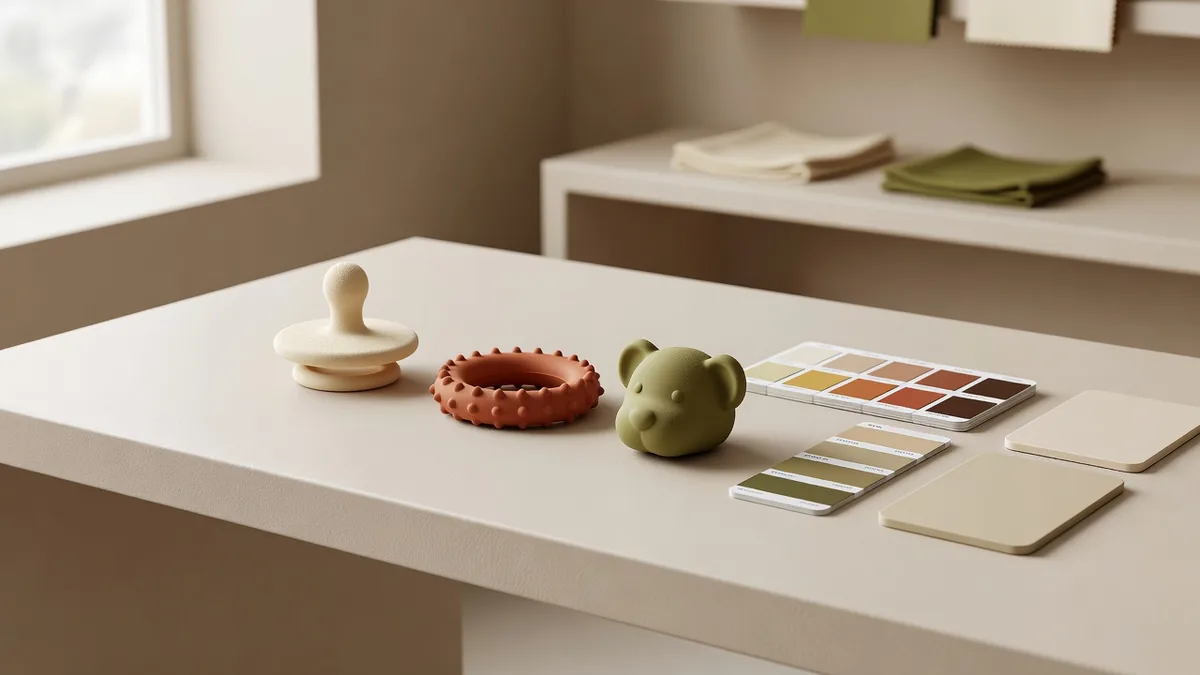
“Silicone teething” in pet wholesale is a cluster of forms, not one SKU:
- Pacifier / soother silhouettes with a soft bite face and a cotton or rope handle for tug and carry
- Rings, beads, and pacifier hybrids sized for puppies and small mouths
- Character heads or food shapes molded in soft silicone with textured bite zones
- Treat-hold or slow-nibble inserts where silicone is the mouth-safe contact surface
Most programs that convert for DTC and boutique retail sit in Shore A roughly 40–60 for gentle teething. Harder compounds feel “premium” in the hand and fail faster in real puppy mouths because silicone tends to tear rather than abrade. If your brief says “power chewer,” silicone is usually the wrong material family—send those buyers to rubber / TPR / nylon paths instead of forcing a soft compound to do a hard job.
Ask the factory to state platinum-cured vs peroxide-cured, target Shore A with a tolerance (±3–5 is common), and whether the compound is claimed for food contact. Vague “food grade” language without a mill or compound sheet is marketing, not a purchasable spec.
Who this wholesale search is really for
Traffic on this keyword usually splits into clear jobs:
- Puppy / starter brands that need a soft first SKU next to plush and rope
- Marketplace sellers refreshing a teething set with cleaner pack-out and fewer flash-related returns
- Distributors building a mixed carton of silicone soothers plus cotton-handle hybrids
- Private-label teams that already sell hard chews and want a gentle SKU without inventing a new factory relationship
If you need aggressive chew durability, stop here and change material. Silicone shines when bite force stays moderate and the story is soothing texture, temperature stability, and easy wipe-down—not “indestructible.”
Spec checklist before you RFQ a silicone teething factory
Vague briefs create expensive molds. Send something a production manager can quote without guessing.
Geometry and play- Finished size (for example a ~21 cm pacifier-style body with handle) and target dog size band
- Wall thickness map: thin lips tear; thick cores feel clumsy and cost more compound
- Texture zones (ribs, nubs, tiger-head facial detail) vs smooth faces for logo print
- Hybrid parts: cotton rope handle, GPR/TPR joint, woven label placement
- Shore A target and tolerance
- Cure system (prefer platinum-cured when your channel cares about residual byproducts)
- Colorways with Pantone or physical chips; note that deep colors can shift lot-to-lot
- Any recycled or “eco” claim only if you can document it—most silicone teething programs should stay honest on virgin food-contact compound
- Destination markets (US / EU / UK) and the chemical / mechanical screens your channel actually requires
- Small-part and tear risks on thin facial features or detachable beads
- Warning copy language for hangtags and polybags
- Pad print, deboss, or hangtag-only branding (full-wrap print on soft silicone is often a pain)
- Inner bag thickness, carton marks, barcode, multi-language warnings
A complete brief shortens sample rounds. Factories quote faster when they are not inventing your product for you.
Mold tooling, sampling, and MOQ reality
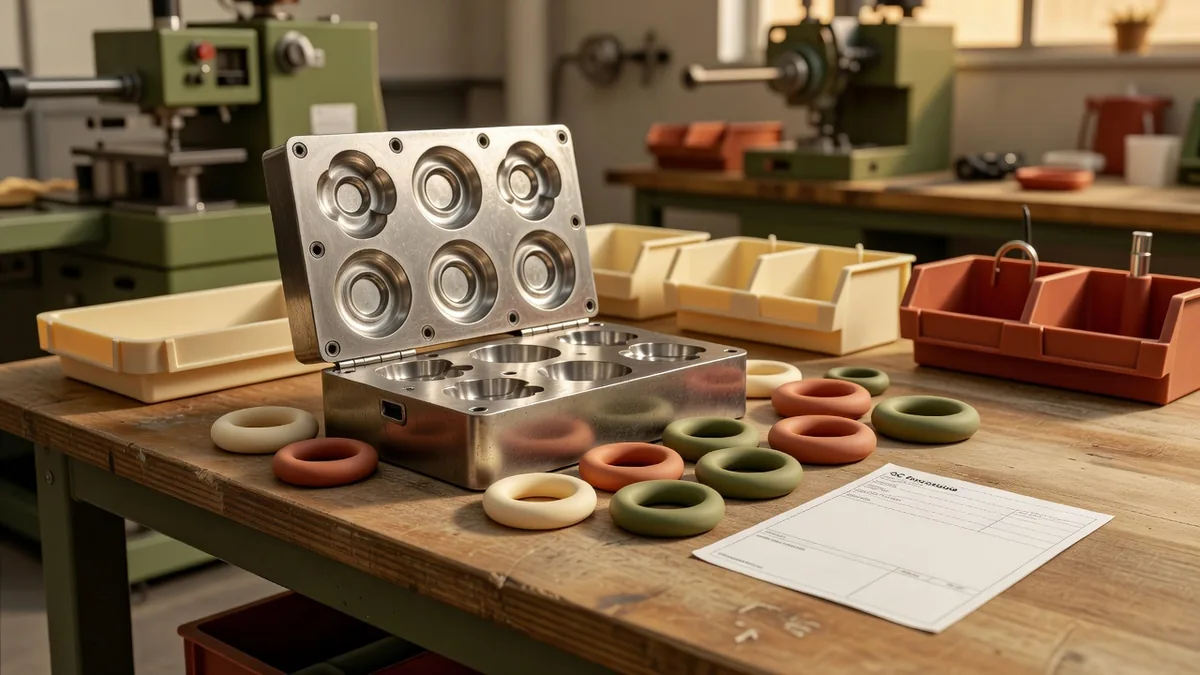
Silicone teething is a tooling story. Compression molds for simpler rings cost less and move faster. LSR / injection routes hold finer facial detail (think character heads) but raise tooling and minimums. Hybrid SKUs that combine a silicone face with a cotton rope handle add sewing or assembly stations—quote those as one BOM, not two unrelated vendors.
Rough patterns many brand buyers see on China pet programs:
- Catalog-adjacent colorway + your hangtag on an existing mold: often a few hundred units per SKU when the cavity already runs
- New soft mold for a simple ring / pacifier: sample in days to a couple of weeks; trial MOQ commonly mid-hundreds depending on color count
- New character mold with fine facial detail + multi-color: higher tooling, longer first sample, and a floor that can climb toward low thousands if you demand many colors in one drop
If someone promises fifty units of a brand-new multi-cavity character in three colors, ask what is subsidized and what the reorder MOQ becomes. Trial MOQs that only work once create ugly surprises when you scale.
A typical first engagement looks like this:
1. Brief review and compound recommendation (a few business days)
2. Soft tooling or first sample (often 1–3 weeks depending on cavity complexity)
3. Buyer feedback—trim flash, adjust Shore, fix rope joint
4. Pre-production sample locked against the PO
5. Bulk with in-line checks and final inspection
Budget freight both ways on samples, plus lab fees when your market needs them. Sign the pre-production piece in writing before you release bulk compound.
Quality control that matters for silicone teething
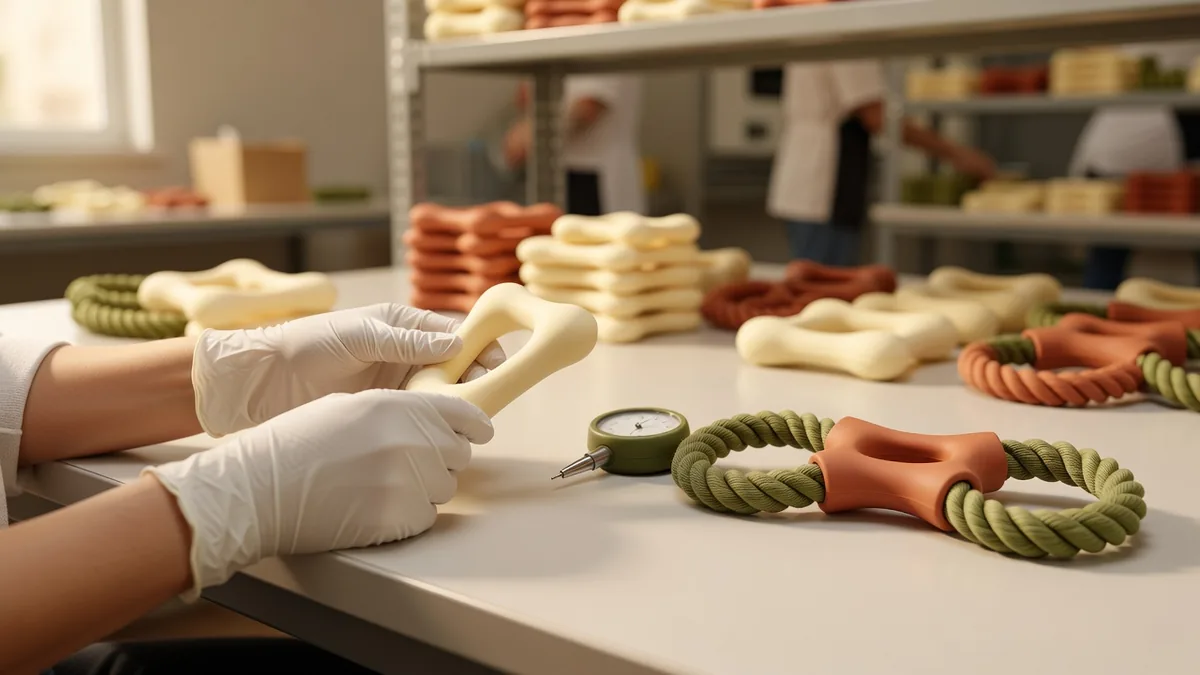
Returns on this category cluster around a short list: sharp flash on bite edges, Shore drift between lots, color mismatch, rope handles pulling out of the silicone joint, and thin facial details tearing after a week of puppy chewing.
Insist on three gates even on a trial PO:
- Incoming compound: batch codes mapped to the Shore and cure system you approved
- In-line: flash trim, wall thickness spot checks, print/deboss placement, hybrid joint pull tests
- Pre-shipment: carton count, barcode scan sample, photo evidence against the golden sample, random Shore re-check
Keep a shared issue log. The same flash line should not reappear on reorder because nobody wrote the trim standard down. For US or EU retail programs, align lab timing with production so certificates exist before cargo booking—not after the container is sealed.
Do not invent lab results in marketing copy. If a certificate is pending, say so on the RFQ timeline instead of printing claims the carton cannot defend.
Packaging, labeling, and retail readiness
Wholesale and brand buyers lose margin when packaging is an afterthought. Align early on:
- Inner polybag thickness and whether silicone needs anti-dust or anti-stick treatment in humid seasons
- Hangtags, care icons, barcode placement, and multi-language warnings for target markets
- Master carton dimensions and drop-test expectations for soft, oddly shaped soothers
- How pack-out photos will match the shipped unit for marketplace listings
Inconsistent packaging is a top reason for customer returns on pet toys. If you sell on Amazon or similar, lock the listing photo against the signed pre-production sample, not against a mood board.
Common mistakes brand buyers make
- Choosing silicone for power chewers because it “feels safe”
- Quoting unit price without tooling amortization, lab fees, and freight
- Skipping a real tear / joint pull test on hybrid silicone + rope SKUs
- Approving a soft sample, then asking for a harder Shore mid-PO without a new cost sheet
- Vague artwork that does not account for pad-print limits on curved faces
- Changing color count after the mold is cut
- Ordering bulk before the pre-production sample is signed off
Most post-shipment disputes come from unwritten assumptions, not from bad intent. Put Shore, flash standard, joint pull, and pack dieline in the PO.
How WagNab supports silicone teething and wholesale programs
WagNab works with brand and wholesale partners on pet toy manufacturing—from material selection through sampling and bulk. Review live options on our products catalog, OEM/ODM process on ODM services, and brand-building path via private label.
Teams evaluating a silicone teething dog toys wholesale factory usually start with a short brief: target pet size, Shore preference, logo method, first-order quantity, and destination market. From there we map a realistic sample plan and flag compliance needs before tooling money is spent. Related catalog directions include pacifier-style hybrids and soft chew forms you can use as geometry references while you finalize compound and branding.
Decision framework before you place the PO
Use this checklist before committing:
- Spec sheet signed and versioned (Shore, cure, size, BOM for hybrids)
- Sample approved in writing (photos + physical if the channel is picky)
- QC plan and AQL agreed, including flash and joint pull
- Packaging dieline approved
- Incoterms, payment terms, and lead time written into the PO
- Contingency for one revision cycle without killing the launch window
If any item is still verbal-only, pause.
Choosing a silicone teething dog toys wholesale factory is a process decision, not a price auction. Define compound and geometry, test samples, lock QC, then scale. When you are ready to talk MOQ and sampling timelines, contact WagNab with your brief and target markets.
Ready to Build Your Next Collection?
From material selection to final delivery, we help brands bring pet toys to market.