Small Dog Toys Bulk: Specs, MOQ, and QC for Brand Buyers

Buyers searching small dog toys bulk are rarely shopping for a single cute SKU. They need an assortment that fits toy and small-breed mouths, ships at export volume, and does not spike returns when a terrier treats a “gentle plush” like a chew project. Size is the product. A 35 cm rope that works for a Labrador becomes a choking and swallow risk for a 4 kg Chihuahua. This guide is for brand owners, Amazon and marketplace sellers, distributors, and retail buyers who want small-dog programs that match the sample once cartons leave the plant.
Scan soft and interactive options on the products catalog while you lock size bands. Catalog-adjacent bodies usually start with lower MOQ than a full custom sculpt. If the silhouette still needs pattern work, map an ODM path. When hangtags, cartons, and retail copy ride with the same PO, plan a private label track so packaging QC is not an afterthought.
What “small dog” means on a factory floor
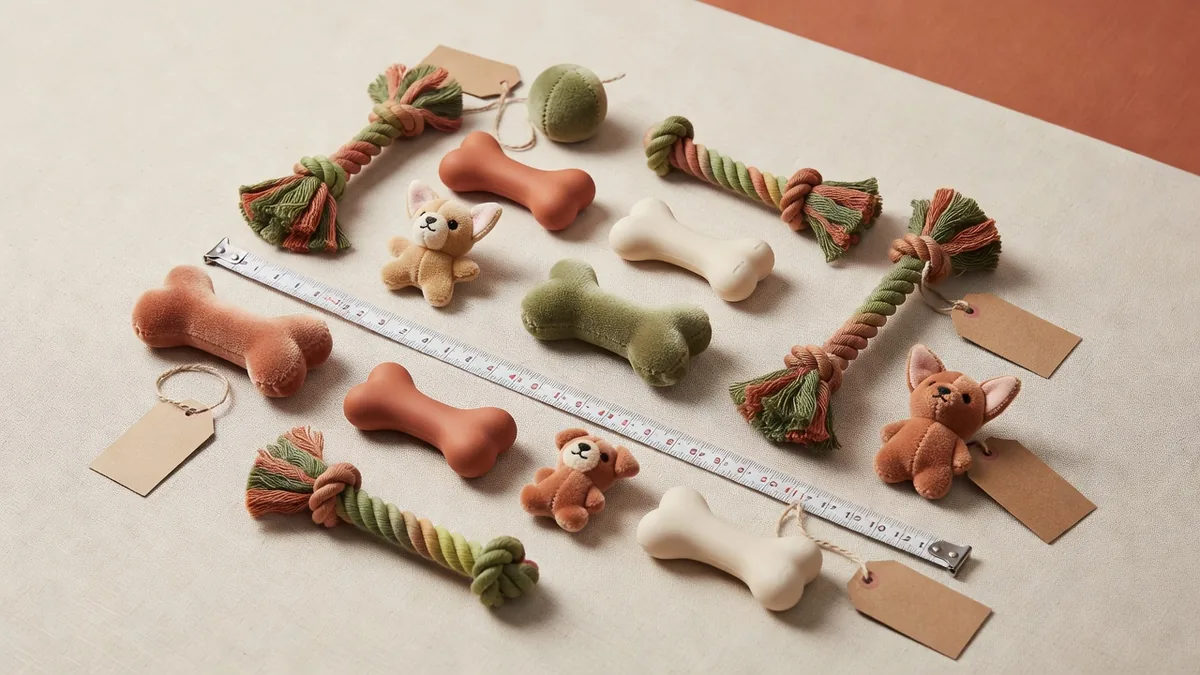
Retail copy says “for small dogs.” Production managers ask for finished length in cm, weight band, and which parts can detach under tug. Write those numbers into the RFQ.
Practical size bands many buyers use for small dog toys bulk programs:
- Toy / tiny (under ~5 kg): finished body often 8–15 cm; rope diameter thinner; no oversized squeakers or hard eyes that fail a small-parts screen
- Small (roughly 5–10 kg): 12–22 cm bodies; light tug rope; optional single squeaker with a secure pocket
- Small-medium crossover: only if you intentionally sell one SKU across both bands—and you accept that some small dogs will destroy it faster
Do not rely on “small dog” as the only size callout on a carton. A distributor in Texas and a boutique in Berlin will interpret that phrase differently. Put cm and grams on the spec sheet, then mirror the same numbers on the PPS sign-off.
Play style matters as much as length. Companion plush for apartment dogs fails differently than rope for a puller. If your listing promises “tough,” the construction has to match. Soft crystal velvet with sparse stitching will not survive a determined Jack Russell, and returns will teach you that before GSC does.
Who actually buys these programs
Traffic on this keyword usually falls into a few camps:
- DTC brands building a “for small breeds” collection next to hard chews
- Marketplace sellers refreshing an ASIN family with colorways that share one body size
- Distributors stocking mid-price soft toys for independent pet shops
- Retail buyers filling gift and value aisles where small-dog owners shop hardest
If your only product is heavy power-chew rubber molded for mastiffs, you are in a different tooling story. Small-dog assortments lean plush, light rope, soft TPR, and hybrid builds. Treat them like soft goods with toy-safety thinking, not like industrial chew alone.
Wholesale buyers care about mixed colorways in one master carton more than brand buyers do. Say that up front. A plant that only ships mono-SKU masters will frustrate assortment programs built for small-breed shelves.
Spec checklist before you RFQ
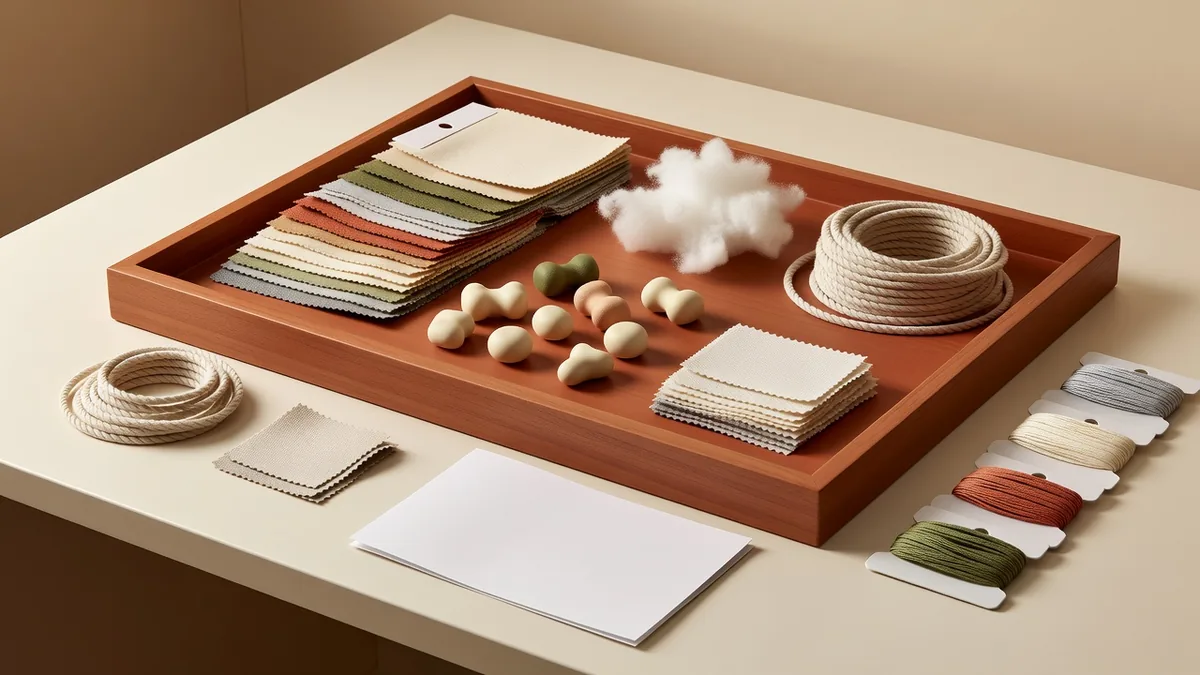
Vague briefs create samples that look adorable on the desk and fail on a 3 kg dog in week one. Send something a production manager can quote without inventing your product.
Size and play- Dog weight band and mouth size assumptions
- Finished length, width, and weight targets per SKU
- Play style: gentle companion, light tug, fetch, or “cute until destroyed”
- Whether the SKU must pass a small-parts style screen for your channel
- Outer fabric: short plush, crystal velvet, sherpa, canvas wear panels
- Fill type and density; recycled-content claims need documentation, not hangtag poetry
- Rope yarn count, twist, and diameter sized for small jaws
- Soft TPR or rubber hardness band if you mix materials
- Inserts: squeaker count/type, crinkle, no loose beads unless you own the risk
- Woven label, printed hangtag, embroidery or heat-transfer logo placement
- Polybag thickness, carton marks, barcode, multi-language warnings for US / EU
- Destination markets and the tests your channel actually requires
A clean brief shortens sample rounds. Factories quote faster when they are not guessing whether “small” means 10 cm or 25 cm.
MOQ reality for small-dog assortments
Buyers hope for fashion-level MOQs. Factories hear dye lots, embroidery digitizing, rope minimums, and packaging floors. Packaging MOQ can exceed toy MOQ if you need custom polybags and hangtags.
Bands you will hear (not a quote):
- Near-stock small body + your hangtag / one colorway: often a few hundred units per SKU if the body already runs
- New fabric color on an existing small silhouette: mid-hundreds upward depending on dye lot size
- Multi-SKU assortment sharing one fabric or mold: can keep the true floor lower than treating every SKU as a standalone dye job
- Fully custom tiny sculpt + exclusive embroidery map: higher MOQ and longer sampling
For a test assortment, ask for stock or near-stock small bodies with your label and one custom color story rather than six brand-new sculpts. Private label programs often start that way, then move to exclusive shapes after sell-through. Full custom paths are better scoped under ODM services once you know which fabric and rope diameter survive your market’s dogs.
Do not treat a “300 pieces” email as a program if the fabric dye lot is a volume you cannot use across reorders. Ask which constraint sets the floor: sewing line, dye house, rope MOQ, or printed pack. Freight, testing, and packaging can erase a small unit-price win. Build a landed cost sheet before you celebrate a quote.
Sampling path that protects the bulk run
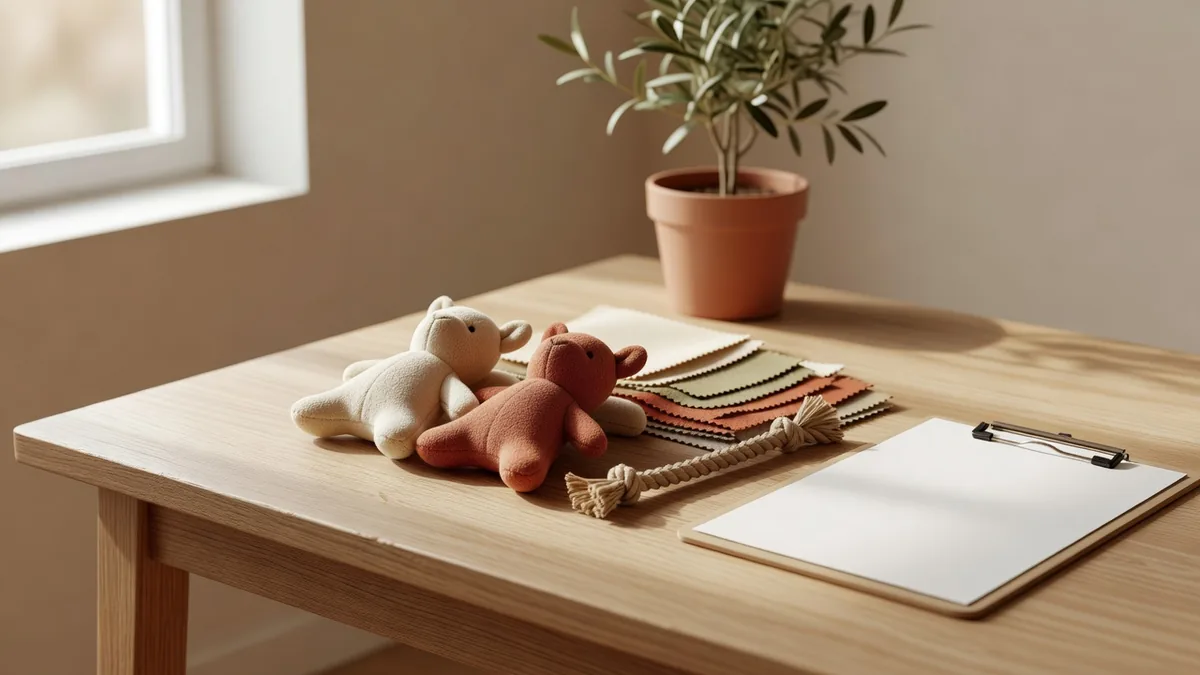
Treat sampling as product development, not a free gift.
1. Material and size board. Fabric swatches, fill sample, rope diameter, and a printed size card with cm targets.
2. Soft sample. Crush it. Tug lightly the way a small dog would. Check seam creep, fill migration, and whether any part can detach into a swallow risk.
3. Pre-production sample (PPS). Bulk-intended fabric lot, rope lot, and pack-out—including the polybag and hangtag you will ship.
4. Sign-off in writing. Photos plus physical if needed. Verbal “looks fine” is how disputes start.
Budget freight both ways on samples plus lab tests if your channel needs certificates before intake. Signing off a pretty photo sample and then changing rope diameter mid-PO is how ship windows slip.
For small dog toys bulk work destined for US or EU retail, align lab timing with production so certificates are ready before cargo booking, not after the container is sealed. Chemical and mechanical screens differ by market; write the destination on the RFQ so the factory does not assume “toy” means the same suite everywhere.
QC that catches small-dog failure modes early
Small-dog returns cluster around a short list of defects: open seams under light tug, squeakers that go silent after carton crush, rope ends that fray into strands, eyes or hard parts that fail a small-parts check, and fill that clumps after a wash claim you should not have made.
Insist on multi-stage QC even on trial orders:
- Incoming fabric, rope, and fill lot checks against the locked swatch
- In-line seam and join checks at the size that matches your PPS
- Pull tests on rope-to-plush joins if the SKU is marketed for tug
- Final inspection with an AQL plan written into the PO
- Pack-out photos that match the listing (size scale in frame helps)
On first production runs, ask for photo or video evidence of each gate before goods leave the plant. Keep a shared issue log so the same heel seam or silent squeaker does not reappear on reorder. Document a simple AQL plan early; it trains the line before you scale.
If you sell on marketplaces, confirm that pack-out photos match the shipped unit. Inconsistent packaging and size mismatch are top reasons for customer returns on pet toys marketed to small breeds.
Packaging and retail readiness
Wholesale and brand buyers lose margin when packaging is an afterthought. Align early on:
- Inner polybag thickness and print
- Hangtags, care labels, barcode placement
- Master carton dimensions and drop-test expectations
- Multi-language warning copy for target markets
- Clear size callouts (cm / weight band) so retailers do not mis-shelf the SKU
If your assortment mixes colors in one master carton, say so in the PO. Plants that only run mono-SKU masters will frustrate distributors stocking small-dog gift sets.
Common mistakes on small dog toys bulk orders
- Choosing on unit price without freight, testing, and packaging
- Speccing “small” without cm and grams
- Skipping durability checks with real small dogs or a defined tug method
- Vague artwork files that delay logo application
- Ignoring packaging compliance (barcodes, warnings, language)
- Changing materials mid-sample without updating the cost sheet
- Assuming the factory will “just know” your market’s labeling rules
- Ordering bulk before the PPS is signed off
- Mixing power-chew claims onto soft plush constructions
Most post-shipment disputes come from unwritten assumptions, not from bad intent. If a decision is still verbal-only, pause.
How WagNab supports small-dog wholesale and brand programs
WagNab builds pet toy programs for brand and wholesale partners—from material selection through sampling and bulk. Review live options on the products catalog, development process on ODM services, and branded packaging paths via private label.
Teams evaluating small dog toys bulk usually start with a short brief: target weight band, preferred materials, logo method, first-order quantity, destination market, and whether the program is open stock or custom. From there we map a sample plan and flag compliance needs before dye lots and embroidery maps lock you in.
Decision checklist before you place the PO
Use this before committing cash:
- Spec sheet signed and versioned (size in cm, materials, play style)
- Sample approved in writing (photos + physical if needed)
- QC plan and AQL agreed
- Packaging dieline approved
- Incoterms, payment terms, and lead time written into the PO
- Contingency for one revision cycle without killing the launch window
When the brief is ready, contact WagNab with your size bands, material preferences, and target markets. We will respond with sampling options and realistic lead times—not a vague “low MOQ” promise with no constraint named.
Ready to Build Your Next Collection?
From material selection to final delivery, we help brands bring pet toys to market.