Wholesale Pet Supplies Low MOQ: How Buyers Start Small Without Getting Stuck

Buyers searching wholesale pet supplies low MOQ usually already know the trap. They need a first carton small enough to test a channel, but large enough that a factory will still treat the order as real production. Too low and you get leftover stock or a trading desk that never names the plant. Too high and cash sits in cartons while you learn which shapes actually sell.
This guide is for brand owners, Amazon and marketplace sellers, distributors, and retail importers who want honest first-run quantities on pet toys and related soft goods. It covers what “low MOQ” means in export factories, how to brief a plant so the quote matches the sample, sampling that protects margin, QC for small lots, and when open stock is smarter than a full custom pattern. Browse live assortment on the products catalog before you lock a silhouette—catalog-adjacent bodies often quote lower first MOQs than a new mold.
What low MOQ actually means in pet supply wholesale
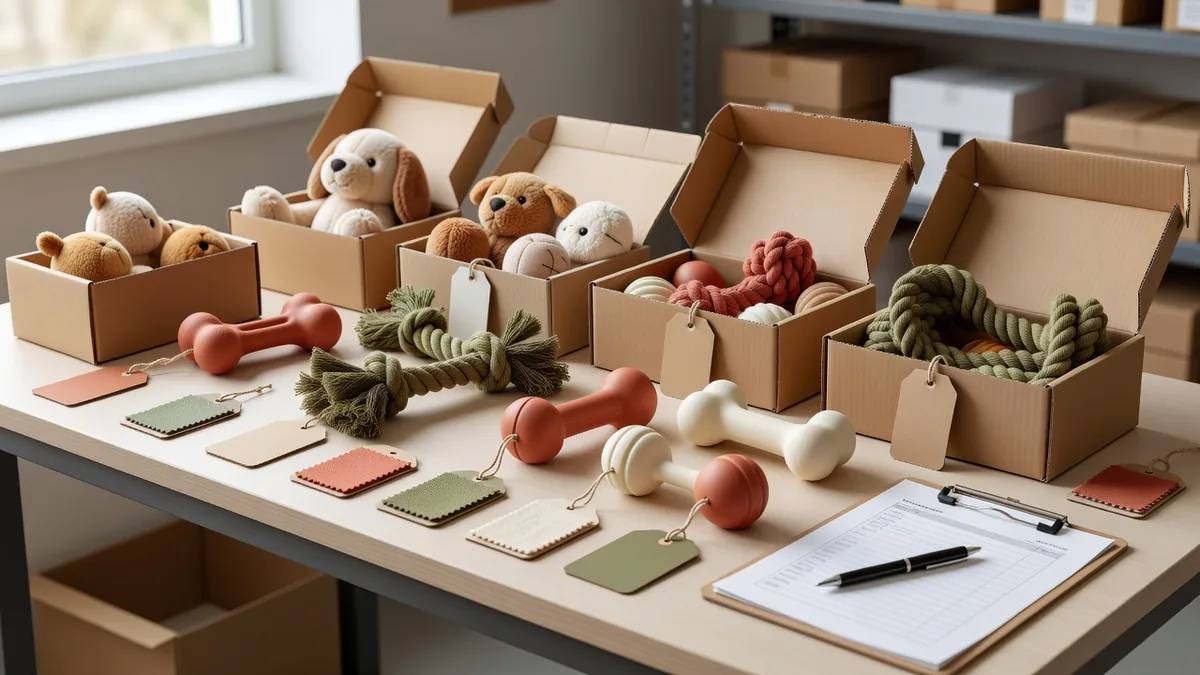
In factory English, low MOQ is not a single number. It is a commercial posture: the plant will cut, sew, or mold a smaller first lot if your construction is simple, your color count is limited, and you accept shared tooling or open-stock bodies. The same factory that quotes 500 pieces per color on a custom embroidery plush may accept a few hundred mixed colors on a catalog rope bone with a hangtag change.
Typical drivers that raise or lower first-order size:
- Tooling ownership. Shared molds and existing plush patterns drop MOQ. New cavities or exclusive patterns raise it.
- Colorways. One or two colors per shape is easier than six Pantones that each need a dye lot.
- Decoration. Woven label and hangtag scale better than heavy embroidery or multi-pass print.
- Pack-out complexity. Mono-SKU masters are cheaper to schedule than eight-SKU mixed retail sets.
- Season. Q4 gifting capacity is tighter; plants protect big accounts first.
If a quote is far below other plants for the same construction, ask which of fill weight, fabric GSM, squeaker grade, or QC hours was cut. That gap often shows up later as returns, not as a permanent discount.
Who this keyword is for (and who should skip it)
Serious traffic on wholesale pet supplies low MOQ usually falls into a few buckets:
- New brands testing one or two hero SKUs before a private-label ramp
- Marketplace sellers who need trial cartons that leave room for ads and fulfillment fees
- Distributors filling independent pet shops without committing a full container
- Established brands adding a value tier or seasonal promo without reopening premium tooling
If your only ask is a fully exclusive character with custom packaging, multi-language retail ready artwork, and medical-adjacent claims on day one, this keyword is the wrong lane. That work belongs under ODM development or a structured private label brief, with MOQ priced like development—not like a promo bin.
Wholesale buyers also care about mixed-SKU packing and master-carton marks more than brand buyers do. Say that up front. A plant that only ships mono-SKU masters will frustrate assortment programs with eight shapes and two price points.
Spec checklist before you send an RFQ
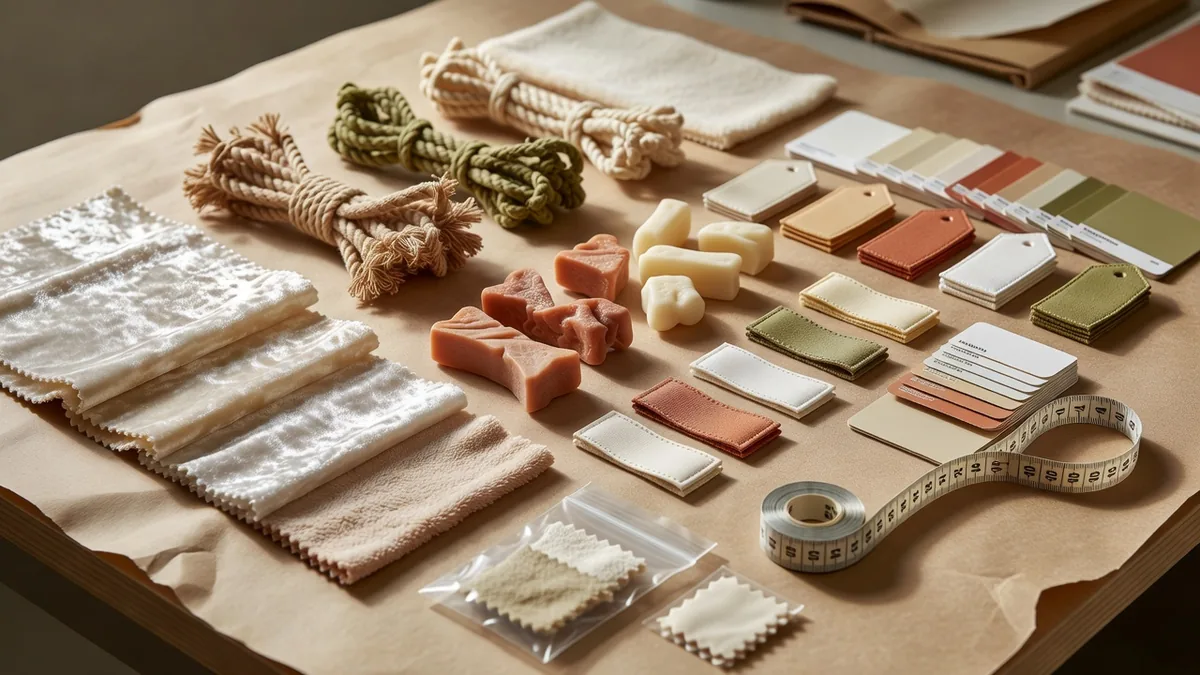
Vague briefs create samples that look fine on a desk and fail after three weeks on a hook. Send something a production manager can price without inventing your product.
Play and size- Target pet (dog / cat), size band, and play style (gentle tug, light chew, fetch, solo soft play)
- Supervised-play expectation and any small-parts risk for the markets you sell into
- Body type: plush, rope, TPR/rubber, hybrid
- Fabric or compound grade (not only “soft plush”); fill type and target weight band if plush
- Squeaker model if used; pocket sewing rules
- Color count: mono vs multi; Pantone or physical swatch preferred over “as photo”
- Hangtag, woven label, printed polybag, UPC/EAN placement
- Inner pack count, master carton dimensions, mixed-SKU rules
- Warning copy for destination language (US and EU retail habits differ)
- Destination markets and which chemical screens you expect
- No fabricated lab certificates—ask what tests the plant already runs on similar export lots and plan lab timing with production
A clean brief shortens sample rounds. Factories quote faster when they are not guessing fill weight and seam allowance.
Realistic first-order bands (directional, not a price list)
Numbers move with season, material, and plant load. Treat these as planning bands buyers often see on open-stock and light-custom pet toy programs—not as WagNab rate cards:
| Program type | What usually stays “low” | What pushes MOQ up |
|---|---|---|
| Open-stock plush / rope with hangtag | Lower hundreds per SKU or mixed color, plant-dependent | Extra embroidery, exclusive colors, custom polybag art |
| Catalog TPR / rubber on shared molds | Often the easiest low-MOQ path | New cavity, custom hardness, insert squeakers |
| Private-label pack on shared body | Moderate step up for print/embroidery setup | Full new pattern + retail gift box |
| Full ODM exclusive | Rarely a low-MOQ first carton | Tooling amortization + sample lock |
Run a landed-cost sheet before you celebrate unit FOB. Freight, duties, testing, packaging, and expected return rate can erase a “winning” first quote. A slightly higher FOB with denser cartons and fewer defects often wins the year.
Sampling and trial orders that protect margin
Do not treat the first sample as a photo prop. Treat it as a production proxy.
1. Confirm construction matches the quote. Weigh plush samples. Measure rope diameter and knot count. Check TPR hardness and edge finish.
2. Run a simple abuse test. Compress squeakers dozens of times. Tug seams. Check color rub with a damp cloth if you sell wet-play claims (only claim what you test).
3. Approve packaging with the product. Hangtag alignment, barcode scan, polybag thickness, and master-carton marks fail as often as the toy itself on small lots.
4. Lock a golden sample. Photograph and label it. Reorders should match that unit, not the last chat screenshot.
Trial orders on low-MOQ programs should still carry a written AQL mindset, even if the carton count is small. Plants learn which defects you will reject. Silent squeakers, underfilled plush, and frayed rope ends are the usual early failures.
If you need process depth beyond assortment trials, map the full path on the OEM / ODM services page and ask for a sampling calendar before you book cargo space.
QC and pack-out for small wholesale lots
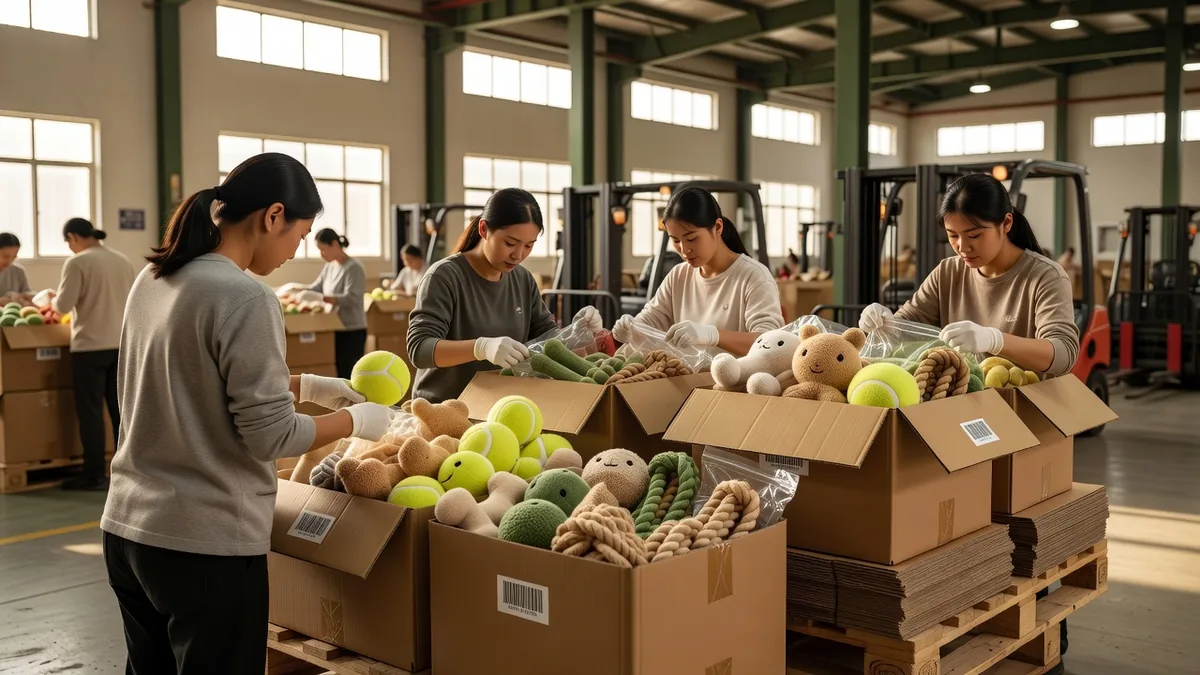
Small lots fail in predictable ways. Build QC around those modes instead of a generic checklist copied from a container program.
Plush- Seam strength at ears, limbs, and closures
- Fill weight band and even distribution
- Embroidery or print adhesion after light rub
- Eye / nose attachment if used; prefer embroidered features when small-parts risk matters
- Knot tightness and end finish
- Dye-lot consistency across cartons
- Fray after a controlled tug cycle
- Odor after airing (harsh chemical dye smell is a red flag)
- Flash and sharp edges
- Color consistency and surface stickiness
- Compression set if the SKU is a fetch ball
- Insert push-out if a squeaker is press-fit
- Inner counts match the PO
- Master carton crush resistance for the stack height you actually use
- Label language and warning copy for destination markets
On first production runs, ask for photo or video evidence of each QC gate before goods leave the plant. Keep a shared issue log so the same defect does not reappear on reorder. For programs aimed at US or EU retail, align lab test timing with production so reports exist before cargo booking—not after the carton is sealed.
Third-party inspection is not optional when you use a trading desk or a new plant. Budget it into the low-MOQ landed cost; skipping it is how a “small trial” becomes the most expensive learning exercise of the year.
Open stock vs private label when MOQ is the constraint
Not every low-MOQ program needs full private label from day one.
Open stock / near-stock. Fastest path to a workable first carton. You pick existing shapes, pick colors, add hangtag or polybag branding if the plant allows. Good for testing price points and discovering which shapes sell before you invest in exclusive tooling. Private label on shared bodies. Your logo, colors, and packaging on catalog-adjacent construction. Still MOQ-friendly if you avoid heavy embroidery and custom molds. Common for marketplace multi-packs and regional brands. Full ODM / new pattern. Makes sense when you need exclusive IP. It is rarely the cheapest first carton. If that is your path, sequence sampling and tooling so you do not pay development prices and still expect promo-bin economics.Many programs start open stock, lock the winners, then migrate packaging and color control under a private-label brief. That ladder keeps cash free while you learn real demand. When you are ready to brand packaging on a proven body, start from private label pet toys and keep the construction simple until reorder data is stable.
Common mistakes on low-MOQ wholesale buys
- Choosing on unit price without freight, testing, packaging, and expected return rate
- Asking for six custom colors on a “low MOQ” line and wondering why dye-lot risk and setup fees exploded
- Accepting sample quality that the bulk line cannot hit at the quoted price
- Skipping carton and hangtag approval because “it is only a trial”
- Mixing premium claims (eco, organic, medical-grade) onto a promo construction without documentation
- Letting artwork stay in low-res screenshots until the week of production
- Assuming the factory will “just know” US or EU labeling rules without a written pack brief
- Ordering bulk before the pre-production sample is signed off in writing
None of these are unique to pet toys. They show up harder on low-MOQ programs because the margin buffer is thinner and there is less room to absorb a bad carton.
A practical buying path
1. Define channel and retail price constraints first (marketplace multi-pack, shop hook, value aisle).
2. Pick construction families from live products that fit those constraints.
3. RFQ with full specs; request open-stock and light private-label pack options side by side.
4. Sample, abuse-test, lock golden sample and packaging.
5. Place a trial order with AQL and photo gates; inspect before ship.
6. Reorder only after color lots and defect rates are stable; then expand color or pack complexity.
When you are ready for a quote conversation on first-run quantity, mixed pack-out, or branded packaging on a shared body, use the contact form with target markets, rough MOQ, and whether you need open stock or branded packaging. Clear inputs get usable FOB ranges faster than a one-line “need wholesale pet supplies low MOQ” message.
Assortment trials often start from open-stock shapes such as food plush and durable rubber grips—price those constructions honestly before you stack private-label pack costs.
Bottom line
Wholesale pet supplies low MOQ works when you buy a simpler construction on purpose—not when you force exclusive branding and six colorways onto the smallest number a salesperson will type into a chat. Shared tooling and limited decoration create the real first-order room. Specs, sampling, and QC keep that room from vanishing into returns and chargebacks.Start with assortment and construction, price the full landed stack, and only then negotiate the carton count. That is how a small first order stays a strategy instead of a warehouse full of problems.
Ready to Build Your Next Collection?
From material selection to final delivery, we help brands bring pet toys to market.