EN71 Pet Toys Manufacturer: What EU Buyers Should Ask Before a Bulk PO

An EN71 pet toys manufacturer is a plant that can list every material in the SKU you want, keep a sample that matches the bulk lot, and send that same lot to a lab for the EN 71 parts your retailer actually named. EN 71 is a European toy-safety standard family. It is not a pet-product law, and it is not a stamp a factory can print because the toy is “for dogs.” Many EU buyers still ask for it when a child can mouth the same object, or when a marketplace form will not accept a blank. If the only proof on the quote is the letters EN71 with no part numbers, the file is unfinished.
This note is for brand owners and importers placing plush, TPR, and rope orders into the EU or UK retail channels that borrow toy rules. The longer legal frame sits on the CPSIA, EN71, and REACH page. A separate note covers REACH as chemicals law. Here the job is narrower: which catalog pieces you can brief today, which EN 71 parts belong in the PO, and which claims you should leave for the lab. Open shapes are on the products catalog.
What an EN71 request usually means on a pet toy
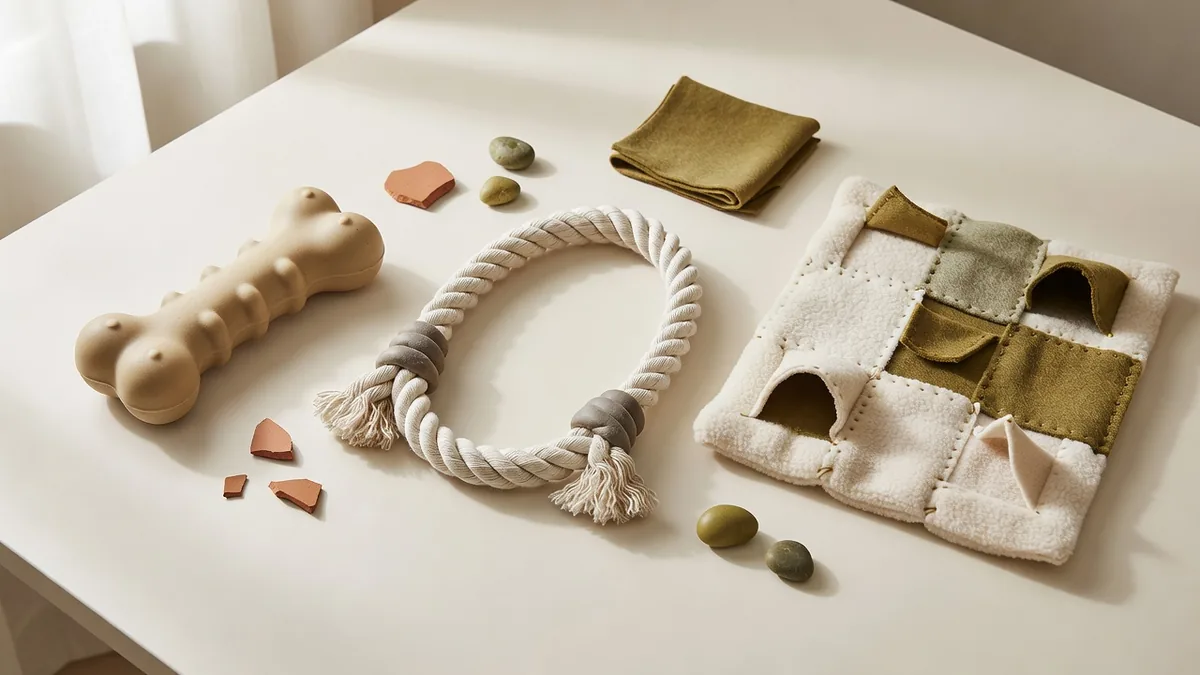
Buyers say “EN71” as if it were one test. The standard is a set of parts. The ones that show up on pet-toy RFQs, and the ones you should name instead of the bare code, are usually these:
EN 71-1, mechanical and physical properties. Small parts, sharp edges, tension on cords, and whether a squeaker or eye can come off. This is the part a rope knot and a thin TPR tab actually fail or pass. EN 71-2, flammability. Relevant when the face fabric or fill can burn in a way your retailer cares about. Not a substitute for a chew-durability story. EN 71-3, migration of certain elements. A chemistry panel on coatings, dyes, and accessible materials. It is not REACH, and a pass here does not answer an SVHC question.Other parts (including organic chemistry in later parts of the series) only belong in the PO if your retailer or notified protocol named them. Do not let a supplier answer “full EN71” without a part list. Confirm the part list on quote.
WagNab’s product records do not store lab reports. A blank certification field is not a pass and not a fail. It means the report has to be scoped against the material list before anyone writes “compliant” on a hangtag.
Split the brief by material, not by the word “dog toy”
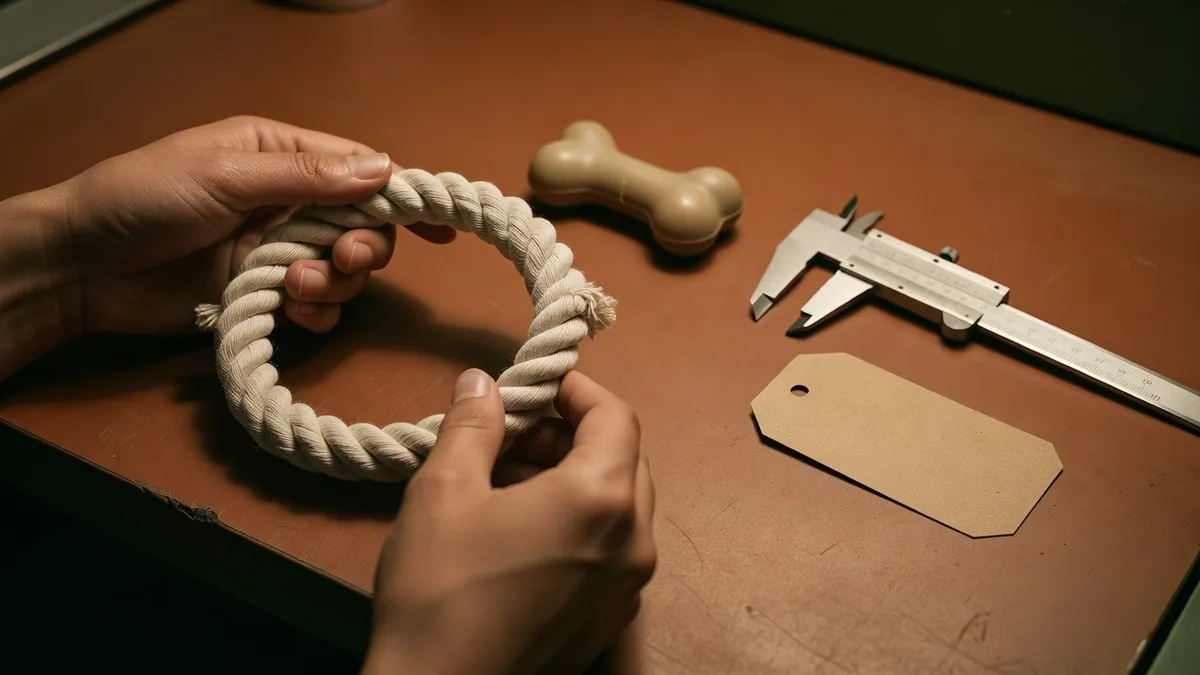
Three constructions already in production cover most first EN 71 conversations. Specs below are catalog fields, not lab results.
Molded TPR, one compound. Key Chew Slim is TPR, 12×3.9×2.1 cm, about 42 g, MOQ 120, Classic Chew, dogs. Key Chew Wide is the same material family, 12×3.5×4 cm, about 63 g, same MOQ. Same length band, different cross-section. If a lab asks for accessible surface and a minimum sample mass, the wider piece gives you more compound per unit. That is a sampling convenience. It is not a safety claim. A third size, Key Chew Flat, is 16×4.3×1.8 cm and about 35 g. Thin sections are where EN 71-1 tension and bite-off questions get specific. Put the size you will actually ship on the test request, not “the key chew line.” Hybrid: elastomer plus cord. Puppy Rope Ring is TPR and cotton, 16.5×7.8×4.3 cm, about 67 g, MOQ 120. The cotton loop and the molded ends are different materials. EN 71-1 cares about cord length and whether an end can separate. EN 71-3 cares about whatever dye or coating is on the cotton and whatever pigment is in the TPR. One sentence that says “rope toy, EN71” skips both. Fleece and felt, enrichment. Dog Carrots IQ Toy is fleece and felt, listed size 21.9×29×13, MOQ 120, Smart Play, dogs. No weight is stored on that record, so do not invent grams for the lab form. Face fabric, felt layers, and any stitching thread are separate accessible materials. If you later add a squeaker, plastic eyes, or a rope tail, those parts are not covered by a test on the open-stock fleece body. Say so in the PO.There is no stored EN 71 report for any of these SKUs. Treat them as shapes you can sample, not as pre-certified goods.
How a first trial should be built so the lab sees the real lot

Catalog MOQ on the SKUs above is 120. That number is a sewing and molding floor. It is not a test plan, and it does not automatically include retains.
A workable first order for an EU buyer who needs EN 71 paperwork looks like this:
1. Pick two SKUs that share a compound when you can. Key Chew Slim and Key Chew Wide are both TPR. You still test the size you ship, but you are not opening five unrelated chemistries in week one.
2. If the line needs a rope SKU, keep Puppy Rope Ring as its own line item. Cotton plus TPR will not inherit a pass from a solid TPR chew.
3. Approve color on a physical sample. A new masterbatch is a new EN 71-3 question even when the cavity is unchanged.
4. Write the part numbers into the PO: 71-1, 71-2, 71-3, or whichever subset your retailer named. Add age grading only if you are selling the item as a toy for children. A dog chew is not automatically a “0–3” toy, and you should not borrow that label to look stricter.
5. Hold the booking until the report’s product description matches the PO color, size, and material list.
Who pays for the first fail and the retest belongs in the same PO. Leaving it to “standard practice” is how a 120-piece trial sits in the warehouse while two offices argue.
If the shape does not exist yet, stop treating this as a catalog reorder. A new cavity, a new rope construction, or a plush with added hardware is development work. That path is ODM, and the lab brief should be written before tooling, not after the mold is cut.
Private label changes the test even when the shape stays
Open colorways already running are the easier file, because the compound is the one in production. A logo changes the file the moment it adds ink, a heat transfer, embroidery thread, or a woven label a child can mouth.
That is the practical boundary on private label. A hangtag on the carton is packaging. A print on the TPR, or a metallic thread on the fleece carrot, is part of the accessible article. Ask for a material addendum: base SKU materials as stored (TPR, cotton, fleece, felt) plus every logo element. If the addendum is empty, you do not have an EN 71 brief. You have a decoration idea.
Small logo programs still sit on the catalog MOQ of 120 unless a quote says otherwise. Do not assume a 50-piece “logo trial” exists. Ask. If the logo chemistry is new, budget extra pieces for the lab on top of the 120, or state that retains come out of it. Either choice is fine. Silence is not.
What to put in the RFQ
Ask for the EN 71 part numbers, not the phrase “European standard.” List material names from the SKU record plus any ink, eyes, squeakers, or thread the record does not store. Include recorded size and weight so the report matches a real piece (Key Chew Slim at 42 g, Puppy Rope Ring at 67 g). State whether MOQ 120 includes lab retains, which lab and report date you will accept, and who pays for a fail and a retest.
Leave out invented ppm limits, a line that calls EN 71, CPSIA, and REACH one certificate, age grades copied from a child’s toy protocol, and any promise that a TPR pass covers the cotton on a hybrid or the felt on an enrichment toy.
Contact WagNab with the destination market, the SKU shortlist, and the retailer’s part list if you have one. We will quote the make and tell you what still has to be tested. We will not draft a pass result to fill a blank onboarding form.FAQ
Is EN 71 mandatory for dog toys in the EU?Not as a pet-product law. Dog toys often sit outside the Toy Safety Directive, but retailers and marketplaces still request EN 71 when children can access the product. Ask your importer which parts they need. The factory can sample and test. It should not invent a legal opinion.
Does MOQ 120 include the pieces the lab destroys?No, not by default. MOQ 120 is the order floor on these catalog SKUs. Write retains in or on top of that quantity in the RFQ.
Can one EN 71-3 report cover every color next season?No. Pigment changes are new accessible chemistry. Lock the color you are shipping, and retest when the masterbatch changes.
Where does CPSIA fit if I also sell in the US?CPSIA is a US children’s-product regime. It is a different file from EN 71. If one SKU ships both ways, budget both panels. The CPSIA and EN71 overview is the map. This page is the factory brief.
Ready to Build Your Next Collection?
From material selection to final delivery, we help brands bring pet toys to market.