Gramercy Products: Brand Search vs an Open-Stock Plush Order

If the job is a gift or boutique plush wall, start in Studio Warmth. The hero on the first line sheet is Fox Elephant: crystal plush, 32×14, about 98 g, MOQ 120, listed for dogs and cats. It is an open-stock animal, not a licensed silhouette.
What the short query usually means
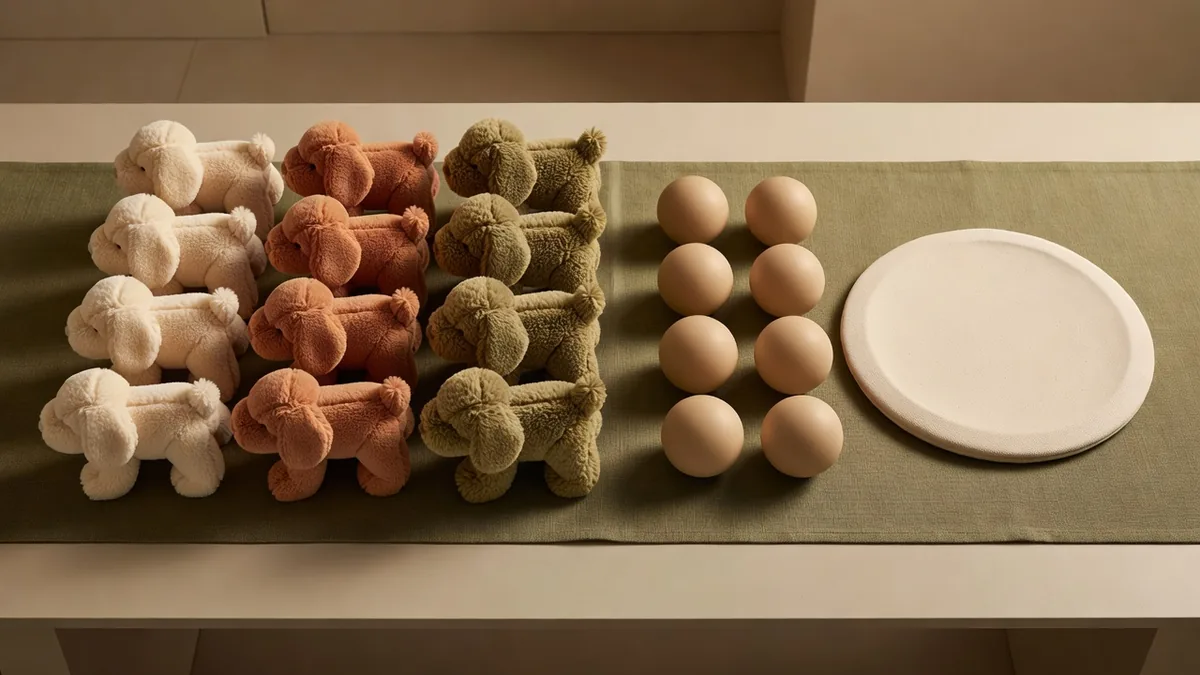
Three intents show up behind the same two words.
A retailer wants the branded assortment and the channel rules that come with it. That conversation belongs with the brand's wholesale desk. A factory cannot sell you their molds, their hangtag, or a lookalike colorway.
A marketplace seller wants a private-label version of a toy they saw next to the name. Licensed geometry is not a development brief. Stay on shapes you can own.
A founder wants the kind of product: a fetch ball, a disc, a soft animal, made under their own carton. That last group is the one a China pet plant can quote. Split the RFQ by construction. A rubber ball and a crystal-plush animal do not share a sample path, a pack photo, or a first MOQ.
The products catalog is where that split is visible. Studio Warmth is the soft line. Classic Chew is rope and bone. Smart Play is mats, puzzles, and roll balls. Mixing them into one "toy program" line sheet is how the first carton photographs badly.
Open-stock plush you can quote this week
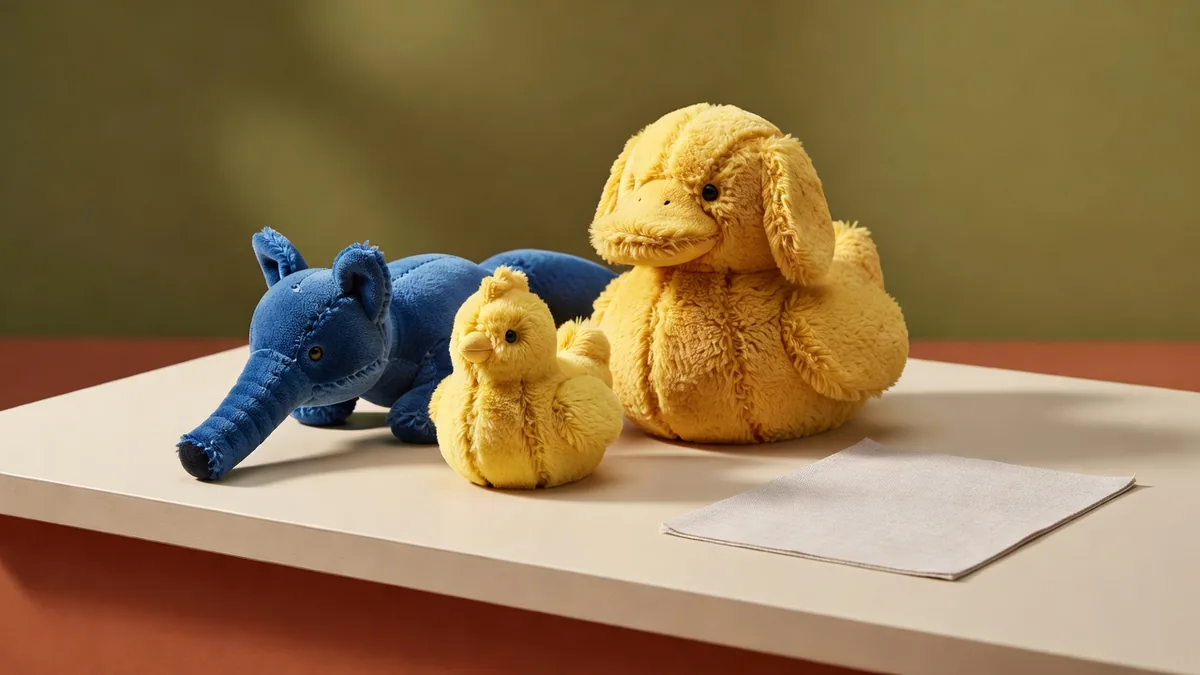
These three are active Studio Warmth rows. Dimensions and MOQ come from the product record. Colorways are the ones listed, not a promise that every shade is in stock today.
Fox Elephant is crystal plush and plush, 32×14, about 98 g, MOQ 120, blue on the color record, dogs and cats. One silhouette, one size. Easy to put on a spec sheet without arguing whether the PO is a set. Cute Goofy Chicken is crystal plush and plush, 22×10, about 85 g, MOQ 120, yellow, dogs and cats. Smaller face, same floor. Useful when the fox reads long for a counter basket and you still want a character, not a chew. Charging Duck is plush, 45 cm, about 202 g, MOQ 60, colors listed as yellow, pink, and green, dogs and cats. Heavier and longer than the other two, and the floor is lower. It is the one SKU here that does not sit at 120. If the buyer asked for "one trial carton of animals," do not assume the duck ships at the fox quantity, and do not assume the fox can drop to 60.A reasonable first box, if the retailer sells soft indoor toys and not power-chew:
- Fox Elephant at 120 as the photo hero
- Cute Goofy Chicken at 120 as the smaller face
- Charging Duck at 60 only if the fixture has room for a 45 cm body
Leave food-shaped plush out of box one. Donut is crystal plush, 11×11, about 17 g, MOQ 360. Drumstick Chew is crystal plush, 19×16, about 30 g, MOQ 240. Those floors are real, and they are the SKUs every plush article already leans on. A "small add-on" can triple the quantity of the hero.
What not to copy from a licensed fetch line
NERF DOG, as sold under that brand, is known for squeakers, flying discs, and rubber balls. Those constructions exist as open stock. They are not the same SKU as a licensed pack, and a photo of the branded one is a bad attachment on an RFQ.
On our side, a blank canvas disc is Flying Disc: canvas, 22×21, MOQ 120, beige, dogs. Weight is not on the record. Confirm grams on the quote before you print a hangtag that states a number.
A plain rubber fetch ball is a different family again. Plush Rubber is TPR, about 7.62 cm, about 97.5 g, MOQ 120, orange on the color record, dogs and cats. The name says plush. The material field says TPR. Write TPR on the line sheet so a buyer does not expect pile. Ball Rubber is the larger chew ball: TPR, 14×9.3×8.8, about 150 g, MOQ 120, purple listed. Same rule. Hardness is not in the database. Do not invent a Shore A. Ask for it on the sample if the retailer compares bounce to a licensed ball.
If the search started because someone wanted "the ball from that brand," send them two quotes: the disc and one TPR ball, plus the plush animals only if the bay is soft goods. One PO that says "similar to Gramercy products" will come back as a clarification loop.
Label, color, and the line you cannot cross
Hangtags, a sew-in label, and a reorder of a listed color are private label. Fox Elephant's record shows blue. Chicken shows yellow. Duck shows yellow, pink, and green. A new dye outside that list is a shade approval, not a checkbox. Crystal plush shows drift more than a dark TPR ball. Sign a physical swatch before you commit three SKUs to one color story.
A new sculpt, a new eye method, or a squeaker that is not on the current record is ODM. That is also where you go if you want the duck at a shorter body, or the fox without the long face. Do not send a licensed product photo as "the reference." Send a sketch you can own, or point at the open-stock slug and say what changes.
Certification fields on these rows are empty. If the destination retailer wants a CPSIA, EN71, or REACH panel, order the test against the golden sample. Do not paste another brand's certificate onto your carton. Pack copy, barcode, and warning text are yours once the goods are private label. They are not yours on a licensed brand's pack, which is another reason the short search and the factory quote should not share a folder.
Pack-out and the first PO
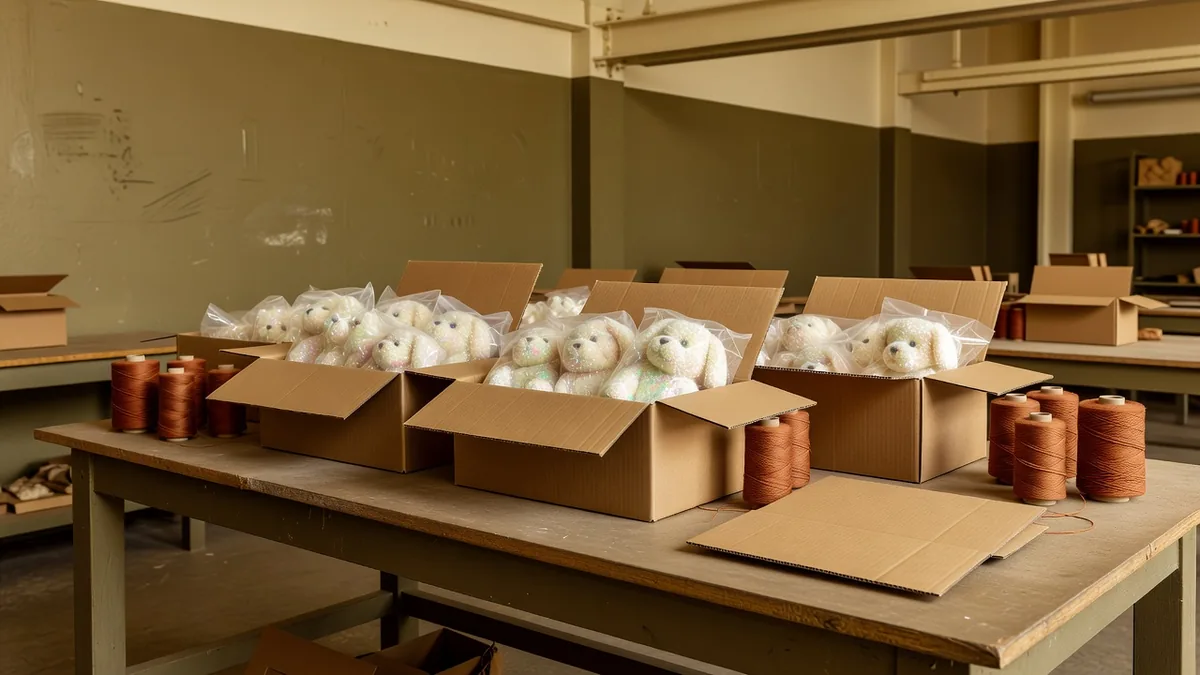
Write the PO in fields a planner can count:
- Slug and construction: crystal plush vs plush vs canvas vs TPR
- Size and weight from the record, with "confirm on sample" where weight is blank (the flying disc)
- MOQ as listed: 120, 120, and 60 are three different floors
- Color name from the record, or "new shade, PPS required"
- Logo method: hangtag, woven label, or none on the trial
- Destination market, so testing is scoped before deposit
Inner pack on a trial should be a plain polybag. Printed bags are a separate plate and a separate MOQ conversation. Master carton marks can be your company name. They should not mention the brand you searched on the way in.
QC for this mix is visual and mechanical, not a lab novel. Check pile shading against the swatch, seam burst on the 45 cm duck (it is the heavy one), and whether the TPR ball's color matches the approved chip. AQL level is whatever you write into the PO. We will not pretend a default number here.
Landed cost still eats a pretty FOB. The duck at MOQ 60 looks friendly until freight on a 45 cm body shows up. The donut at MOQ 360 looks cheap per piece until you are holding inventory you did not want in box one.
FAQ
Is Gramercy Products the factory?No. The short query points at a US brand operator for a licensed dog-toy line. Import history from China is normal for that model. It does not transfer their molds or their license to you.
Can I private-label a NERF-style ball?Not from a photo of their goods. You can quote an open-stock canvas Flying Disc or a TPR ball such as Plush Rubber or Ball Rubber, then brand the pack. Hardness and exact color get locked on a sample.
What MOQ should I plan for a first plush carton?Use the record. Fox Elephant and Cute Goofy Chicken start at 120. Charging Duck starts at 60. Donut starts at 360 and Drumstick Chew at 240, which is why they stay off the trial. Mixed cartons are a packing request, not a way to cut the per-SKU floor.
Where do I send the brief?One page is enough: pet type, the three slugs (or the disc and one ball), logo method, destination, and whether the first order is open stock or a new sculpt. Send it through contact. We will say what can ship from the current record and what needs a sample before anyone talks tooling.
Ready to Build Your Next Collection?
From material selection to final delivery, we help brands bring pet toys to market.