HTS Code Pet Toys Import: What the US Entry Needs

HTS code pet toys import questions usually arrive after the factory invoice is already typed. A US buyer has one PO and three constructions in the cartons: a crystal plush character, a coated nylon bone, and a small foam ball. The broker asks for the HTS. Someone pastes a six-digit heading from a forum. If the goods and the line do not match, the hold belongs to the importer, not the sewing line.
This note is for US importers and distributors buying dog toys from a Chinese factory. It is not a binding ruling and it does not quote a duty rate. The Harmonized Tariff Schedule is published by the USITC and revised through the year. Your customs broker files the entry. If a current ruling covers your exact goods, follow the ruling, not a blog.
A factory catalog shows why one line rarely covers a mixed first order. Monster Series crystal plush dog toys is crystal plush, about 25×15×7 cm and 120 g, dogs and cats, MOQ 120. Coated Bone Chew for nylon bone programs is PA with a PU coating, three sizes (about 13.3, 16.5, and 19.5 cm; about 65 g, 145 g, and 200 g), dogs, MOQ 120. Woven Foam Ball for a light fetch line is TPR and foam, about 7 or 7.5 cm, about 102 g or 119 g, dogs, MOQ 120. Same supplier, three products. Pick the mix on the products catalog before anyone invents one code for "assorted dog toys."
HTS is the US filing number, not the factory's HS

Buyers treat "HS code" and "HTS code" as the same box on the commercial invoice. They are related. They are not the same field on a US entry.
The Harmonized System is the shared six-digit structure. Heading 9503 is the one people reach for first: other toys, models, puzzles, and similar playthings. The United States then publishes its own 10-digit HTS. The extra digits are statistical. You still have to describe the goods. The suffix is what the broker transmits.
A six-digit number on a supplier invoice is a hint, not the entry. Do not ask the factory to print a full 10-digit HTS "so customs is happy." A plant can give you material, size, weight, and the country where the goods were made. Classification is the importer of record's call, with the broker, against the current schedule.
The mix-up that keeps showing up is a heading meant for leads, collars, and harness, not for a chew. A nylon bone is not a leash because it is hard. A linen tug is not a lead because it has rope in it. Textile headings and rubber headings get proposed the same way, when a plush or a solid chew looks more like cloth or an industrial part than a toy. Say how it is packed and sold. Invoice wording for the same problem sits in what to put on the commercial invoice for a pet toys HS code. This page stays on the US entry.
EU and UK shipments should not reuse a US statistical suffix. Those tariffs share the first six digits and then split. Los Angeles and Rotterdam are two filings.
Split the entry the way the goods are built
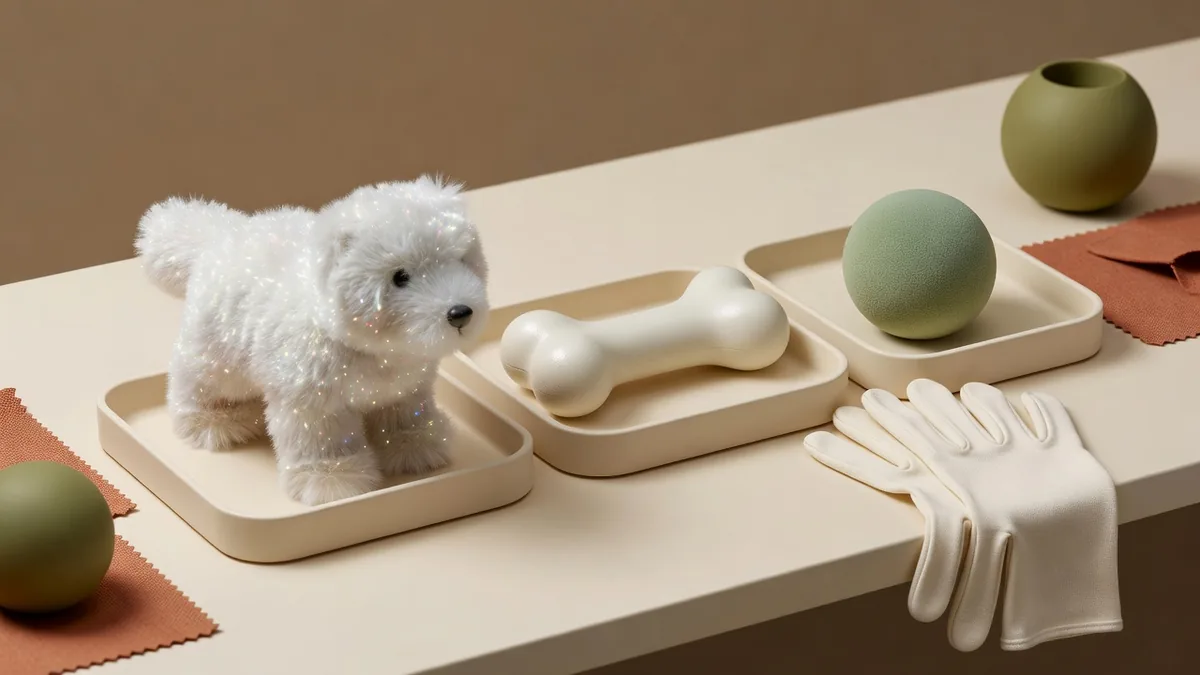
Customs classifies the carton, not the purchase order. One supplier does not mean one HTS line.
For the three SKUs above, a usable line set looks like this:
1. Crystal plush stuffed dog toy, polyester plush shell, about 25×15×7 cm, 120 g, for dogs and cats. Monster Series.
2. Coated nylon bone dog chew, PA core with PU coating, state the size you actually booked (S, M, or L) and the matching weight from the spec, for dogs.
3. TPR and foam dog ball, about 7 or 7.5 cm, about 102 g or 119 g, for dogs. Woven Foam Ball.
Skip "pet supplies" and "dog toys assorted." Price fields on these SKUs are stored at zero, so the value on the line is the quote, not a number from a blog. Quantity is pieces. Origin is the country of manufacture, not the trading company's office. The 10-digit code goes on only after the broker has opened the current USITC schedule. A screenshot of an old suffix under 9503 is how last season's line gets filed this season.
MOQ 120 is a factory opening quantity, not a customs quantity. You can still split the entry by construction inside one shipment. Say which way you want the paperwork before production. Coated Bone Chew runs about 65 g to about 200 g by size, Woven Foam Ball sits near 100 g, and Monster Series is about 120 g of plush. A freight quote built on the lightest sample will not match the booking.
Hybrids, sets, and the line you wish you had split
A single-material toy is the easy conversation. Hybrids sit in email for a week.
Puppy Rope Knot for light tug is TPR plus cotton, 9.8×7.8×4.3 cm, about 29 g, dogs, MOQ 120. The rope is not a decoration and the TPR is not a hangtag. Send a photo of the finished unit, a material bill, and the weights you have. "Cotton rope dog toy with TPR ends, 29 g" is a description. "Rubber toy" is not, if a real share of the weight is cord. Real Bone Chew for a denser nylon program is PA and TPR, about 12.5 cm / 110 g or about 16.5 cm / 260 g, dogs, MOQ 120. Two polymers means two materials on the line, not the word "nylon." Pick the size. A bone should not ride the plush line because both SKUs left the same warehouse.Sets are their own trap. A puppy starter kit sold in one printed box may classify as a set. The same three SKUs only married in a master carton usually stay separate lines. The printed retail box is the fact that changes the answer. Packaging work on the private label path should include that customs description, not only the hangtag.
Fleece gets pulled toward textile articles more often than a squeaker plush does. Mat Slow Feeding for slow-feeder enrichment is fleece, dogs, MOQ 120, and the product record has no size. Confirm dimensions on the quote before you reuse a stuffed-toy suffix.
What to hand the broker, and what not to invent
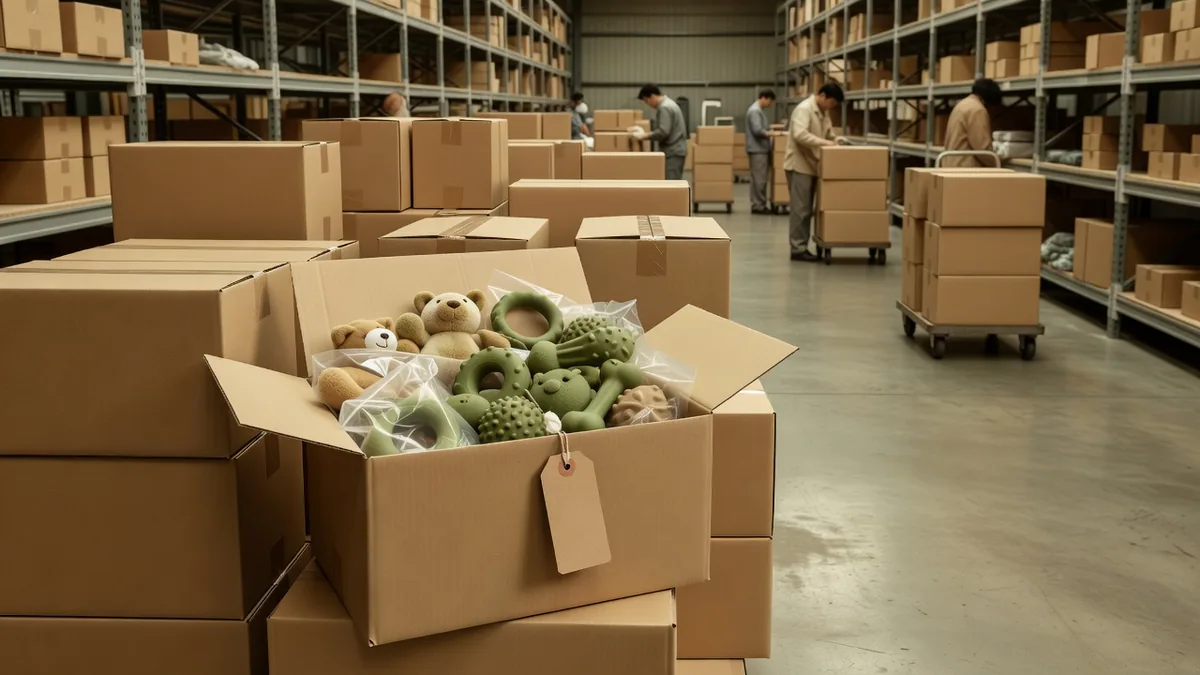
A clean broker packet is short.
With the pre-production sample, send a material list, the size and weight you are buying, a photo of the retail pack and the master carton, and the country where the goods are made. That country is the factory, not the trader's showroom. If a trading company in another city is the seller on the contract, say so, and still name where the toy was manufactured.
This catalog does not store certifications on the SKUs above. A CPSIA or REACH PDF, if you ask for one, is not an HTS code. Do not ask the factory to stamp a 10-digit string so a duty column prints the way you hope. A blank "suggested HTS" cell is better than a confident wrong one.
If you are cutting a new shape instead of buying open stock, lock the description when you lock the sample. An ODM brief that says "fun dog toy, mixed materials" cannot be classified. A brief that says "PA bone with PU coating, 16.5 cm, about 145 g, sold as a dog chew, polybag plus hangtag, made in China" can go to a broker while the tool is still cheap to change.
Before the entry: each construction should be its own invoice line, with pieces, value, and origin. Someone should have opened the current HTS, not last season's screenshot. The broker should have seen the finished hybrid, not only a fabric swatch. A retail set and a master-carton assortment are not the same description. Carton marking and the origin on the entry should name the same country. If the plan is "the forwarder will sort it," you are late.
Filing is the importer's job
The factory can pack a correct carton. It cannot file your entry. Plush, coated bone, and foam ball belong on separate lines, hybrids stay hybrids, and a set is a set only when it is sold that way. Check the live schedule, then tell us what you are booking if you want material, size, weight, and MOQ pulled for the SKUs on the PO before the paperwork goes to the forwarder. We will not invent a 10-digit code. We can make the product facts boring enough that the broker does not have to guess.
Ready to Build Your Next Collection?
From material selection to final delivery, we help brands bring pet toys to market.