Low MOQ Pet Toy Manufacturer China Plush and Rope: Dual Catalog Guide

If you are searching for a low MOQ pet toy manufacturer China plush and rope, you are usually trying to fill a first retail set or Amazon private-label launch without locking 2,000 pieces of a SKU that might flop. Plush and rope look cheap in a catalog. The hard part is finding a plant that will open a dual-category trial, keep dye lots honest, and still ship carton marks you can reorder against.
This guide is for brand buyers, marketplace sellers, and small distributors who need both soft goods and cotton/hybrid rope from one China partner—or at least from one account team that manages both lines. The MOQ numbers and QC habits below match common 2025–2026 export conversations for trial programs, not a sales brochure.
What dual-catalog low MOQ actually means
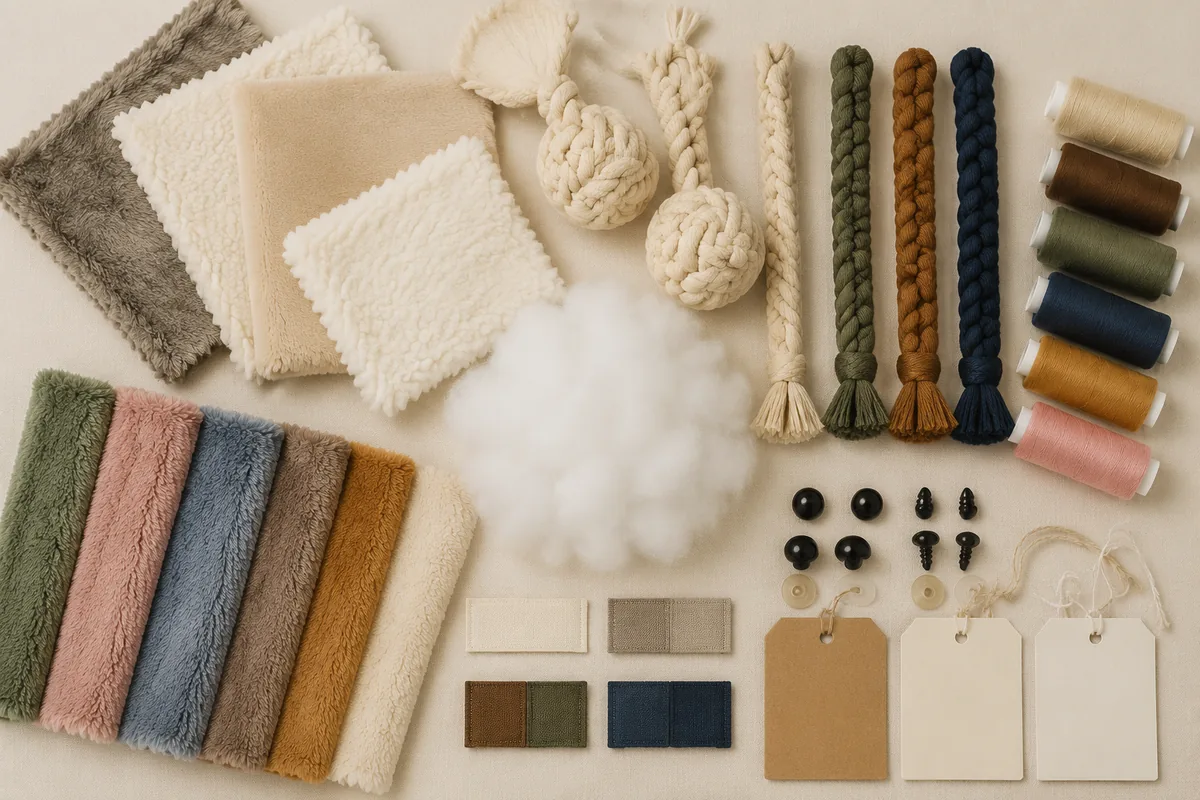
“Low MOQ” is not a factory slogan. It is a mix of dye-lot size, sewing-line changeover cost, braid capacity, and how much risk the plant will take on a first PO.
On plush, low MOQ often sits around 120–300 pieces per colorway when you use near-stock bodies and swap labels, hangtags, and embroidery. Fully custom fabric color or a new character body jumps that number because fabric mills and embroidery programs hate tiny lots.
On rope, low MOQ is driven by yarn dye lots and braid changeover. Many houses will open 120–240 pieces per color on classic bones and multi-knot tugs if the construction is already on the floor. New strand diameters, animal heads, or rope-plus-plush hybrids need more volume or sample pricing that looks like a mini production run.
A true dual-catalog partner can quote both families in one RFQ, share carton mix rules, and keep one QC language for both. That matters when your planogram needs a soft companion next to a tug SKU and you do not want two separate freight dramas.
Browse shapes that already exist before you invent tooling: the live products catalog is a faster path to low MOQ than a blank sketchbook.
Who should chase low MOQ on plush + rope
Not every buyer benefits from the same MOQ band.
| Buyer type | Typical first dual-catalog band | What they optimize for |
|---|---|---|
| Indie pet shops / small distributors | 120–240 pcs per SKU, mixed colors | Assortment depth, hangtag look, shelf mix |
| Amazon / marketplace private label | 240–500+ once photos lock | Color match to listing, pack-out photos |
| New DTC brands testing a set | Near-stock plush + stock rope, custom labels | Cash risk, speed to first reviews |
| Regional chains doing a pilot | Higher pack standards from day one | Barcodes, written AQL, carton marks |
If you need 50 pieces of a brand-new embroidered character plus a custom-dyed multi-knot with a plush head, expect either a polite no or sample fees that erase the “low MOQ” story. Factories price changeover and scrap, not only unit cost.
Spec the two lines separately (then combine the PO)
A dual catalog still needs two tech packs. Vague briefs force the plant to invent your product.
Plush brief
- Body style: bone, animal, food shape, squeaker pocket yes/no
- Fabric: short pile, sherpa, velboa; GSM if you have it
- Fill: polyester fiberfill density target; no recycled claim without mill docs
- Seams: double stitch on ears, limbs, and stress points
- Eyes/nose: locking safety parts or embroidered only
- Branding: woven label, hangtag, polybag print
- Size in cm, not “medium dog”
Rope brief
- Style: bone, multi-knot, ring, stick, animal head, hybrid handle
- Finished length and diameter in mm
- Strand count / braid type
- Knot count and tightness target
- Fiber: cotton or blend; natural cream vs Pantone-dyed
- End finish: raw, melted, stitched, or bound
- Play band: gentle tug vs power chewer; supervised-play warning copy
Shared PO fields
- Destination markets (US chemical thinking, EU REACH screens when retail treats it as a toy)
- Mixed carton rules if plush and rope ship together
- Inner pack counts, master carton dims, barcode placement
- Sample approval photos that lock both color and construction
Send both packs in one email. Dual-line buyers who drip specs get dual-line delays.
For custom branding paths beyond hangtags, read how private label programs usually stage labels first, then bodies. If you need new construction rather than catalog-adjacent SKUs, the ODM process is the honest route—and it is not always low MOQ.
Realistic MOQ math for dual programs
Here is the pattern many export quotes follow in 2025–2026 for trial orders:
Near-stock plush + stock rope, custom labels only. Often openable at 120–240 pcs per SKU per color if the plant already runs those bodies. Best first test for dual-catalog low MOQ. Near-stock plush, custom embroidery + stock rope colors. Plush may hold 200–360; rope stays lower if dye is stock. Embroidery setup is the silent cost. Custom fabric color plush + custom dyed rope. Expect 300–500+ per colorway, or split mills and accept longer lead times. This is where “low MOQ” pitches often break. Rope-plush hybrids (animal head on rope, rope handle on plush body). Treat as a third category. Joins fail if stitch density is weak. MOQ and QC both rise.If a sales rep quotes 50 pieces of everything with no setup fee, ask what they skip: dye-lot control, in-line QC, or pre-shipment inspection. Cheap openers often reappear as chargebacks.
Sampling without burning the timeline
Dual sampling is where calendars die. Sequence it.
1. Material swatches first. Plush fabric + rope yarn samples before full toys. Color fights early are cheaper than full prototype fights.
2. Gold sample per construction. One approved plush body, one approved rope style. Photograph seams, knots, labels, and fill density.
3. Pre-production (PP) sample. Same materials as bulk, same embroidery or dye lot rules. Sign off in writing with photo set.
4. Random production pull. On first PO, ask for mid-run photos of both lines, not only final packing shots.
Budget 2–4 weeks for swatches and gold samples on stock constructions, longer if fabric or yarn is custom. Parallel sample both lines only if the same project manager owns both. Split ownership means two calendars and one missed ship date.
Test samples the way your customer will. Sit on plush seams. Tug rope knots until they loosen. If you only do a photo review, you will discover defects after the container leaves.
QC that works when two product families share a PO
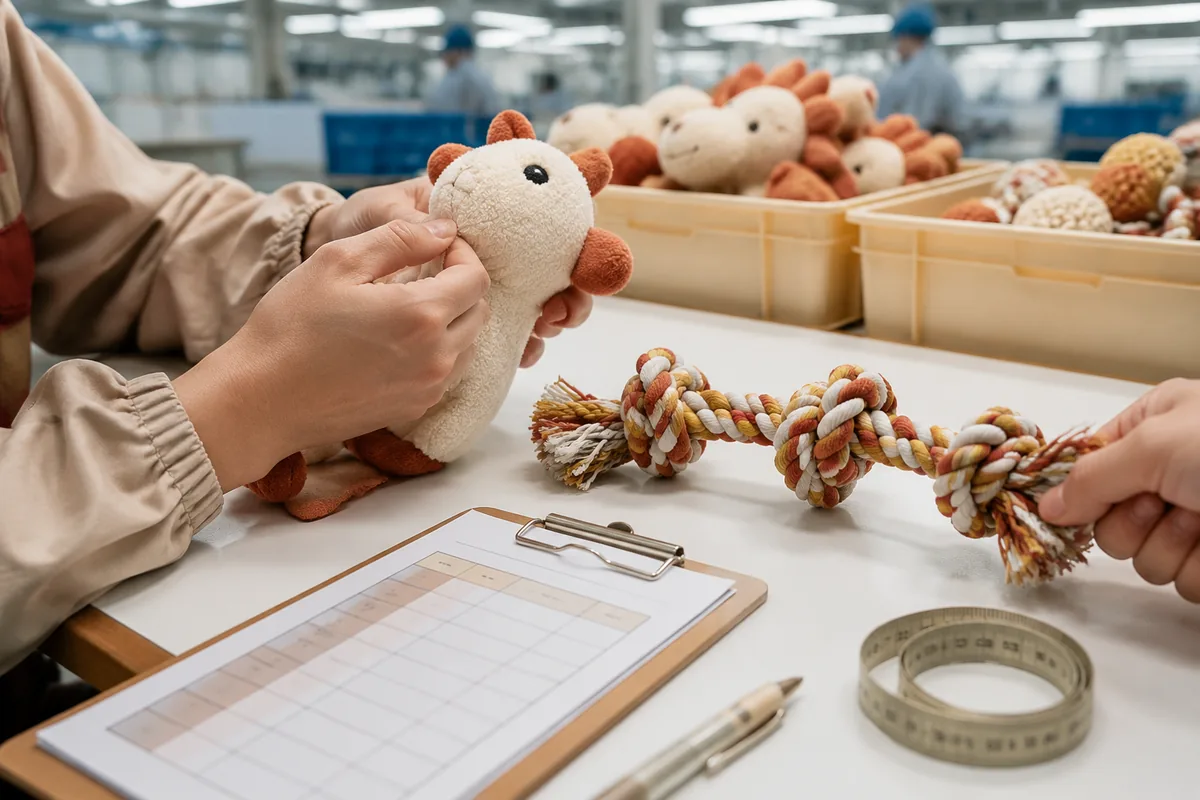
Plush failures and rope failures do not look the same. One AQL plan with two defect lists works better than a generic “check quality” email.
Plush checks: seam strength at ears and limbs, fill density consistency, eye/nose attachment pull, embroidery registration, odor after airing, size variance vs gold sample. Rope checks: knot tightness, strand diameter, end finish, colorfastness to saliva/light wash claims, fray after controlled tug, hybrid join strength if a head is sewn on. Shared checks: label and hangtag accuracy, barcode scan, polybag print, carton marks, mixed-SKU packing count.Even on a 120-piece trial, write a simple AQL and photo evidence at incoming materials, in-line, and pre-shipment. First orders train the factory. Skip documentation and the reorder will invent a new “normal.”
For US-bound goods, plan chemical thinking early (lead, phthalates where relevant). For EU retail that treats toys as toys, align EN71 / REACH screens with production so certificates exist before cargo booking. Do not seal a container waiting on a lab report you never scheduled.
Packaging and mixed cartons for low MOQ
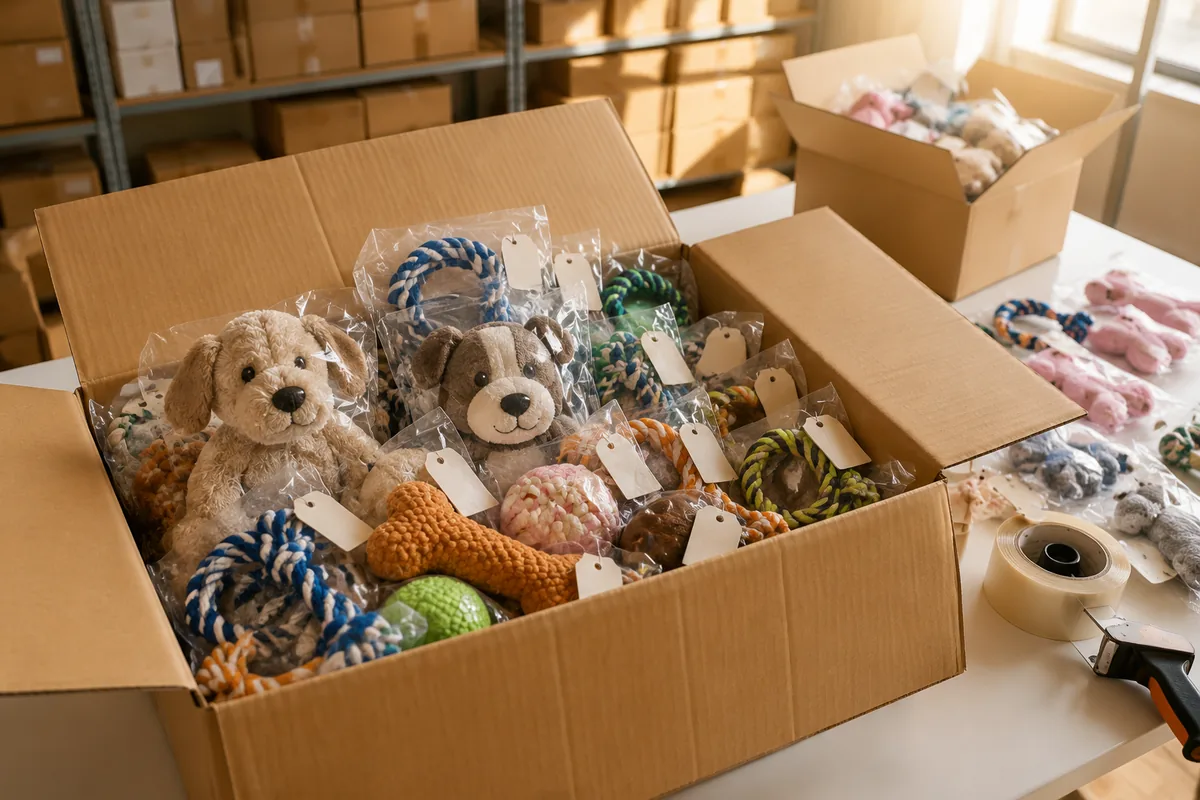
Low MOQ buyers often ship mixed cartons. That is fine until a retailer opens a box and finds three plush and zero rope because packing rules were verbal.
Write the mix:
- Inner polybag count per SKU
- Master carton assortment formula (e.g. 20 plush A / 20 plush B / 40 rope natural)
- Maximum weight and dimensions your 3PL will accept
- Corner crush and moisture protection if ocean freight is long
- Outer mark fields: PO, SKU list, qty, destination, “fragile/soft goods” if needed
Hangtags and woven labels should match the approved sample photo set. Color drift between plush fabric and rope yarn is common when lots are small—call it out if your brand photography needs a matched palette.
Common mistakes on dual-catalog low MOQ
- Treating plush MOQ and rope MOQ as one number when mills and braid lines are different
- Choosing unit price without freight, testing, packaging, and sample fees
- Approving soft photos only, no seam or tug test
- Sending fuzzy artwork and then blaming the plant for logo delay
- Ignoring warning copy and barcode language for the destination market
- Opening five custom colorways on a first PO when two would teach you enough
- Using a pure trading company for a branded character without a written QC gate
If the factory cannot show you where plush is sewn and where rope is braided—or admits both are subcontracted without inspection rights—price is not your main risk.
When dual catalog is the wrong tool
Stay dual-catalog when your assortment needs soft + tug and cash is limited. Split suppliers when:
- You need specialty power-chew TPR or rubber that the plush house does not mold
- One plant’s rope quality is fine but plush embroidery is weak (or the reverse)
- Your volume on one family will hit factory-scale MOQ while the other stays tiny
Many mature brands keep a dual-line starter partner for speed, then migrate winners to specialized houses. That is normal. Low MOQ is a launch tool, not a forever contract.
How to shortlist a low MOQ plush-and-rope manufacturer
Ask for answers you can verify:
1. Share of output that is pet vs human soft goods or apparel
2. Lowest recent export PO size for plush and for rope (with photos of that shipment)
3. In-house vs subcontract for sewing, embroidery, dyeing, braiding
4. Sample fee policy and whether fees credit against first bulk
5. Written QC steps and who signs the inspection report
6. Lead time from PP sample approval to ex-works for 120–240 pcs dual mix
7. Lab partners and which tests they run for US vs EU
Visit if you can. If you cannot, demand factory walk video and mid-production photo pulls with timestamps. English fluency is nice. Process discipline is better.
When you are ready to brief a real program—stock dual catalog, private label labels, or full ODM—start with a clear RFQ and the contact form. Attach both tech packs. The faster the plant sees plush and rope as one project, the fewer surprises you pay for.
FAQ
What is a realistic low MOQ for plush dog toys from China?
For near-stock bodies with custom labels or hangtags, many export lines open around 120–300 pieces per colorway. Custom fabric color or new character tooling usually needs more. Always confirm dye-lot and embroidery setup fees, not only the per-piece quote.
Can one factory handle both plush and rope at low MOQ?
Yes, if they run both lines or manage both with one QC owner. Ask for recent dual-category shipment photos and mixed-carton packing rules. Some “dual catalog” sellers are traders stitching two unrelated plants together—inspect rights matter.
How long does sampling take for a dual plush-and-rope trial order?
Stock constructions: often 2–4 weeks for gold samples after materials lock. Custom yarn or fabric colors add mill time. Sequence swatches before full prototypes so color fights do not restart the clock.
Should first orders mix plush and rope in one master carton?
Yes if your 3PL and retail plan need assortment and the factory has a written mix formula. No if you need separate labeling for different sales channels. Mixed cartons fail when the mix lives only in a chat thread.
Bottom line for buyers
A low MOQ pet toy manufacturer China plush and rope program works when you treat the two product families as separate specs under one PO, lock gold samples with real tug and seam tests, and write carton rules before production starts. Start near-stock where you can. Spend custom budget on the SKUs reviews already prove.
If you want a dual-catalog trial scoped against real constructions, send your brief through contact, review products for near-stock options, and decide early whether you need private label branding only or full ODM development. Low MOQ is useful. Clear specs are what keep the reorder looking like the sample.
Dual-catalog trials work best when you pair one plush and one rope unit early—e.g. Farm Plush Set with Soak Water Bone—and write separate QC lines under one PO.
Related reading
Rope-heavy programs can go deeper in wholesale rope dog chew toys bulk MOQ; plush-first wholesale is covered in wholesale plush dog toys China factory.
Ready to Build Your Next Collection?
From material selection to final delivery, we help brands bring pet toys to market.