Pet Toy MOQ for Startups: What a First Order Actually Costs

Pet toy MOQ for startups is the number that decides whether a first brand even ships. Most new buyers ask for 50 pieces and a custom color. Most factories answer with a dye lot, a sewing changeover, and a carton that only makes sense at 120 or more. The gap between those two numbers is where first orders stall.
This is a working note for brand founders, marketplace sellers, and small distributors placing a first or second PO. It uses MOQ figures stored on live catalog SKUs, not a marketing range invented for the page. If a field is not in the product record, treat it as confirm-on-quote. Browse shapes before you invent tooling on the products catalog.
A useful first assortment often mixes a durable chew with a softer play piece. Coated Bone Chew for everyday dog chew programs sits at MOQ 120 in PA and PU, with three recorded sizes (S 13.3×4.6×2.8 cm, M 16.5×5.6×3.7 cm, L 19.5×6.6×4 cm) and weights of about 65 g, 145 g, and 200 g. Pair it with Puppy Rope Knot for light tug and puppy chew, also MOQ 120, TPR plus cotton, one size at 9.8×7.8×4.3 cm and about 29 g. Those two lines already show why "low MOQ" is not one number.
What pet toy MOQ for startups usually means
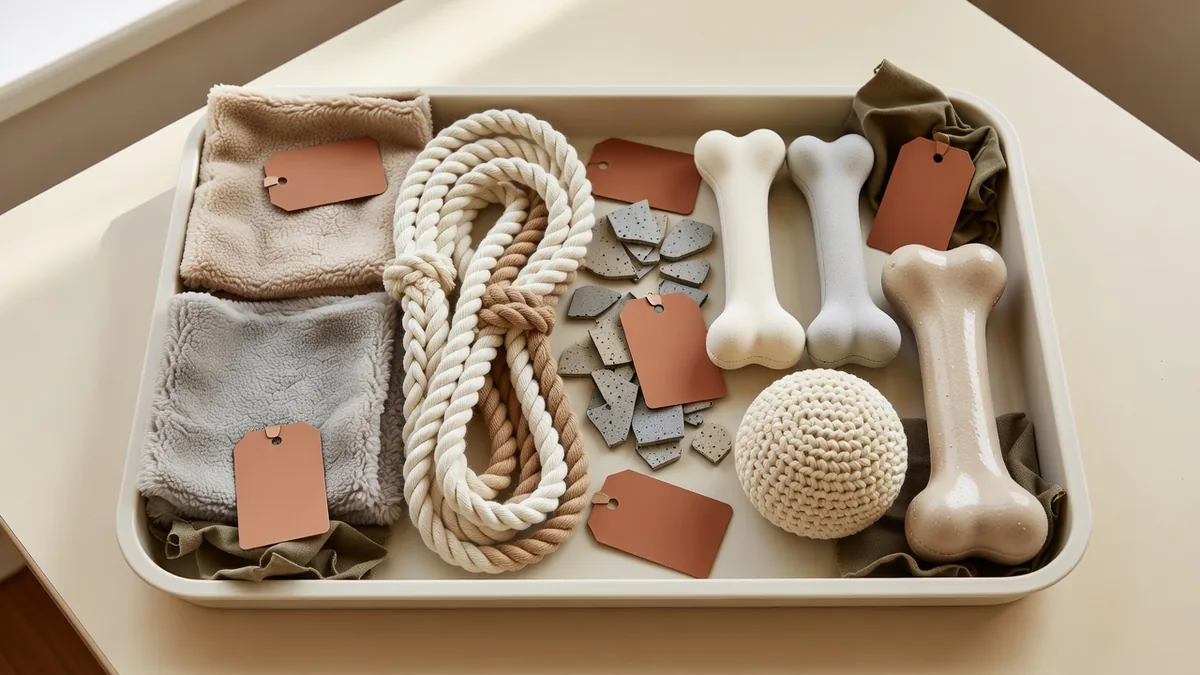
MOQ is the smallest quantity a line will open without losing money on setup. On pet toys that setup is rarely the toy itself. It is fabric dye, embroidery digitizing, braid changeover, mold color, printed polybags, or a carton mark that has to be plate-made.
On this catalog, active SKUs cluster hard:
| Recorded MOQ | Active SKUs | What it usually covers |
|---|---|---|
| 120 | 136 | Open-stock chew, rope, fleece, and many TPR bodies in existing colors |
| 240 | 17 | Slightly tighter color or construction lots |
| 360 | 13 | Heavier plush and crystal-plush bodies |
| 480 | 6 | Selected linen, corn-texture, and crystal-plush shapes |
| 60 / 144 / 300 | 1 each | Outliers, not a program you should plan around |
120 is the honest floor for most startup trials on existing bodies. 50-piece "sample orders" that look like production are usually paid samples, not a reorderable SKU. Ask which one you are buying.
Construction moves the floor more than the sales deck does.
- Existing TPR, rope, or fleece body, stock color, your hangtag. Often 120 per SKU. Key Chew Long is a plain example: TPR, 21×2.5×2.5 cm, about 33 g, MOQ 120, mixed colorway already on file.
- Soft enrichment that is still open stock. Mat Slow Feeding is fleece, colors on file gray / teal / yellow, MOQ 120. Color count is the trap. If you want all three colors, confirm whether 120 is per color or per style before you write the PO.
- Crystal plush and some corn-texture shapes. Several sit at 360 or 480. Avocado and Carrot, both crystal plush plus polyester, are recorded at 480. That is a different cash plan than a 120-piece chew.
A startup that copies a plush MOQ onto a rubber RFQ, or the reverse, gets a quote that looks rude and is actually consistent.
Who should stay at 120, and who should not
Not every new brand needs the same first band.
Indie pet shops and small distributors usually want assortment depth. Four SKUs at 120 beats one SKU at 480 if the shelf is mixed and you do not yet know which silhouette sells. A coated bone in three sizes can already fill a small durable bay if you order size M only on the first cut and add S and L after sell-through. Do not assume the 120 covers all three sizes in one PO. Lock size on the line item.
Marketplace sellers have a photo problem, not just a unit problem. Once the listing image is a specific yellow TPR ball, reorders have to match that yellow. Roll Rubber Ball is TPR, about 7.8 cm, about 148 g, pet types dogs and cats, MOQ 120, yellow on file. That is a reasonable photo-lock SKU. A brand-new Pantone on the same ball is a different conversation, and it may not stay at 120.
DTC brands testing a set should spend the first PO on labels, not molds. Woven label, hangtag, and a simple polybag on a stock body is the usual "private label" that still fits a startup budget. Full character ownership, new embroidery maps, and custom cartons push MOQ up because the plate and the sew line both hate tiny lots. If the brand story depends on a new silhouette, read the private label path before you promise retailers a date.
Regional chains running a pilot often need barcodes, an agreed AQL, and carton marks from day one. Their unit MOQ can still be 120. Their packaging MOQ sometimes is not. Ask for both numbers on the same quote.
Carton math that quietly blows the MOQ
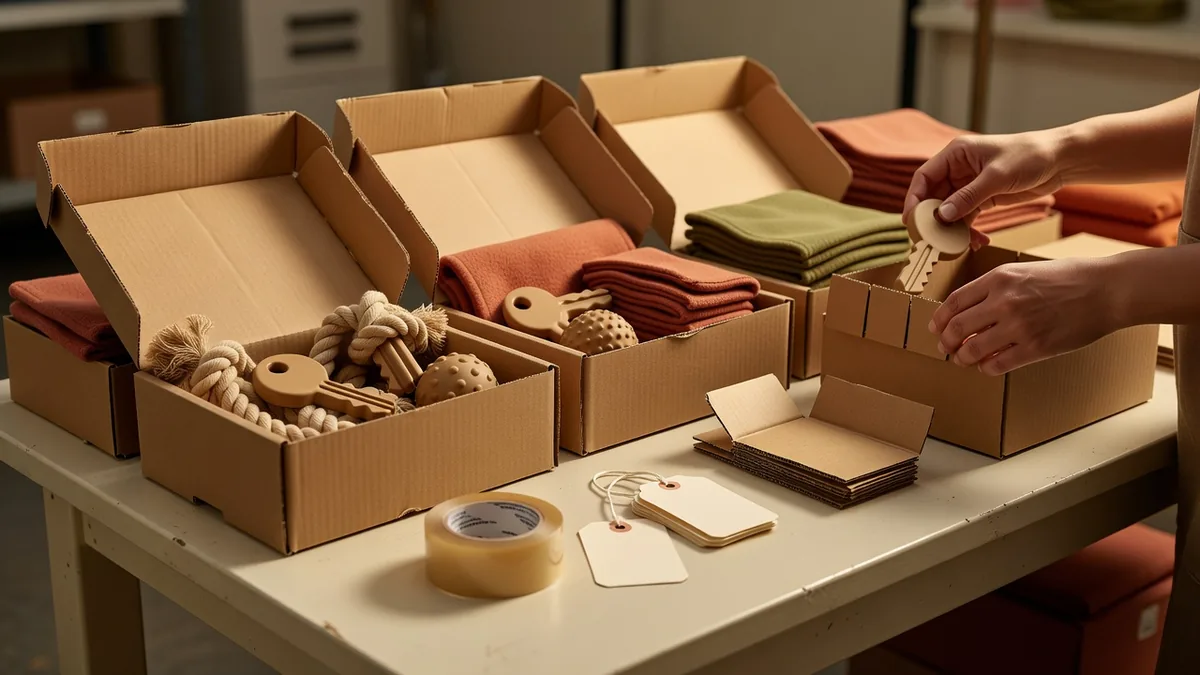
A 120-piece MOQ is not 120 pieces of free-form shipping. Factories pack to a master carton. If the inner pack is 12 and the carton is 48, your "120" becomes 144 or you pay for a broken carton. The single active SKU recorded at 144 is a reminder that pack multiples exist. Confirm inner pack and master carton before you celebrate a round number.
Weight changes freight more than buyers expect on a first air shipment. Puppy Rope Knot at about 29 g is a light carton. Roll Rubber Ball at about 148 g is not. Coated Bone Chew size L at about 200 g is a different cube again. Quote freight on the actual size you will ship, not on the lightest sample someone mailed you.
Mixed cartons are how small assortments stay alive. A factory that will put two chew SKUs and one rope SKU in one export carton will save you a consolidation fee. A factory that will not should say so before you book a forwarder. Write the mix rule into the PO: units per SKU, size, color, and whether hangtags are applied or packed loose.
Price bands on these SKUs are not published as retail or FOB figures in the product record (price fields sit at zero). Do not budget from a blog. Ask for FOB on the exact size and color, then add packaging, sample freight, and the duty position your broker gives you. HTS classification is a broker question, not a factory slogan.
Sampling before the first real PO
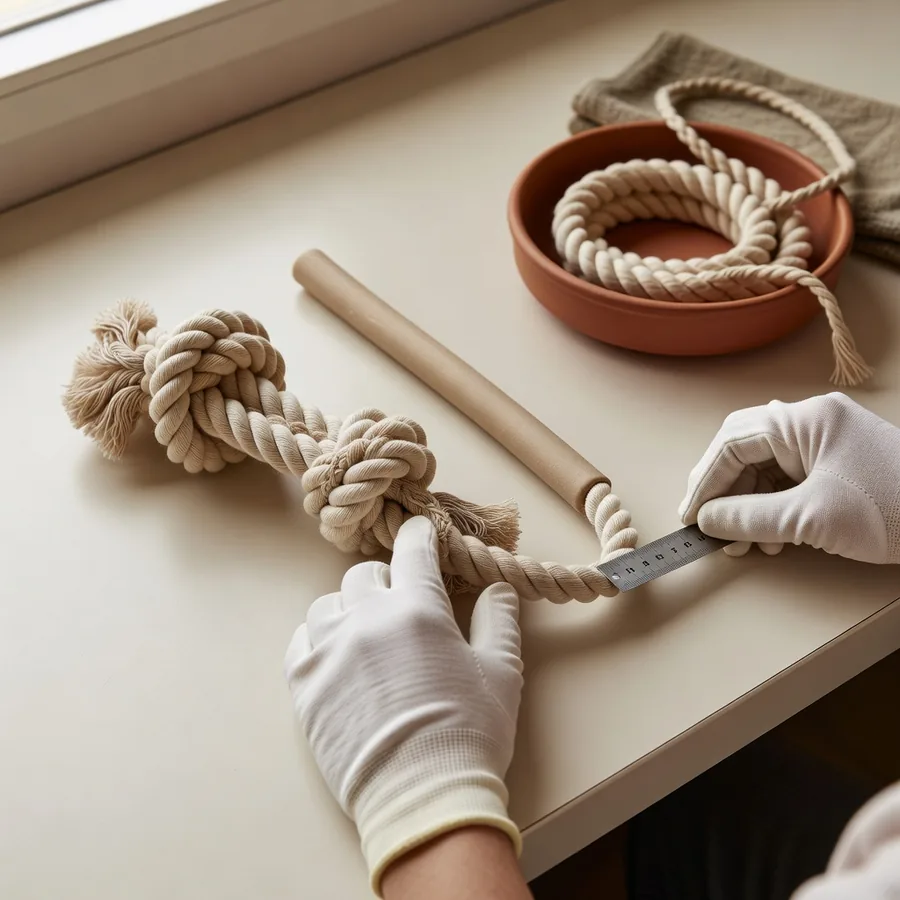
Pay for pre-production samples that match the body you will actually scale. A beautiful plush sample from a different line does not prove the seam standard on a 29 g rope knot.
For a startup trial, a practical sample set looks like this:
1. One stock body in the color already on file, with your hangtag mocked on a blank card if the real tag is still in art.
2. The same body with the woven label position marked, even if the label itself is a later lot.
3. A short written note of what will be checked at packing: loose thread, rope-end finish, obvious flash on TPR, color versus the approved swatch, carton mark.
Skip lab-result theater. This catalog does not store certifications on the SKUs above. If a buyer needs CPSIA, EN71, or REACH paperwork for a destination market, ask for the current report on that material and that mold, and read the date. Do not assume a chew and a fleece mat share one certificate.
Sampling lead time is separate from production lead time. Stock-color bodies with an existing label plate move faster than a new embroidery file. If someone quotes "two weeks" , ask whether that is sample approval, production after approval, or both stacked. Startups miss launch dates by adding those weeks in their head and forgetting the boat.
Where open stock stops and development starts
Stay on open stock while you are still learning sell-through. Woven Foam Ball (TPR and foam, about 7 cm and 7.5 cm, roughly 102–119 g, MOQ 120, blue on file) is the kind of add-on SKU that fills a carton without a new mold. Busy Ball (polyester and TPR, about 13.5×13×11 cm, navy, MOQ 120) is a larger play piece in the same MOQ band if the line needs an indoor enrichment SKU next to chew.
Move to development when the stock body cannot carry the brand: a silhouette you own, a color that is not on file, or a structure that is not in the catalog. That work belongs on an ODM brief, with a sample budget that is allowed to be ugly. Tooling and new fabric colors are amortized over later POs. Pretending the first 120 pieces will pay for a new mold is how founders end up with a sample they love and a reorder MOQ they cannot fund.
A simple split we use in RFQs:
- Trial PO: two to four existing SKUs, stock colors, MOQ 120 each, custom hangtag only.
- Second PO: keep the winners, add one colorway if the dye lot allows, fix the carton mark.
- Development: one new shape, quoted separately, not mixed into the trial price.
If the quote blends all three into one unit price, you cannot tell which decision costs money.
QC points that matter on a small first run
Small POs get less attention unless you write the check into the order. You do not need a 40-point manual. You need the defects that create returns on these constructions.
On rope and rope-hybrid pieces such as Puppy Rope Knot, look at cut ends, loose fibers, and whether the TPR grip is seated. A 29 g toy fails in the customer's hand faster than it fails in a spreadsheet.
On nylon or PU coated bones, check size against the record you ordered. Coated Bone Chew S, M, and L are far enough apart in weight (65 g vs 200 g) that a mixed carton is obvious on a scale. Weigh five pieces per size at packing if the PO includes more than one size.
On TPR sticks and balls, look for sharp flash, stuck ejector marks, and color drift versus the approved chip. Key Chew Long is a thin profile (21×2.5×2.5 cm). Flash along that edge is easier to feel than to see in a photo.
On fleece mats, confirm the color name you ordered (gray, teal, or yellow on Mat Slow Feeding) and that pieces in one carton are one dye lot. Do not accept "similar yellow" if the listing photo is already live.
Agree a simple AQL or a 100% visual on the first export if the quantity is only 120. At that volume, sampling statistics are thin. A full visual on one carton is often cheaper than a return from a first wholesale account.
A first-order checklist
Use this before you send money, not after the goods land.
- SKU name, size, color name, and material copied from the product record, not from a chat screenshot.
- MOQ confirmed per color and per size, not only per style.
- Inner pack and master carton quantities, and whether 120 rounds to a full carton.
- Packaging scope: stock polybag, your hangtag, woven label, or full printed carton. Each can have its own minimum.
- Sample approval date versus production start.
- What is not promised: no stored cert on these SKUs means paperwork is a separate request.
- Freight mode and who books it. Air on a 200 g bone is a different invoice than sea on a 29 g rope.
- Reorder path: same colorway still available, or was this a one-time lot.
If the factory cannot answer the carton and per-color questions in writing, the MOQ on the website is not the MOQ you will pay.
What to send when you are ready to quote
A short brief beats a 30-page brand deck. List the SKUs, the size, the color on file or the Pantone you hope for, the packaging you actually need this season, destination country, and whether this is a trial or a reorder. Say if you need documents for a specific market. Leave Shore hardness, lab scores, and retail price targets out unless you have them from a real test or your own pricing model.
When that brief is ready, contact WagNab and ask for FOB, pack multiple, and a sample slot on the exact bodies. We would rather tell you a colorway stays at 120 and another jumps to 360 than smooth it into one friendly number.
If you want the longer dual-line version of this conversation, the note on low MOQ pet toy manufacturing for plush and rope goes deeper on dye lots. For factory vetting beyond the first carton, see how buyers vet a pet toys supplier. The live assortment, including the chew and rope pieces above, stays on products.
Ready to Build Your Next Collection?
From material selection to final delivery, we help brands bring pet toys to market.