Pet Toy Quality Control China: A Buyer’s Gate Plan That Survives Bulk

Search traffic for pet toy quality control china usually comes from people who already got burned once. A sample looked fine. The carton photos looked fine. Then retail returns spiked because seams opened, squeakers migrated, dye bled, or a rubber compound felt softer than the pre-production piece. Quality control in this category is not a final handshake at the loading dock. It is a written gate plan that starts at incoming materials and ends only when the shipment matches the sample you signed.
This guide is for brand owners, private-label sellers, distributors, and Amazon / marketplace operators who place real POs with Chinese factories. It covers what to put in the RFQ, which checks matter for plush vs rope vs molded toys, how AQL works on small trial runs, and how to keep certificates honest when bulk drifts. Browse construction options on our products catalog before you lock a tech pack.
What “QC” should mean in your RFQ
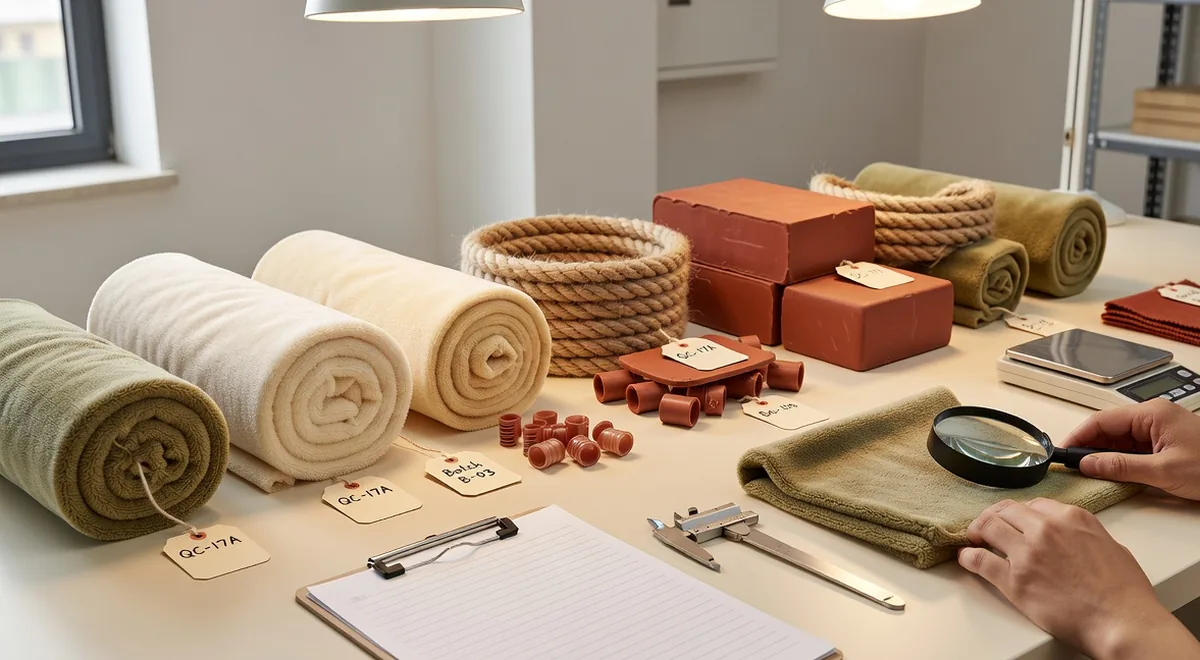
Factories hear “good quality” every day. That phrase does nothing for a sewing line or a molding shift. Write the RFQ so a production manager can measure it:
- Destination markets and channels (US retail, EU retail, Amazon FBA, indie shops)
- Construction family (plush with plastic eyes, cotton rope, TPR chew, hybrid)
- Acceptable defect classes and AQL levels for critical / major / minor
- Golden-sample rules: what “match” means for color, weight, hardness, stitch density, logo placement
- Photo or video evidence required at each gate before goods leave the plant
- Who pays for rework and re-inspection after a failed lot
If you are still shaping a custom construction, use an ODM path so sketches become measurable specs instead of mood-board guesses. When branding, hangtags, and retail cartons are part of the same program, plan a private label track so QC covers pack-out, not only bare FOB toys.
Incoming materials: where most bulk failures begin
Bulk rarely fails because the sewing room “forgot how to sew.” It fails because the fabric lot, dye bath, rope yarn, or rubber compound changed after the lab and the golden sample.
What to check on arrival- Fabric / plush pile height and GSM against the approved lab dip
- Rope yarn count, twist, and color lot IDs
- Rubber or TPR compound batch codes that map to what the lab saw
- Eyes, noses, squeakers, coatings, and print inks with declarations when your market needs them
- Rejected lots quarantined and logged — not “used up on a different PO”
Ask for a simple incoming checklist with lot photos. If the plant cannot show how today’s material maps to last month’s report, treat the PDF as marketing.
In-line checks by construction type
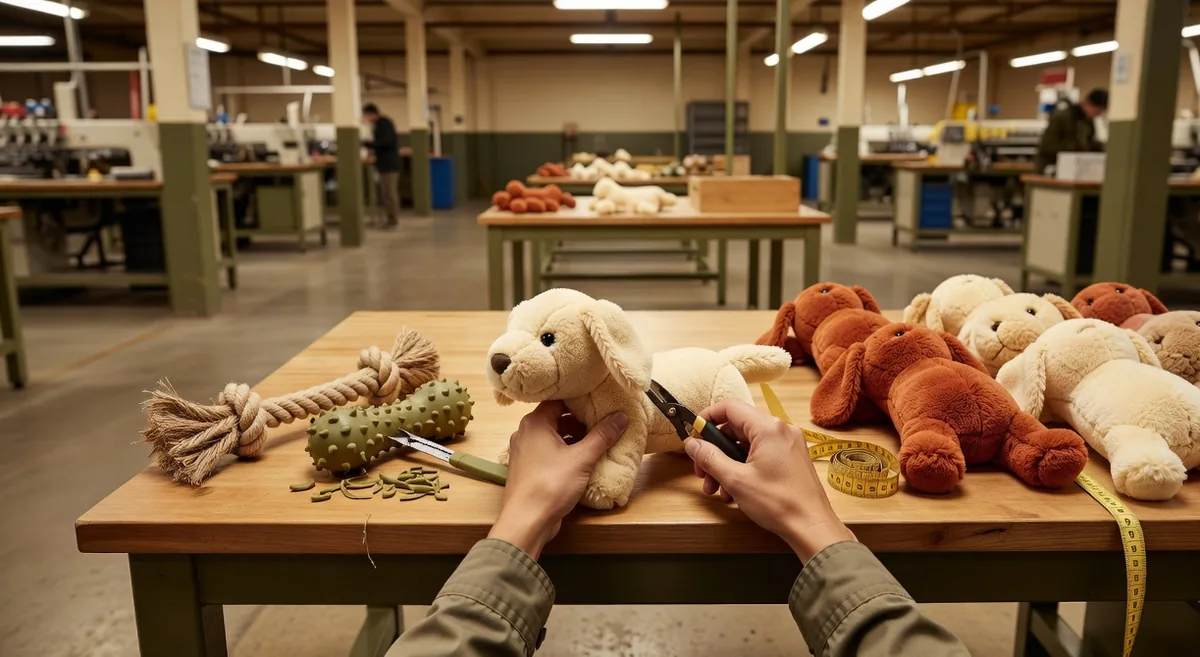
One QC script does not fit every pet toy. Adjust the gate to how the product fails in the real world.
Plush- Seam strength on ears, limbs, and stress openings
- Stuffing weight tolerance and fill migration after a wash or shake test
- Eye / nose attachment method (embroidered vs locking washers) and pull resistance
- Embroidery bleed after a damp rub; logo placement vs the signed sample
- Knot security and braid density
- Join strength where rope meets a rubber or plush body
- Fray behavior after a controlled tug cycle
- Colorfastness if the rope will see saliva and outdoor dirt
- Shore hardness band vs the golden sample (write the tolerance, not “feels right”)
- Flash cleanup, voids, and sink marks
- Squeaker pocket integrity if the part is hollow
- Odor and surface bloom after a short aging window if that has bitten you before
- Bond or stitch strength at every material changeover
- Differential shrinkage after humidity or wash simulation
- Mixed-material labeling so care instructions match reality
Run these checks during production, not only on the last pallet. In-line photos force problems to surface while the line can still correct them.
Pre-shipment inspection and AQL without the theater
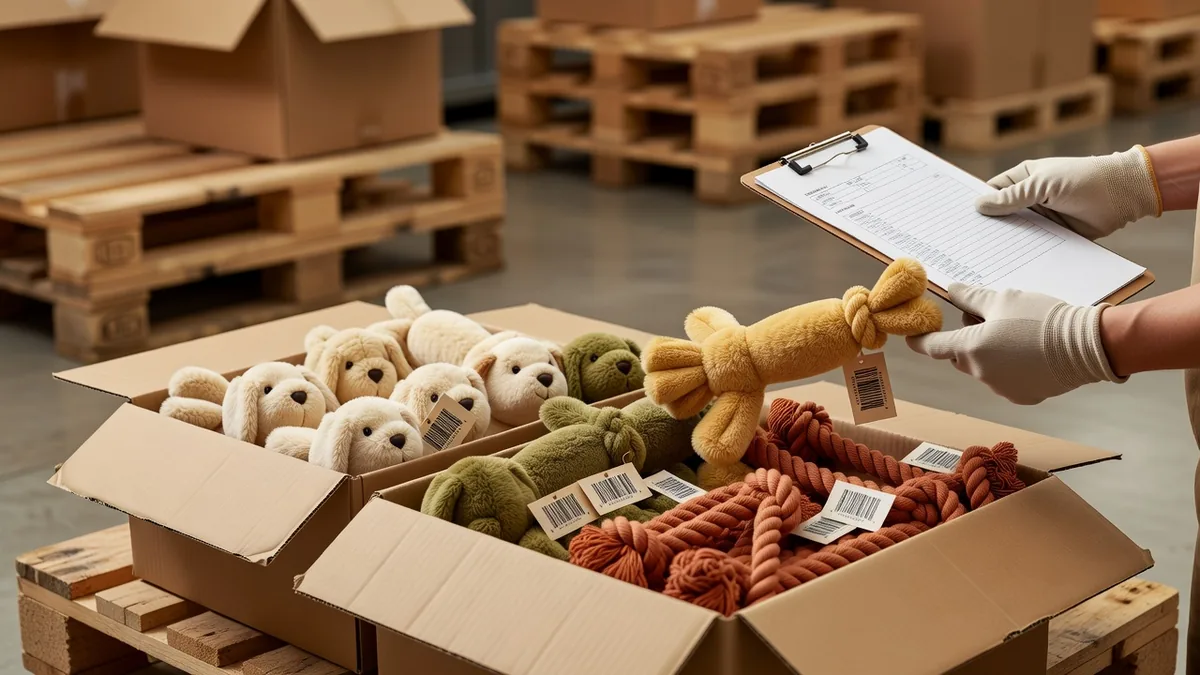
AQL is useful when both sides agree what a defect is. It is theater when the buyer shows up with vague “premium feel” language and the factory counts only broken units.
Practical pattern many brand buyers use on first China runs:
1. Freeze a written defect list with photos of acceptable vs reject examples
2. Agree critical / major / minor definitions before the PO ships
3. Pull a random carton sample at pre-shipment — not only cartons the factory pre-selects
4. Compare every pulled unit to the golden sample for color, weight, logo, and construction
5. Hold ship until rework and re-check clear, or until you accept a written concession
Even on a few hundred units, documenting AQL trains the factory early. On reorders, compare the new lot to the previous approved shipment, not only to memory.
For programs headed to US or EU retail, align lab timing with production so reports land before cargo booking. Our companion notes on pet toy certification and safety standards cover paperwork timing; this article stays on the plant floor gates that keep those papers honest.
Sampling timeline that leaves room for QC
A workable first engagement for pet toy quality control China looks like this:
1. Brief + material recommendation — factory flags high-risk parts early (unknown coatings, soft PVC if you ban it, glitter, battery modules)
2. Prototype — judge play feel and construction; do not burn the full lab budget on a shape you will change
3. Revision sample — lock Pantone, fill weight, Shore hardness, seam method, logo placement
4. Pre-production (golden) sample — this is the piece bulk must match, and ideally the piece that goes to the lab
5. Pilot / first bulk with in-line and final inspection — photo evidence at each gate; shared issue log for reorders
Budget freight both ways on samples. Cheap samples that skip durability and compliance often become expensive returns later. Share one decision owner on the buyer side. Conflicting revision threads from three stakeholders are a common way to miss a ship window.
Packaging QC buyers forget until returns start
Toys leave the factory looking right and arrive looking wrong when pack-out was never inspected.
Align early on:
- Inner polybag thickness, print, and warning language for target markets
- Hangtag and care-label placement vs marketplace listing photos
- Barcode readability and carton marks
- Master carton dimensions, drop expectations, and moisture protection for ocean freight
- Assortment accuracy when a carton mixes SKUs or colorways
If you sell on marketplaces, confirm that pack-out photos match the shipped unit. Inconsistent packaging is a frequent return driver on pet toys even when the product itself is fine.
Communication cadence that protects launch dates
Factory silence is a risk signal. Once the PO is live, agree on a weekly update: materials in, molding or sewing progress, QC photos, open issues, and ship window. For seasonal peaks (Q4 gifting, spring refresh), lock capacity earlier than feels comfortable. Pet retail calendars compress bandwidth across the same plants your competitors use.
Keep a shared defect log with photos, root cause, and corrective action. Reorders go smoother when last season’s ear-seam failure is already written into the next PO’s in-line checklist.
How WagNab runs QC with brand and wholesale partners
WagNab works with brand and wholesale buyers who need measurable gates, not slogan QC. Start from the live products range, map custom development through ODM, or brand packaging and cartons through private label. Teams evaluating pet toy quality control China usually send a short brief: target pet and play style, material preference, logo method, first-order quantity, destination market, and which defects are deal-breakers.
From there we propose a sample plan, incoming and in-line photo gates, and a pre-shipment check tied to the golden sample — before tooling money and dye lots lock you in.
Decision checklist before you release the PO
Use this before you commit cash:
- Spec sheet signed and versioned (not a WeChat screenshot)
- Golden sample approved in writing with photos
- Defect list and AQL agreed for critical / major / minor
- Incoming lot tracing required for fabric, yarn, or compound
- Packaging dieline and warning copy approved
- Lab timing aligned with cargo cut-off when your channel needs reports
- Incoterms, payment terms, lead time, and rework rules written into the PO
- One buyer-side decision owner named
If any of those items are still verbal-only, pause. Most post-shipment disputes on pet toys come from unwritten assumptions, not from bad intent.
When you are ready to talk MOQ, sampling, and a concrete QC gate plan, contact WagNab with your brief and target markets. We will respond with sampling options and a realistic inspection cadence for the construction you want to run.
Ready to Build Your Next Collection?
From material selection to final delivery, we help brands bring pet toys to market.