Pet Toy Testing Before the Plush Trial

This note stays on soft goods, because that is where a visual sample and a production lot drift apart fastest. Two open Studio Warmth pieces already have enough stored data to brief a first panel. Dinosaur is crystal plush and polyester, listed at 25 cm and 110 g, MOQ 120, dogs and cats. Duck and Cow is crystal plush only, duck 16×10 cm and cow 18×10 cm, listed at 120 g for the pair record, same MOQ, same pet types. Neither row stores a certification. A blank field is not a pass. Browse the rest of the line on the products catalog before you freeze a silhouette that has no weight or size on file.
The longer clause list for US and EU paperwork lives on the CPSIA, EN71, and REACH page, and a dog-chew version of abuse testing is already written as dog toy testing. Here the job is the plush conversation: seams, fill, eyes, color, and when a 120-piece trial is large enough to spare pieces for a lab.
What pet toy testing covers on a plush SKU
Buyers collapse three jobs into one sentence.
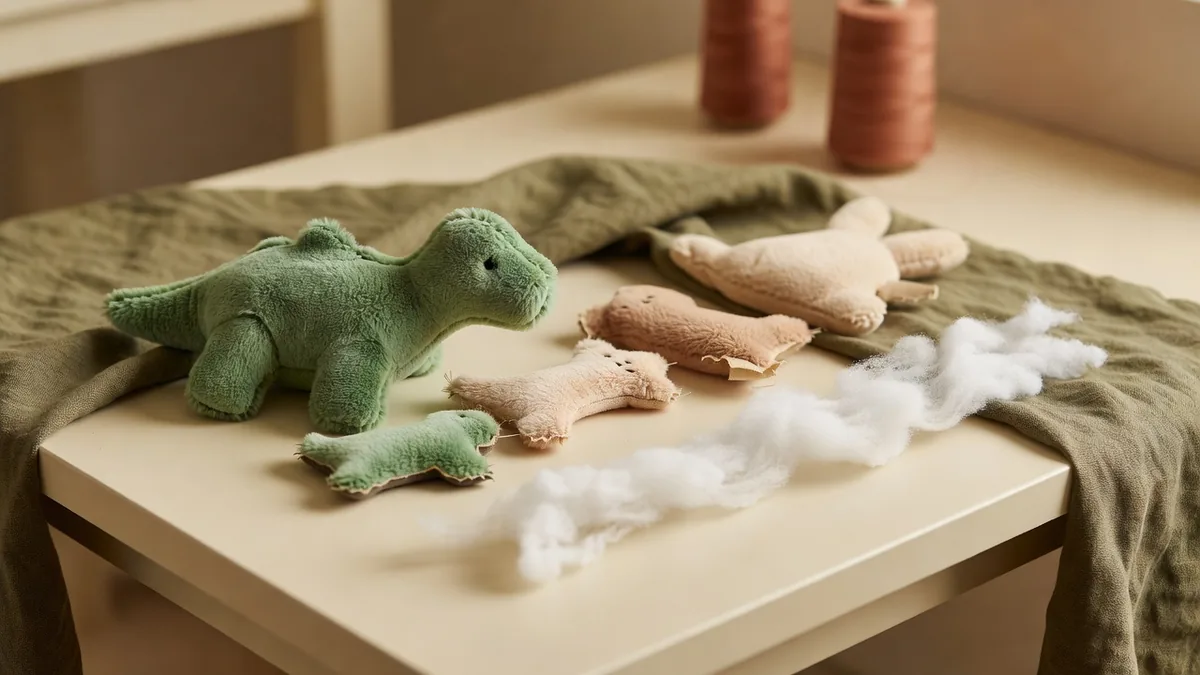
Desk checks on the sample you approved. Length against the recorded size, scale weight against the recorded grams, seam pull by hand on the stress points (neck, limb join, ear base), and whether any plastic eye, embroidered nose, or squeaker can be worked loose with fingers. This is not a lab method. It is how you catch a sample that was sewn tighter than the line will sew. Factory gates on the lot. Incoming face fabric and fill, an in-line look at stitch density, and a pre-shipment count of the defects you already named. Photo evidence of each gate is more useful than a stamp that says QC passed. A third-party report, only if someone asked for one. A retailer, a marketplace form, or your own insurer. Chemical screens and mechanical toy protocols are scoped to a market. They are not implied by the words "pet toy." Do not copy ppm limits or age grades into a PO because a blog listed them. Confirm the panel on the quote.A dog photo next to a plush is not any of the three. It is marketing.
Specs you can lock from the catalog, and what you cannot
Use recorded fields. Inventing the rest is how a test report describes a toy you do not sell.
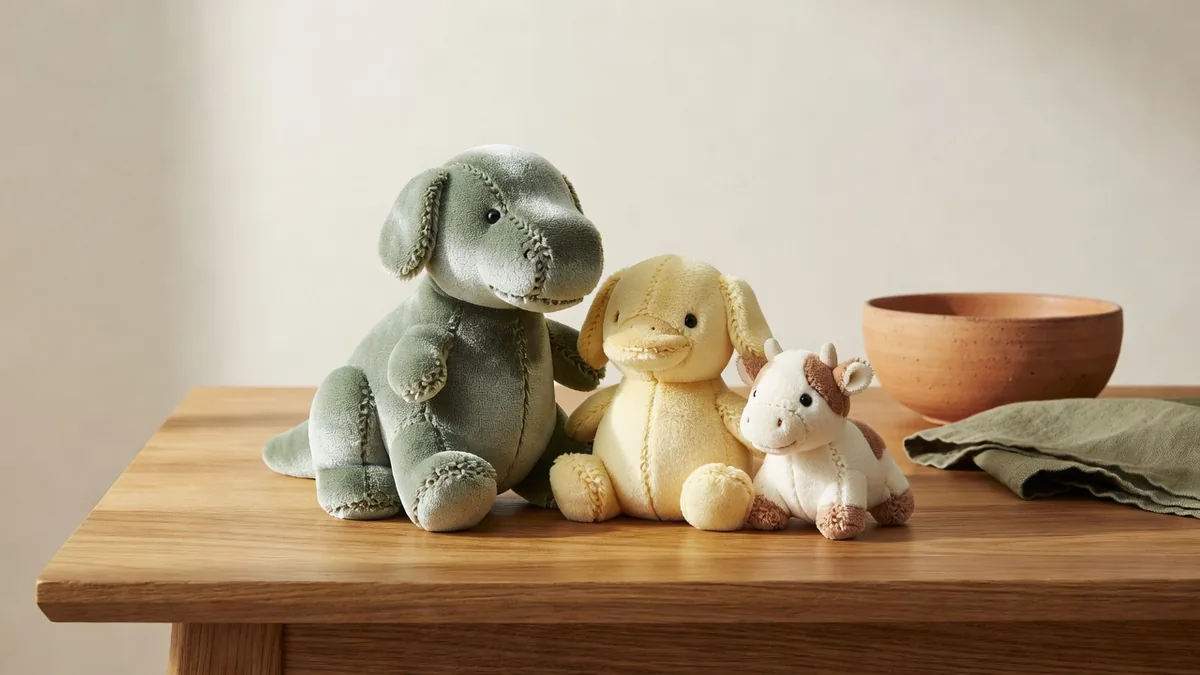
Dinosaur. Materials on file: crystal plush and polyester. Size: 25 cm. Weight: 110 g. MOQ: 120. Pet type: dogs and cats. Collection: Studio Warmth. Two materials means the lab form, if you book one, needs both the face fabric and the fill (and any polyester binding or lining the sample actually contains). One line that says "plush" is not a material list. Duck and Cow. Materials on file: crystal plush. Sizes: duck 16×10 cm, cow 18×10 cm. Weight: 120 g on the product record. MOQ: 120. Same pet types, same collection. Two bodies on one record is a sampling trap. If you only send the duck, the cow's seam length and any extra fabric at the larger body are untested. State which body is in the test, or send both and say the 120 g figure is the record weight, not a per-piece guarantee you measured yourself. What the records do not have. Certifications are empty on both. No stitch count per inch. No fill ratio. No eye or nose construction. No squeaker. No inner-pack count. Color chips are stored as hex values, which is a screen color, not a dyed lot. If your test cares about a specific green or a specific blue, approve a physical swatch. A hex code will not survive a dye lot argument.A third shape is worth naming only so the brief does not pretend every plush is crystal pile. Fox Elephant is crystal plush and plush, 32×14 cm, 98 g, MOQ 120, also Studio Warmth, dogs and cats, also with an empty certification field. It is a sister SKU for assortment, not a second test protocol. If the face fabric differs from Dinosaur, it does not inherit Dinosaur's result.
How a 120-piece trial should spare pieces for the bench
Catalog MOQ on these three is 120. That number is a sewing floor in the product record. It is not a test plan, and it does not say the lab pieces are free.
A first plush order that can actually be checked looks like this:
1. Pick one body as the golden sample. For a single-character program, Dinosaur at 25 cm / 110 g is the cleaner file because there is one size. For a pair, write "duck" or "cow" on the tag before anyone weighs it.
2. Pull 3 to 5 pieces from the same bundle as the bulk, not from a sample room that sewed them last month. Mark them. Weigh them. Measure the longest axis. If the scale is more than a small band off 110 g or 120 g, stop and ask whether fill weight changed. Do not publish a tolerance the factory did not agree to. Ask what band they sew to.
3. Abuse the ones you can spare: seam pull at neck and limb, twist on any plastic eye, squeeze for a squeaker you were not told about. If a part comes off in your hand, that part is a small-parts question for any market where a child can reach the toy. Say so in the notes. Do not invent a newton value.
4. If a retailer named a lab panel, book it on the same color and the same body. A new dye, a new eye, or a switch from crystal plush to a cheaper face fabric is a new sample. The old report does not follow the new bill of materials.
5. Put who pays for a fail and a retest in the PO. A 120-piece trial is too small to sit in a warehouse while two offices argue about a $ lab invoice.
Who runs the in-house abuse is a buyer decision. Some teams do it on a kitchen table. Some send the same retains to a lab that also runs the chemical panel. Either is fine if the piece is from the production bundle. A prettier sample from a showroom is not.
If the shape does not exist yet, this is no longer a catalog trial. A new pattern, a new eye, or a rope tail stitched onto a plush body is development. That path is ODM, and the test list should be written before the pattern is graded, not after 120 bodies are filled.
Private label is a material change, not a hangtag
Open colorways already in the file are the easier test, because you are checking the construction the factory already sews. A logo changes the file when it adds ink, a heat transfer, embroidery thread, or a plastic patch a tooth can lift.
That is the practical line on private label. A paper hangtag on the polybag is packaging. Embroidery through the crystal plush face is part of the toy. So is a printed belly patch. Ask for an addendum: base materials as stored (crystal plush, polyester, or plain plush) plus every decoration element and where it sits. If the addendum is blank, you do not have a test brief. You have a logo file.
Do not assume a 50-piece logo trial exists under the catalog MOQ. These rows say 120. A quote can say otherwise. Ask. If the decoration chemistry is new and a lab needs its own pieces, those pieces come out of the 120 or they are extra. Write which.
Color is the other quiet change. Dinosaur's stored colors and Duck and Cow's stored colors are not the same chips. Approving "the green from the other SKU" without a swatch is how two lots fail a side-by-side a buyer never requested. Pet toy testing for a colorway is a new swatch plus the same seam checks, not a sentence that says the shape already passed.
QC talking points that do not pretend to be a certificate
Keep the factory conversation on things a person can see on a table.
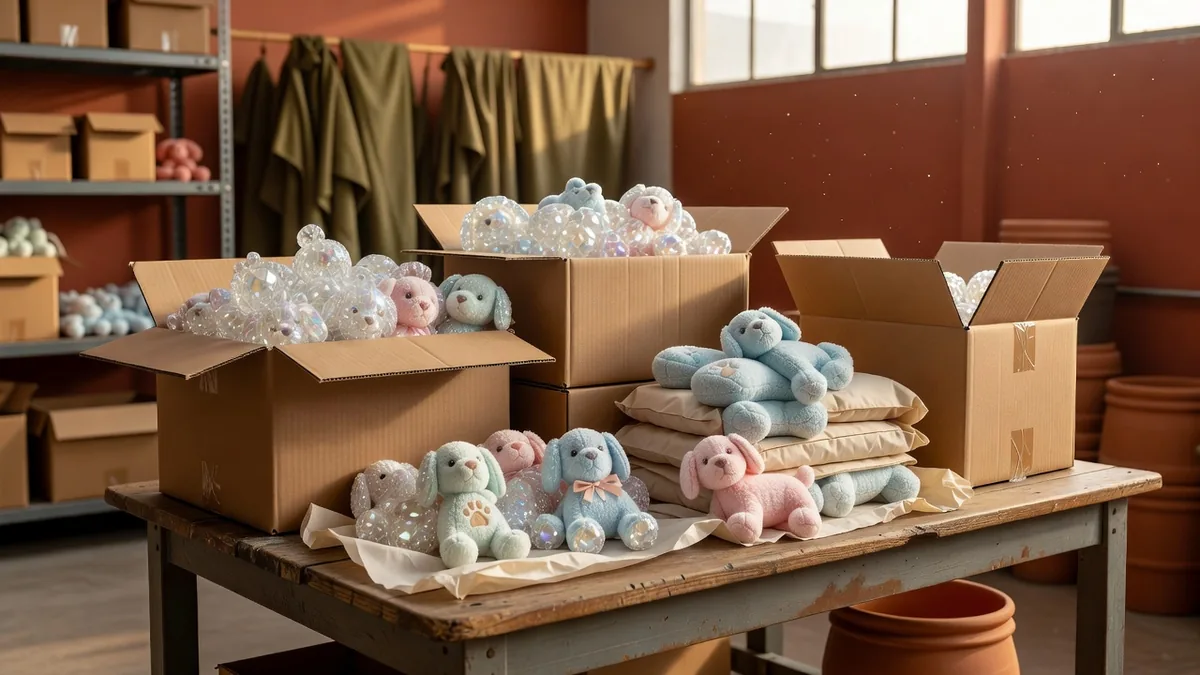
Seam ends should be backtacked where a neck or limb joins the body. Fill should not clump into one end after you shake the toy the way a carton shakes. Ears and tails that are only caught in a single stitch line are the parts that come back in return photos. Stuffing on the floor of the sewing line is a sign the weight band is whatever the operator grabbed.
For pre-shipment, agree a small defect list in normal words: open seam, exposed fill, missing eye, wrong size body in the pair, stained pile, carton short count. You do not need a novel AQL speech on a 120-piece trial. You need the factory to know which three defects you will reject the carton for. Photo the golden sample into the same email as the defect list so "like the sample" has a picture.
Packaging still causes returns after the toy itself is fine. Polybag, insert card, and warning copy are not tested by a seam pull. If the marketplace listing shows a hangtag you did not order, fix the listing or fix the pack-out before the carton is sealed. Contact Wagnab with the SKU, the destination market, and whether you need lab paperwork or only a production check. We will quote the make and tell you what the product record does not already prove.
Leave these out of the PO: a claim that the SKU is CPSIA, EN71, or REACH compliant because a sister product was tested; a durability grade ("strong chewer") the catalog does not store; a fill composition beyond the material names on file; any lab number you have not seen.
What to send when you ask for the test
A short brief beats a mood board.
- SKU name and the size you will ship (Dinosaur 25 cm, or duck versus cow)
- Recorded weight, and a request for the fill band they actually sew
- Materials copied from the record, plus eyes, noses, squeakers, thread, and prints the record does not store
- Whether the check is in-house abuse only, or a named lab panel for a named market
- How many pieces you will pull from the 120, and who pays a retest
- A sentence that certifications on these SKUs are empty until a report exists
If you are comparing a soft gift toy with a chew, do not run them through one protocol. A TPR bone and a crystal plush dinosaur fail in different ways. The plush fails at the seam and the eye. The chew fails at a bite-through or a chemical screen on the compound. Mixing the reports makes both files useless.
FAQ
Does MOQ 120 include lab samples?The catalog number is a production minimum, not a test quote. Ask whether retains come out of the 120 or sit on top. Get the answer on the quotation, not after the goods are cut.
Can one report cover Duck and Cow plus Dinosaur?Only if the lab's product description lists each body, each size, and each material, and you actually submitted those bodies. A report that says "plush dog toy" covers whatever piece was in the bag. Crystal plush plus polyester is not the same bill of materials as crystal plush alone.
The certification field is empty. Is the toy unsafe?Empty means the database has no report. It does not mean a fail, and it does not mean a pass. Pet toy testing starts by admitting that, then scoping the check you are willing to pay for.
Should a child-toy age grade go on a dog plush?Only if you are selling it as a toy for children and your retailer named that protocol. Borrowing a 0–3 label to look stricter creates obligations you may not want. Confirm the grade on quote if a buyer form forces the question.
Ready to Build Your Next Collection?
From material selection to final delivery, we help brands bring pet toys to market.