Rubber Dog Balls Wholesale: Specs, MOQ, Bounce QC for Buyers

You will get a practical RFQ brief, hardness and size choices that actually affect play, how wholesale MOQ and sampling tend to work, QC checks that catch soft-fail units before pack-out, and when stock cores should give way to ODM or private label. For adjacent rubber shapes (bones, rings, hybrids), see our rubber dog toy manufacturer guide. For live SKU direction, skim the products catalog.
Who buys rubber dog balls wholesale (and what they need)

Wholesale buyers rarely want “a ball.” They want a repeatable construction:
- Solid or thick-wall fetch balls for medium chewers
- Hollow bounce balls with a defined wall map
- Treat-dispensing or slot balls (more failure modes—start after a simple body ships clean)
- Soft puppy lines vs power-chewer Shore windows
- Color assortments for retail pegs or FBA variety packs
Distributors care about mixed master cartons, hangtag uniformity, and reorder lead time. Brand buyers care about Pantone lock, logo method (emboss vs pad print), and odor after 48 hours of airing. If your first email says only “rubber balls, cheapest,” most factories will quote a soft compound that photographs fine and fails in the field.
Say early whether you sell US Amazon FBA, EU indie pet shops, or big-box retail. Channel changes warning copy, barcode placement, and how picky QC must be on flash and weight variance.
Spec checklist before you RFQ rubber dog balls
Factories quote what you write down. Attach a one-page brief and keep it versioned.
Body and play- Style: solid, hollow, slotted treat, dual-texture surface
- Finished diameter in mm (and weight target if hollow)
- Wall thickness map if hollow (thin spots tear first)
- Target dog size band and play style (fetch, chew, supervised only)
- Shore A hardness window (example: 50–60A soft play, 65–75A firmer chew)—not just “medium”
- Bounce expectation: drop-test height and “dead ball” reject rule
- Base: TPR, natural rubber, or named blend—ask what is actually in the mix
- Color: Pantone or physical chip; matte vs glossy
- Odor: bulk should not smell like a warehouse of solvents after airing
- Surface: sticky soft compounds pick up lint and look dirty on shelf photos
- Destination: US (CPSIA-oriented chemical screens), EU (REACH where retail treats it as a toy)
- Small-parts risk if multi-piece inserts or loose cores
- Warning copy: supervised play, inspect for damage, discard when torn
- No invented certificates—plan lab timing to the markets you sell
- Logo: in-mold emboss, pad print, hangtag only
- Polybag, header card, UPC/EAN placement
- Inner pack count and master carton dims
- Mixed-color packing rules if you ship assortment cartons
A clean brief cuts sample rounds. Vague briefs create pretty first samples and ugly third reorders.
Hardness, size, and bounce: what wholesale buyers get wrong
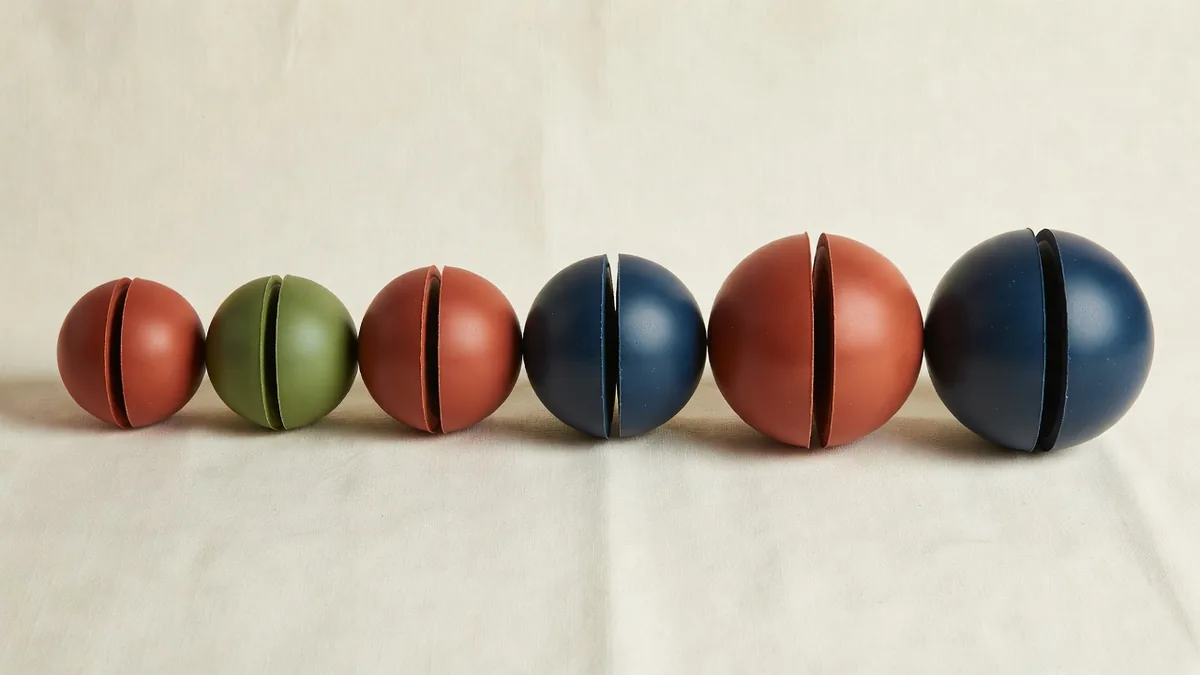
Price per piece is easy to compare. Shore window and diameter are where programs quietly die.
Too soft. Soft TPR feels friendly in the hand and photographs well. Under real jaws it develops tooth tracks, then tears. Soft balls also oval in warm shipping containers, so FBA units arrive looking used. Too hard. Hard compounds survive chewing but some dogs lose interest, and hard edges can stress gums if the surface is poorly finished. Spec a range with your vet or trainer partners if you sell into sensitive channels. Size without dog band. A 60 mm ball that works for a 15 kg mixed breed can be a choke risk for smaller dogs or a boredom toy for large power chewers. Put dog weight bands on the hangtag and in the RFQ—not only in marketing copy. Bounce without a reject rule. “Good bounce” is meaningless unless you define a drop height, floor type, and minimum rebound. Ask the factory to video the same test on the pre-production sample and on the bulk lot you inspect.If you already run plush or rope lines, do not assume the same plant’s rubber desk uses the same QC culture. Ask who owns the mold shop and who owns compound records.
MOQ, molds, and cost reality for rubber dog balls wholesale
Stock-core balls (existing cavities, standard colors) usually start with lower MOQ than a new mold. New cavities add tooling cost and longer first-sample lead time. Quotes should separate:
1. Tooling / mold amortization (if any)
2. Piece FOB at your target volume tiers
3. Color change fees and minimum per color
4. Logo method cost (emboss vs print)
5. Packing upgrades (color box vs polybag)
Do not invent a “standard MOQ” number in your own docs unless the factory wrote it on a quote. Ask for tiers: trial, first reorder, and steady monthly. Many buyers place a small trial, then choke when reorder MOQ jumps without a written plan.
For brand-owned graphics and exclusive colorways, compare private label paths against full custom under ODM services before you spend mold money. Catalog-adjacent bodies from the products line often get you to market faster when the shape is already proven.
Sampling timeline that protects launch dates
A typical rubber dog balls wholesale engagement looks like this in practice:
1. Brief review and compound recommendation (a few business days)
2. First sample from stock tool or soft tool (often 1–3 weeks depending on cavity work)
3. Buyer feedback: hardness, odor after airing, bounce video, logo placement
4. Pre-production sample locked against the PO (measure, weigh, photograph)
5. Bulk with in-line and final inspection
Budget freight both ways on samples and lab fees if your market needs them. Cheap samples that skip odor and bounce checks become expensive returns later.
Share one decision owner on your side. Three stakeholders emailing conflicting Shore targets is the fastest way to miss a seasonal window.
QC gates that catch soft-fail rubber balls
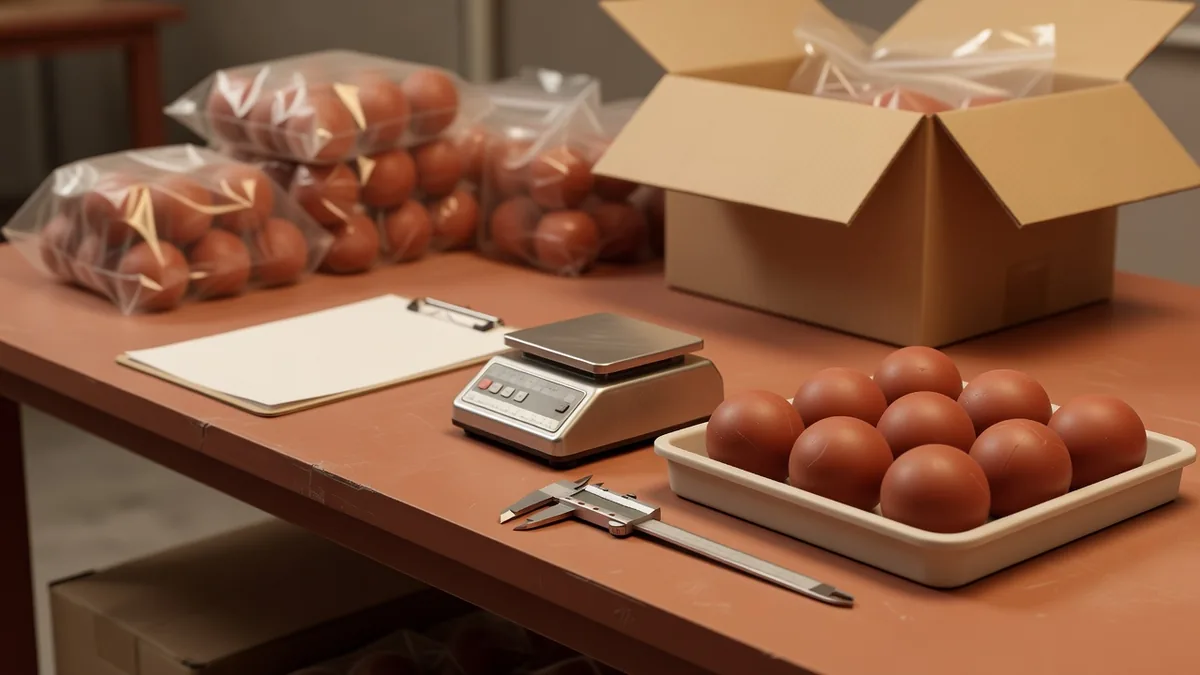
Insist on checks that map to how balls fail:
- Incoming compound: hardness window logged per batch, not “looks soft”
- In-line: flash trim, seam cleanup, weight variance on hollow SKUs
- Bounce / deformation: same drop test as the approved sample
- Odor panel: air and sniff after 24–48 hours; reject chemical warehouse smell
- Color: wet-wipe and saliva-proxy if you claim color-safe play
- Pre-shipment: AQL on appearance + functional sample pull from sealed cartons
Ask for photo or short video evidence of each gate on the first production run. Keep a shared issue log so the same flash line does not reappear on reorder.
For US or EU retail, align lab timing with production so reports exist before cargo booking—not after the container is sealed. Do not claim certifications you have not ordered.
Packaging and FBA / retail pack-out
Wholesale margin disappears when packaging is an afterthought:
- Inner polybag thickness and print that survives humidity
- Hangtags and warning language for the destination market
- Master carton drop expectations and compression
- Assortment rules so “6-color mix” is not random leftovers
- Pack-out photos that match what FBA or retail receiving will open
Inconsistent packaging is a top reason for marketplace returns on pet toys. Lock the dieline with the pre-production sample, then treat pack changes as a revision—not a free add-on at ship week.
Red flags when evaluating rubber dog balls wholesale suppliers
Walk away (or slow way down) if you see:
- Quotes with no Shore range, no wall map, and no odor discussion
- “We can do anything” with no mold shop ownership story
- Samples that smell sharp and never get re-aired before approval
- Refusal to video bounce or weight checks on bulk
- Certificates promised after sailing
- Mid-PO material swaps without a new cost sheet and new sample
A trading desk that shops your PO after deposit can still deliver a nice first carton. Reorder consistency is the real test.
How WagNab fits rubber and hybrid programs
WagNab works with brand and wholesale partners on pet toys across rubber, plush, and rope constructions—sampling through bulk. Browse current directions on the products catalog, custom development on ODM, and brand white-label on private label.
Teams shopping rubber dog balls wholesale usually start with a short brief: diameter and Shore window, solid vs hollow, logo method, first-order quantity, and destination market. From there we map a sample plan and flag compliance needs before tooling money is spent.
Decision checklist before you place the PO
- Spec sheet signed and versioned (diameter, Shore, wall map)
- Sample approved in writing with photos, weight, and bounce video
- QC plan and AQL agreed
- Packaging dieline approved
- Incoterms, payment terms, and lead time on the PO
- Lab timing booked if your markets require it
- Contingency for one revision cycle without killing the launch window
If any of those are still verbal-only, pause. Most post-shipment fights on rubber balls come from unwritten assumptions about hardness and bounce—not from bad intent.
When you are ready to talk MOQ and sampling for rubber dog balls wholesale, contact WagNab with your brief and target markets. Share diameter, Shore range, and channel (FBA, retail, distributor) so the first reply can be a real plan instead of a generic catalog dump.
Ready to Build Your Next Collection?
From material selection to final delivery, we help brands bring pet toys to market.