Sourcing Pet Toys from China: Vet Manufacturers & MOQ

The global pet toy market is booming, driven by humanization trends and a growing awareness of pet enrichment. For brand owners, Amazon FBA sellers, and retailers in the US and EU, sourcing pet products from China offers a powerful combination of cost efficiency, vast material selection, and manufacturing expertise. However, navigating the landscape of overseas production can be daunting. This comprehensive guide covers everything you need to know—from identifying a trustworthy pet toy manufacturer in China to ensuring your wholesale pet toys arrive safely and compliantly.
1. Why Source Pet Toys from China
China remains the world’s largest exporter of pet products for good reason. Decades of investment in manufacturing infrastructure have created an ecosystem where virtually any type of pet toy can be produced at scale. Here are the main advantages:
- Cost-Effectiveness: Lower labor and raw material costs translate into competitive pricing, allowing you to maintain healthy profit margins.
- Material and Craftsmanship Diversity: Whether you need natural rubber, organic cotton, eco-friendly jute, or dense plush, Chinese factories have specialized workshops for each.
- Customization Capabilities: The rise of OEM pet products means you are not limited to off-the-shelf designs. You can create custom pet toys that perfectly match your brand’s aesthetic and functional requirements.
- Scalability: Many manufacturers can handle small trial orders just as comfortably as large-scale production runs.
- Proven Expertise: Most international pet brands already manufacture in China. The supply chain is mature, with factories closely familiar with US and EU market demands.
By sourcing private label pet toys from China, you can differentiate your product line while enjoying the economies of scale that mass production provides.
2. What to Look for in a Pet Toy Manufacturer
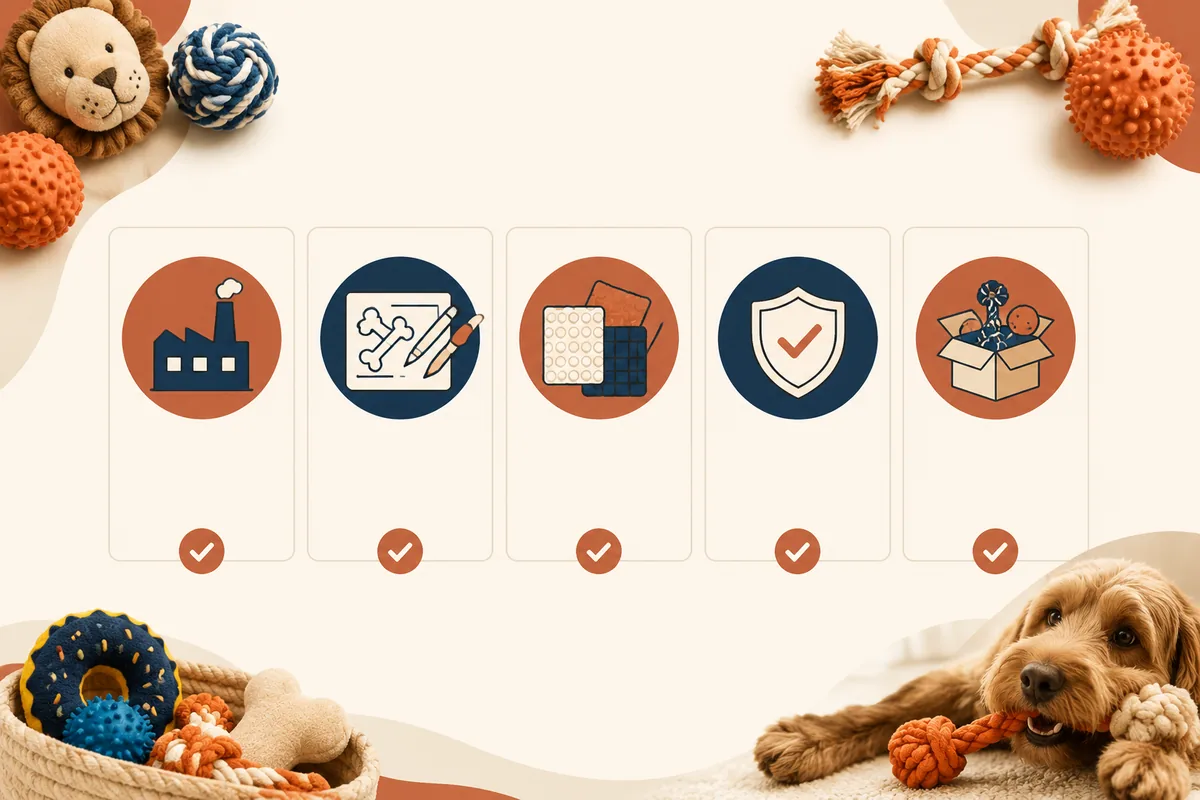
Choosing the right factory is the single most important decision you will make. Not all pet toy manufacturers in China are created equal, so here are the key criteria to evaluate:
- Relevant Industry Experience: Seek a factory that has been producing pet toys for at least five years. Ask for a portfolio of past custom pet toys and client references.
- In-House Design and R&D: A manufacturer with its own design team can help transform your sketches or ideas into safe, functional products. This is crucial if you want fully OEM pet products rather than simply slapping your logo on a generic item.
- Material Expertise: The factory should demonstrate deep knowledge of materials—such as food-grade silicone, safe nylon, non-toxic dyes, and stuffing that complies with flammability standards.
- Certifications and Compliance: Look for facilities that hold relevant certifications (ISO 9001, BSCI, SEDEX) and can produce to specific safety standards. We’ll discuss compliance in detail later.
- Clear Communication: Your contact person should speak fluent English and be responsive. Miscommunication can lead to costly mistakes in sampling, packaging, or labeling.
- Sample Policy: A reputable supplier will eagerly provide samples (even if at a cost that is refundable upon order). Refusal to provide samples is a major red flag.
3. Quality Control Checklist for Pet Toys
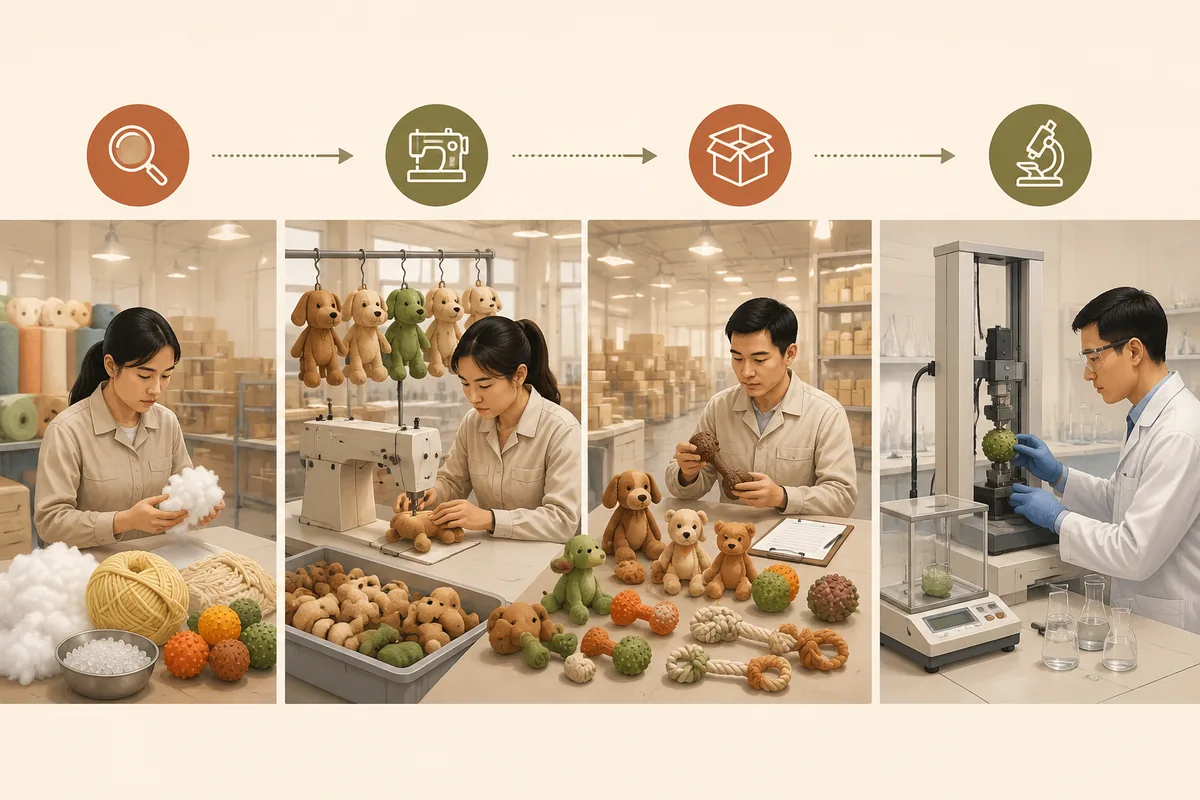
Robust quality control processes for pet toys are non-negotiable. Defective or unsafe toys can harm pets, trigger lawsuits, and destroy your brand’s reputation. Make sure your manufacturer implements a multi-stage QC system:
Pre-Production Inspection:- Raw material certificates (e.g., FDA for food-contact, REACH for chemicals).
- Incoming material color, density, and odor checks.
- Verification of labeling components (barcodes, legal warnings).
- Stitching strength and seam integrity.
- Component attachment (e.g., squeakers, eyes, ropes) tested to specified pull-force standards.
- Weight and dimension consistency.
- Functional tests: squeaker operation, bounce, flotation, durability under simulated chewing.
- Visual defects: stains, discolored fabrics, misaligned prints.
- Packaging and labeling accuracy, including country of origin and safety standards.
4. Red Flags to Avoid When Choosing a Supplier
The marketplace for wholesale pet toys is vast, but it’s also full of pitfalls. Protect your business by watching out for these warning signs:
- Unwillingness to Provide a Factory Tour (Virtual or In-Person): In today’s connected world, a video call showing the production line is a minimum requirement. If they always have an excuse, walk away.
- Vague or Inconsistent Pricing: If quotes fluctuate wildly without explanation, the supplier may be a middleman with no real control over production costs.
- No Quality Control Documentation: A factory that says “trust me, quality is good” without showing checklists, reports, or test certificates is not a serious partner.
- Very Low MOQ with Suspiciously Low Prices: While a low MOQ pet toy manufacturer is attractive, prices that are 50% below market average often indicate substandard materials or illegal labor practices.
- Poor Online Presence or No Verifiable Business License: Always ask for the company’s business license and cross-check it on official Chinese databases or through a trade platform.
- High-Pressure Sales Tactics: Legitimate manufacturers focus on building long-term relationships, not rushing you into a deposit for a “limited-time deal.”
5. How to Verify a Chinese Manufacturer
Verifying a pet toys manufacturer China is not just about avoiding scams; it’s about confirming production capacity and ethical standards. Use a combination of these methods:
- Document Verification: Request their business license, export license, and any industry certificates. Check the registered scope of business: it should specifically mention pet products or toys.
- Third-Party Audits: Companies like SGS, Bureau Veritas, and QIMA offer factory audits that cover structural integrity, worker conditions, and production capability.
- Virtual Factory Tour: A guided video call through all departments (materials warehouse, cutting, sewing, packaging, QC lab) reveals the real state of operations. Look for organization, cleanliness, and visible safety gear.
- Sample Development: The way a factory handles your first sample tells you a lot. Do they ask intelligent questions? Do they deliver on time? High-quality samples suggest a thorough production team.
- Trade References: Ask for contact information of two or three current clients in your target market. A short email or phone call can provide invaluable insight into reliability and after-sales support.
6. MOQ, Pricing, and Lead Times
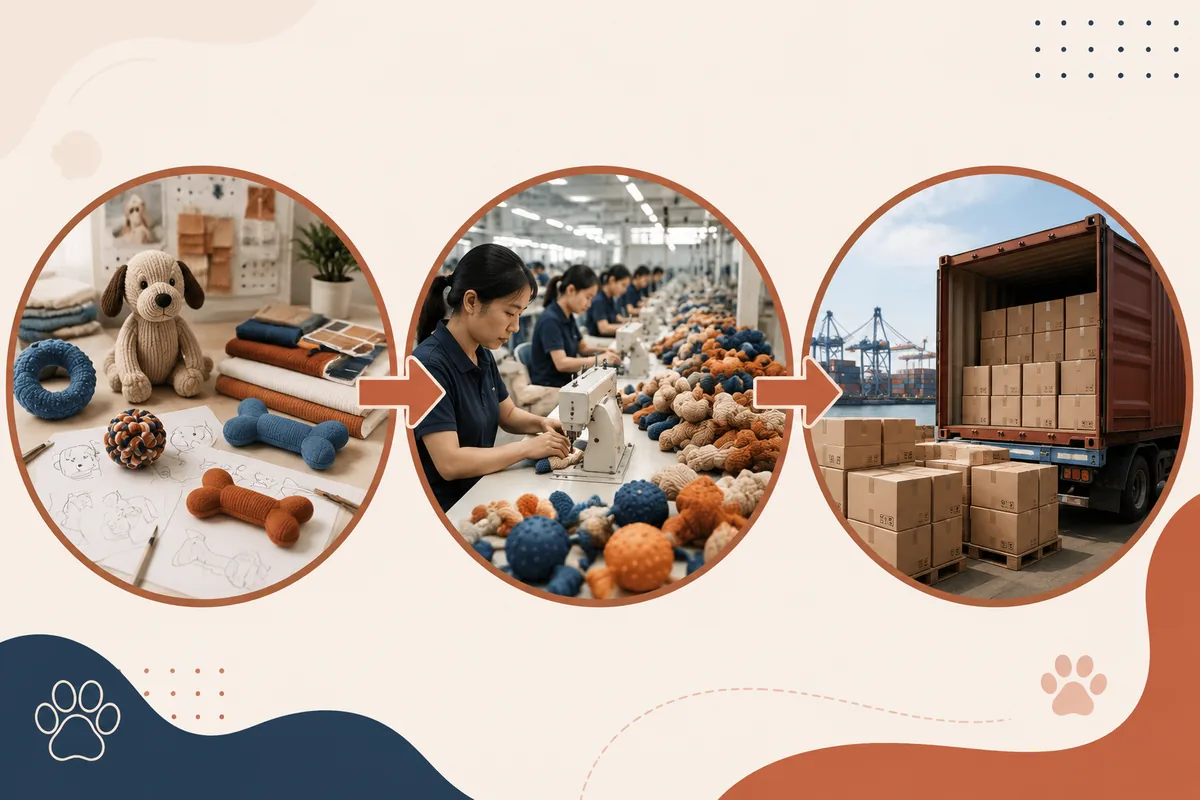
Understanding the dynamics of minimum order quantities (MOQ), pricing, and timing is essential for cash flow and inventory planning.
- MOQ (Minimum Order Quantity): Traditional factories may demand 1,000–3,000 units per design, which can be prohibitive for startups. However, many modern manufacturers, including WagNab, position themselves as a low MOQ pet toy manufacturer, offering MOQs as low as 200–500 units for custom designs. For stock toys sold as private label, MOQs might be even lower, but per-unit cost decreases significantly with volume.
- Pricing Structure: Costs depend on material (rubber vs. plush), complexity (number of components, printing techniques), and packaging. Always request a detailed BOM (Bill of Materials) to understand where your money is going. Don’t forget to budget for sample fees, mold fees (if applicable), and testing.
- Lead Times: A typical timeline looks like this:
- Sample development: 7–15 days (excluding shipping).
- Order confirmation and material procurement: 5–10 days.
- Mass production: 20–45 days, depending on complexity and factory schedule.
- Always add buffer time for shipping and unexpected delays, especially around Chinese New Year.
- Payment Terms: Standard terms are 30% deposit to start production and 70% balance before shipment (or against a copy of shipping documents). Letters of credit are possible for large orders.
7. Shipping, Customs, and Compliance
Shipping private label pet toys from China to the US or EU involves several key steps:
- Incoterms: FOB (Free on Board) is most common. The manufacturer is responsible for getting goods to the port and handling export clearance. You then assume responsibility for freight, insurance, and import clearance. For a door-to-door experience, consider DDP (Delivered Duty Paid), though it is more expensive.
- Shipping Methods: Sea freight (LCL or FCL) is most economical for orders over 1 CBM and takes 25–40 days. Air freight is faster (5–10 days) but significantly costlier. Express couriers (DHL, FedEx) are ideal for samples or small urgent shipments.
- Customs Clearance: You must provide commercial invoices, packing lists, and a Bill of Lading/Air Waybill. Correct HS codes are vital. For the US, pet toys often fall under 4201.00 or 9503.00, but verify with your customs broker.
- Compliance Documentation: For the US, if your toy could be confused with a children’s toy, you may need a Children’s Product Certificate (CPC). Always include lab test reports. For the EU, a Declaration of Conformity and CE marking may be required. Labels must include importer information, country of origin, and care instructions.
- Duties and Taxes: Tariffs vary by material and trade agreements. As of 2024, many pet toys from China to the US are subject to Section 301 tariffs, so factor these into your landed cost calculations.
8. Why Choose WagNab as Your OEM Partner
When sourcing pet products from China, you deserve a partner that combines manufacturing excellence with a customer-first approach. WagNab is a premium OEM/ODM pet products manufacturer dedicated to helping brands succeed.
Here’s what sets WagNab apart:
- Extensive R&D Support: Our design team works directly with you to turn concepts into market-ready custom pet toys, offering guidance on materials, shape, and safety.
- Low MOQ Flexibility: We understand the needs of growing brands and offer low MOQ options, enabling you to test new products without overcommitting capital.
- Uncompromising Quality Control: Every order undergoes our strict QC protocol, from inline inspections to final random sampling. We only use certified, non-toxic materials that meet CPSIA, REACH, and EN71 standards.
- Transparent Pricing & Timelines: You will always receive a clear breakdown of costs, and we proactively communicate any delays or updates.
- Global Logistics Support: We have deep experience shipping to Amazon FBA warehouses, retail distribution centers, and directly to consumers. We handle all export documentation and can coordinate with your freight forwarder seamlessly.
- Long-Term Partnership Mentality: We invest in your brand’s growth. Whether you are just launching your first product or expanding a successful line, WagNab provides the reliability and innovation you need.
Conclusion
Sourcing custom, OEM, or private label pet toys from China can unlock tremendous value for your business—if you approach it with proper due diligence. By knowing what to look for in a manufacturer, implementing rigorous quality control pet toys protocols, and understanding the logistics of shipping and compliance, you can build a product line that delights pets and pet parents alike.
Don’t leave your brand’s reputation to chance. Partner with a proven, quality-driven manufacturer that understands the unique demands of the US and EU markets.
Request your free quote from WagNab today. Let’s bring your next best-selling pet toy to life.Next Step for Buyers
Explore wholesale pet toy catalog, ODM pet toy development, private label pet toys, and request a quote to continue your wholesale evaluation.
When you shortlist factories, ask for samples of known shapes first—for example a Rubber Grip Toy and a Woodland Rope Set—so QC and freight math sit on real units, not catalog sketches.
Related reading
After the general import map, specialize with pet toy manufacturer for ecommerce brands and the compliance deep-dive on CPSIA EN71 REACH.
Ready to Build Your Next Collection?
From material selection to final delivery, we help brands bring pet toys to market.