Pet Toy Manufacturer for Ecommerce Brands: How to Choose

If you run an Amazon brand, a Shopify store, or a multi-channel pet shop online, you are not looking for a factory that "can make toys." You need a pet toy manufacturer for ecommerce brands that understands listing photos, FBA carton rules, return rates, and the gap between a sample that looks good on a desk and a 2,000-piece lot that still matches those photos three months later.
This guide is for buyers who already sell or are about to launch pet toys online. It covers how manufacturer selection changes when your customer is a click away from a one-star review, not a shopper standing in a retail aisle.
Why ecommerce brands need a different factory conversation
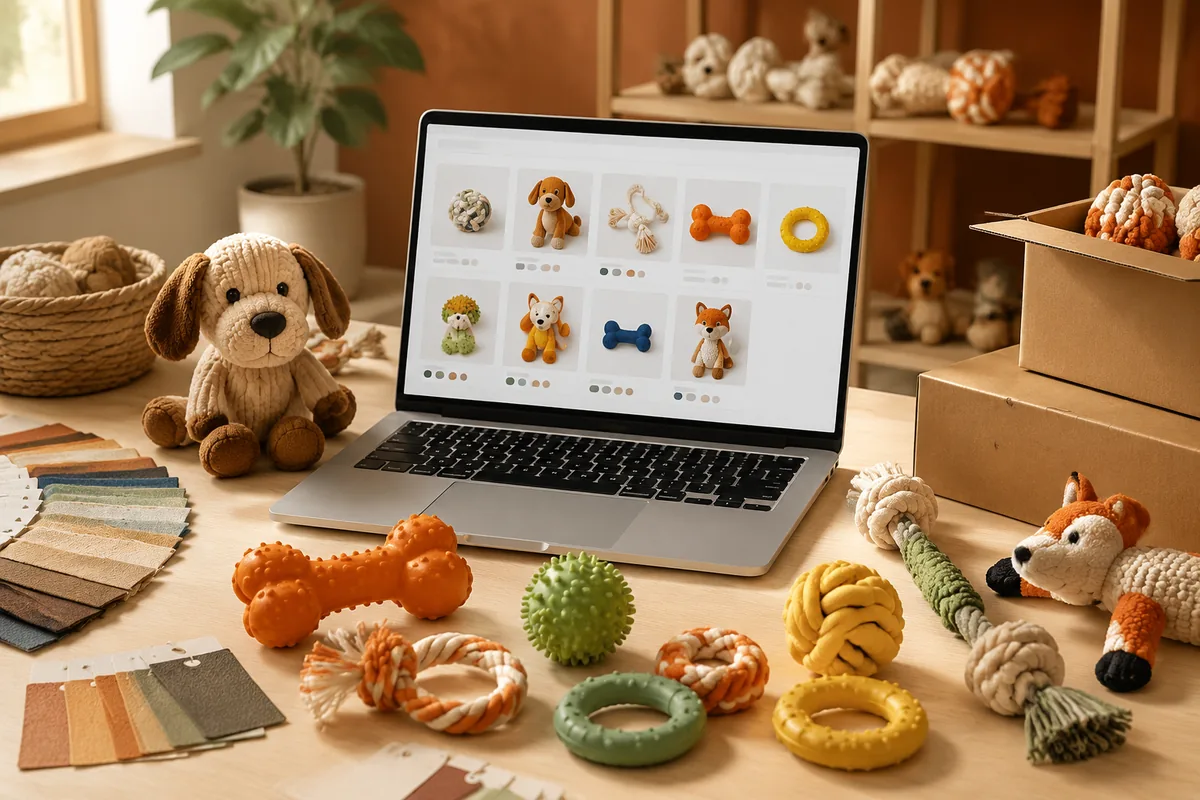
Brick-and-mortar suppliers optimize for shelf fill and wholesale packs. Online sellers optimize for something messier: ad creative, size charts, "as shown" claims, and the return email that says the color was wrong.
A solid ecommerce-ready partner usually does four things without drama:
1. Holds color and size across reorders so your main images stay honest.
2. Ships samples you can photograph and still re-order six months later.
3. Packs for marketplace logistics (poly bags, barcodes, carton marks, mixed SKUs when you need them).
4. Documents materials and safety so you are not inventing claims for A+ content.
If a factory only talks MOQ and unit price, keep shopping. Price matters, but returns and chargebacks cost more than a 12% unit gap.
Browse shapes that already exist in production on the products catalog. Catalog-adjacent bodies often get you to market faster than a fully new tool.
Match manufacturer type to your channel mix
Not every "OEM factory" fits every store model.
| Your model | What you need from the plant | Typical first order band |
|---|---|---|
| Amazon / marketplace private label | Color-lot control, barcode discipline, photo-true samples | 300–1,000+ pcs per colorway once images lock |
| Shopify / DTC brand | Stronger design input, packaging that unboxes well, smaller SKU counts | 200–600 pcs per hero SKU to start |
| Multi-channel (own site + marketplaces) | One SKU system, dual pack-out options, clear re-order MOQ | Hero SKUs higher; variants lower |
| Whitelabel reseller | Near-stock programs, hangtags, quick logo swap | Lower MOQ, limited exclusive color |
If you are still validating demand, push for near-stock bodies with your label and hangtag first. Full custom molds and exclusive fabric dyes make sense after a SKU proves itself. For white-label and brand-build paths side by side, see private label and ODM development.
What to put in the RFQ (ecommerce version)
Factories quote what you write. Vague briefs produce pretty samples and ugly reorders.
Product and listing truth
- SKU name as it will appear on the listing (not only internal codes)
- Target species and dog/cat size band with finished mm dimensions
- Material stack: plush pile, fill density, TPR Shore, rope fiber, squeaker yes/no
- What the listing will claim: "tough chew," "soft for puppies," "machine washable," "eco cotton"—only claim what you will test
Visual and pack
- Reference photos or competitor URLs (for intent, not for copying protected IP)
- Pantone or physical swatch for main colors
- Packaging: poly bag only, window box, kraft mailer, multipack
- Barcode type, insert cards, care labels, country of origin placement
Ops
- Destination: FBA, 3PL, or your warehouse
- Carton mark rules and mixed-SKU tolerance
- Target ship window and sample lead time in calendar days
- QC standard (AQL, pull tests, color check method)
Send this as one document. Chat threads alone create "I thought you meant..." moments.
Sampling for listings, not for the desk
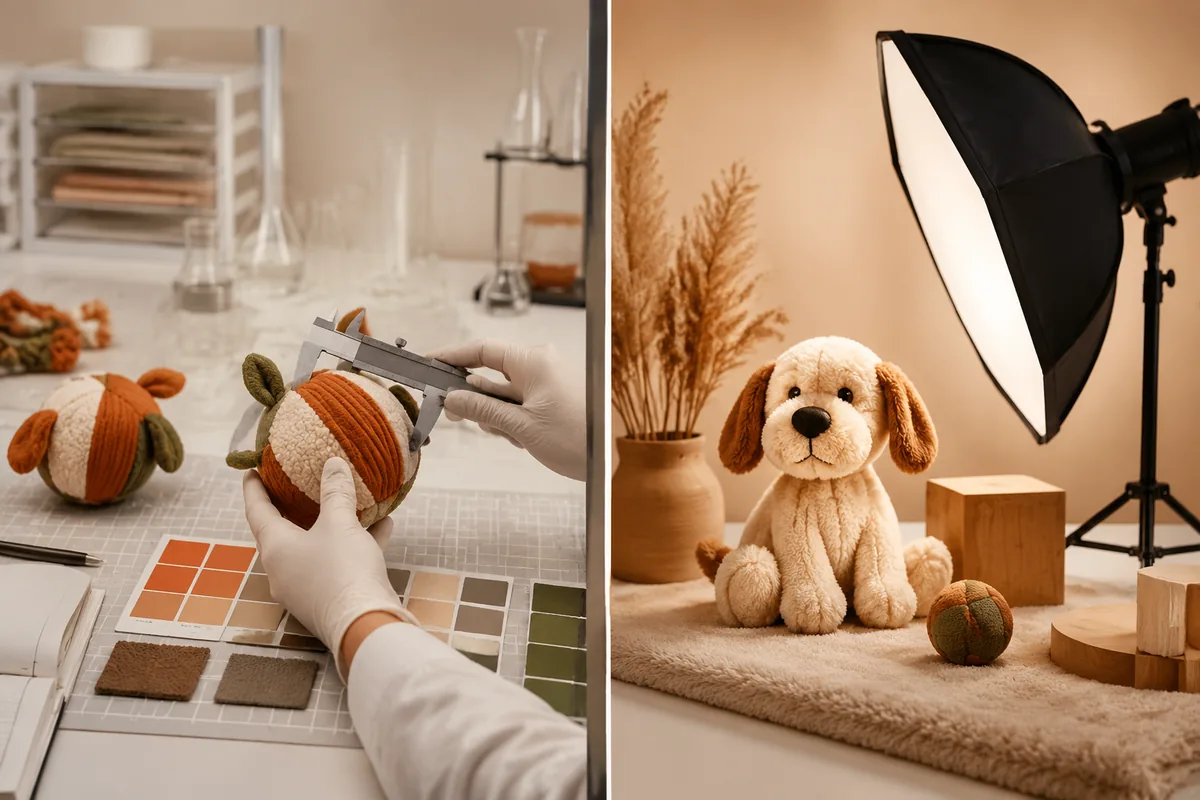
Ecommerce sampling has one job: freeze the product you will photograph and sell.
Gold sample process that actually works online:1. Proto sample — shape and function. Reject early if scale or chew feel is wrong.
2. Photo sample — same materials as production, correct color, correct hangtag/pack. Shoot main + lifestyle from this unit.
3. PP / pre-production sample — signed off before bulk. Keep one sealed unit in your office as the re-order reference.
4. Production sample from the lot — pull from the first carton when goods arrive; compare to the sealed gold sample under the same light you used for photos.
Ask the manufacturer to label every sample with date, material lot, and color code. When a customer says "mine is darker," you need a paper trail, not a memory.
If you need full custom development (new shape, new hybrid material), walk the ODM process with written milestones instead of open-ended "we'll tweak it."
MOQ, inventory risk, and SKU math
Online brands die from cash stuck in slow colors, not from missing one SKU.
Practical patterns we see with ecommerce pet toy programs:
- Hero + variants. One proven body in 2–3 colors beats six unproven shapes.
- Color MOQ vs style MOQ. Dye lots and embroidery setups often set the floor more than the sewing line does.
- Re-order floors. Confirm the re-order MOQ in writing. A first order of 500 that becomes 2,000 next time changes your ads plan.
- Mixed cartons. Useful for test kits and wholesale hybrids; painful for pure FBA if labels and packing lists are sloppy.
Low MOQ is only useful if re-orders stay available at a sane floor. A plant that does 100 pcs once and ghosts you at 800 is not an ecommerce partner.
QC that protects reviews and ads
Listing claims create legal and reputation risk. Align QC with what customers see.
Must-check items for online sellers:- Dimensions within agreed tolerance (size charts live on the PDP)
- Color match under D65 or agreed light; no "close enough" for main image colors
- Seam strength and attachment pull on eyes, ropes, squeakers
- Odor after airing (chemical smell = returns)
- Stuffing density consistency (soft one week, rock-hard next = reviews)
- Label accuracy: care, material, age/size guidance if you print it
For US/EU destinations, plan third-party lab tests early when you make material or safety claims. Do not invent "non-toxic" copy from a supplier WeChat message.
Walk the products assortment with your QC checklist open. If a factory cannot explain how they inspect a plush, a rope, and a TPR chew differently, they are generalists hoping you will not notice.
Packaging, FBA, and the unboxing problem
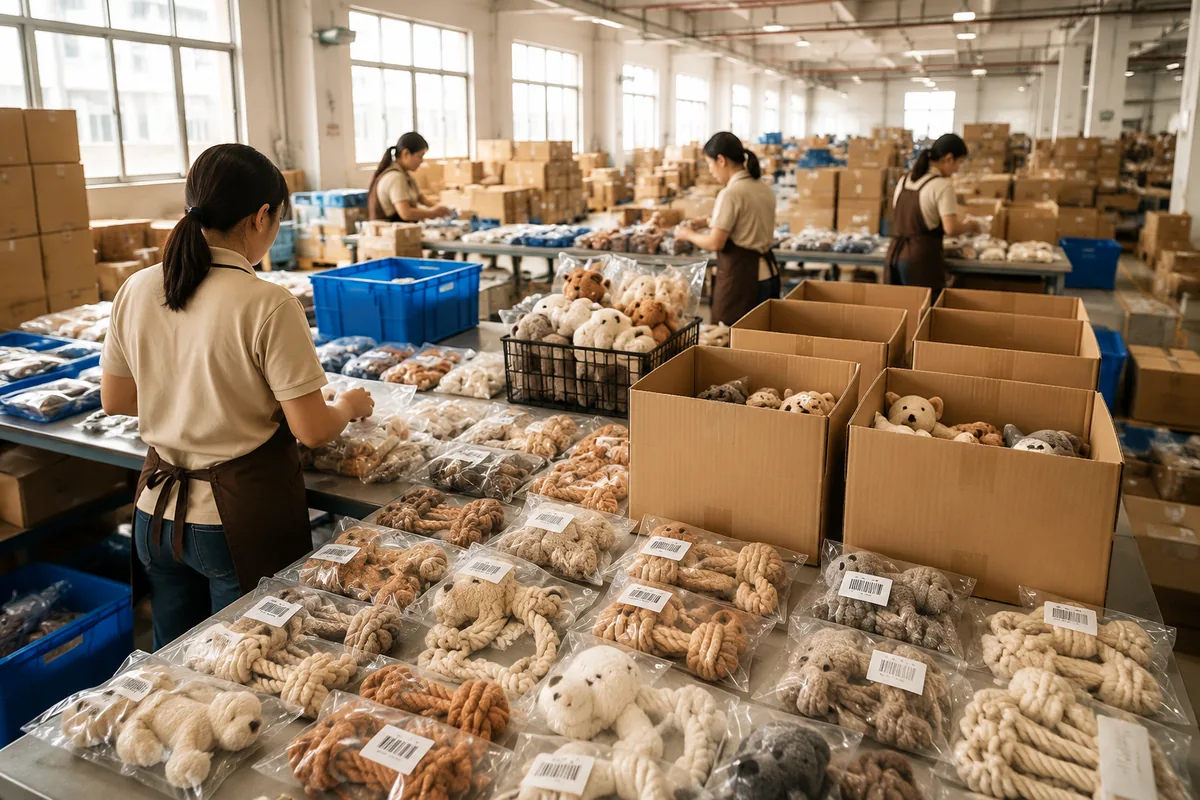
Ecommerce packaging is product experience and logistics cost at the same time.
- Poly bag + hangtag keeps cost down for commodity chews; works if your brand lives in the photos and insert.
- Retail-ready box helps DTC unboxing and gift; watch dim weight.
- Multipacks need clear unit labels so returns and 3PL picks do not break.
- Carton marks should match what your 3PL or FBA prep team expects the first time.
Ask for a packing video of the first bulk order. You want to see how units sit in the carton, not only a finished box photo.
Brand programs that need logo, exclusive color, and custom pack should read the private label path before locking MOQ.
Red flags for online brands
Walk away (or at least slow down) when you see:
- Samples that look better than the factory admits bulk will look ("export quality special")
- No English-capable ops contact after deposit
- Refusal to share material specs in writing
- Price 40%+ below comparable quotes with no explanation
- Pressure to pay full balance before any production photo or inspection window
- "We can copy any bestseller" as the main pitch (IP and platform risk)
You are building a brand, not a one-time gray-market deal.
A simple 30-day selection plan
Week 1: Shortlist 3–5 manufacturers. Send the same RFQ. Compare response quality, not only price. Week 2: Pay for samples from 2 finalists. Photograph both under the same light. Note lead time honesty. Week 3: Virtual or on-site factory check. Confirm production lines for your material type (plush vs rope vs TPR are different floors). Week 4: Lock PP sample, packaging, QC checklist, and payment terms. Place a controlled first order sized to ads and cash, not to optimism.When you are ready for a real quote conversation, use the contact form with your channel (Amazon, Shopify, wholesale mix), target SKUs, and destination markets. Concrete briefs get concrete answers.
FAQ
Can a pet toy manufacturer for ecommerce brands work with small first orders?
Many can, especially on near-stock or catalog-adjacent bodies. Fully new molds and exclusive dyed materials usually need higher floors. Ask for first-order and re-order MOQ separately.
Should I start with private label or full ODM?
If you need speed and lower risk, start private label or near-stock with your branding. Move to ODM once a hero SKU has sales data. Mixing both is normal after year one.
How do I keep bulk stock matching my Amazon main image?
Sign a photo sample and a PP sample, keep a sealed gold sample, require lot codes on cartons, and inspect the first production lot against that gold unit under the same light used for photography.
What certifications matter for US and EU online sales?
It depends on claims and materials. Common asks include lab reports for restricted substances, and toy-adjacent standards when products could appeal to children. Align testing with what your listing states; do not copy generic "CE" logos without documents.
Bottom line for brand buyers
A good pet toy manufacturer for ecommerce brands sells you consistency: samples you can shoot, cartons you can ship, and re-orders that do not quietly change color or fill density. Start with clear RFQs, photo-true sampling, and QC tied to listing claims. Use the products range to shortlist shapes, ODM when you need new development, private label when you need brand-ready near-stock, and contact when your brief is ready to quote.
If you need photo-ready bodies to stress-test listings first, start with something shoppers recognize—like the Cotton Rope or a compact Rubber Grip Toy—then lock color lots before you scale ads.
Ship the first order small enough to learn. Scale the factory that still matches the photo.
Related reading
Marketplace QC still fails on the basics—use the sourcing pet toys from China checklist and the low MOQ plush and rope dual-catalog model.
Ready to Build Your Next Collection?
From material selection to final delivery, we help brands bring pet toys to market.