Bulk Cat Toys Wholesale for Resellers: MOQ, QC & Assortment

If you sell cat toys online, in pet stores, or under your own label, you already know the hard part is not finding “cheap toys.” It is finding a bulk cat toys supplier for resale that can repeat the same quality on reorder, hit ship windows, and still leave you margin after freight, testing, and packaging.
This guide is written for buyers who place real POs: Amazon and marketplace sellers, multi-store retailers, and private-label brands. No fluff about “the booming cat economy.” Just how to brief a factory, read a quote, run samples, and scale without burning cash on a bad first container.
What resale buyers actually need from a cat toy supplier
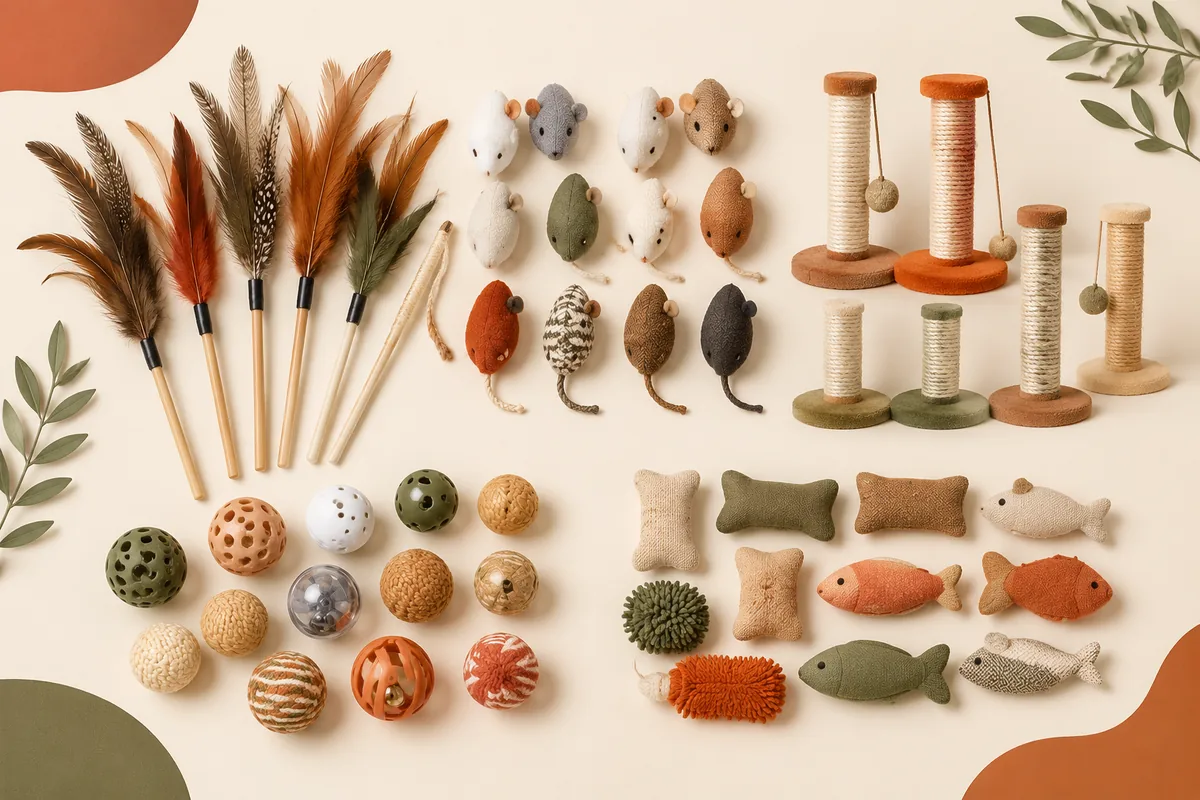
Most resale programs fail for boring reasons: wrong material for the price tier, packaging that does not match marketplace photos, or an MOQ that forces you to hold six months of dead inventory.
A solid bulk partner should be able to answer, in writing:
- Which SKUs are stock (fast reorder) vs custom (logo, color, new mold)
- Realistic first-order MOQ by construction (plush, TPR, sisal, feather wand)
- Sample lead time and who pays freight each way
- Which tests they already run, and which you must book third-party
- Pack-out options: polybag only, hangtag, color box, multipack
If answers stay vague after two emails, you are not talking to a production team. You are talking to a trading desk that will shop your order around later.
Browse our live products catalog to see how assortment is usually grouped before you RFQ ten random SKUs at once.
Map your assortment before you ask for price
Cat toys look simple until you try to ship them. Feather teasers break in transit if shafts are too thin. Plush mice lose eyes if pull strength is weak. Catnip toys go flat if fill is stale or under-dosed. Balls with bells fail drop tests if the shell cracks.
Group your list by construction, not by “cute photos”:
| Category | Common materials | Resale notes |
|----------|------------------|--------------|
| Interactive wands | Plastic/wood shaft, feathers, string | Tip: spare feather packs sell well as attach-ons |
| Plush & mice | Short plush, PP cotton, embroidery | Eye/nose attachment and seam AQL matter most |
| Balls & rollers | TPR, hard plastic, bells | Check bounce consistency and small-part risk |
| Catnip / silvervine | Non-woven pouches, felt, dried herb | Shelf life and odor control affect returns |
| Scratch / sisal | Sisal rope, cardboard, wood | Edge fray and glue smell drive complaints |
Price a core 8–12 SKU set first. Winners fund the experimental designs later. Trying to launch 40 SKUs on day one is how warehouses fill up with unsold “unique” items.
For brand-owned lines (your logo on hangtags and cartons), pair stock cores with a private label path instead of forcing every SKU through full tooling.
Spec checklist to send with every RFQ
Factories quote what you write, not what you meant. Attach a one-page brief:
1. Market & channel — US Amazon FBA, EU retail, independent pet shops, etc.
2. Pet size / play style — kitten, adult indoor, multi-cat household
3. Materials you will accept — and materials you will not (e.g. no PVC if that is your brand rule)
4. Brand marks — woven label, heat transfer, printed hangtag, custom color box
5. Target landed cost band — give a range; “as cheap as possible” gets you junk
6. First PO qty + reorder plan — e.g. 500 pcs/SKU trial, 2,000 pcs reorder if sell-through hits X
7. Compliance — CPSIA / ASTM where relevant, EN71 / REACH for EU, lab partner preference
8. Packaging photos — how the unit must look on the PDP
That brief also becomes your version-control document. When someone on your team changes the shaft length mid-sample, update the brief and the cost sheet together. Midstream “small changes” are the number-one cause of sample-to-bulk drift.
If you need help turning a moodboard into production-ready specs, our ODM services team works from sketches and competitor references, not only from finished CAD.
Quality control that protects margin (not just “nice photos”)
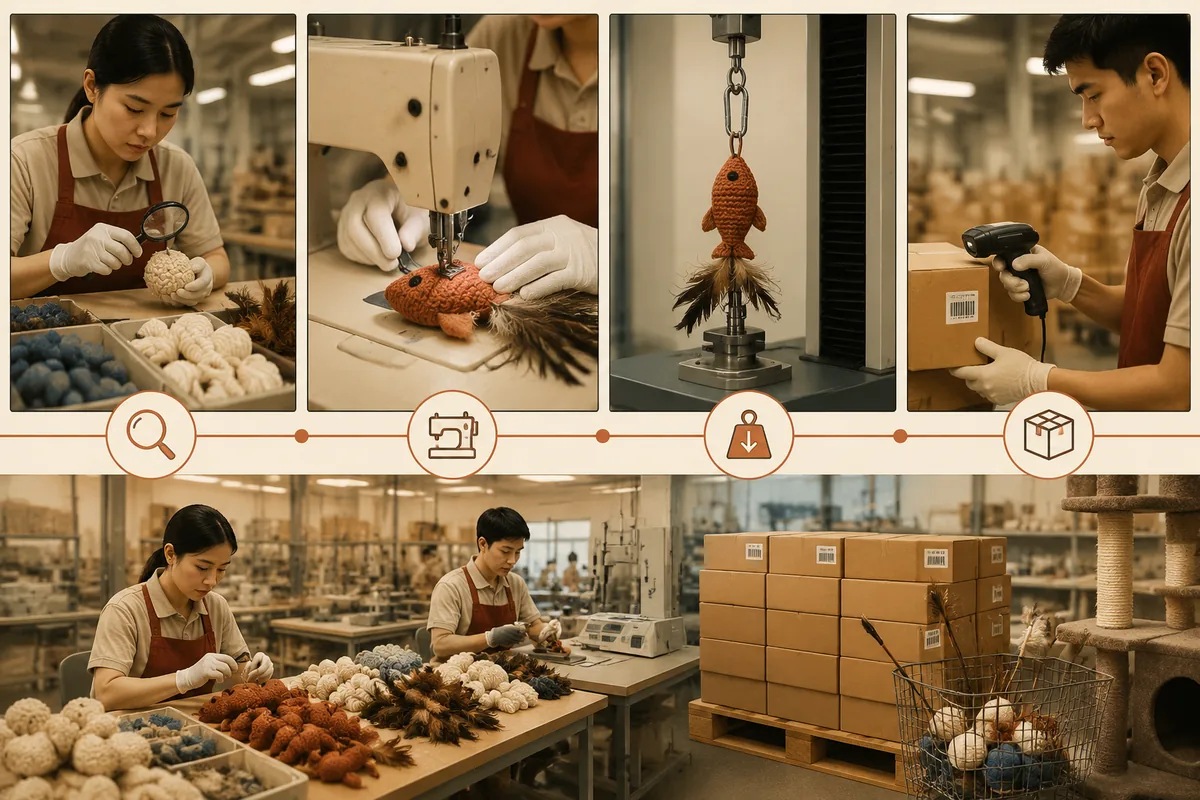
Resale returns eat profit faster than a slightly higher unit cost. Build QC into the PO.
Incoming materials- Fabric lot color against approved lab dip or Pantone
- Feather cleanliness and shaft straightness
- Herb lots for catnip (moisture, mold, odor)
- Thread, stuffing, and plastic parts with basic RoHS / REACH declarations where required
- Seam strength on plush
- Knot and glue points on wands
- Bell insert security on balls
- Weight variance on filled toys (± agreed grams)
- AQL sampling (even on small trials — start the habit early)
- Carton drop test if multipacks are fragile
- Barcode scan check against your ASIN / SKU map
- Photo set of open cartons before sealing
For US-bound goods, plan lab timing so certificates exist before cargo booking. Booking a container and then discovering a heavy-metal fail is a classic expensive lesson.
Document defects in a shared issue log. If round-one bulk had loose string knots, that defect should appear on the inspection checklist for reorder — not only in someone’s inbox.
Sampling timeline and what “good” looks like
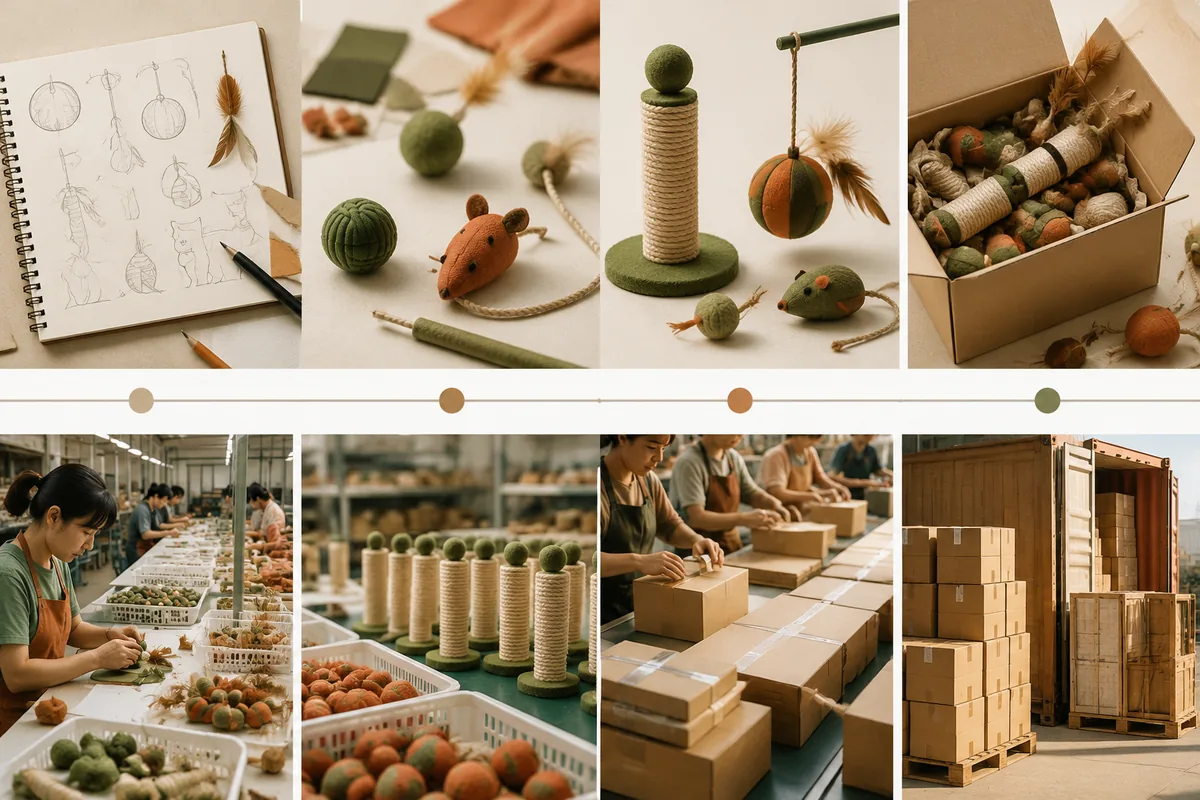
A realistic first engagement with a bulk cat toys supplier for resale looks less like a catalog order and more like a short project:
| Step | Typical timing | Buyer action |
|------|----------------|--------------|
| Brief + material advice | 2–5 business days | Approve direction or reject early |
| First sample | 7–20 days (tooling dependent) | Physical review + photo record |
| Revision sample | 5–12 days | Only if needed; limit loops |
| Pre-production sample (PPS) | Before mass cut | Sign off in writing |
| Bulk + in-line / final QC | Per PO lead time | Weekly status, photo evidence |
Pay for samples. Free samples that skip compliance often become recalls later. Budget freight both ways and, if your channel is strict, a basic lab panel on the approved construction.
What to test at home or in a small lab proxy before you scale:- Pull on eyes, bells, feather bundles
- 10-minute rough play simulation (tug, bat, chew edges)
- Odor after 24 hours in a sealed bag (glue, dye, plastic smell)
- Color transfer on light fabric
If the sample fails here, do not “hope bulk will be better.” Bulk is usually equal or slightly worse under production pressure.
MOQ, pricing, and landed cost (not unit price theater)
MOQ for cat toys often lands around:
- Stock SKU with minor branding: 300–1,000 pcs per color
- Custom color / print: 1,000–3,000 pcs depending on process
- New mold or complex wand hardware: higher, plus tooling amortization
Always ask for a ladder quote (e.g. 500 / 1,000 / 3,000). The jump from 500 to 1,000 sometimes pays for itself if sell-through is proven.
Landed cost checklist (quick):
- Ex-works or FOB unit price
- Inner + master carton packaging
- Testing and certificates
- Inland + ocean / air freight + duties
- FBA prep or warehouse receiving fees
- Expected return rate (budget 2–5% on interactive toys until you have data)
A supplier that only talks “FOB $0.XX” without helping you think about pack dimensions and duty codes is not a resale partner. They are a price board.
Packaging and retail readiness
Marketplace buyers return items when the package does not match the listing. Retail buyers reject cartons that crush on the shelf.
Align early on:
- Polybag thickness and tear notches
- Hangtag size, barcode placement, warning language
- Master carton dimensions that fit your 3PL or FBA size tiers
- Multipack inserts that stop feather crush
- Multi-language care / safety copy if you ship EU + US
If you run Amazon, shoot pack-out photos from the approved PPS, not from a random factory phone snap. Inconsistency between listing and ship is a top reason for customer returns on cat toys.
Red flags when you vet suppliers
Walk away (or slow way down) if you see:
- No factory video or tour, ever
- Quotes that swing 30% with no material explanation
- Refusal to put AQL or material grades in the PO
- “Any MOQ” at prices far below market without a reason (seconds stock, mixed lots)
- Pushy deposit deadlines that ignore sample approval
- Zero questions about your market — good factories ask about channel and compliance
Healthy partners push back. They will tell you a $0.12 wand will break. That honesty saves you returns.
How WagNab works with resale and brand programs
WagNab builds pet toys for wholesale and brand buyers — stock assortment, OEM tweaks, and full private-label lines. Start from the products range to shortlist constructions, use ODM when you need design-to-sample support, or go private label when your brand identity has to own packaging and storytelling.
Most teams evaluating a bulk cat toys supplier for resale send a short brief: target channel, 8–12 core SKUs, material preferences, logo method, first qty, and destination market. We map sample steps and flag compliance needs before tooling money is spent.
Decision checklist before you place the PO
Do not wire a deposit until these are locked:
- Spec sheet versioned and shared
- Physical or photo-documented sample approved
- PPS signed for custom work
- QC plan and AQL written into the PO
- Packaging dieline and barcode map approved
- Incoterms, payment terms, and lead time on paper
- One buyer-side decision owner (not a five-person comment thread)
If any of that is still “we’ll figure it out later,” pause. Most post-shipment fights on pet toys come from unwritten assumptions, not from bad intent.
FAQ
What MOQ should I expect for bulk cat toys for resale?
Stock SKUs with light branding often start in the mid-hundreds per color. Full custom color, print, or new hardware usually needs higher MOQ. Always request a ladder quote so you can see where unit cost actually drops.
Do cat toys need the same lab tests as children’s toys?
Rules depend on market and product claim. US and EU buyers commonly request chemical and mechanical panels aligned with CPSIA, ASTM, EN71, and REACH where applicable. Align the test plan with your channel before bulk, not after booking freight.
Should I mix stock catalog SKUs with private label?
Yes for most first programs. Stock cores prove sell-through and cash flow. Private label packaging and a few hero SKUs differentiate the brand once you know what moves.
Next step
Choosing a bulk cat toys supplier for resale is a process decision: clear specs, real samples, written QC, then scale. If you have a SKU list and target markets ready, contact WagNab with your brief. We will reply with sampling options, MOQ ranges, and a lead-time plan you can put on a calendar.
For assortment planning, start with real bodies such as the Linen Fish and a multi-SKU Critter Plush Set—then lock hangtags and carton marks before the first resale PO.
Related reading
For dog-side volume in the same factory conversation, compare wholesale plush dog toys China factory and the low MOQ plush and rope dual catalog.
Ready to Build Your Next Collection?
From material selection to final delivery, we help brands bring pet toys to market.