Squeaky Balls for Dogs Bulk: Specs, Squeaker QC & MOQ

If you are sourcing squeaky balls for dogs bulk, you are buying two products in one SKU: a ball body that must bounce or hold shape, and a squeaker that still works after carton crush, warehouse heat, and a week of real play. Cheap mixed cartons fail in predictable ways: silent units, migrating inserts, thin walls that tear at the mold line. Those failures show up as Amazon returns or retail chargebacks, not as a polite WeChat apology.
This guide is for brand owners, FBA sellers, distributors, and retail importers who need squeaker-ball programs that reorder clean. It covers body constructions factories actually run, how to write a brief a plant can quote, MOQ and sampling patterns, QC that catches dead squeakers before pack-out, and when open-stock cores should move to ODM or private label. For wider squeaker assortments (plush animals, food shapes), see our bulk squeaky toys guide. For non-squeaker rubber fetch balls, use the rubber dog balls wholesale checklist. Live SKU direction sits on the products catalog.
Who buys squeaky balls for dogs bulk (and what breaks)
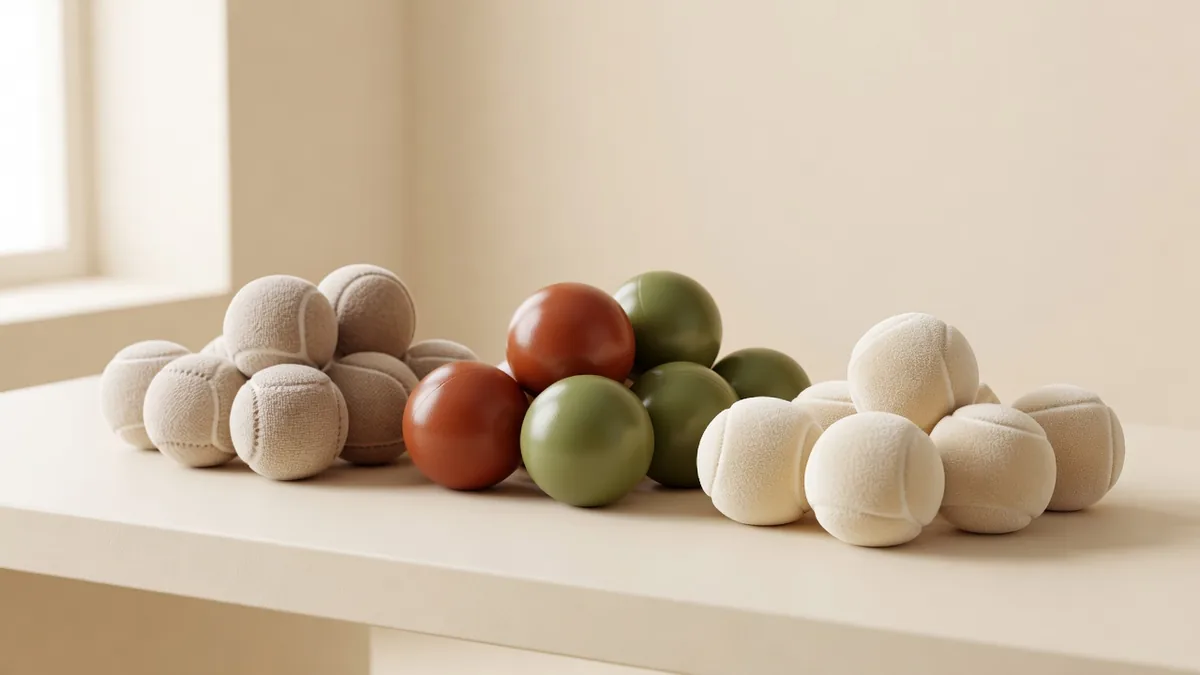
Buyers who land on this keyword usually want a ball-shaped interactive SKU, not a random soft toy with a reed inside. Common programs:
- Tennis-style fabric or felt-covered balls with a plastic reed
- Hollow rubber or TPR bounce balls with a press-in or molded squeaker cavity
- Soft puppy foam or light TPR balls with a single quiet reed
- Dual-texture or rope-panel balls that still need a sealed squeaker pocket
- Mixed-color assortments for peg hooks or FBA variety packs
What breaks in the field is rarely "the ball looked ugly." It is silent units after transit, squeakers that push out through a torn cavity, odor that never airs out, or bounce that dies after two weeks in a hot warehouse. Distributors care about mixed master cartons and hangtag uniformity. Brand buyers care about Pantone lock, logo method, and whether the squeak volume matches the signed sample on reorder.
Say early whether you sell US Amazon FBA, EU indie pet shops, or big-box retail. Channel changes warning copy, barcode placement, and how hard you push AQL on silent and leaky units.
Spec checklist before you RFQ squeaky balls
Factories quote what you write down. Attach a one-page brief and keep it versioned. Vague "squeaky balls, cheapest" emails get soft compounds and loose reeds that photograph fine and fail in the field.
Body and play- Style: fabric tennis cover, solid rubber, hollow TPR, foam puppy, dual-texture
- Finished diameter in mm (and weight target if hollow)
- Wall thickness map if hollow; thin spots tear first under bite
- Target dog size band and play style (fetch, gentle squeak, supervised only)
- Bounce expectation if rubber/TPR: drop-test height and "dead ball" reject rule
- Squeak volume band: quiet puppy vs loud retail demo (define with a sample, not adjectives)
- Reed type and supplier model number if you can lock it
- Count: single vs dual tone
- Pocket or cavity method: sewn fabric pocket, molded cavity, press-in plug
- Migration rule: insert must stay captive after crush and after intentional tear tests you define
- Silent-unit reject rate you will accept at final inspection (write a number)
- Base: TPR, natural rubber blend, fabric cover + core, or foam; ask what is actually in the mix
- Color: Pantone or physical chip; matte vs glossy; odor after 48 hours of airing
- Destination markets: US (CPSIA-oriented chemical screens), EU (REACH where retail treats it as a toy)
- Small-parts risk if the reed can exit a torn body; warning copy for supervised play
- Logo method, polybag, barcode, inner pack count, master carton dims, mixed-color packing rules
- No invented certificates; plan lab timing to the markets you sell
A complete brief shortens sample rounds. Plants quote faster when they are not inventing your product for you.
Materials and constructions that show up in bulk programs
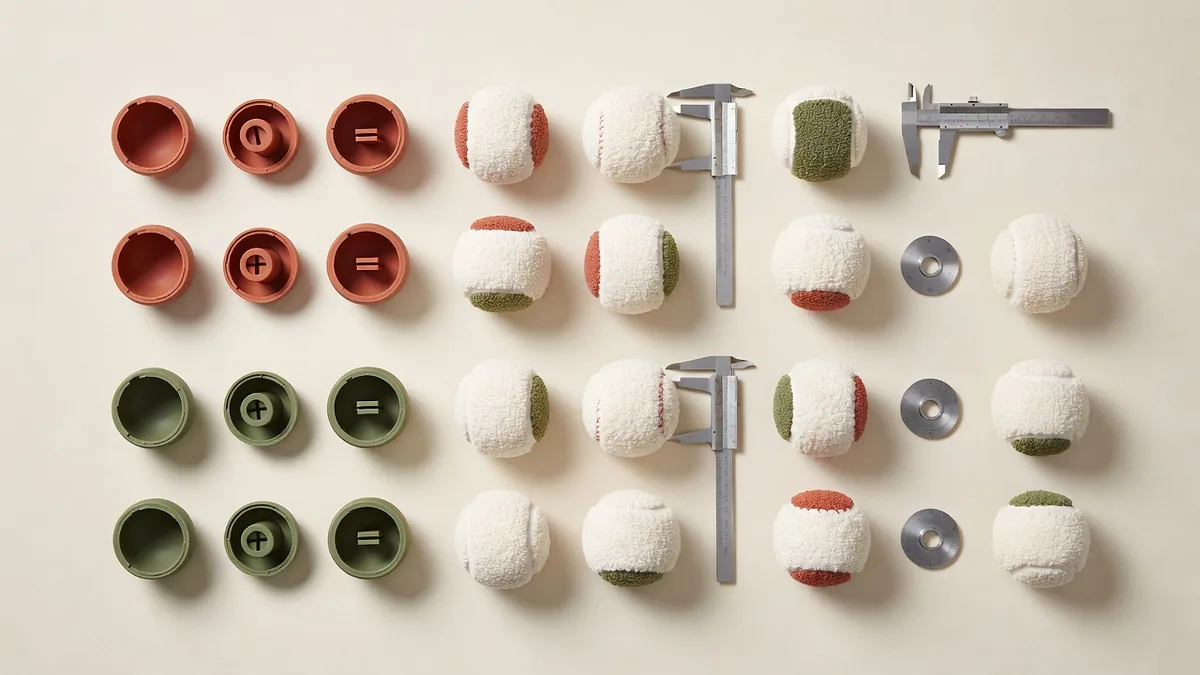
Most export squeaky balls for dogs bulk programs fall into a few constructions. Pick one primary path for the first PO; hybrids raise scrap until the line is trained.
Fabric or felt tennis-style ball + reed. Classic look, softer mouth feel, popular for fetch branding. Failure modes: cover seam open, reed rattle after crush, dye bleed on light covers. Lock stitch density and cover fabric weight. Hollow TPR / rubber ball with molded cavity or press-in squeaker. Better outdoor bounce. Failure modes: thin wall tear, flash at openings, insert push-out under bite, inconsistent squeak after aging. Ask for a wall map and a crush test that mimics stacked cartons. Soft puppy foam or light TPR. Quiet reed, lower chew durability. Fine for gentle play assortments; do not sell it as a power-chewer SKU. Dual-texture or rope-panel hybrids. Retail novelty, more seams and glue points. Start after a simple body ships clean for two reorders.Ask what share of the plant's monthly output is squeaker product versus silent rubber. If the answer is vague, assume your order is the training run for pocket and cavity QC. For plush animal squeakers outside the ball silhouette, the bulk squeaky toys article covers pocket sewing in more depth.
MOQ, sampling, and when to go private label
MOQ for squeaky balls is usually driven by color changeover, reed purchase lots, and mold or cover capacity, not by how friendly the sales WeChat feels.
Rough patterns many brand buyers see (ranges, not promises):
- Open-stock or catalog-adjacent colorways on an existing ball body: often a few hundred units per color if the factory already runs that tool or cover
- New Pantone + logo on a stock body: mid-hundreds is common once reed lots and print plates are set
- New mold or fully custom cover pattern: higher MOQ, frequently low thousands depending on cavity complexity
Sampling that protects you:
1. Brief review and material recommendation (a few business days)
2. First sample with the intended reed locked by model if possible
3. Buyer crush / bounce / squeak check against a written reject rule
4. Pre-production sample signed against the PO
5. Bulk with in-line and final inspection, including a silent-unit count
Budget freight both ways on samples and lab timing if your channel needs chemical screens. Cheap samples that skip the reed lock often become silent cartons later.
When open stock is enough, stay there. Move to private label or fuller ODM when you need locked Pantone, exclusive cavity geometry, or packaging that matches a brand story across reorders. WagNab's products catalog is a useful place to see which silhouettes already exist before you pay for a new tool.
QC that catches silent and leaky squeaky balls
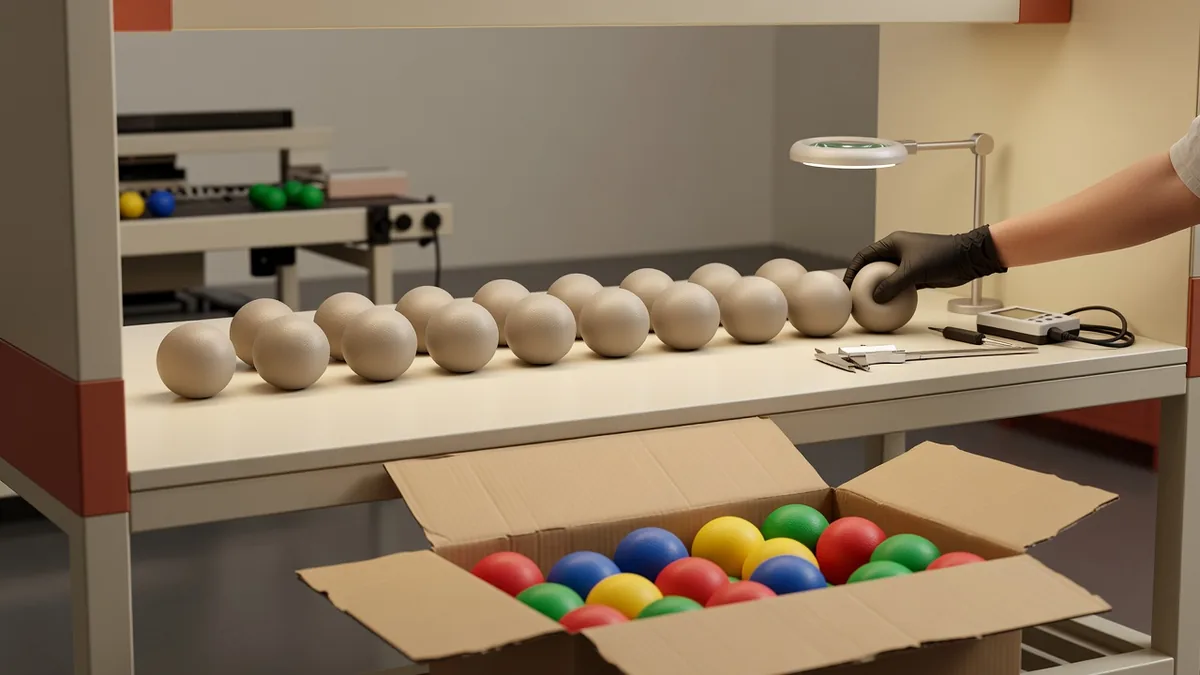
AQL without a squeaker-specific checklist still ships quiet units. Add these gates even on small trial orders; they train the factory early.
Incoming: reed model and lot match the signed sample; compound or cover fabric lot traceable; no strong solvent odor on random pulls after airing. In-line: wall thickness or cover seam checks at set intervals; cavity or pocket closure integrity before final close; random squeak test after assembly (define compression method so operators do not "help" the reed). Final / pre-shipment: silent-unit rate against your written limit; migration check via the crush or tear protocol in the brief; bounce or deformation check for rubber/TPR; flash, weight variance, and color mix against assortment rules; pack-out photos that match marketplace or retail images.On first production runs, ask for photo or video evidence of each gate before goods leave the plant. Keep a shared issue log so the same silent or leaky defect does not reappear on reorder. For US or EU retail programs, align lab test timing with production so paperwork is ready before cargo booking, not after the container is sealed. We do not invent MOQ numbers or certificate claims here; your PO and lab plan own those facts.
Wholesale and brand buyers also lose margin when packaging is an afterthought. Align early on polybag print, hangtags, barcode placement, master carton stack height (squeakers hate crush), and mixed-color packing rules. If you sell on marketplaces, confirm pack-out photos match the shipped unit. Variety packs can mask a weak reed lot until reviews pile up.
Common mistakes and a PO checklist
Frequent misses: choosing on unit price without freight, testing, and carton crush risk; skipping a written silent-unit reject rate; changing reed suppliers between sample and bulk without a new PPS; vague artwork that delays print or hangtag approval; ignoring warning-label language for the destination market; ordering bulk before the pre-production sample is signed off; assuming a rubber-ball factory automatically understands squeaker pocket QC.
Factory silence after PO is a risk signal. Agree on a weekly update once production is live: materials in, molding or sewing progress, QC photos, ship window. Share one decision owner on the buyer side.
Before you commit cash:
1. Body construction and diameter locked in writing
2. Reed model (or equivalent) locked between sample and bulk
3. Silent-unit and migration reject rules written into inspection
4. Color and logo method approved on a physical or photo PPS
5. Carton stack height and crush risk acknowledged
6. Lab plan timed to ship window for your markets
7. One buyer-side owner for change requests
8. Reorder lead time and reed supply risk discussed, not assumed
If any of those are still "we will figure it out in production," you are not ready for bulk. Fix the brief, sign the PPS, then scale.
How to brief WagNab
WagNab works with brand and wholesale partners on pet toy manufacturing, from material selection through sampling and bulk. Teams evaluating squeaky balls for dogs bulk usually start with a short brief: target dog size, body type (fabric tennis, TPR hollow, soft puppy), reed preference, logo method, first-order quantity, and destination market. From there we map a sample plan and flag compliance timing before tooling money is spent.
Useful next steps:
- Browse constructions on the products catalog
- Review development flow on ODM services
- Plan brand packaging via private label
- Send the brief and ask for MOQ and sampling reality through contact
If your assortment also needs non-ball squeakers or silent rubber fetch balls, keep those as separate SKUs with separate QC checklists. Mixing failure modes in one PO is how silent rates and bounce rejects get argued away instead of fixed.
Buying squeaky balls for dogs bulk well is mostly discipline: one construction, one reed lock, countable QC, and packaging that survives the stack. Price matters, but silent cartons cost more than a slightly higher unit quote. When you are ready to compare a stock core against a private-label path, start with the catalog and a concrete brief, then talk through sampling on the contact page.
Ready to Build Your Next Collection?
From material selection to final delivery, we help brands bring pet toys to market.